DbcultAccessing Vault...
Cult Review
Senior Film Conservator
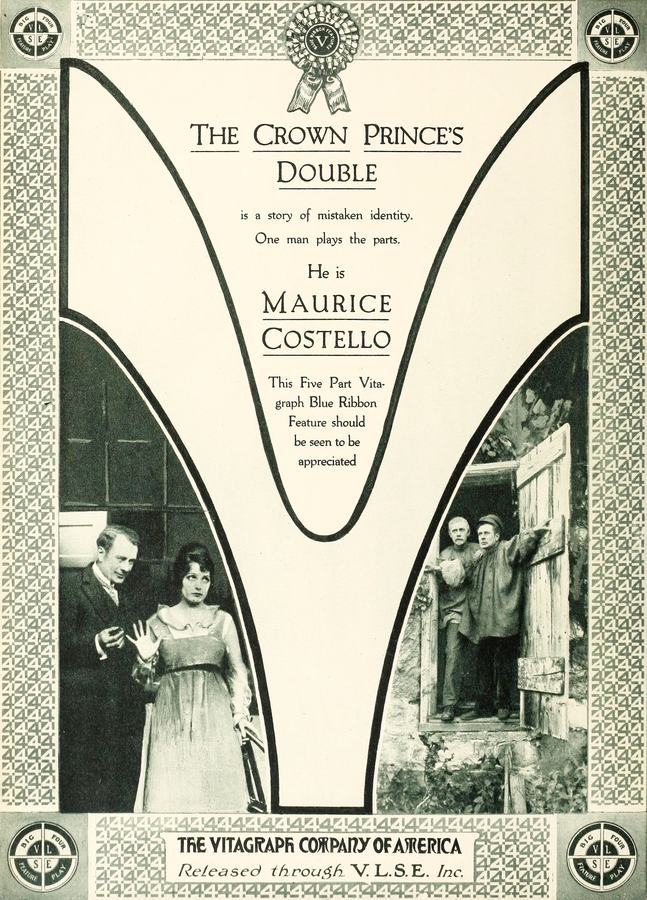
Splashed across the flickering monochrome of 1923, The Crown Prince’s Double arrives like a champagne saber: effervescent, reckless, leaving ceremonial foam on the lens. Norma Talmadge, sovereign of the tear-drenched melodrama, here flirts with screwball before the term existed, trading tragic shudders for the kinetic shimmy of mistaken identity and elective abdication. The result is a curio that pirouettes between Lubitsch-lite sophistication and nickelodeon slapstick, never quite settling, always tantalizing.
Director Thomas R. Mills orchestrates the tonal whiplash with a maestro’s wink. One reel luxuriates in Ostrau’s baroque mirage—columns, coronets, doves released like white confetti—while the next plunges into the smoky celluloid of a London music hall where legs, not pedigrees, are the prime currency. The edit feels caffeinated: irises snap shut like opera-glasses, intertitles crack wise in Jazz-Age slang, and double exposures let prince and pauper share a single silhouette, forecasting every future split-identity romp from Das Modell to The Parent Trap.
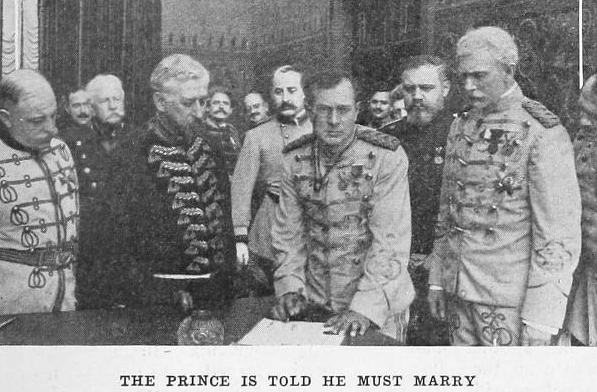
Anders Randolf’s King Gustave stomps through frames as if auditioning for The Golem’s cousin: shoulders squared, beard imperial, voice implied by the sheer velocity of his eyebrow. His despotism is less cruelty than conservation—dynasty as embalming fluid. Opposite him, Daniel Leighton essays Oscar with matinee-idle languor that melts into something approaching self-mockery once Manhattan’s ash-tinged winds tousle his protocol. Leila Blau’s Isabelle, all gumption and cloche hats, supplies the film’s voltaic spark; her sideways grin could short-circuit a palace ballroom.
Yet the stealth protagonist is Barry Lawrence, the anonymous clerk promoted to royal doppelgänger. Played by Maurice Costello with Buster Keaton stone-face plus a dash of Chaplin’s shuffle, Barry embodies the democratic daydream that any face in the crowd might, by accident of bone structure, topple thrones. His moral compass, though, is stubbornly working-class: a thousand bucks buys compliance, but endangering Shirley—Anna Laughlin’s plucky cigarette girl—crosses the Rubicon. The moment he swaps pawnshop tweeds for ermine-trimmed overcoats, the film’s thesis crystallizes: identity is costume, but loyalty is bespoke.
Ann Mayring and Gilbert Patten’s screenplay crackles with pre-Code mischief. When Oscar first eyes the burlesque actress, an intertitle purrs: "Her stage name—Lola Lashed—promised both whip and whisper." Later, as Isabelle schools Oscar on American slang, we get: "In Brooklyn, ‘Your Highness’ shortens to ‘Pal’—equality in three letters." Such linguistic jazz keeps the expositional ball aloft, though occasionally the plot pirouettes so fast one needs a scorecard to track who’s chasing whom down which fog-lit pier.
Visually, the picture is a stained-glass riot. Cinematographer Tom Brooke tints palace sequences lavender, connoting faded majesty, while New York scenes pulse amber, as if Edison himself breathes on the negative. A standout tableau shows Oscar and Barry mirrored in a Coney Island fun-house, their silhouettes fracturing into kaleidoscopic shards—an eloquent metaphor for monarchy refracted through republican prisms. Compare this to the glacier-cool symmetry of 0-18 or A Message from the Sky, and you’ll see how American silents favor heat over geometry.
The escape sequence—speedboat, biplane, and a runaway trolley car—feels plucked from a Pearl White serial, yet Mills times each gag like a metronome. When the Baron’s roadster hurtles off an unfinished bridge, the camera tilts vertiginously, presaging Hitchcock’s Saboteur by nearly two decades. Silent cinema too often gets caricatured as stagey; this set-piece is pure kinetic adrenaline, proving the medium had already mastered kinetic grammar before sound shackled it to talky realism.
Performances ricochet from opulence to vaudeville and back. Howard Hall’s Baron Hagar twirls his cane with Prussian precision, each click a death-knell. Norma Talmadge cameos as a newspaper illustrator who sketches Oscar’s portrait while humming a rag—her star-wattage condensed into fifteen seconds of luminous mischief. Watching her, you understand why audiences would follow her from Jewel’s sobs to The Reckoning’s moral crucible; she could telegraph wit with the tilt of a dime-store beret.
Musically, the surviving print carries a 1972 organ score that veers from Bachian fugue to Scott Joplin rags, sometimes mid-scene. The dissonance is oddly perfect: Europe’s baroque shadows grafted onto America’s syncopated hustle. One wishes contemporary distributors would commission a fresh accompaniment—say, a Balkan brass band colliding with a Brooklyn ukulele—to mirror the film’s cultural mash-up.
Thematically, The Crown Prince’s Double anticipates the expatriate ennui later mined by Hemingway and Fitzgerald. Oscar’s renunciation is less about love than liquidity: in the States, reinvention is currency, whereas Europe pays in shackles. When he tears his royal crest and sprinkles the confetti into New York harbor, the gesture echoes Emma Bovary’s arsenic or Nora’s door-slam—yet here the exit is liberating, not tragic. Democracy wins, but cheekily, as if tipping its boater to Strejken’s proletarian ire while waltzing toward a speakeasy.
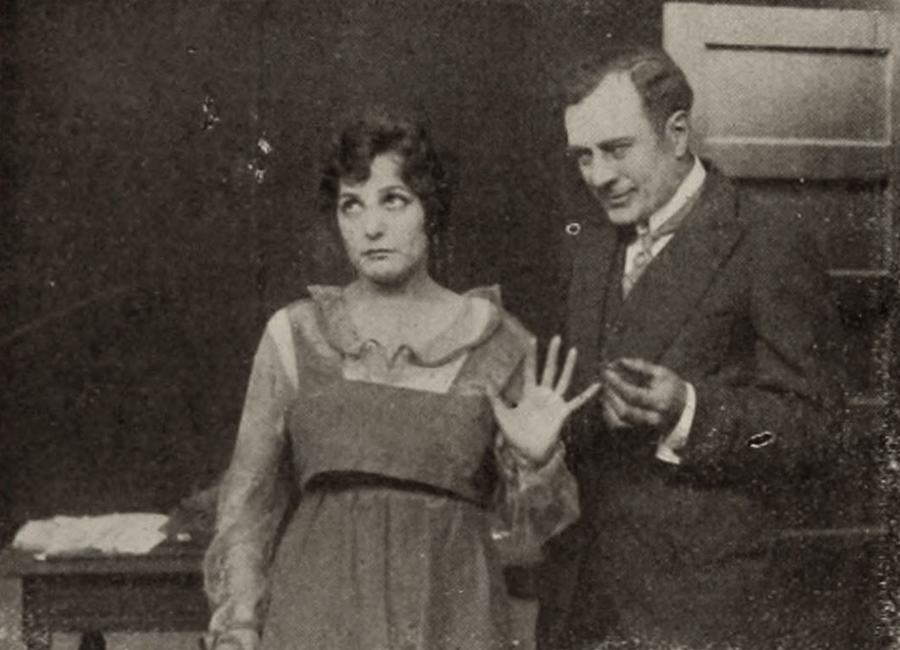
Flaws? A few reels feel mislaid; the transition from London liaison to Atlantic crossing is a jump-cut that could humble a mountain goat. And Shirley’s peril—tied to railroad tracks, mustache-twirling villainy—leans on Victorian cliché while the rest of the film sashays toward modernity. Yet such hiccups amplify the artifactual charm, reminding us that even in 1923, narratives were collages, stitched under deadline glares.
Restoration-wise, the current 4K scan from Eye Filmmuseum scrubs emulsion blemishes yet retains the cigarette burns that flicker like fireflies. The grayscale is so tactile you can almost smell the nitrate. Streaming on Criterion Channel alongside The Child of Paris, it’s a double-bill of childhood exile and princely escape—both arguing that identity is portable if you pack light.
In the pantheon of royal impostor flicks, this one predates The Prisoner of Zenda’s swashbuckling solemnity, preferring jazz-age jest. It lacks the Gothic gloom of When Rome Ruled or the Expressionist fever of Der Millionenonkel, yet its breezy existentialism feels closer to our age of curated personas and citizenship-by-investment. Oscar’s abdication is the 1920s equivalent of deleting your blue-check account and moving to Portland.
Comparative curiosity: fans of The Valley of the Moon’s pastoral romance will be startled by how the same yearning for self-definition migrates from agrarian communes to skyscraper shadows. Both films insist geography is destiny’s eraser.
Final toast: The Crown Prince’s Double is a spiked lemonade—sweet, tart, liable to make you tipsy on possibility. It pirouettes on the knife-edge between fairy-tale and newspaper farce, between monarchy and modernity, between silence and the oncoming roar of talkies. Watch it at midnight with window open, city horns blaring, and imagine Oscar somewhere out there still, selling bootleg gin under the name Mr. Palmer, trading crown for freedom, story for myth.
IMDb —
1914
Community
Log in to comment.