DbcultAccessing Vault...
Cult Review
Senior Film Conservator
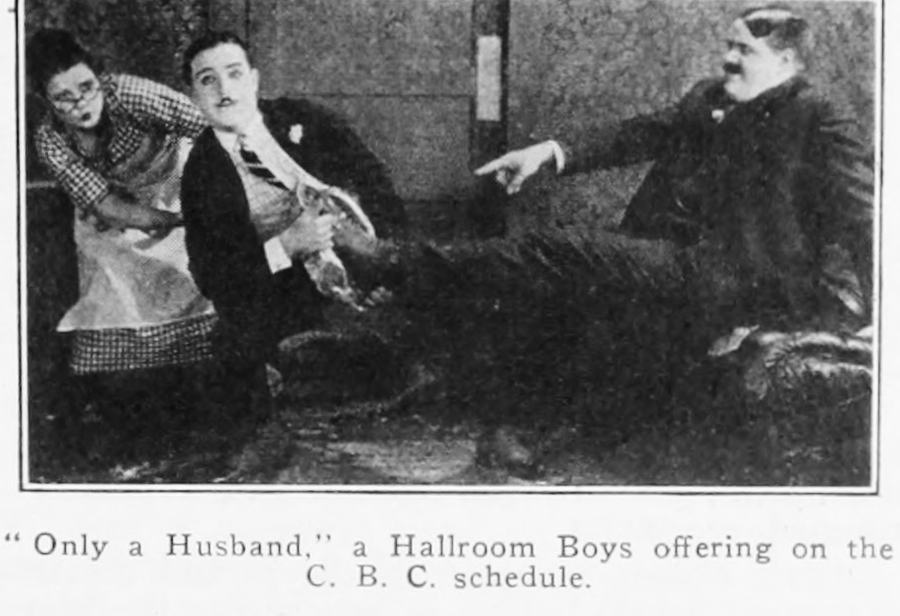
To truly appreciate the clockwork precision of 1920s short-form comedy, one must look past the heavyweights of the era and delve into the specialized craftsmanship of creators like Jean C. Havez. In 1924, Only a Husband arrived as a sharp-witted dissection of the American domestic dream, a film that feels remarkably contemporary in its cynicism despite its century-old vintage. While many comedies of the time relied on broad, sweeping physical stunts, this piece finds its heartbeat in the micro-aggressions of marriage and the inherent comedy of social expectation.
Jean Havez is a name that carries immense weight among silent film aficionados, primarily for his structural contributions to the masterpieces of Buster Keaton. In Only a Husband, Havez’s fingerprints are everywhere. The narrative doesn't just meander from gag to gag; it builds a cumulative pressure. It’s a film about the friction of living in close quarters, a theme explored with varying degrees of success in other contemporary works like Be My Wife. However, where other films might lean into the whimsical, Havez ensures that the stakes—though trivial—feel monumental to the characters involved.
The casting of Marion Mack provides a fascinating focal point. Most modern audiences recognize her as Annabelle Lee from The General, but here, in a domestic setting, her comedic timing is allowed a different kind of breathing room. She isn't just a foil for the male protagonist; she is an active participant in the chaos. Her chemistry with George Williams and Sidney Smith creates a triad of misunderstanding that propels the plot forward with relentless energy. It’s a far cry from the more melodramatic undertones found in Eyes of the Soul, proving that comedy often requires a more rigorous intellectual framework than drama.
What strikes the modern viewer most is how the film uses the 'husband' archetype as a vessel for middle-class anxiety. In the early 1920s, the concept of the suburban lifestyle was still coalescing, and Only a Husband mocks the fragility of this new social order. We see echoes of this satirical edge in A Pair of Sexes, but here the execution is tighter. The presence of Bud Jamison, a veteran of the silent screen who would later become a staple of the Three Stooges shorts, adds a layer of robust physicality. Jamison’s ability to dominate a frame with his sheer presence provides the perfect counterweight to the more frantic movements of the leads.
"The film operates on the principle that a man’s home is not his castle, but rather a sophisticated trap designed to highlight his every inadequacy. It’s a beautifully choreographed nightmare of etiquette and error."
When comparing this to the nuptial disasters depicted in Wedding Dumb Bells, one notices a distinct shift in focus. While the latter focuses on the explosive failure of the ceremony, Only a Husband is interested in the slow burn of the aftermath. It asks the question: what happens after the 'I do' when the plumbing fails, the neighbors intrude, and the social mask begins to slip? This thematic depth is what elevates it above mere slapstick. It shares a certain spiritual DNA with Marry Me, yet it possesses a sharper, almost more cynical bite.
The cinematography of the mid-20s was beginning to move away from the static 'proscenium arch' style of the previous decade. In Only a Husband, the camera is used to trap the characters. Tight framing emphasizes the lack of escape within the domestic sphere. This visual strategy is a stark contrast to the more expansive, outdoor-oriented action of The Combat or the rugged landscapes of Kentucky Brothers. By shrinking the world, Havez and his director increase the comedic density of every scene.
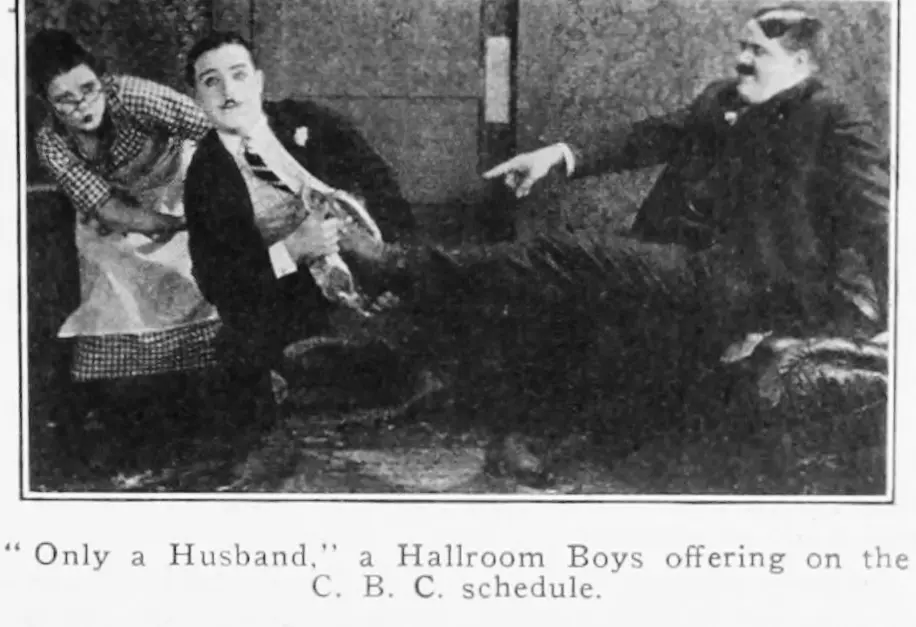
Consider the breakfast table sequence—a staple of the genre. Here, it is treated like a battlefield. Every pass of the coffee pot, every rustle of the newspaper is a tactical maneuver. This level of detail is something we also see in the experimental textures of Alice's Wonderland, though applied here to the service of situational comedy rather than technical gimmickry. The pacing is breathless; there is no 'dead air.' Every frame is utilized to either establish a character trait or plant a seed for a future payoff.
The protagonist’s struggle in Only a Husband is a precursor to the modern sitcom. He is the 'Everyman' who is perpetually one step behind the world around him. This trope is handled with far more grace here than in the heavy-handed moralizing of Seeing It Through or the melodrama of The Way Out. There is a dignity in his failure, a resilience that makes the comedy sympathetic rather than cruel. This is the 'Havez magic'—the ability to make us laugh at a character while simultaneously seeing ourselves in their shoes.
Even the secondary characters, such as those played by Sidney Smith, are given moments of distinct personality. They aren't just props; they are complications. This ensemble approach reminds me of the intricate character dynamics in Dabbling in Art, where the comedy arises from the collision of different social aspirations. In Only a Husband, those aspirations are centered on the 'perfect home,' a goal that remains hilariously out of reach.
Looking back from a century's distance, Only a Husband stands as a vital artifact of a transitioning Hollywood. It sits comfortably between the raw energy of the early silents and the sophisticated features of the late 20s. It lacks the surrealist edge of The Blue Bandanna or the frontier grit of Old Hartwell's Cub, but it gains strength from its specificity. It is a film about the 'now' of 1924, capturing the fashions, the technology, and the anxieties of its time with startling clarity.
For those interested in the evolution of Marion Mack’s career, this is essential viewing. It showcases her versatility before she was immortalized in the Keaton canon. Likewise, for fans of Jean Havez, it’s a masterclass in how to construct a gag-heavy script that still maintains a coherent narrative arc. It’s a film that demands multiple viewings to catch the subtle visual puns and the intricate background business that less attentive directors would have ignored. While it may be overshadowed by the feature-length epics of its era, like The Scarlet Runner or the Danish complexities of Lykkens blændværk, Only a Husband remains a potent reminder that sometimes the greatest comedy is found within the four walls of one's own living room.
In the end, Only a Husband is more than just a relic; it’s a living, breathing piece of entertainment. It reminds us that while technology changes and styles evolve, the fundamental absurdity of human relationships remains constant. It’s a short film with a long-lasting impact, proving that Jean Havez and Marion Mack were a formidable creative force in the golden age of silent laughter. If you find yourself weary of the CGI-laden spectacles of today, take a trip back to 1924. You might find that the struggles of a suburban husband a hundred years ago are more relatable than you ever imagined.
Final Verdict: A sparkling example of domestic farce that highlights the genius of Jean Havez and the underrated comedic prowess of Marion Mack. A must-watch for silent film enthusiasts and students of comedic structure alike.
IMDb —
1920
Community
Log in to comment.