DbcultAccessing Vault...
8.1/10
Senior Film Conservator
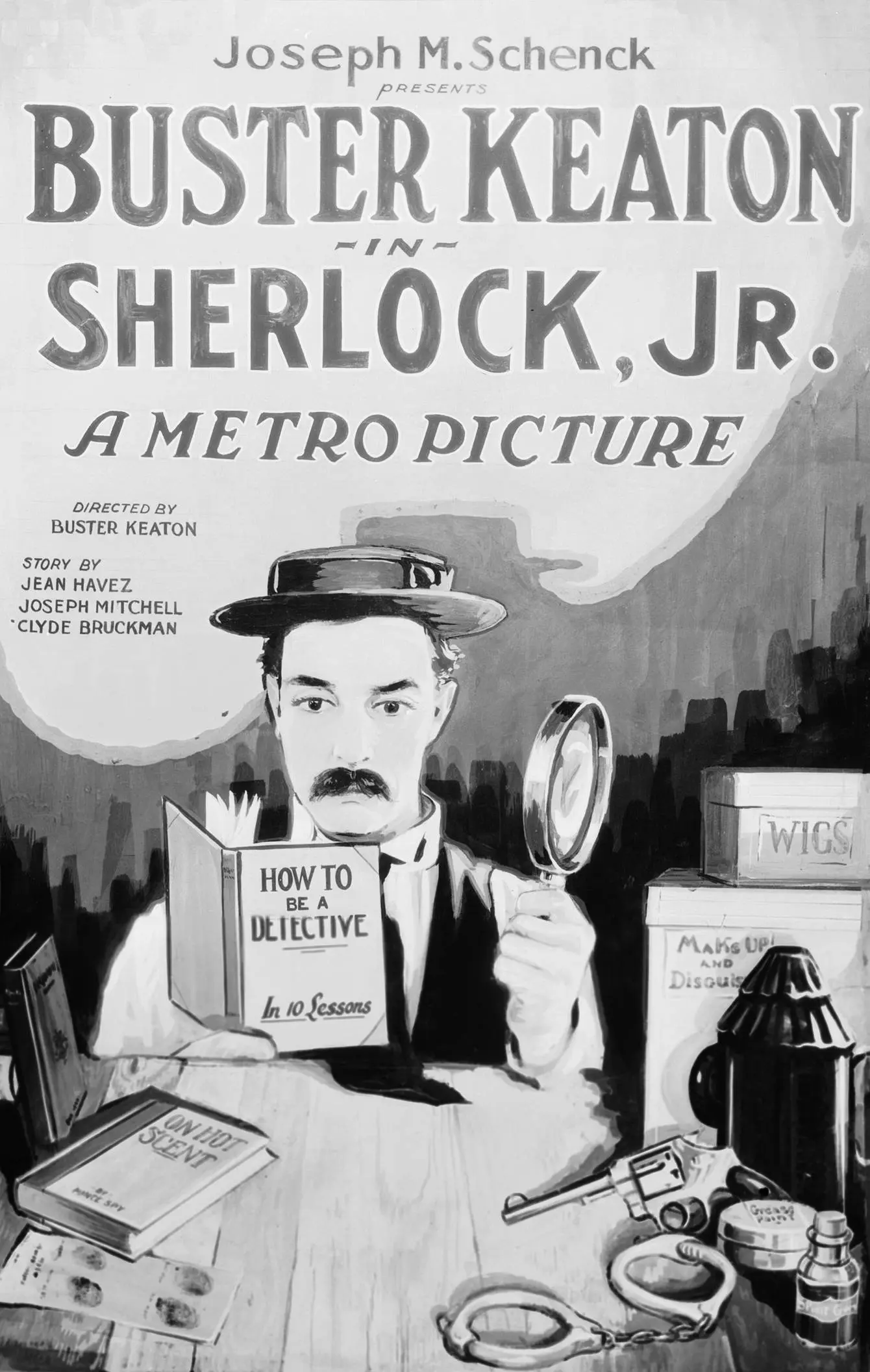
A definitive 8.1/10 rating for a film that redefined the boundaries of cult cinema. Sherlock Jr. remains a cornerstone of transgressive art.
To witness Sherlock Jr. is to peer into the very soul of the cinematographic medium. Released in 1924, this film does not merely exist as a relic of the silent era; it functions as a prophetic exploration of the relationship between the spectator and the screen. While other contemporary works like Nobleza gaucha explored social hierarchies through a more traditional lens, Buster Keaton ventured into the metaphysical, dismantling the 'fourth wall' decades before the term became a staple of postmodern critique.
The narrative structure of Sherlock Jr. is deceptively simple, yet its execution is labyrinthine. Keaton plays a projectionist whose aspirations far exceed his station. This character is a quintessentially Keatonesque figure—the stoic underdog, the 'Great Stone Face' against the crushing weight of an indifferent universe. When he is framed by Ward Crane’s character for the theft of a watch, the film transitions from a standard comedy of errors into a profound meditation on escapism. Unlike the melodrama found in The Man Who Came Back, Keaton’s pathos is internalized, expressed through the geometry of his movements and the precision of his timing.
The sequence in which the projectionist walks into the movie screen remains one of the most technically audacious moments in film history. This wasn't merely a gag; it was a revolution. Keaton and his cinematographers, Byron Houck and Elgin Lessley, utilized meticulously measured distances to ensure that as the background changed—from a garden to a desert, to a rocky outcrop in the ocean—Keaton’s physical position remained consistent. This 'match cutting' predates the digital era’s seamless transitions by nearly eighty years. It captures a sense of disorientation that mirrors the experience of being lost in a narrative, a theme also touched upon in the thematic depth of The Zero Hour, though Keaton approaches it with a whimsical, albeit dangerous, physicality.
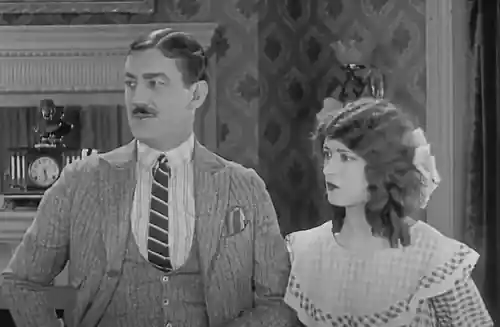
The ensemble, including Kathryn McGuire as the Girl and Joe Keaton (Buster’s father), provides a grounded reality against which the surrealism can pop. While Ambrose's Visit relied on the broader slapstick conventions of the time, Sherlock Jr. elevates the genre. Every performance is calibrated to support the central visual conceit. Ward Crane plays the villain with a slick, predatory grace that makes his eventual downfall all the more satisfying. The supporting cast, from John Patrick to Jane Connelly, fills the frame with a sense of 1920s Americana that feels both lived-in and slightly heightened.
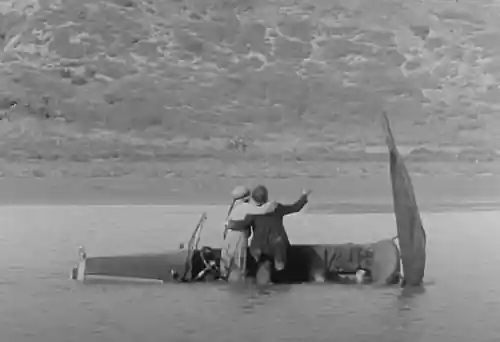
One cannot discuss the cast without mentioning the sheer physical bravery of Keaton himself. During the famous motorcycle chase—where Keaton rides on the handlebars of a driverless bike—the peril was genuine. This wasn't the staged safety of A Rough Passage; this was a man risking his life for the perfect frame. In another scene, involving a water tower, Keaton actually broke his neck, an injury he didn't discover until years later during a routine X-ray. This commitment to the 'bit' is what separates Keaton from his peers. He wasn't just an actor; he was an athlete, an engineer, and a visionary director all rolled into one.
The 'Sherlock' portion of the film features a pool game that is a masterclass in mathematical choreography. Each shot is a miracle of timing and physics. While films like The Treasure of the Sea might use editing to imply action, Keaton presents it in long, unbroken takes that defy belief. The precision required to hit those balls—some of which were manipulated by hidden wires, though most were the result of endless practice—creates a sense of hyper-competence for the Sherlock character that contrasts hilariously with the bumbling projectionist of the real world.
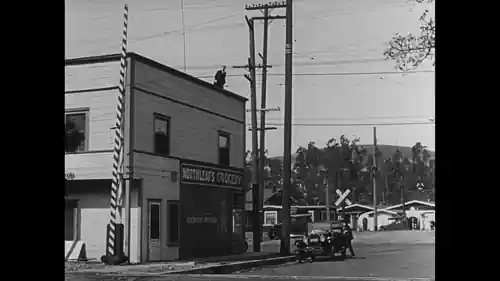
This duality is the film's philosophical core. We all see ourselves as the 'Sherlock' of our own internal movies, even as we stumble through the mundane tasks of our 'projectionist' lives. The film acknowledges this human condition with a gentle, knowing smile. It’s a theme that resonates across cultures, much like the universal appeal of Mästerkatten i stövlar or the emotional resonance of Palicova dcera.
Keaton’s use of the camera was decades ahead of its time. In Sherlock Jr., the camera isn't just a recording device; it's a participant in the joke. The way he utilizes the depth of field to hide and then reveal the villain, or the way he uses the screen-within-a-screen to comment on the artifice of cinema, is nothing short of brilliant. Consider the comparison to Rytterstatuen; while that film might capture a moment in time, Sherlock Jr. captures the essence of how we perceive time and space through a lens.
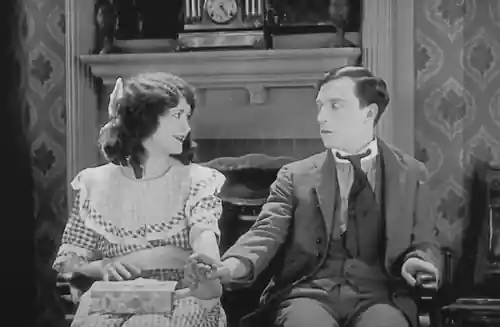
The film also explores the darker undercurrents of the era. Beneath the comedy lies a story of social ostracization and the fragility of reputation. In the same way that The Darkest Hour (1923) or Kinder der Finsternis delved into the gloom of the human experience, Keaton uses the projectionist's plight to highlight the vulnerability of the innocent. However, Keaton’s response to this darkness is not despair, but a defiant, acrobatic resilience.
It is impossible to overstate the influence of this 45-minute masterpiece. Every director who has ever played with the boundaries of reality—from Buñuel to Nolan—owes a debt to the man who first walked into the screen. The film’s brevity is its strength; there is not a single wasted frame. Every movement, every cut, and every gag serves the larger purpose of the narrative. It lacks the padding found in some longer features of the time, such as When Love Is King or Dukes and Dollars.
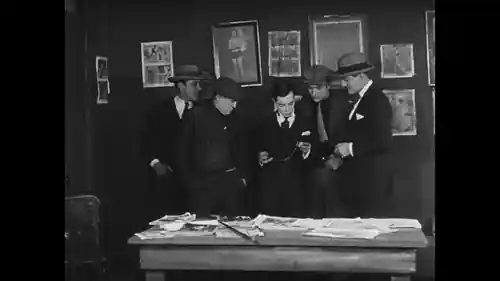
The ending of the film is perhaps its most poignant moment. Having 'solved' the mystery in his dream, the projectionist wakes up to find that the girl has discovered the truth on her own. He then looks to the screen for guidance on how to reconcile with her, mimicking the movements of the romantic lead in the movie he is projecting. It is a final, brilliant commentary on how cinema teaches us how to live, how to love, and how to be. It’s a sentiment echoed in the atmospheric storytelling of The Ghost of Old Morro or the gentle pacing of In the River, yet Keaton delivers it with a punchy, comedic grace that is uniquely his own.
Ultimately, Sherlock Jr. is more than a comedy; it is a love letter to the magic of the movies. It reminds us that while life may be filled with rivals who frame us and fathers who doubt us, we always have the sanctuary of the dark theater, where we can be the world's greatest detectives, if only for a few flickering moments.
IMDb 6.5
1921
Community
Log in to comment.