DbcultAccessing Vault...
5.8/10
Senior Film Conservator
A definitive 5.8/10 rating for a film that redefined the boundaries of cult cinema. Shônen bidan: Kiyoki kokoro remains a cornerstone of transgressive art.
Is Shônen bidan: Kiyoki kokoro a film that warrants your time in the contemporary cinematic landscape? Short answer: yes, but with a crucial caveat. This is a film for those who appreciate nuanced character studies and deliberate pacing, offering a reflective experience rather than immediate gratification.
It is a deeply human drama that transcends its period setting, making it highly relevant for anyone grappling with themes of integrity, bias, and the often-misunderstood dynamics of mentorship. However, it is decidedly not for viewers seeking rapid-fire plots, overt action, or unambiguous moral pronouncements. If you demand a clear hero and villain, this subtle exploration of human failing and redemption might test your patience.
This film works because of its unflinching gaze into the flawed nature of good intentions, presenting a narrative that cleverly subverts expectations by turning the teacher into the student. It fails because its pacing, while deliberate, occasionally borders on languid, and its visual language, while effective, is largely understated, potentially leaving some viewers wishing for more overt stylistic flourishes. You should watch it if you are seeking a thought-provoking drama that invites introspection and challenges preconceived notions about justice and education.
Shônen bidan: Kiyoki kokoro, often translated as "A Pure Heart" or "The Beautiful Story of a Boy: A Pure Heart," is a film that deftly navigates the treacherous waters of moral judgment. At its core lies a seemingly simple premise: a teacher, convinced of a young student's guilt in a theft, attempts to extract a confession through a moral fable. Yet, beneath this surface, the film unspools a complex tapestry of human psychology, revealing that the path to truth is rarely straightforward and often illuminated by unexpected sources.
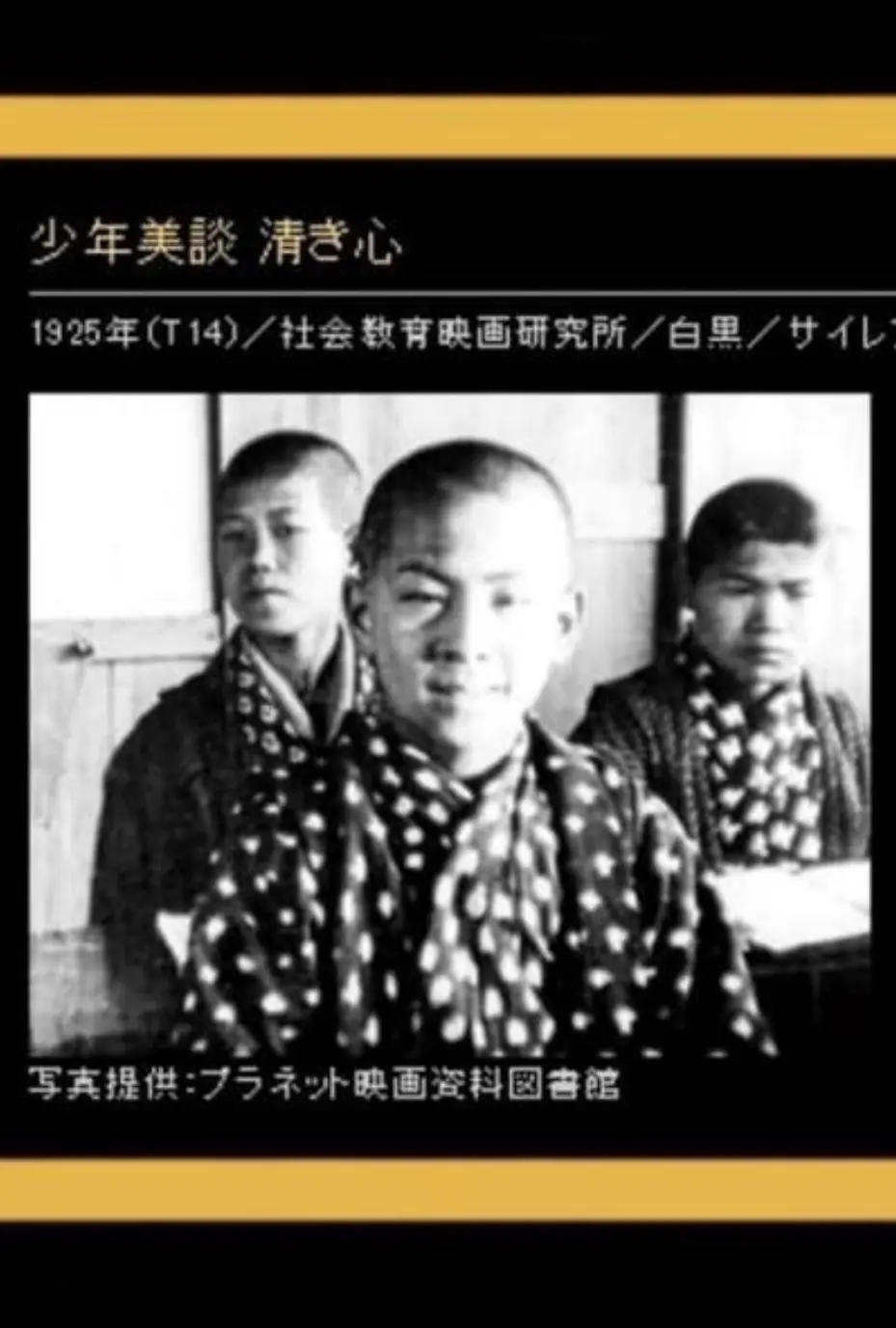
The narrative structure itself is a testament to the film's thoughtful design. We are presented with a classroom setting, immediately establishing a dynamic of authority and submission. The teacher, portrayed by Michitarō Mizushima, carries an air of stern conviction, his posture rigid, his gaze penetrating. He is not merely narrating a story; he is performing, his voice laced with the weight of expectation, his eyes frequently darting towards the suspected student, Masamitsu Igayama, as if to gauge the impact of his words.
The feudal tale, concerning a man and an honest porter, is not merely a digression but a mirror. It is crafted to reflect the teacher's own assumptions about honesty and guilt, designed to corner the student into an admission. However, the film's genius lies in how this mirror is turned back upon the teacher himself. What begins as a lesson intended for the accused slowly morphs into a profound personal revelation for the accuser. The film suggests that true understanding often comes not from lecturing, but from listening, and from the humility to recognize one's own blind spots.
One particularly striking aspect is how the film avoids making the teacher a caricature of villainy. He is not malicious, but misguided. His conviction stems from a place of wanting to instill virtue, yet his method is tainted by a lack of empathy and a preconceived judgment. This nuance is crucial; it elevates the story beyond a simple morality play, transforming it into an intricate study of human fallibility and the often-unintended consequences of our actions, especially when wielding power over others.
The tension is built not through external conflict, but through the internal struggle playing out on the faces of the characters. We see the teacher's growing unease as his story fails to yield the desired result, and the quiet dignity of the student, who, through his silence and subtle reactions, emerges as the unexpected moral compass of the narrative. It’s a bold choice to make the protagonist’s 'lesson' backfire so completely, yet it feels entirely earned.
The success of Shônen bidan: Kiyoki kokoro hinges significantly on the caliber of its performances, particularly from Michitarō Mizushima as the teacher and Masamitsu Igayama as the accused student. Mizushima delivers a masterclass in controlled intensity. His teacher is not prone to grand gestures but conveys immense internal pressure through subtle shifts in expression, the tightening of his jaw, or the slight tremble in his voice when his carefully constructed narrative begins to falter.
Consider the scene where the teacher first introduces the feudal story. Mizushima’s eyes, initially piercing and confident, gradually betray a flicker of doubt as the student's unwavering gaze meets his. It's a quiet battle of wills, articulated more through unspoken tension than dialogue. He embodies the weight of authority and the slow erosion of certainty with remarkable precision. This isn't a bombastic performance; it's a deeply internal one, reflecting the character's journey from presumed wisdom to humble self-awareness.
Masamitsu Igayama, as the young student, is equally compelling. His role is largely reactive, yet his stillness speaks volumes. He doesn't confess, he doesn't overtly defy; he simply exists, absorbing the teacher's narrative with a quiet intensity that forces the audience to question the teacher's assumptions. His innocence is conveyed not through wide-eyed naivety, but through a profound sense of calm and an unyielding, almost stoic, presence. There is a particularly memorable close-up on Igayama’s face as the teacher concludes the feudal tale, where a single, almost imperceptible shift in his expression communicates more than any line of dialogue could – a mixture of understanding, perhaps disappointment, but crucially, no guilt.
The supporting cast, including Hiromitsu Kunie and Takehiko Kojima, contribute to the authentic classroom atmosphere, acting as a silent chorus, their reactions mirroring the audience's own developing understanding. They are not mere background figures but provide a collective lens through which to view the central conflict, their youthful faces reflecting curiosity, confusion, and eventual realization. The interplay between these quiet observers and the central dramatic tension is expertly handled, preventing the narrative from feeling like a two-person play.
This collective restraint in acting choices is a deliberate and effective directorial decision, emphasizing the film's thematic depth over overt emotional displays. It allows the audience to lean in, to scrutinize every glance and every pause, making the eventual moral shift all the more impactful.
The director's
IMDb —
1925
Community
Log in to comment.