DbcultAccessing Vault...
Cult Review
Senior Film Conservator
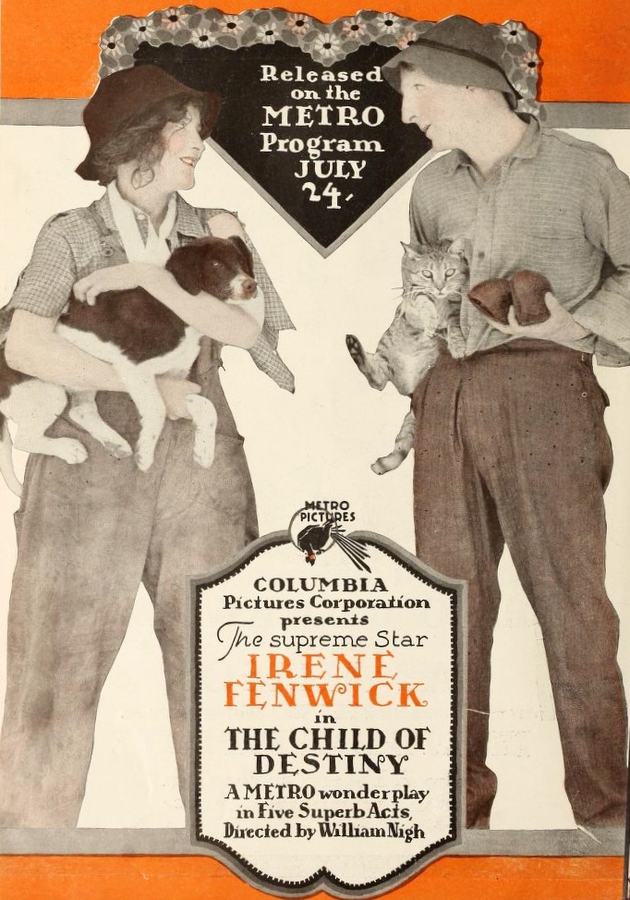
Picture, if you can, a universe where cypress knees rise like cathedral spires from ink-dark water, where Spanish moss drips spectral lace onto shoulders of children who have never heard a locomotive’s scream. Into this cathedral steps The Child of Destiny, a 1925 silent melodrama that drapes its Victorian morality play over the gnarled shoulders of the American swamp—an ecosystem both womb and tomb. William Nigh and Harry O. Hoyt, architects of this fever dream, understand that silence can be louder than dialogue: every intertitle lands like a stone in still water, sending ripples of implication across the viewer’s mind.
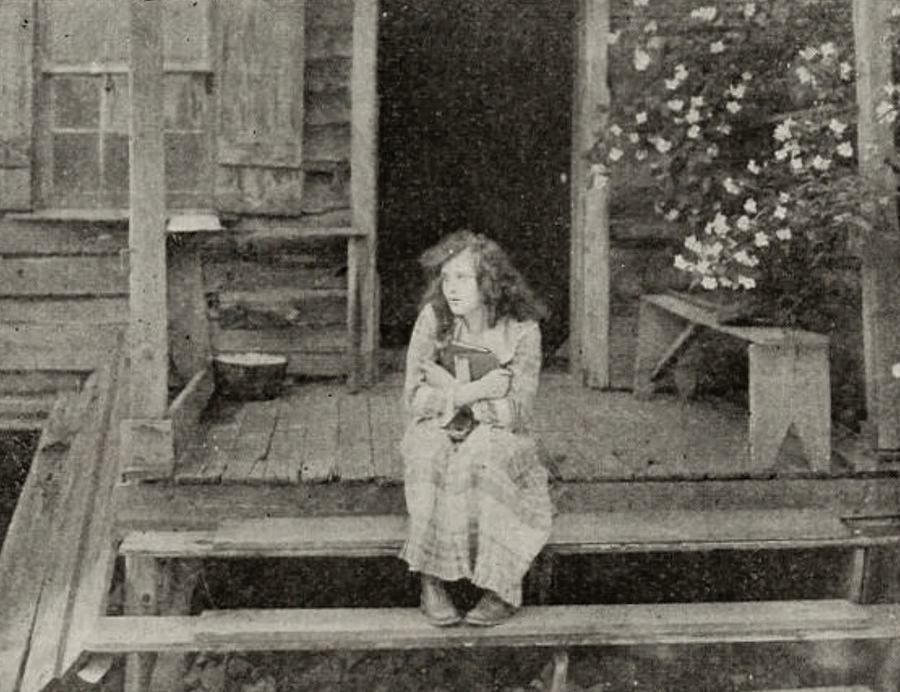
Alita—played with feral luminosity by an almost-forgotten ingénue—enters the frame barefoot, her hair a tangle of twilight. The camera worships her kneecaps smudged with peat, the snail-shell curve of her ear as she listens to crane calls. She is unclaimed property of the natural world until Judge Gates, austere in frock coat and silvered sideburns, arrives with the clang of civilization. Their first shared shot stages the central tension: he stands on a rickety wharf, city boots unsullied; she crouches half-submerged, eyes level with alligator eyes. The mise-en-scène whispers what the censors forbid: this is a tale about ownership—of land, of bodies, of narrative itself.
Judge Gates and Bob Stange share an apartment whose décor is a study in vir solutus: mounted fish, stacked legal tomes, a pipe stand carved like a snarling bear. Their pact—never to marry—feels less like comedic superstition than a desperate prophylactic against repetition compulsion. When Bob’s errant marriage license flutters to the Turkish rug, the paper seems to glow with radioactivity; the judge recoils as though it were a death warrant signed by Eve herself. In a bravura close-up, Nigh holds on Gates’s pupils dilating, the iris swallowing the sclera—a visual shorthand for masculine panic that predates Hitchcock by three decades.
Madame Ganna Walska—better remembered for her lethal soprano and millionaire husbands—embodies Constance with a languid cruelty that scalds the screen. She first appears in a cramped atelier lit by a single gas jet; scissors glint like incisors as she snips fabric, each cut a surrogate beheading of her clientele. Her dual life is conveyed through a simple but devastating device: a mirror that reflects her exhausted seamstress persona while the real Constance powders her décolletage for nocturnal predation. When Calvin Baker—oiled mustache, ruby cravat—slides behind the Japanese screen, the film stages its own clandestine opera of bodies and transactions. The wedding that follows is a masterclass in accelerated doom: minister, witnesses, and bride arranged like porcelain figurines on a mantel of shame.
The narrative pivots on a single gunshot—intended for a squirrel, lodged in Alita’s shoulder—yet the wound is less physical than symbolic. From this moment, the swamp’s wilding merges with the fever chart of heterosexual awakening. Alita’s gaze at Bob, as he tears his linen shirt to bind her arm, is filmed through a veil of reeds; the camera becomes both voyeur and confessor. Notice how the blood on Bob’s fingers matches the iron-rich soil—Nigh insists that violence and fertility share the same palette. Their ensuing scenes play like a halting courtship between species: she offers him a hawk’s feather, he responds with a pocket-watch ticking urban time.
Judge Gates’s attempt to civilize Alita via a prissy professor provides the film’s most acidic comedy. Lessons in posture—book balanced on cranium—are cross-cut with shots of Weird Willie outside the window, mimicking the gestures in sympathetic magic. The professor, a human exclamation mark, collapses into neurasthenics when Alita releases a live turtle in the parlor. The sequence satirizes the Kangaroo-era obsession with pedagogy as colonial tool: every elocution drill is an echo of Gates’s larger project—turning swamp orchids into hothouse roses.
The summer hotel—white clapboard, cupolaed like a wedding cake—functions as purgatory where all masks must liquefy. Alita descends a grand staircase clad in chiffon the color of sunrise, her gait still hinting at webbed feet. Constance glides across the same lobby in mourning mauve, a spectral reminder that fashion is simply another way of wearing one’s sins on the outside. When Bob confronts his wife to demand divorce, Nigh frames them between twin Ionic columns—visual shackles. The Judge’s intrusion, frock coat flapping like a raven’s wing, triggers a cut to Alita’s face: the moment she apprehends the entire lattice of deceit, her pupils eclipse her irises in perfect mirroring of Gates’s earlier terror.
Back in the swamp, the film achieves its tragic lift-off. Constance learns via intertitle that Alita is the infant she discarded years ago—the same infant referenced in Gates’s courtroom parable. The moment is staged without histrionics: a simple dolly-in on Constance’s face as recognition calcifies into granite remorse. She wanders into the fog, a lone camera tracking her until she becomes a smear of mauve against gray. Her death is off-screen, reported by a splash and the panicked cries of a fisherman. The ellipsis is ethical; the film refuses to aestheticize female suicide, unlike contemporaries such as The Return of Helen Redmond.
Surviving prints—thankfully restored by a consortium of cine-archivists—reveal a sophisticated tinting strategy: amber for interiors of power (courtrooms, parlors), viridian for exteriors of flux (swamp, lake), and rose for moments of erotic tension. The marriage scene is bathed in sulfurous yellow, as though the film itself were holding its breath in a gas chamber of moral compromise. Note also the use of iris transitions that constrict the world to a single eye, implying that every character is both watcher and watched.
William B. Davidson’s Judge Gates oscillates between granite stoicism and sudden fissures of vulnerability; watch how his left thumb worries the brim of his hat whenever Constance’s name surfaces—a micro-gesture that speaks louder than title cards. Roy Applegate’s Bob Stange embodies the callow American male, all teeth and impetuosity, yet the actor allows a flash of self-disgust to cross his features when he realizes he has become the latest bead on Constance’s abacus of victims. Irene Fenwick (Alita) deserves special laurels; she never overplays the wild-child shtick. Her body language relaxes by degrees as clothing civilizes her, but the final shot—barefoot again, cradling a swamp lily—restores the primordial symmetry.
The film’s ethical calculus is merciless: every act of possession begets loss. Gates’s guardianship of Alita is less benevolence than a second kidnapping; Bob’s romantic rescue is prelude to another form of captivity. Only Constance’s final self-immolation ruptures the cycle, and even that is framed as transaction—she trades death for her daughter’s marital future. Yet the film withholds easy absolution; the closing iris closes on Alita’s tear-streaked face, suggesting that destiny, once claimed, is merely another word for cage.
Viewers versed in the era will detect intertextual whispers: the swamp-child trope anticipates One of Our Girls, while the courtroom monologue on unwanted children prefigures the social outrage of Money. The Calvin Baker character—a velvet parasite—belongs to the same genus as the urbane seducers in The Third Degree and A Continental Girl.
The Child of Destiny is not a relic; it is a wound that keeps reopening. Its questions—Who owns a child’s future? Can maternity be retroactivated? Does love always arrive disguised as catastrophe?—remain inflammable. The film ends on a long shot of Weird Willie, now alone, feeding breadcrumbs to herons that no longer answer to a name. The camera lingers until the boy becomes a silhouette, then a cipher, then pure motion against the water. In that diminishing perspective, the swamp reclaims its narrative, and we—urban, digital, perpetually surveilled—are left holding the empty title card, hearts rifled, pockets turned inside out.
IMDb —
1919
Community
Log in to comment.