DbcultAccessing Vault...
Cult Review
Senior Film Conservator
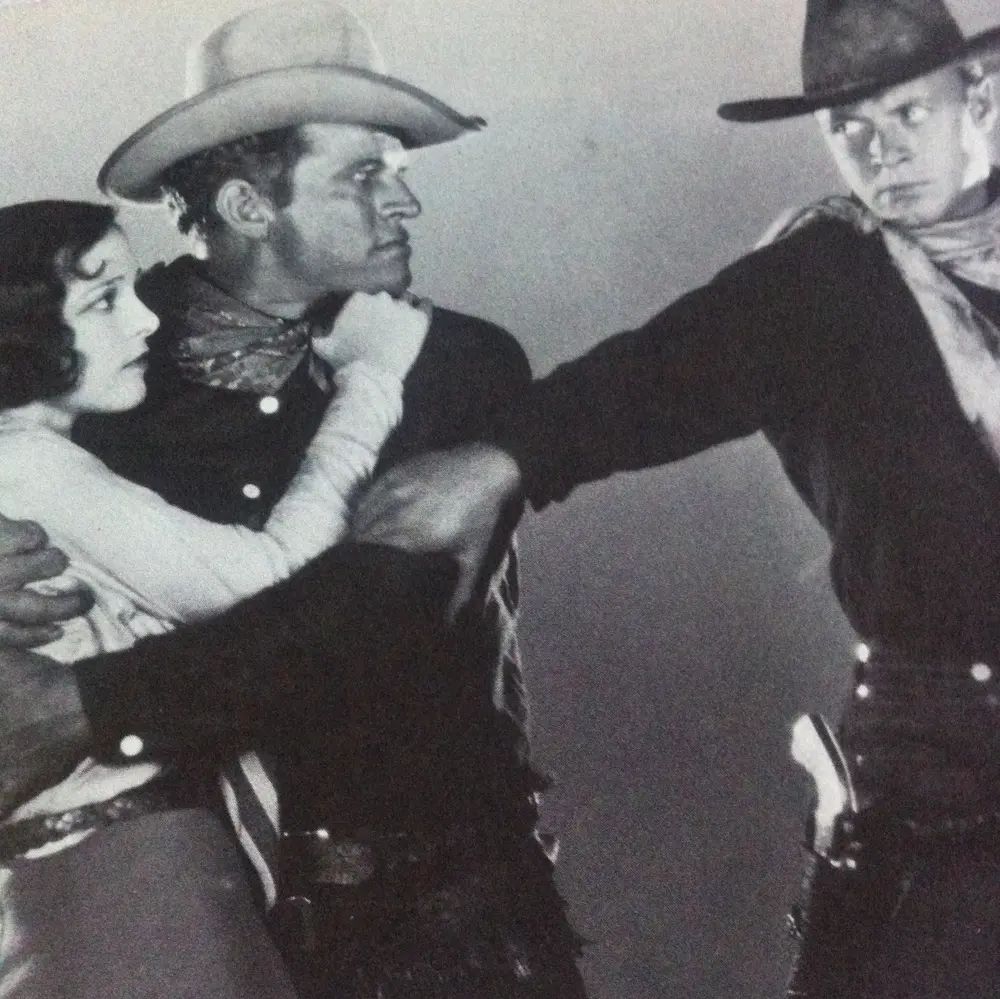
Is Shootin' Irons worth watching today? Short answer: yes, for specific audiences, but with considerable caveats. This 1927 silent Western offers a fascinating glimpse into early genre filmmaking, making it a compelling watch for cinema historians and devoted fans of the era, yet it will undoubtedly test the patience of modern viewers accustomed to contemporary pacing and storytelling.
This film works because of its earnest performances and its surprisingly complex villain. This film fails because its narrative contrivances strain credulity and its pacing often drags. You should watch it if you appreciate the raw, foundational elements of the Western genre and have a high tolerance for silent film conventions.
Is 'Shootin' Irons' a hidden gem? Not exactly. It’s a foundational piece, a stepping stone in the development of the Western genre. It showcases early Western tropes with a certain earnest charm, offering insight into silent film production techniques and the storytelling sensibilities of the late 1920s.
It is a specific experience for a niche audience. If you're a casual moviegoer looking for a quick thrill, this isn't it. If you approach it as an archaeological expedition into cinema's past, however, you might find some genuine rewards. It demands patience, but it offers a window into a bygone era of filmmaking.
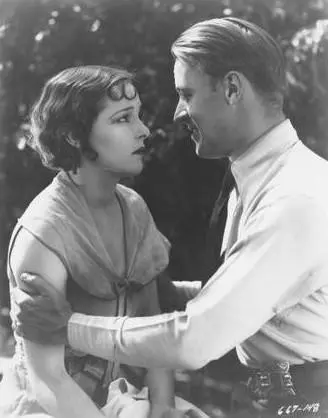
Pan Smith, a grounded Montana rancher, crosses paths with Jim Blake and his daughter Lucy amidst a chaotic stampede of wild horses. His act of rescue extends into an invitation, drawing the transient Blake family into his rancher's world. As Pan's affections turn toward Lucy, a quiet tension simmers with Dick Hardman, his foreman, who harbors his own ambitions.
The narrative thickens during a barn dance when Lucy confides in Pan about her father's unjust pursuit for a bank theft. In a desperate bid to buy time and clear Blake's name, Pan orchestrates a stagecoach holdup, concealing a crucial dispatch box containing exonerating documents—an act witnessed by the duplicitous Dick.
This betrayal sets in motion a dramatic chase, as Dick informs the sheriff and assembles a posse, even as news of Blake's innocence begins to circulate. The climax sees Dick, with calculated timing, intervene in the ensuing confrontation, ultimately leading to Pan and Lucy's eventual union, an outcome shaped by both heroic action and underhanded opportunism.
J. Walter Ruben's direction in Shootin' Irons is, for its time, competent if not groundbreaking. The film benefits from the natural grandeur of its Montana setting, which Ruben frequently exploits with sweeping wide shots that establish the vastness of the frontier. These shots, particularly during the initial wild horse stampede, convey a sense of genuine peril and scale that still holds a measure of impact today, even through the lens of a nearly century-old print.
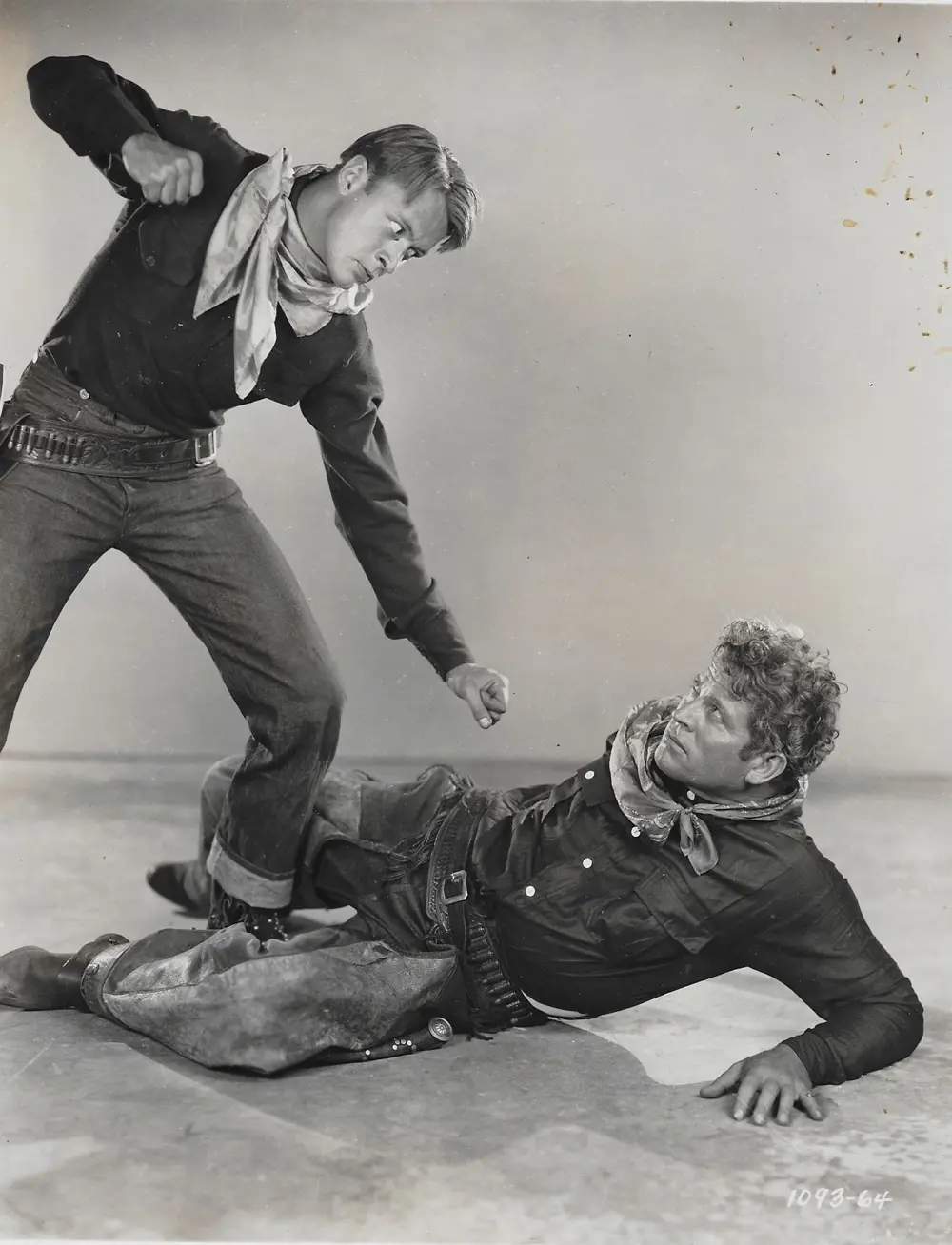
However, the limitations of silent film cinematography are evident. While Ruben attempts to build tension through cross-cutting during chase sequences, the visual language often defaults to static medium shots during dialogue-heavy scenes, punctuated by intertitles. There's a certain raw energy in the action sequences, a visceral quality to the horse riding and physical altercations that feels authentic, a testament to the stunt work and practical effects of the era.
The film’s visual storytelling relies heavily on broad strokes, emphasizing action over subtle character expression through camera work. Close-ups are used sparingly, primarily to highlight moments of intense emotion from Lucy or the villainous Dick. This approach is typical for the period, prioritizing clarity of narrative over artistic flourish. While it lacks the inventive camera movements or sophisticated lighting of contemporaries like F.W. Murnau, it effectively tells its story within the established conventions of a silent Western. In this regard, it shares a certain workmanlike efficiency with other genre pieces of the era, such as The Man from Hell's River, focusing on clear narrative progression over visual experimentation.
The cast of Shootin' Irons delivers performances that are very much of their time – broad, expressive, and often melodramatic. Scott McKee as Pan Smith embodies the archetypal silent film hero: stoic, honorable, and quick to action. His portrayal relies on a strong physical presence and clear, if somewhat one-note, facial expressions to convey his character’s moral fortitude and burgeoning affection for Lucy.
Sally Blane, as Lucy, is the emotional core of the film. Her performance is characterized by an earnest vulnerability, particularly during her confession to Pan about her father’s predicament. She effectively uses gestures and expressions to communicate fear, hope, and love, making her plight sympathetic even if her character isn't given extensive depth beyond her role as the damsel in distress.
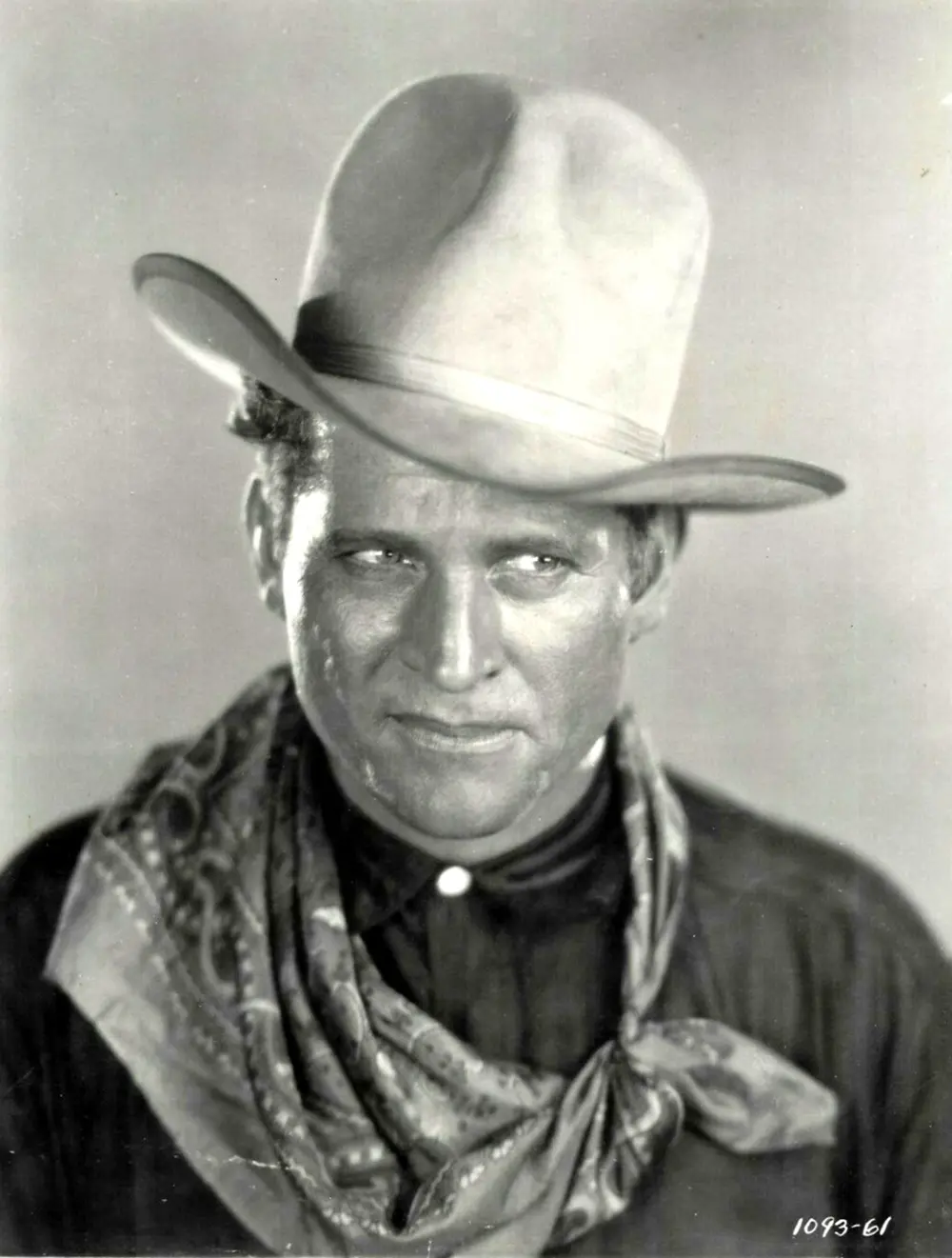
However, it is Fred Kohler as the foreman Dick Hardman who truly stands out. Kohler, a veteran heavy of the silent era, brings a palpable menace and cunning to his role. His sneering expressions, calculating glances, and physical assertiveness make him a genuinely compelling antagonist. Unlike Pan, whose motivations are purely heroic, Dick’s actions are driven by a mix of jealousy, opportunism, and outright malice, making him the most dynamic and interesting character on screen. His performance elevates the film beyond a simple good-vs-evil narrative, adding a layer of genuine human villainy that feels surprisingly modern in its psychological underpinnings.
The supporting cast, including Guy Oliver as Jim Blake, capably fills their roles, providing the necessary narrative support without drawing undue attention. Their performances, while less flamboyant than Kohler’s, contribute to the film's overall authenticity and period feel.
The pacing of Shootin' Irons is perhaps its most challenging aspect for contemporary viewers. As with many silent films, it operates at a rhythm far removed from today's rapid-fire editing and constant narrative propulsion. The film frequently allows scenes to play out at length, giving the audience time to absorb the visual information and the emotions conveyed through the actors' expressions.
The initial setup, establishing Pan's ranch and his encounter with the Blakes, takes its time, building a pastoral, almost idyllic tone before introducing conflict. This deliberate pace, while occasionally feeling sluggish, does allow for a greater appreciation of the setting and the simple, frontier life it depicts. The narrative shifts from a nascent romance to a more urgent pursuit of justice, and with it, the pacing attempts to accelerate, particularly during the stagecoach holdup and the subsequent posse chase.

However, even in its more action-oriented sequences, the film never quite achieves the breakneck speed one might expect from a modern Western. Intertitles, while necessary for exposition, inevitably interrupt the flow, momentarily breaking immersion. The tone is largely earnest and melodramatic, with clear distinctions between hero and villain, good and evil. There are moments of genuine tension, particularly when Dick's treachery is revealed, but these are often tempered by the overarching sentimentality characteristic of the era. The balance between lighthearted romance and dramatic suspense is somewhat uneven, contributing to a viewing experience that can feel inconsistent.
The screenplay for Shootin' Irons, credited to Richard Allen Gates, Sam Mintz, and J. Walter Ruben, is a straightforward affair, adhering closely to the established tropes of the Western genre. It crafts a narrative centered on themes of justice, betrayal, love, and the rugged independence of frontier life. The central conflict—an innocent man accused of a crime, a hero stepping in to clear his name—is a timeless one, providing a solid foundation for the drama.
The writers effectively utilize the 'dispatch box' as a classic MacGuffin, a plot device that drives the action without necessarily having intrinsic value beyond its narrative function. This simplicity in storytelling is both a strength and a weakness. It makes the plot easy to follow, a necessity in the silent era where narrative clarity was paramount, but it also means there are few surprises or profound character insights.
The character motivations are clear-cut: Pan is honorable, Lucy is virtuous, and Dick is purely villainous. While this binary morality might seem simplistic to modern audiences, it was a common and effective storytelling device for the period. The script's strength lies in its ability to weave together several genre elements—romance, mistaken identity, a chase, and a showdown—into a cohesive, if predictable, whole. It’s a testament to the foundational storytelling of early Hollywood, where archetypes were king and moral ambiguities were largely left unexplored.
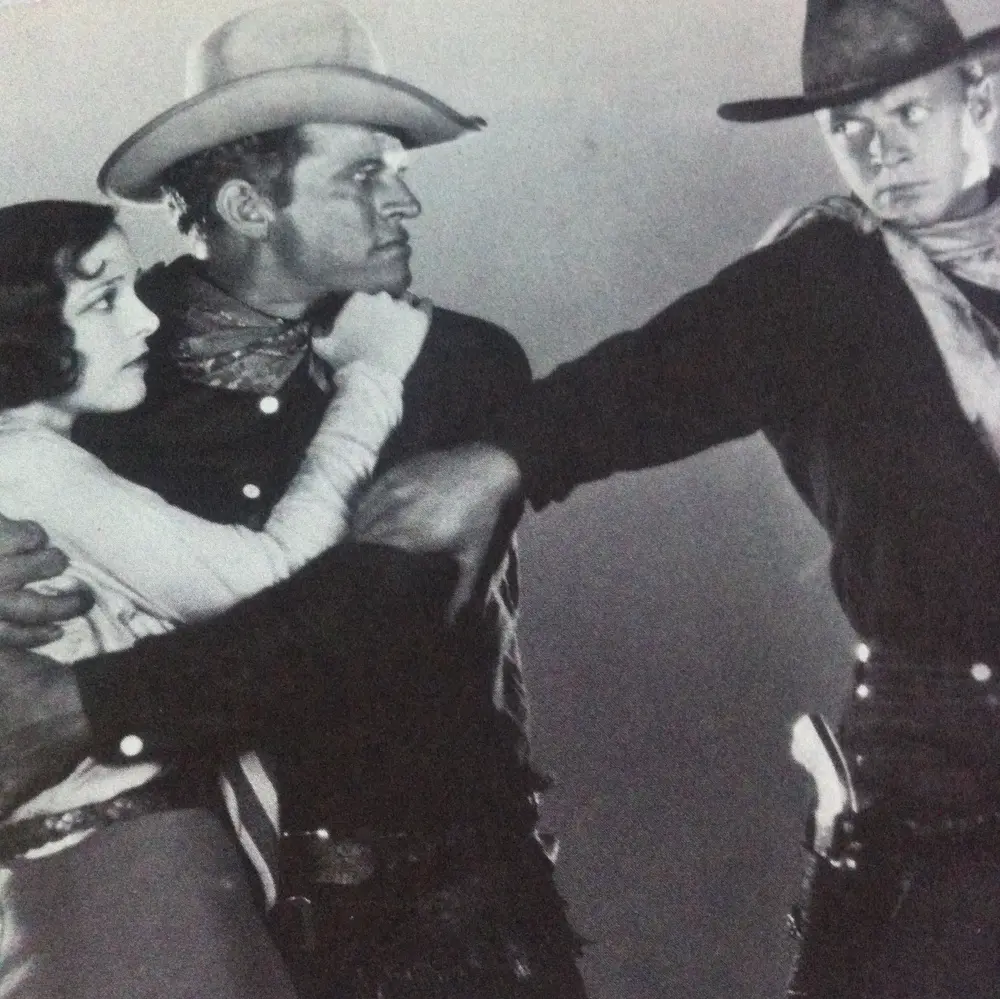
My most surprising takeaway from Shootin' Irons isn't its narrative, but its accidental revelation of the sheer physical stamina required of silent film actors. The prolonged chase sequences, the handling of real horses in what appear to be genuine stampedes, and the sheer physicality of expressing emotion without dialogue all point to a level of athletic performance rarely seen in character actors today. It's less about subtle craft and more about raw, unadulterated effort.
I maintain that Fred Kohler's villainous turn here, while archetypal, is far more compelling and nuanced than the ostensibly heroic Pan Smith. Pan is good because the script dictates it; Dick is evil with a tangible, almost gleeful, malevolence that gives his character agency and makes him genuinely interesting to watch. His calculated opportunism feels more human, ironically, than Pan's unwavering virtue. It makes for a stronger character, despite his role as the antagonist.
The film's final resolution, while satisfying in a genre sense, feels less like earned triumph and more like the inevitable ticking off of plot points. The deus ex machina of the judge's word arriving just in time, combined with Dick's conveniently timed intervention, drains some of the organic tension. It feels less like a natural conclusion born of character choices and more like the scriptwriters ensuring a tidy, happy ending, which I find detracts from the dramatic stakes that had been carefully built.
Shootin' Irons is a fascinating artifact, a window into the nascent days of the Western genre. It works. But it’s flawed.
While Shootin' Irons isn't a film that will redefine your understanding of cinema, it is a valuable artifact for anyone interested in the evolution of Hollywood. It offers a glimpse into the foundational elements of a beloved genre, showcasing the raw energy and narrative conventions of the silent era.
Its strengths lie in its earnest performances, particularly Fred Kohler's memorable villain, and its authentic portrayal of the Old West through early cinematic techniques. However, its deliberate pacing and straightforward plot will undoubtedly test the patience of many contemporary viewers.
Ultimately, Shootin' Irons is a film to be appreciated for its historical significance and its contribution to the cinematic landscape, rather than for its ability to captivate a mainstream audience today. It's a journey back in time, dusty and a little slow, but not without its own quiet charm.
IMDb —
1929
Community
Log in to comment.