DbcultAccessing Vault...
Cult Review
Senior Film Conservator
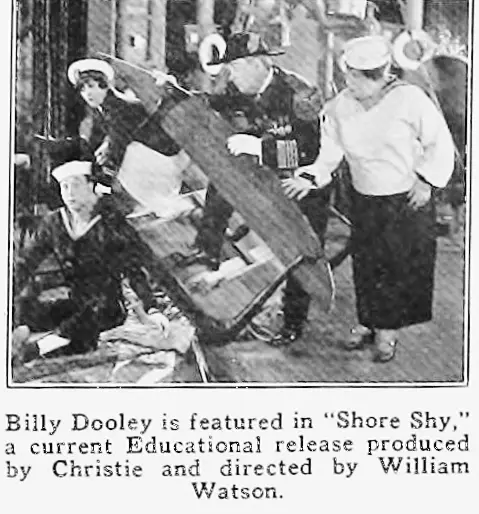
Is 'Shore Shy' worth watching today? Short answer: yes, but with significant caveats that anchor it firmly in its historical context. This brief silent comedy is primarily for dedicated cinephiles, historians of early film, and those with a keen interest in the evolution of comedic timing and physical performance from the 1920s. It is emphatically not for casual viewers seeking modern pacing, sophisticated narrative arcs, or universally relatable humor; approach it expecting a period piece, not a timeless laugh riot.
This film works because it commits wholeheartedly to its absurd premise, showcasing Billy Dooley's impressive capacity for conveying escalating misery through physical comedy.
This film fails because its humor, while inventive for its time, relies heavily on repetitive gags that can feel stretched thin even in its short runtime, lacking the deeper character development or narrative stakes of its more celebrated contemporaries.
You should watch it if you're fascinated by the mechanics of early slapstick, appreciate the art of comedic suffering, or want to understand the foundational elements that would later be refined by silent film's giants.
At its core, "Shore Shy" is a masterclass in comedic irony. Billy Dooley plays a sailor, understandably weary of the confines and routines of naval life, who yearns for the simple pleasures of solid ground and domestic tranquility. His family, however, has other plans. His well-meaning but utterly misguided aunt and uncle decide that the best way to make him feel at home is to bring the ship to him. This isn't just a subtle nod to his profession; it's a full-blown, immersive, and ultimately torturous theatrical production of naval life within their suburban abode.
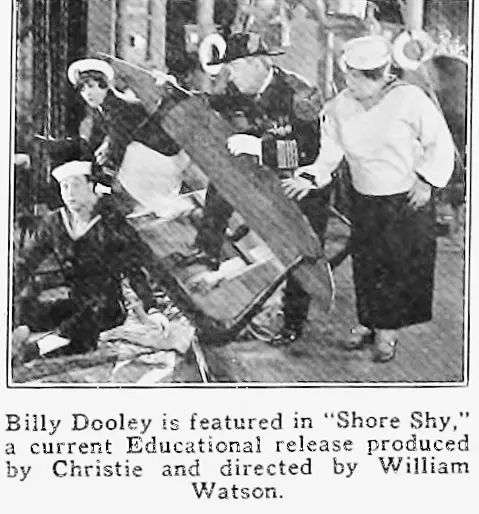
The house itself becomes a stage. Decorations mimic a ship's interior, waiters are forced into hornpipe dances, and the dining table is rigged to rock with the simulated motion of the sea. Dooley’s initial polite discomfort quickly morphs into genuine despair as each attempt at hospitality becomes another form of torment. The most egregious offense arrives with a meal infused with kerosene from a ship’s lantern – a moment that transcends mere slapstick to border on dark comedy. The film culminates in an unwanted boxing match, a final indignity before Dooley's triumphant, if utterly exhausted, return to the genuine, predictable confines of his actual ship. It’s a brilliant inversion: the ship becomes a sanctuary, and land, a nightmare.
Billy Dooley, the film's beleaguered protagonist, is the undisputed anchor of "Shore Shy." His performance is a testament to the power of non-verbal communication in silent cinema. Dooley doesn't just react to the escalating absurdities; he embodies a spectrum of polite bewilderment, simmering irritation, and outright existential dread. From the forced smile as the table rocks to the look of sheer revulsion after tasting the kerosene-laced food, his expressions are precise, exaggerated, and utterly captivating.
Unlike the stoic resilience of a Buster Keaton or the melancholic charm of a Charlie Chaplin, Dooley’s comedic persona here is one of escalating, almost pitiable, victimhood. He’s not a trickster or a romantic; he’s simply a man who wanted a quiet night and got a sea simulation instead. His physical comedy isn't about grand stunts but about the subtle shifts in posture, the slight slump of the shoulders, the way he tries – and fails – to maintain decorum amidst chaos. The scene where he is forced to box, his movements clumsy and unwilling, perfectly encapsulates his character’s complete lack of agency in his own "vacation." It's a surprisingly nuanced portrayal for a short slapstick film.
One might argue that Dooley's performance is almost too effective, making the viewer genuinely feel his discomfort rather than simply laughing at it. This is where the film finds its unique, if somewhat uncomfortable, charm. It’s a comedy rooted in empathy for the put-upon, a feeling that still resonates even if the specific gags are dated.
Frank Roland Conklin, the film's writer and director, crafts "Shore Shy" with an economy typical of silent shorts, yet with an eye for exaggerated detail that keeps the premise alive. The pacing is brisk, moving from one "navy" themed torture to the next with little time for reflection, mirroring Dooley's inability to escape the situation. Conklin understands that the humor lies in the relentless, inescapable nature of the relatives' misguided hospitality.
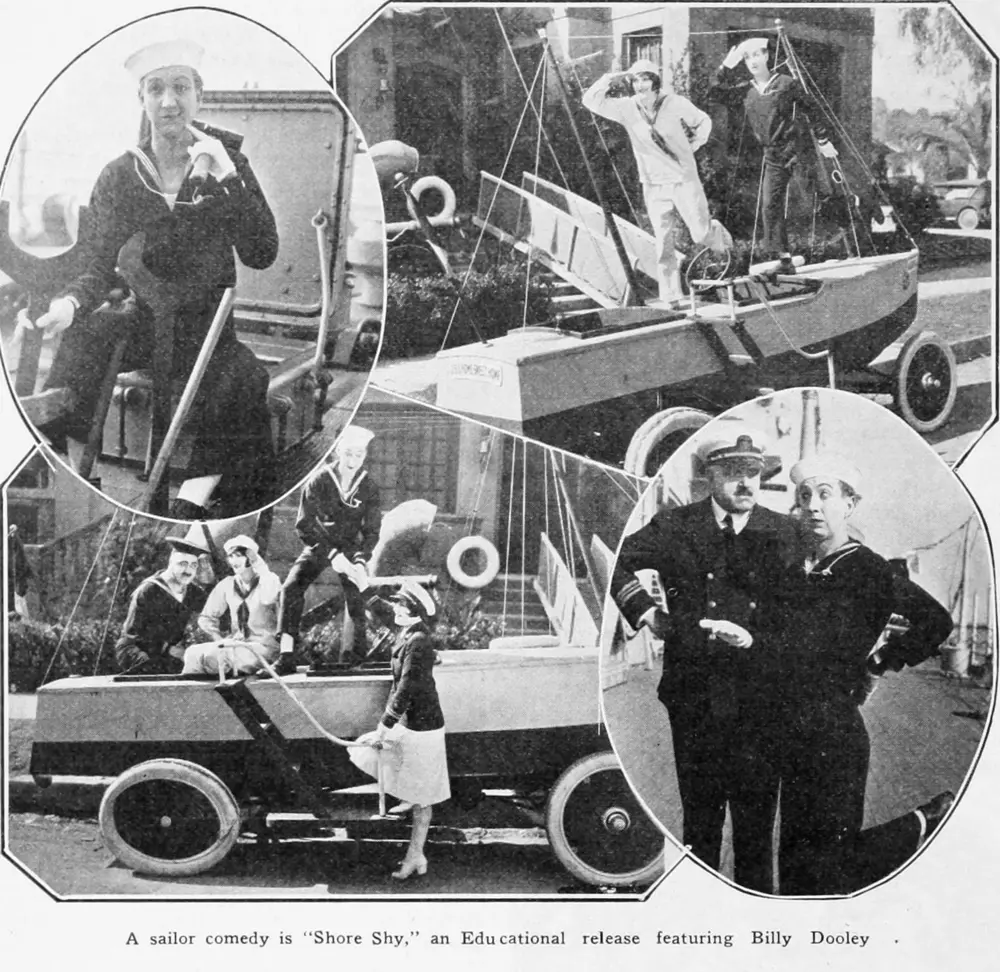
The direction makes excellent use of the limited sets, transforming a domestic interior into a theatrical approximation of a ship. The camera largely remains static, allowing the physical comedy and the elaborate set pieces to unfold within the frame. There’s a directness to the filmmaking, a no-frills approach that prioritizes the gag over stylistic flourishes. While some may find this simplistic by modern standards, it’s remarkably effective in conveying the film’s central conceit without distraction. The choice to have the "waiters" perform a hornpipe, for instance, is a simple visual gag, but Conklin ensures it’s executed with enough earnest absurdity to land its comedic punch.
However, this directness also means the film doesn't delve into character motivations beyond the surface level. The aunt and uncle are caricatures, not complex individuals, existing solely to perpetuate Dooley’s misery. This is a common trait of early slapstick, but it does limit the film's emotional range. It’s a single-note symphony of suffering, played expertly, but a single note nonetheless.
For a film of its era, "Shore Shy" demonstrates a commendable effort in production design to establish its core visual gag. The house isn't just decorated; it’s transformed. Ship's lanterns hang askew, hammocks are strung where chairs should be, and maritime paraphernalia is strewn about with an almost obsessive zeal. This visual commitment sells the premise long before the first rocking table gag even begins. The art direction, while rudimentary by today’s standards, is clearly intentional and forms a crucial part of the film's comedic engine.
Cinematography, handled by an uncredited director of photography, is functional and clear. The lighting is straightforward, designed to illuminate the action and the actors' expressions without excessive shadow play or stylistic flourishes. There are no grand sweeping shots or complex camera movements; the frame is typically static, capturing the full scope of Dooley's domestic ordeal. This simplicity ensures that the audience's focus remains squarely on the unfolding physical comedy and the increasingly outlandish set pieces. The shot of Dooley’s face as he confronts the kerosene-laced food is particularly effective, relying on a medium close-up to convey his disgust without needing intertitles.
While one could argue for more dynamic visual storytelling, the film’s visual language is perfectly aligned with its comedic goals. It’s about creating an environment of inescapable, nautical-themed discomfort, and in this, it largely succeeds. The visual humor of the rocking table, for instance, relies on the audience seeing the full contraption and Dooley’s struggle to maintain balance, something a more fragmented editing style might have undermined.
The humor in "Shore Shy" is rooted in the comedy of discomfort and the slow, agonizing erosion of a protagonist's patience. It's a specific brand of slapstick that prioritizes sustained annoyance over explosive gags. Does this still work today? My honest opinion: it's a mixed bag. For those accustomed to the rapid-fire wit and sophisticated character work of modern comedies, "Shore Shy" might feel slow, even tedious. The gags, though inventive for their time, repeat a core idea – "navy stuff on land is bad for Dooley" – without much variation in escalation beyond the sheer intensity of his suffering.
However, for viewers attuned to the nuances of silent film, there’s a genuine, if subtle, brilliance in its execution. Billy Dooley’s performance elevates the material, transforming what could have been a series of one-note jokes into a compelling character study of a man pushed to his absolute limit. The humor, then, isn’t just in the absurdity of the situation, but in our shared human experience of being trapped in polite, yet utterly

IMDb —
1917
Community
Log in to comment.