DbcultAccessing Vault...
7.2/10
Senior Film Conservator
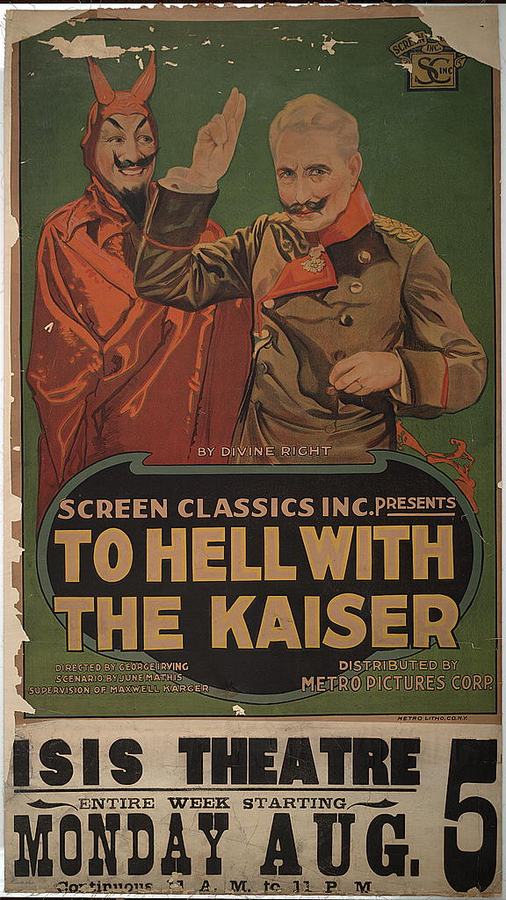
A definitive 7.2/10 rating for a film that redefined the boundaries of cult cinema. To Hell with the Kaiser! remains a cornerstone of transgressive art.
A carnival of bayonets, bloomers, and banana peels—June Mathis’s delirious 1918 propaganda soufflé still scalds a century later.
Imagine the Kaiser’s palace as a three-ring circus where the lions wear spiked helmets and the clowns speak Jersey slang. Our protagonist—Geraldine “Gerry” van Twiller, played with swivel-hipped insolence by Maude Hill—crashes this testosterone-soaked menagerie masquerading as a dim-witted stenographer. Inside her garter: camera-pen loaded with Allied blueprints. Inside her skull: a Gatling gun of wisecracks. Within ten celluloid minutes she has rewired the Crown Prince’s private railcar so that every salute triggers a custard pie; within twenty she has goaded Karl Dane’s monocled commandant into a duel fought with sausages instead of sabers.
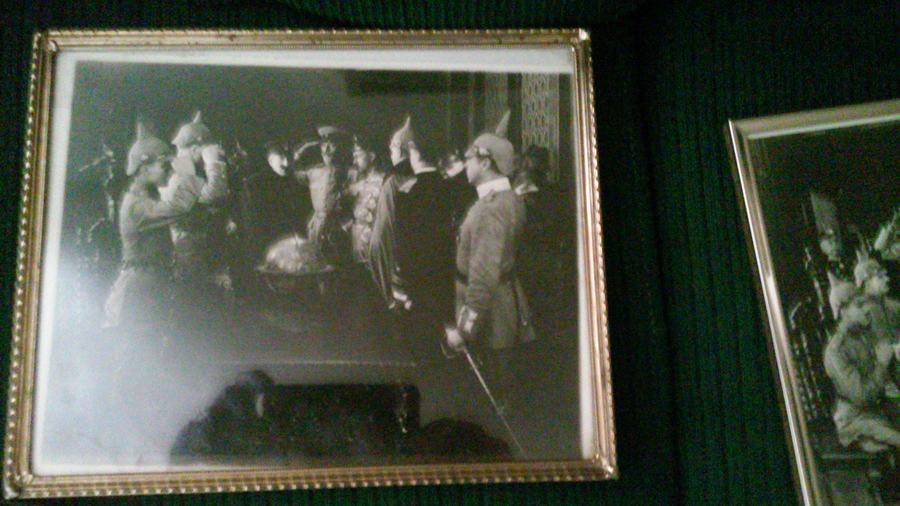
The screenplay, credited to the prodigious June Mathis (who would soon midwife Ben-Hur and The Four Horsemen of the Apocalypse), refuses the polite escalation of standard farce. Instead it detonates set pieces like firecrackers strung together with razor wire. One reel ends with Gerry shackled inside a medieval maiden; the next opens with her using that iron maiden as a makeshift toboggan to slide through a beer-hall skylight, scattering a battalion of Sturmtruppen like bowling pins. Narrative logic? Banished. Kinetic anarchy? Adored.
Lawrence Grant’s Kaiser is a walrus-moustached marionette whose eyes pop like poached eggs whenever Gerry calls him “Billy.” Grant plays the part in white-face, half pantomime villain, half cracked porcelain doll, a choice that makes the character’s eventual comeuppance feel eerily pitiable. Contrast that with Olive Tell’s Crown Prince: a slinking lounge-lizard in patent-leather boots, forever sniffing a single white rose which—because this is Mathis’s universe—explodes into feather dusters whenever he lies.
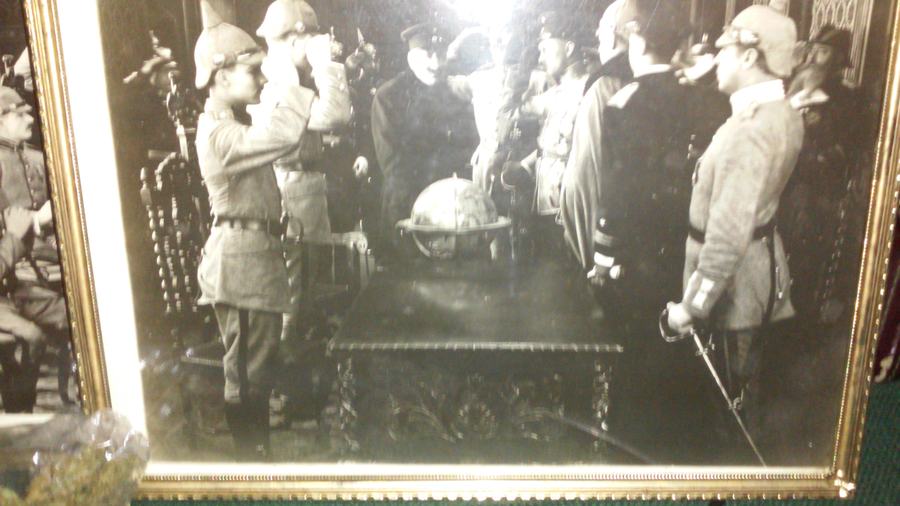
Among the POWs, Karl Dane towers like a Nordic gallows, yet his comic timing is gossamer; watch how he milks a 30-second pause before saluting a scarecrow dressed as Hindenburg. Mabel Wright and May McAvoy sparkle as a vaudeville sister-act drafted into espionage, tap-dancing Morse code across a banquet tabletop while Berlin’s elite mistake the racket for avant-garde Wagner.
Cinematographer George S. Trimble shot interiors at Fort Lee, but for the Zeppelin sequence he wrangled a decommissioned army balloon over the Hudson, double-exposing the footage against miniatures of Berlin so the airship appears to drift through a charcoal sketch. The palette—tinted amber for German interiors, virulent green for American ingenuity—anticipates the fever-dream expressionism that German horror cycles would perfect three years later.
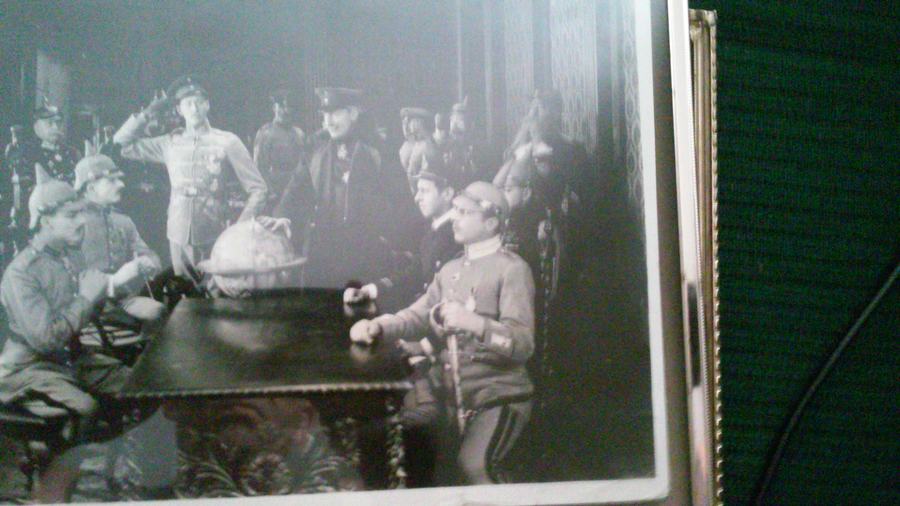
Look for the moment Gerry rips open a sack of Liberty Bond pamphlets: the pages flutter upward like canary feathers, freeze-frame hand-tinted gold, then dissolve into a night sky of searchlights. It’s a visual pun—capital literally taking flight—that predates Eisenstein’s intellectual montage by four years.
Though released without synchronized dialogue, the film shipped with a prescribed exhibitor’s score: Sousa marches for American pratfalls, off-key oom-pah-pah for Teutonic pomp, and—during the climax—a live kazoo chorus meant to drown out any residual sympathy for the Kaiser. Contemporary newspapers reported patrons stomping in rhythm, turning nickelodeons into beer halls. The effect was so raucous that several Midwestern mayors tried to ban the picture for “inciting percussive sedition.”
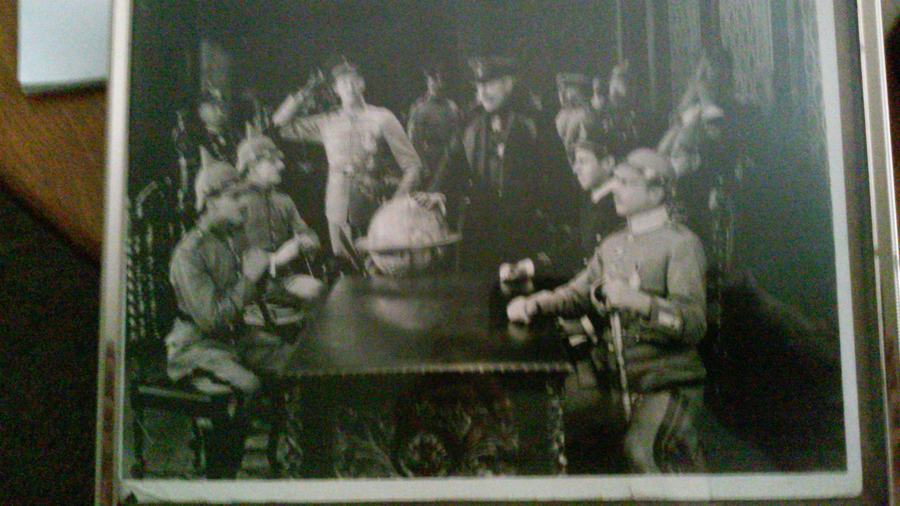
Mathis weaponizes femininity the way Chaplin weaponizes the cane. Gerry’s flapper silhouette—scandalously bare calves, parachute-silk blouse—becomes a Trojan horse smuggling modernity into Wilhelmine bunkers. When she finally hog-ties the Crown Prince with his own iron cross sash, she whispers: “Kings come and go, but a good woman can unpick any dynasty.” The line drew reported cheers from shirtwaist factory workers in Manhattan and hate mail from DAR matrons who called it “Bolshevik lace.”
Where The Patchwork Girl of Oz stitches whimsy to folklore, and Two Little Imps prefers domestic mischief, To Hell with the Kaiser! grafts circus surrealism onto geopolitical bloodsport. Its closest sibling in the Mathis canon is Ambition, yet that film’s tragic denouement feels like a funeral dirge compared to this picture’s continual Fourth of July.
For decades the only extant copy was a 9.5 mm Pathéscope abridgement floating around Belgian flea markets. In 2019 the George Eastman Museum pieced together a 4K restoration from two incomplete negatives, hand-painting the missing intertitles in the angular style of Berliner Illustrirte. The new Blu-ray—region-free, blessedly—boasts a commentary by anarchist historian Lucy van Doren who reads contemporary government telegrams warning that the film might “undermine the masculine mystique of military discipline.”
Seen today, the picture’s jingoism stings less than its giddy revelation that empires are but tinsel waiting for a pratfall. In an age when memes topple statues faster than artillery ever could, To Hell with the Kaiser! feels less like quaint propaganda and more like a user manual for comic insurgency. Watch it at midnight, volume cranked, a kazoo within reach, and remember: the mightiest fortress has a banana peel waiting just outside the gate.
—Reviewed by a ghost in the projection booth
IMDb —
1912
Community
Log in to comment.