DbcultAccessing Vault...
Cult Review
Senior Film Conservator
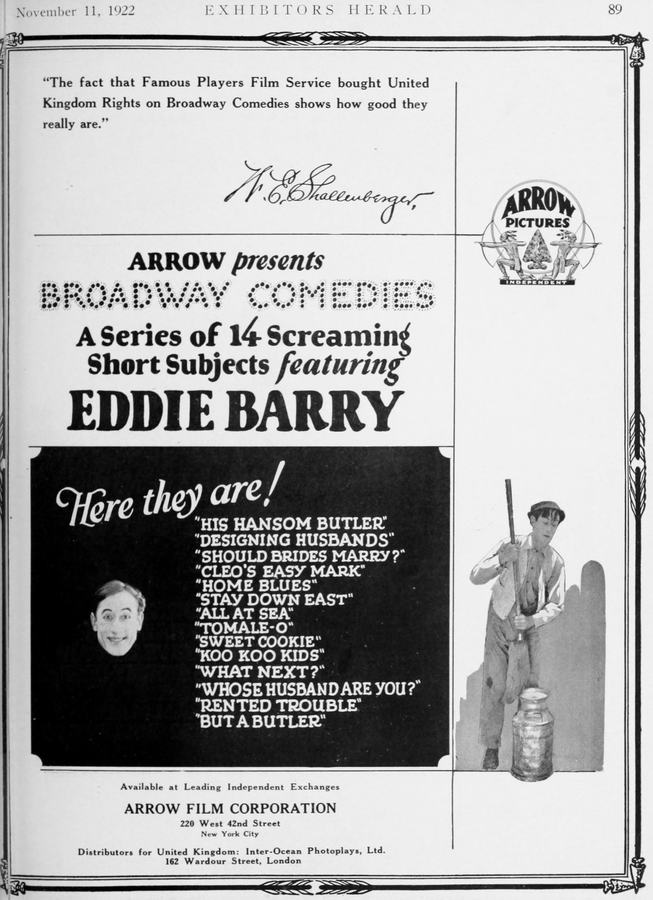
Should Brides Marry? is a film that lingers in the mind like a half-remembered dream, its themes as elusive as the soft glow of a candle flame flickering in a gilded drawing room.
From its opening scene—a slow tracking shot of Vera Reynolds’ character gazing into a mirror, her reflection fractured by the ornate frame of a vintage locket—this film announces its intent to dissect the dissonance between public persona and private turmoil. The script, with its taut dialogue and psychological nuance, feels both archaic and startlingly contemporary, a feat that speaks to the timelessness of its subject matter. The marriage plot, a staple of literary and cinematic tradition, is here deconstructed with surgical precision, its conventions upended to reveal the undercurrents of coercion and performative love that often bind its participants.
Harry Gribbon’s portrayal of the brooding, aristocratic suitor is a masterstroke of restrained intensity. His character, a man whose charm is as calculated as it is magnetic, becomes a cipher for the patriarchal structures that dictate the terms of wedlock. In one particularly harrowing scene, he corners Reynolds’ character in a candlelit library, his words honeyed but his intent predatory. The tension hangs in the air like a storm, and the camera lingers on her face as she navigates the treacherous path between resistance and acquiescence. This is a performance that transcends mere acting; it is a manifestation of the film’s central thesis—the suffocation of individual will beneath the weight of societal expectation.
The film’s visual language is equally provocative. Director Eddie Barry employs a palette of muted earth tones, punctuated by bursts of sea blue (#0E7490) in the costumes and set design, evoking the cold, clinical nature of social rituals. The use of negative space is particularly effective in scenes where the protagonist is surrounded by opulence yet appears utterly isolated, a visual metaphor for the alienation that accompanies conformity. In a striking sequence, Reynolds’ character walks through a grand ballroom, the camera gliding around her as she moves through a sea of smiling faces, each one a mask of superficial contentment. The juxtaposition of her stillness against the swirling chaos around her is a silent scream of existential despair.
What elevates Should Brides Marry? beyond the realm of the merely provocative is its refusal to offer easy resolutions. Unlike the tidy narratives of The Girl with the Green Eyes or First Love, this film resists the temptation to sanitize its characters or their choices. Instead, it presents a mosaic of moral ambiguity, where every decision is a compromise and every rebellion a calculated risk. The film’s climax—a quiet, almost imperceptible moment where the protagonist chooses to walk away from a marriage ceremony, the camera panning to the empty aisle behind her—resonates with the kind of understated power that lingers long after the credits roll.
The supporting cast, while less showy, delivers performances that are no less impactful. Eddie Barry’s character, a jaded journalist with a penchant for cynicism, serves as both foil and confidant to the protagonist. His interactions with Harry Gribbon’s suitor are charged with subtext, their verbal sparring a dance of wit and veiled threats. Meanwhile, Helen Darling’s portrayal of a jaded matron, whose own marriage is a relic of regret, adds layers of depth to the film’s exploration of generational trauma. Her monologue about the "cost of a smile"—delivered while polishing a silver teapot—is a haunting reminder of the emotional toll of maintaining a facade.
Technically, the film is a triumph. The cinematography, with its symmetrical compositions and dramatic use of light, evokes the visual style of Das Große Licht, but with a distinctly modern sensibility. The score, a haunting blend of piano and strings, swells and recedes like the tide, mirroring the protagonist’s emotional highs and lows. Perhaps most impressive is the film’s pacing, which allows silence and stillness to speak volumes—a deliberate counterpoint to the fast-paced narratives of Dead Eye Jeff or The Shootin’ Fool.
Thematically, Should Brides Marry? engages in a dialogue with works like Zhenshchina, kotoraya izobrela lyubov, which similarly examines the intersection of love and societal expectation. Yet this film distinguishes itself through its unflinching portrayal of the psychological toll of compliance. The protagonist’s journey from naivety to disillusionment is not a linear progression but a series of halting, often contradictory steps, reflecting the complexity of human agency in a world governed by rigid norms.
One of the film’s most audacious choices is its treatment of the wedding itself. Instead of the traditional grandeur, the ceremony is depicted in a derelict chapel, its stained glass shattered and its altar draped in tattered lace. This visual choice—a direct contrast to the opulent settings of The Sea Flower—underscores the film’s thesis that marriage, no matter how beautifully packaged, is often a hollow ritual. The vows, recited in a monotone by the officiant, are rendered almost laughable in their generic platitudes, a far cry from the heartfelt declarations of Samson.
In its quieter moments, Should Brides Marry? reveals its soul. A scene where the protagonist writes a letter to herself, addressed to the person she hopes to become, is a masterclass in emotional subtlety. The camera lingers on the ink-stained envelope as she seals it, the weight of her decision etched in every motion. These moments of introspection are interspersed with more overtly dramatic sequences, creating a rhythm that mirrors the protagonist’s internal struggle.
The film’s final act is a masterstroke of ambiguity. Rather than resolving the protagonist’s arc, it leaves her at a crossroads, the camera pulling back to reveal a train platform stretching into the horizon. This visual metaphor—the journey ahead as uncertain as the past—is a fitting conclusion to a film that questions the very notion of destination. It invites viewers to ponder the cost of freedom and the price of tradition, a challenge that resonates with the philosophical inquiries of Melting Millions and The Marble Heart.
In sum, Should Brides Marry? is a film that demands to be experienced, not merely watched. It is a tapestry of contradictions—haunting yet hopeful, oppressive yet liberating—that challenges its audience to confront uncomfortable truths. For those who dare to look beyond the surface, it offers a mirror that reflects not just the characters, but the viewer themselves.
IMDb —
1928
Community
Log in to comment.