DbcultAccessing Vault...
3.5/10
Senior Film Conservator
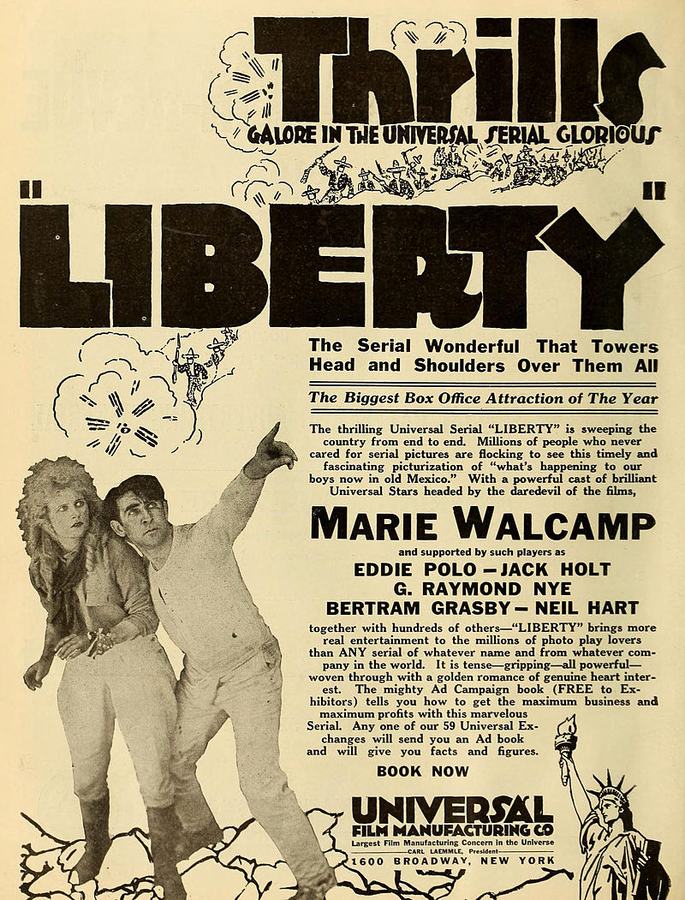
A definitive 3.5/10 rating for a film that redefined the boundaries of cult cinema. Liberty remains a cornerstone of transgressive art.
The cinematic landscape of the early 20th century was fertile ground for experimentation, a vibrant canvas upon which the nascent art form painted its grandest ambitions. Amidst this era of innovation, the film serial emerged as a dominant force, captivating audiences with its episodic thrills and relentless cliffhangers. Few, however, encapsulated the sheer audacious spirit of the form quite like ‘Liberty,’ a sprawling twenty-part Western odyssey that redefined the parameters of frontier adventure. This isn't just a film; it's a monumental undertaking, a weekly ritual that beckoned viewers into a world of high stakes, relentless pursuit, and the unwavering resolve of its titular heroine. Its very structure, a series of two-reel installments, speaks to a different kind of storytelling, one designed to build cumulative tension and foster a deep, abiding connection with its characters across an expansive narrative arc.
At the pulsating heart of 'Liberty' lies the magnetic presence of Marie Walcamp, whose portrayal of Liberty is nothing short of revelatory. In an era often characterized by demure damsels, Walcamp presents a character of formidable agency and physical prowess, truly a trailblazer for female protagonists in action cinema. She doesn't merely react to events; she actively shapes them, displaying an astonishing capacity for resilience and self-preservation. Her Liberty is a woman driven by a quest for justice and the reclamation of her family's honor, navigating a treacherous landscape populated by shadowy figures and imminent dangers with a grit that defies her seemingly delicate frame. Walcamp’s performance, a masterclass in silent film acting, communicates volumes through her expressive eyes and determined posture, embodying the very spirit of the American frontier – untamed, unyielding, and fiercely independent. This was a role that demanded not just emotional depth but also a remarkable physical commitment, and Walcamp delivered on both fronts, executing stunts with a conviction that lent profound authenticity to her character's perilous journey. Her performance set a benchmark, influencing countless future heroines who would dare to challenge the conventions of their time.
The genius of 'Liberty' extends far beyond its star, reaching into the very sinews of its narrative construction, meticulously crafted by Jacques Jaccard and W.B. Pearson. Their screenplay forges a complex web of intrigue, where every episode unfurls a new layer of the overarching mystery surrounding Liberty's father's gold strike and the machinations of Silas Blackwood. The writers masterfully exploit the serial format, concluding each installment with a heart-stopping cliffhanger that guaranteed audiences would return, week after week, eager to witness Liberty's escape from the latest impossible predicament. This wasn't merely a gimmick; it was an integral part of the storytelling, forcing a dynamic pacing that kept viewers perpetually on the edge of their seats. The narrative doesn't shy away from moral complexities, exploring themes of greed, betrayal, and the corrupting influence of power, juxtaposed against the unwavering principles of characters like Marshal Kirk Douglas. In this regard, it shares a thematic resonance with films like As Ye Sow, exploring the moral consequences of actions, albeit within a vastly different genre. The episodic nature allowed for intricate character development, slowly revealing the motivations and backstories of its diverse ensemble, transforming what could have been a simplistic chase narrative into a rich, multi-faceted saga.
Beyond Walcamp, the cast of 'Liberty' forms a formidable ensemble, each actor contributing a vital piece to the serial's intricate mosaic. Neal Hart, as the resolute U.S. Marshal Kirk Douglas, provides the perfect foil and steadfast ally to Liberty. His presence exudes a quiet authority and an unwavering sense of justice, grounding the more fantastical elements of the plot in a believable moral framework. Bertram Grassby, as the villainous Silas Blackwood, delivers a performance dripping with avarice and menace. He embodies the predatory capitalism that often characterized the darker side of frontier expansion, a figure whose ambition knows no ethical boundaries. His ruthlessness is palpable, making him a truly formidable antagonist whose schemes drive much of the serial's conflict. Jack Holt, in a role like 'Shadow,' likely brought his characteristic intensity and physical presence, adding another layer of danger and unpredictability to Blackwood's nefarious operations. The supporting cast, including Hazel Buckham, Charles Brinley, Maude Emory, and Eddie Polo, each contribute significantly to the texture of this cinematic world. Buckham, perhaps as a cunning femme fatale or a duplicitous operative, would have added psychological intrigue, while Polo's physical stature would have made him a menacing enforcer. This rich tapestry of characters, from the noble to the ignoble, provided a dynamic interplay that elevated the serial beyond mere spectacle, turning it into a compelling study of human nature under duress.
'Liberty' was a masterclass in creating visceral, heart-pounding action sequences, a testament to the raw, unpolished energy of early cinema. The serial is replete with daring horseback chases across rugged terrain, explosive encounters in dusty mining towns, and intricate fight choreography that must have left contemporary audiences breathless. The physical stakes felt incredibly real, a direct consequence of the era's practical effects and the actors' willingness to engage in genuinely perilous stunts. One can almost feel the dust and hear the thunder of hooves as Liberty and Kirk outmaneuver Blackwood's posse, or the tension as they navigate collapsing mine shafts. These sequences were not just filler; they were integral to the plot's progression, each action beat pushing the narrative forward and deepening the characters' resolve. The sheer ambition of these set pieces, spread across twenty episodes, speaks volumes about the production's commitment to delivering unparalleled excitement. It's a precursor to the grand spectacles of later Westerns, establishing a visual vocabulary for action that would be emulated for decades. The relentless pace and inventive dangers recall the visceral thrill of early adventure serials, even those from other nations, like the Australian bushranger film Robbery Under Arms (1907), which similarly plunged audiences into a world of lawlessness and daring escapades.
The true genius of 'Liberty' and its immense popularity lay in its unparalleled mastery of the cliffhanger. Each two-reel episode concluded with Liberty or her allies in an seemingly insurmountable predicament: teetering on the edge of a precipice, trapped in a burning building, or facing down a firing squad with no apparent escape. This narrative device wasn't just a cheap trick; it was a sophisticated psychological tool, designed to create an insatiable hunger for the next installment. The writers understood implicitly that the anticipation of resolution was as powerful as the resolution itself. This continuous cycle of peril and reprieve fostered an intense connection between the audience and the fate of the characters. It transformed cinema-going into a communal experience, where viewers would gather week after week, discussing theories and expressing anxieties about the protagonists' survival. This sustained engagement across a twenty-part narrative is a testament to the serial's structural integrity and its ability to continually innovate within its own established framework of peril and rescue. It’s a blueprint for long-form storytelling that reverberates even in today’s serialized television, demonstrating the timeless appeal of a well-executed suspenseful ending.
The visual tapestry of 'Liberty' is as integral to its appeal as its thrilling plot. Filmed against the rugged, expansive backdrops of the American West, the serial leverages its authentic locations to great effect. The vast deserts, towering rock formations, and dense forests are not merely scenery; they are active participants in the drama, shaping the characters' journeys and posing additional challenges. The sheer scale of the landscape amplifies the sense of isolation and the formidable obstacles faced by Liberty and Kirk. The cinematography captures the raw beauty and inherent danger of this untamed frontier, immersing the audience in a world that feels both grand and unforgiving. This commitment to realism in setting enhances the credibility of the narrative, making the high-stakes adventures feel all the more immediate and perilous. It speaks to a nascent understanding of how environment can reflect and amplify internal struggles, a visual metaphor for the freedom and danger inherent in the pursuit of 'Liberty' itself. The choice of location filming, rather than studio sets, imbued the serial with an unparalleled sense of scope and authenticity, distinguishing it from many of its contemporaries and cementing its status as a benchmark for Westerns.
While ostensibly a tale of a gold rush and a chase for a hidden treasure, 'Liberty' delves into deeper thematic waters, exploring concepts that resonate far beyond its immediate plot. The titular 'Liberty' itself is a powerful, multifaceted symbol. It represents not just personal freedom from oppression or the right to one's inheritance, but also the broader ideals of justice, self-determination, and the establishment of a fair society in a lawless land. The struggle against Silas Blackwood and his cohorts is more than a simple hero-versus-villain confrontation; it's a microcosm of the larger conflict between burgeoning civilization and the forces of greed and anarchy that threatened to undermine it. The serial implicitly champions the rugged individualism and moral fortitude required to forge a new world, while simultaneously exposing the corrupting influence of unchecked power. It touches upon the 'American Dream' of opportunity and prosperity, but also the dark underbelly of exploitation and injustice that often accompanied it. This depth elevates 'Liberty' from mere entertainment to a poignant reflection on the values and challenges inherent in the very founding myths of the West. It asks profound questions about what constitutes true freedom and the sacrifices necessary to achieve it, much like the challenging moral dilemmas presented in films such as Who Pays?, which explore the societal costs of individual choices.
The influence of 'Liberty' on subsequent adventure cinema, particularly within the Western genre and the serial format, is undeniable. It established conventions, refined narrative techniques, and showcased a type of heroic female protagonist that would inspire countless imitators. The relentless pacing, the intricate plotting, and the emphasis on character-driven action sequences became hallmarks of successful serials for decades to come. Filmmakers and writers studied its structure, its use of suspense, and its ability to maintain audience interest over an extended period. The serial proved that audiences craved complex, multi-episode narratives long before the advent of television. Its impact can be seen in the development of later serials like 'Flash Gordon' or 'The Lone Ranger,' which adopted similar episodic structures and cliffhanger mechanics. More broadly, it contributed significantly to the evolving grammar of cinematic storytelling, demonstrating how fragmented narratives could coalesce into a powerful, cohesive whole. 'Liberty' didn't just entertain; it educated, helping to define the very language of popular cinema and setting a high bar for adventure storytelling in the nascent film industry. Its ambitious scope even brings to mind, in a vastly different context, the epic storytelling aspirations of a film like War and Peace, both aiming for grand narratives, albeit through distinct lenses.
Considering the technological constraints of its era, the production of 'Liberty' stands as a remarkable feat of cinematic ambition. The coordination required to shoot twenty separate two-reel episodes, each with its own set of elaborate stunts, location changes, and dramatic beats, speaks volumes about the dedication of the cast and crew. The camera work, while perhaps rudimentary by modern standards, possessed an invigorating dynamism, capturing the rapid movements of horses and the intensity of close-quarters combat with surprising clarity. The editing, crucial for maintaining the relentless pace and orchestrating the cliffhangers, was sharp and effective, ensuring that no moment felt wasted. The use of practical effects for explosions, falls, and other perils added a visceral realism that CGI-heavy productions often struggle to replicate. Every aspect of the production, from set design to costume, contributed to the authenticity of the Western setting, creating a fully realized world for the audience to inhabit. This commitment to craft, even in the absence of sophisticated tools, is a testament to the pioneering spirit of early Hollywood, where ingenuity often compensated for technological limitations, producing works of enduring power and charm.
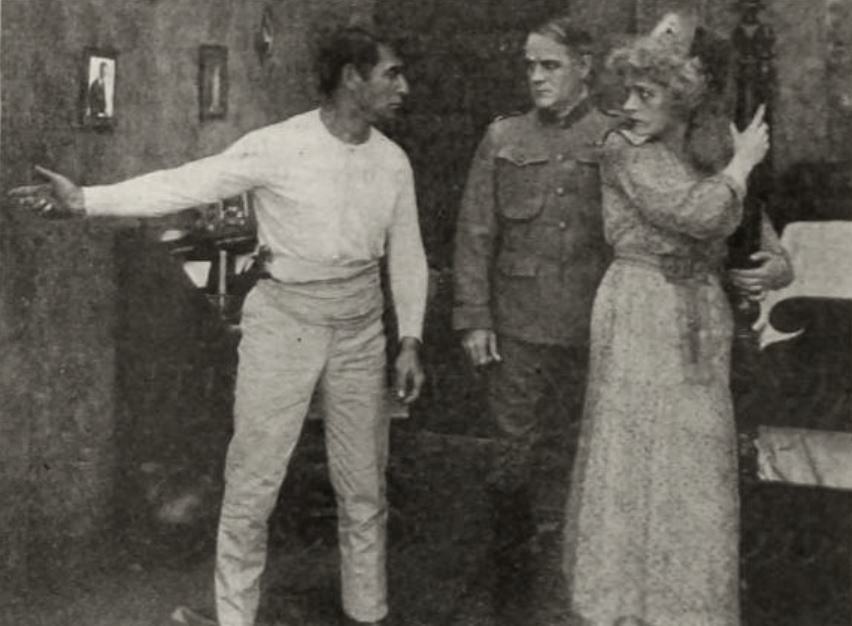
For contemporary viewers accustomed to dialogue-driven narratives and intricate soundscapes, engaging with a silent film serial like 'Liberty' might initially seem daunting. However, it offers a profound lesson in the power of visual storytelling. Without spoken words, the filmmakers were compelled to rely entirely on visual cues, expressive performances, and dynamic action to convey emotion, plot, and character motivation. The use of intertitles, while necessary, was judicious, allowing the images themselves to carry the bulk of the narrative weight. This forced a level of cinematic literacy from the audience, encouraging them to 'read' the film through its composition, acting, and editing. The heightened physicality of the performances, particularly Walcamp's, ensured that the emotional stakes were always clear, transcending the need for verbal articulation. It’s a reminder that cinema, at its core, is a visual medium, and 'Liberty' stands as a brilliant example of how effectively a story can be told through pure image and movement. Its ability to captivate and thrill without a single spoken word is a testament to the universal language of action and emotion, a skill that many modern films could still learn from.
When contextualizing 'Liberty,' it's essential to consider it alongside other works of its period. While many early films focused on standalone narratives or shorter two-reelers, 'Liberty' pushed the boundaries of serial storytelling. Its episodic nature and focus on a continuous, overarching plot distinguished it. Films like After Dark, with its melodramatic suspense, shared a similar spirit of thrilling audiences, but lacked 'Liberty's' sprawling frontier setting and sustained action. The sheer volume of content and the consistent quality across twenty installments set a high bar. Later, serials would refine these techniques, but 'Liberty' was among the pioneers to demonstrate the commercial and artistic viability of such an ambitious format. Its influence on the Western genre is also notable; it helped solidify many of the tropes and character archetypes that would become synonymous with the American frontier, from the valiant marshal to the cunning outlaw. The clarity of its moral universe, despite the narrative complexities, resonated deeply with audiences seeking escapism and clear-cut heroism.
The narrative of 'Liberty' taps into a primal fascination with frontier justice, a world where law and order are often self-administered, and courage is the ultimate currency. The struggle between Liberty and Blackwood is not just personal; it's a battle for the soul of a nascent community, a fight to establish a moral foundation in a land still finding its identity. This theme of bringing order to chaos, of good triumphing over evil through sheer will and determination, is a timeless one. It speaks to a universal desire for fairness and the belief that even in the most lawless environments, individuals can rise to challenge injustice. The serial's portrayal of the harsh realities of the West, combined with its unwavering optimism in the face of adversity, created a potent blend that deeply connected with audiences. It offered a vision of heroism that was both aspirational and relatable, a testament to the human spirit's capacity for resilience. This foundational appeal to justice and self-reliance ensures 'Liberty' remains a compelling watch, even for those far removed from its original context.
Beyond its narrative and artistic merits, 'Liberty' serves as an invaluable historical document, offering a rare glimpse into the production values, acting styles, and audience expectations of early Hollywood. It showcases the raw energy and experimental spirit of a film industry still defining itself. The serial's existence, its extensive length, and its episodic nature provide critical insight into the economic models and distribution strategies prevalent at the time. It reminds us that cinema was not always the monolithic industry we know today, but a dynamic, rapidly evolving art form. Studying 'Liberty' allows us to appreciate the foundational work done by pioneers like Jaccard, Pearson, Hart, and Walcamp, whose collective efforts laid the groundwork for the cinematic language we now take for granted. It's a testament to their vision and tenacity that such an ambitious project could be conceived and executed with such compelling results, leaving an indelible mark on the annals of film history. It provides a unique window into the cultural zeitgeist of its era, reflecting societal values, aspirations, and anxieties through the lens of thrilling entertainment.
For the modern cinephile, revisiting 'Liberty' is more than an academic exercise; it's an opportunity to connect with the primal power of storytelling. While the pacing might feel different from contemporary blockbusters, the fundamental elements of compelling narrative – character, conflict, and resolution – are present in abundance. To appreciate 'Liberty' fully is to embrace its historical context, to understand the constraints and innovations of its time. It’s a chance to witness the birth of genre conventions, to see the raw talent of actors working without the benefit of sound, and to marvel at the sheer ambition of filmmakers who were inventing the rules as they went along. The serial stands as a robust example of how early cinema, far from being primitive, was capable of delivering complex, engaging, and emotionally resonant stories that captivated millions. Its enduring charm lies in its unpretentious commitment to adventure, its celebration of courage, and its vibrant portrayal of a pivotal moment in American history. It's a journey worth taking, a piece of cinematic heritage that continues to thrill and inform.
IMDb 6.3
1935
Community
Log in to comment.