DbcultAccessing Vault...
6.3/10
Senior Film Conservator
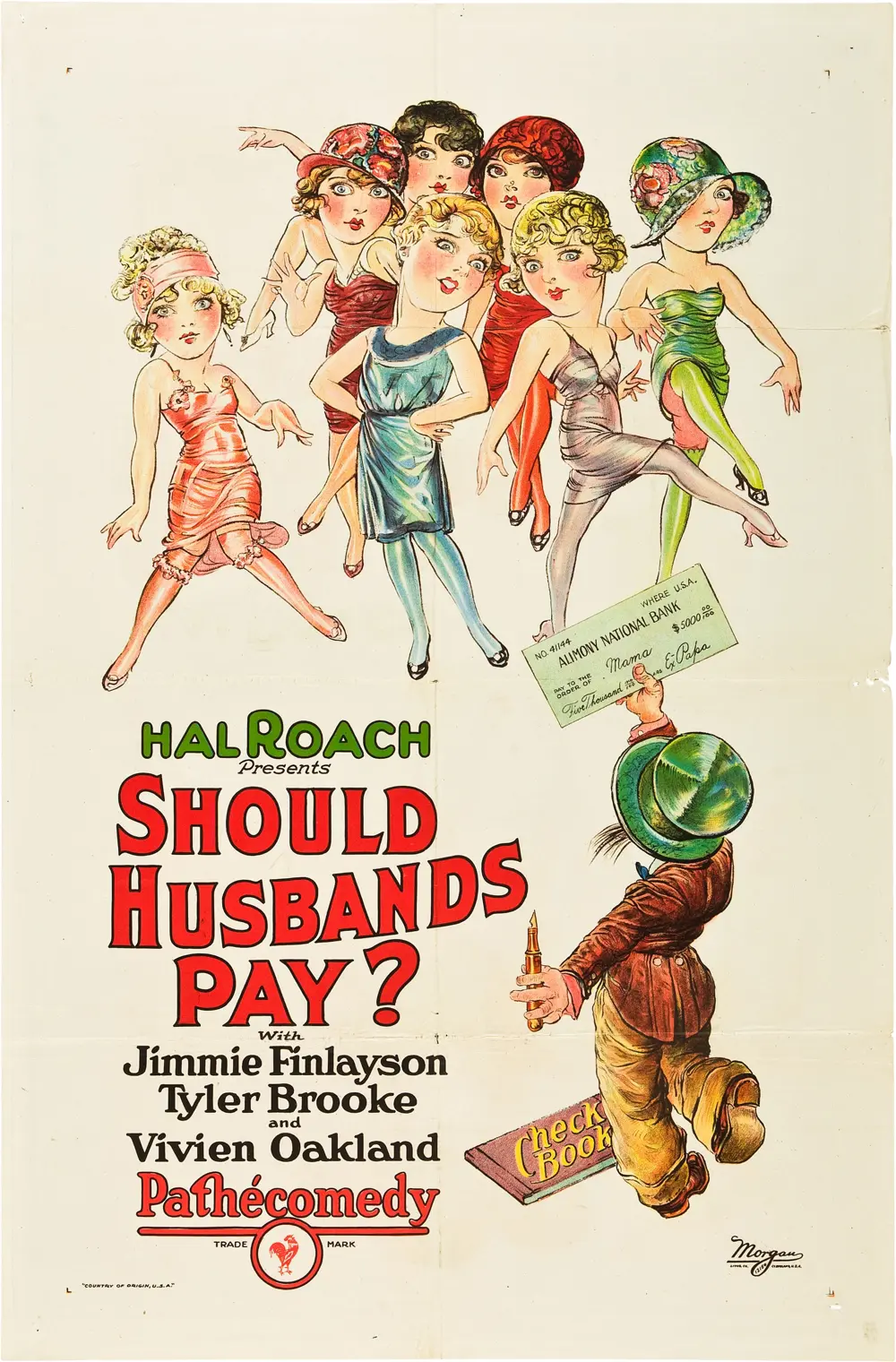
A definitive 6.3/10 rating for a film that redefined the boundaries of cult cinema. Should Husbands Pay? remains a cornerstone of transgressive art.
Short answer: yes, absolutely, but with a significant caveat. This silent-era romp, Should Husbands Pay?, is a masterclass in escalating comedic chaos, a delightful peek into the anxieties and absurdities of early 20th-century morality. However, its episodic structure and reliance on broad physical gags mean it won't resonate with every modern viewer, particularly those unaccustomed to the unique rhythm of silent film.
This film is tailor-made for aficionados of classic slapstick, silent comedy historians, and anyone who appreciates a meticulously choreographed farce that builds to an explosive climax. It is decidedly not for viewers seeking nuanced character studies, subtle humor, or a fast-paced narrative akin to contemporary cinema. If you struggle with intertitles or find prolonged physical comedy tedious, you might find its charm elusive.
At its core, Should Husbands Pay? is a scathing, albeit hilarious, critique of public morality and the performative nature of virtue. The narrative centers on Jimmy, a self-appointed moral crusader whose reputation for rectitude is precisely what lands him in his predicament. His public declaration to act as 'conservator-of-morals' for his neighbor, Tyler, a man accused of the scandalous act of flirting, is the first domino to fall in a chain reaction of escalating absurdity. It's a premise ripe for comedic subversion, and the film wastes no time in delivering.
The genius of the setup lies in its immediate ironic twist. No sooner have Jimmy and Tyler exited the courtroom, basking in the glow of Jimmy's perceived magnanimity, than they encounter a damsel in distress – a lady struggling to navigate a puddle-strewn street. Their well-intentioned, if clumsy, efforts to assist her are, of course, captured by the ever-present, ever-opportunistic tabloid photographers. These images, stripped of context and sensationalized for public consumption, paint Jimmy, the paragon of virtue, in the most compromising and scandalous light imaginable. It's a brutal, yet brilliant, commentary on the fickle nature of public perception and the dangers of moral grandstanding.
The subsequent comedic fallout, as Jimmy’s wife discovers these scandalous pictures in the morning paper, forms the backbone of the film’s escalating farce. This domestic crisis quickly spirals outwards, ensnaring not just the immediate families but also the very pillars of the community, including the police court judge and his own wife. The film orchestrates a symphony of misunderstandings, mistaken identities, and frantic attempts to salvage reputations, all while delivering a relentless barrage of physical gags and visual humor. It's a testament to the writers – James Parrott, H.M. Walker, Jerome Storm, Frank Wilson, Hal Yates, and the inimitable Stan Laurel – that such a simple premise can yield such intricate, laugh-out-loud chaos.
This film works because of its relentless commitment to escalating comedic scenarios, its sharp satirical edge against hypocrisy, and the sheer talent of its physical comedians who execute gags with precision and infectious energy. The writers understood the power of a simple misunderstanding taken to its most absurd conclusion.
This film fails because its pacing, while effective for its era, can feel drawn out to modern eyes, and some of the gags, while historically significant, lack the punch they might have had for contemporary audiences. The reliance on broad archetypes also means character depth is minimal.
You should watch it if you appreciate the foundational elements of silent comedy, enjoy social satire couched in slapstick, and are willing to immerse yourself in a period piece that still speaks volumes about human folly.
The ensemble cast of Should Husbands Pay? is a vibrant collection of silent-era stalwarts, each contributing to the film’s comedic tapestry. Anders Randolf, as the beleaguered reformer Jimmy, is a revelation. His performance is a masterclass in controlled exasperation, a man whose every attempt at moral uprightness only digs him deeper into a hole of scandal. Randolf’s physical comedy, particularly his reactions to the increasingly incriminating photographs and his wife’s furious accusations, is genuinely priceless. He carries the weight of public perception with a face that shifts from smug righteousness to utter bewilderment, often within the same scene.
Tyler Brooke, as the initially accused Tyler, serves as an excellent foil. He’s the catalyst, the seemingly innocuous source of Jimmy’s woes, yet he often appears as bewildered by the unfolding chaos as Jimmy himself. His subtle expressions of guilt mixed with a desire to help only further complicate matters, adding layers to the misunderstandings. Think of his wide-eyed innocence as he watches Jimmy attempt to explain away the photographs to a visibly enraged wife – it's a silent testament to Brooke's understated comedic timing.
Lyle Tayo and Anita Garvin, as the wives caught in the crossfire, are equally vital. Tayo, likely playing Jimmy's wife, embodies the furious indignation of a woman scorned, her dramatic gestures and withering glares providing much of the film’s domestic tension. Garvin, perhaps as the 'lady in distress' or another bewildered spouse, expertly navigates the fine line between damsel and unwitting instigator. Their performances are crucial in grounding the outrageous circumstances in relatable, if exaggerated, human emotions. Without their believable outrage, the escalating farce would lose its emotional stakes.
The supporting cast, featuring talents like Robert Milasch, Charlotte Mineau, James Finlayson, and Vivien Oakland, are the gears in this comedic clockwork. Finlayson, in particular, with his distinctive glare and often exasperated demeanor, brings a familiar gravitas to the judicial figures, making their eventual entanglement all the more satisfyingly ironic. Each actor understands the precise demands of silent comedy: exaggerated expressions, precise timing, and a willingness to commit wholly to the physical absurdity of the moment. It works. But it’s flawed.
The directorial choices in Should Husbands Pay? are a masterclass in orchestrating silent-era chaos. The film maintains a brisk, almost frantic, pace, especially once the tabloid scandal breaks. The editing is sharp, cutting between the public outcry, the domestic strife, and the increasingly desperate attempts of Jimmy and Tyler to clear their names. This rapid-fire progression is essential for a comedy of errors, ensuring that the audience is constantly kept off balance, anticipating the next twist in the ludicrous plot.
IMDb —
1919
Community
Log in to comment.