DbcultAccessing Vault...
7.2/10
Senior Film Conservator
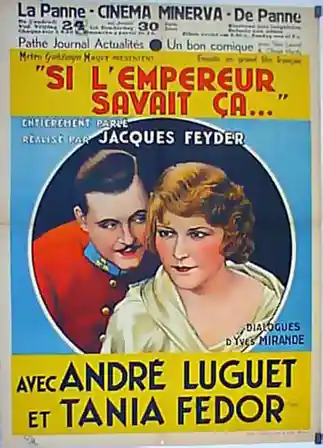
A definitive 7.2/10 rating for a film that redefined the boundaries of cult cinema. Si l'empereur savait ça remains a cornerstone of transgressive art.
Honestly, only if you're the kind of person who digs through the bargain bins of film history or if you really love Jacques Feyder.
If you're looking for a fast-paced rom-com, stay far away from this one. 🏃♂️
But if you want to see how the French handled the 'talkie' transition differently than Hollywood, it’s a total gem.
This is actually a remake of a movie called His Glorious Night, which was a disaster for John Gilbert because his voice sounded 'too high' for a tough guy. 🎤
In this version, André Luguet takes the lead and he’s much better suited for the part of the dashing captain.
He has this way of leaning against doorways that feels actually cool, not just like he's posing for a poster.
The plot is as old as the hills: a Princess (played by Tania Fédor) is supposed to marry some royal bore but falls for the captain instead.
It’s all very Austro-Hungariun with lots of medals and fancy hats and people worrying about what the Emperor would think.
Hence the title, Si l'empereur savait ça (If the emperor knew that). 🤫
The pacing is... well, it's 1930, so it’s a bit like watching molasses pour in a cold kitchen.
You can tell they are still terrified of the microphones because everyone stands perfectly still when they have a long speech.
It’s a bit like The Man Who Came Back in terms of that old-school melodrama vibe.
One scene in the garden goes on for what feels like twenty minutes, and I’m pretty sure I saw a bird in the background that was more active than the actors.
But then Françoise Rosay shows up and just steals every single frame she is in.
She plays the mother and she has this look of permanent disappointment that is just chef’s kiss. 👩🍳
The way she holds her opera glasses makes you feel like she’s judging your entire life choices through the screen.
Feyder’s directing is way more fluid than the American version, even with the technical limits of the time.
He actually moves the camera once or twice! 🎥
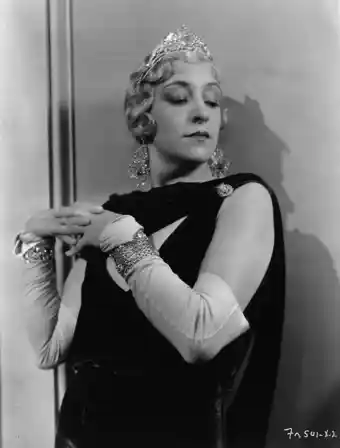
There's a shot through a window that actually looks like real art, which was rare for these early 'canned theater' movies.
It reminds me a bit of the silent era visual storytelling you see in stuff like The Burgomaster of Stilemonde.
The costumes are incredibly heavy-looking; you can almost hear the velvet clanking as they walk.
I kept wondering how the Princess didn't trip over her own train in every single scene.
The romance itself is... fine? It’s very 'I just met you and now I will die for you' logic.
Luguet has a mustache that should have its own credit in the opening titles. 👨🏻
There is a weird moment where they talk about a horse for way too long, and I think I zoned out and started thinking about what I wanted for dinner.
It’s definitely not as modern-feeling as something like The Artist, which is obviously a tribute, but it has a similar soul.
The sound quality on the copy I saw was pretty rough—lots of hissing like a disgruntled snake was in the room.
But that’s part of the charm of these multi-language versions (MLVs).
Back then, they didn't dub movies; they just shot the whole thing again with a different cast for the French or German markets.
It’s a fascinating bit of history, even if the actual movie is a bit of a snooze in the middle.
The ending is exactly what you think it is, no surprises there.
But the final shot of the Princess's face is actually quite haunting and well-lit.
If you liked the vibe of The Unknown Lover, you’ll probably find enough here to keep you awake.
Otherwise, it’s mostly a curiosity for film nerds who want to see Feyder’s early sound work.
It’s a strange little time capsule.
Not a masterpiece, but it doesn't try to be anything more than a chic little romance for the 1930s crowd.
I’d give it a watch on a rainy Tuesday when you have nothing else to do. ☔
IMDb 6.3
1937
Community
Log in to comment.