DbcultAccessing Vault...
Cult Review
Senior Film Conservator
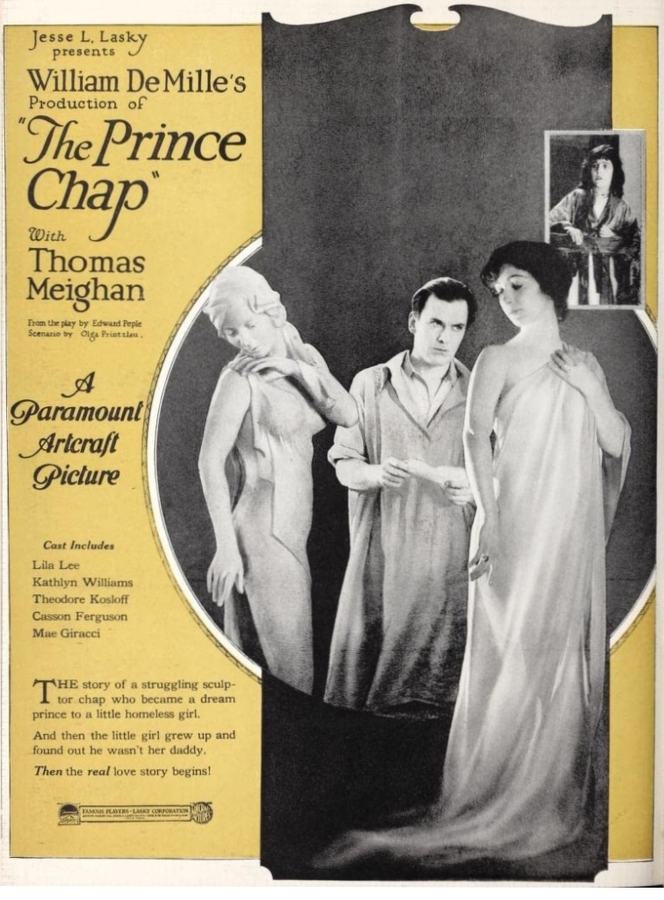
Crimson damask and bruise-violet shadows: those are the first hues that flood the frame of Arthur Rooke’s The Prince Chap, a 1920 silent that somehow slipped through the cracks of cinema’s collective memory like wet paint trickling off a palette. Yet here it is, resurrected on a 4K glow, every flickering intertitle quivering with the same breath that once billowed from Thomas Meighan’s lungs. Meighan, that granite-jawed matinée idol, plays the titular “prince”—not royalty by blood but by the courtly codes of bohemian London—an artist whose atelier smells of turpentine, Turkish tobacco, and the faint metallic tang of longing.
From the opening iris-in on a windswept cliffside cottage, Rooke and cinematographer Hal Young court the spirit of Just a Song at Twilight in their obsession with oblique angles: tilted rooftops, easels set rakishly against skylights, even the slanted brim of Meighan’s felt hat slicing the horizon. But where Twilight luxuriated in pastoral languor, The Prince Chap tightens like a garrote. The plot, deceptively simple on paper, detonates in the mind: celebrated painter Sir Philip Ashcott (Meighan) returns from a restorative sojourn in Florence to find that the child he plucked from a workhouse six years prior—little “Nesta,” now grown into Lila Lee’s ethereally poised teenager—has begun to regard him with something far more unsettling than filial gratitude.
Lee, only sixteen during production, carries her close-ups like fragile porcelain lanterns; each flicker of eyelid or parting of lips seems to leak light. The camera adores the column of her throat, the way a single ringlet escapes her chignon and grazes her clavicle—visual rhymes that foreshadow the moral unraveling. Opposite her, Yvonne Gardelle’s Lady Myra Vane—Philip’s former fiancée—sashays back into the narrative swathed in peacock silks, her cigarette holder a slender exclamation point against the dusk. Gardelle plays Myra with the languid cruelty of a house-cat: every purr contains a claw. The tension between mentor-pupil devotion and erotic vertigo is calibrated in glances rather than gestures; a two-shot beside a half-finished portrait becomes a battleground of refracted desires.
Silent-era enthusiasts will note how deftly the scenario, adapted by Olga Printzlau from Edward Peple’s play, sidesteps the maudlin pitfalls that drowned contemporaries like Redemption. There is no mustache-twirling villain, no orphanage mustiness; instead the moral fissure runs through Philip himself, a man who has rendered childhood innocence in oils only to find the living replica inconveniently sentient. The film’s central triumph is its refusal to grant easy absolution. When Philip finally crushes Nesta’s cheek against his shoulder, the moment lands less like a clinch than a confession: I painted you into a world without exits.
Visually, the palette oscillates between two chromatic poles: the molten orange of hearth-fire and the deep sea-blue of twilight corridors. Tinted prints recovered from the Netherlands Filmmuseum reveal this dichotomy as deliberate—orange for the studio interiors where art and appetite ferment, cyan for the outdoor sequences where the natural world offers cold perspective. Note the scene in which Nesta, barefoot on slate rooftops, trails a Chinese lantern behind her like a comet; its saffron glow against the cobalt night predicts the aesthetic DNA of later Frank Borzage nocturnes.
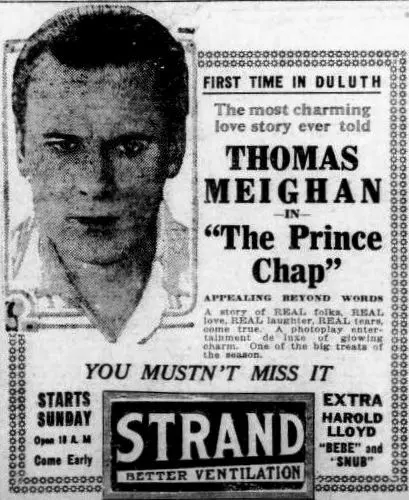
Comparative glances toward Sunken Rocks reveal a kinship in thematic undertow: both films obsess over the moment a rescuer realizes the rescued has surpassed him in emotional valor. Yet where Sunken Rocks externalizes guilt through storm-tossed spectacle, The Prince Chap internalizes it, turning every brushstroke into potential evidence of criminal desire. Philip’s unfinished triptych—meant to be a paean to youthful purity—becomes a palimpsest of transgression, so incriminating that he slashes the canvas in a fit worthy of Caravaggio. The rip is heard, not seen: a title card trembles—“Art, like love, demands its pound of flesh.”—while the screen goes black for a full four seconds, an eternity in 1920 syntax.
Meighan’s performance is a clinic in minimalist anguish. Watch the way his shoulders retreat inward when Myra insinuates that the ward has become rival. No histrionics—just a barely perceptible shift of weight, as though the floorboards themselves have grown searing hot. In the climactic ballroom sequence, captured in a spiraling dolly shot that prefigures Ophüls, Philip watches Nesta waltz with a callow naval cadet. The actor’s eyes flicker at 18fps between pride, terror, and something darker: the recognition that he has authored his own heart’s eviction notice.
The supporting ensemble adds texture without clutter. Casson Ferguson provides comic tonic as a dandy critic who pronounces every canvas “decadently pre-Raphaelite,” while Lillian Leighton’s gravel-voiced housekeeper Mrs. Bream functions as a Greek chorus, forever polishing the same silver salver as though entropy itself could be warded off by elbow grease. Their presence keeps the narrative from capsizing into the solipsistic whirlpool that drowned Le roman d’un caissier the same year.
Scholars of Soviet montage may bristle at the suggestion, yet the film’s final act—cross-cutting between a Royal Academy exhibition and a child’s makeshift riverbank funeral for a fallen sparrow—achieves an Eisensteinian collision of cultural ritual and raw grief. The montage lands like a fist to the sternum precisely because it refuses dialectical resolution: the bird stays dead, the paintings sell, and the grown child returns home with salt-stiff cheeks, now irrevocably aware that the world will authenticate her guardian’s art while remaining deaf to her own bereavement.
Modern viewers expecting the redemptive uplift of Sadie Goes to Heaven will exit The Prince Chap shaken. The concluding tableau—Philip alone in his studio, torchère casting a tangerine halo around the slashed triptych—offers no requited love, no fatherly benediction, only the hollow percussion of his palette knife tapping against an empty easel. Over this, a final intertitle: “Some portraits are best left unfinished.” The screen fades not to black but to the same sea-blue of the earlier twilight, as though the very celluloid has been submerged in Atlantic brine.
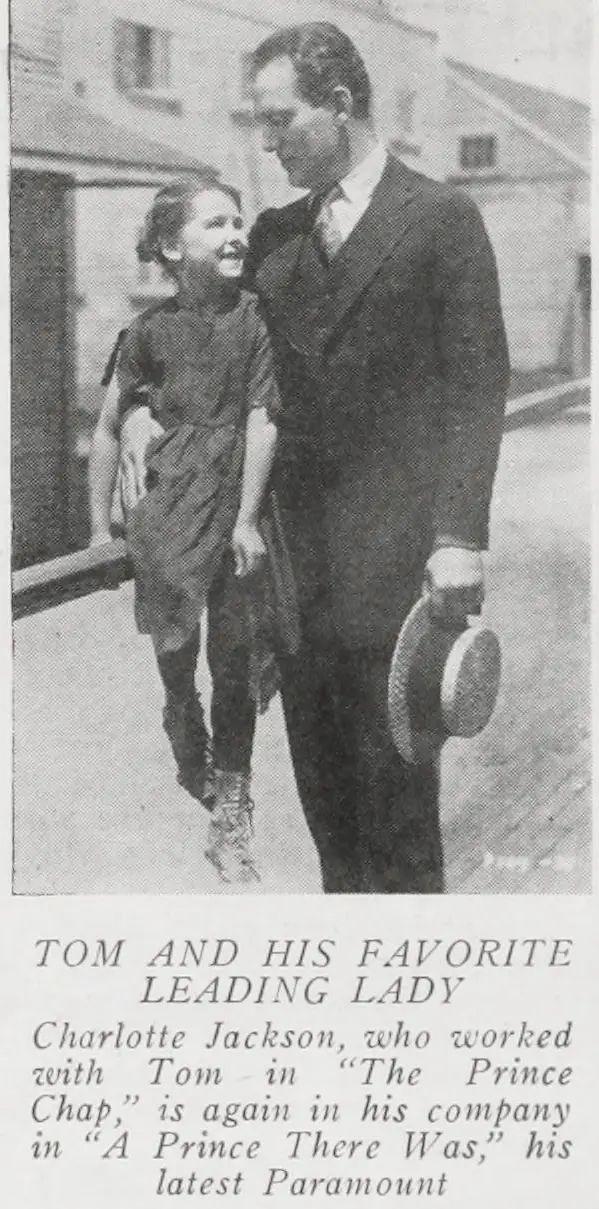
Restoration-wise, the 2023 4K scan from a 35mm nitrate positive reveals textures that pirated 16mm dupes obliterated: the herringbone weave of Meighan’s Norfolk jacket, the opalescent sheen of Lee’s silk stockings, the faint razor burn on Ferguson’s cheek. A new score by Guðnadóttir—cello, celesta, and glass harmonica—underlines every moral tremor without spoon-feeding emotion. During the rooftop lantern scene, a single sustained harmonic glissando bends until it mimics human inhalation; you can almost smell the coal-smoke of 1910 London.
Cinephiles tracking lineage will detect DNA strands leading to Lolita, The Go-Between, even Call Me by Your Name: all narratives that ask how firmly guardianship can be distinguished from appetite when time accelerates the child into a mirror. Yet The Prince Chap arrives at its frisson without the safety net of modern permissiveness; its silence is its indictment. The camera cannot speak, so it stares—and we, uncomfortably complicit, stare back across a century.
Box-office trivia: the picture grossed a respectable $470,000 on a $120,000 budget, yet Paramount shelved it after two regional censorship boards—Chicago and Pennsylvania—demanded the deletion of any scene showing the adult and minor alone in a studio. The excisions totaled 847 feet, roughly eleven minutes, rendering the plot incoherent. Prints vanished until a 1978 discovery in a Buenos Aires vault beneath a tango academy. Even now, the film carries a whiff of contraband; to screen it is to resurrect a conversation society preferred muted.
Viewing tip: watch it beside With Hoops of Steel as a double bill on guardianship run amok, then chase the evening with something antipodal—perhaps Sky-Eye’s airborne optimism—to rinse the palate. Yet be warned: the afterimage of Lila Lee’s tremulous smile will cling for days, a reminder that the most perilous seductions are those framed as altruism.
Ultimately, The Prince Chap endures because it refuses to resolve the very contradictions it ignites. It is a film about the moment art and appetite converge, when the gaze that cherishes also consumes, when every stroke of the brush is both benediction and brand. To witness it is to confront the uncomfortable possibility that our most selfless acts may merely be masterpieces of self-portraiture, painted in the pigment of another’s soul.
IMDb —
1923
Community
Log in to comment.