DbcultAccessing Vault...
Cult Review
Senior Film Conservator
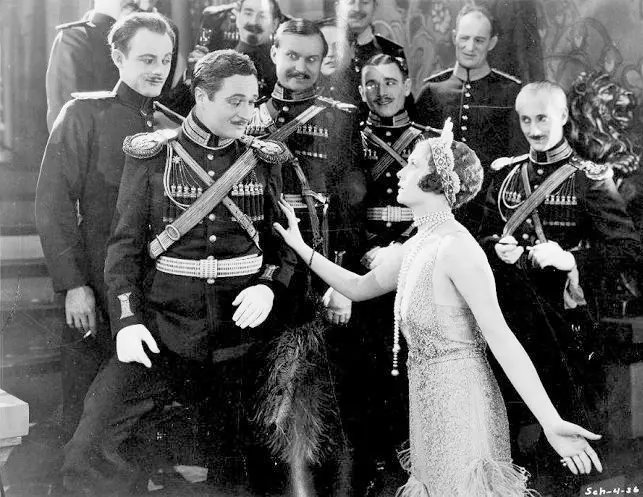
Is Siberia (1926) a lost treasure of the silent era or a frozen relic of outdated politics? Short answer: It is a visual triumph that survives its own clunky melodrama. This film is for the silent cinema devotee who craves atmospheric scale and practical effects; it is not for the viewer who demands historical nuance or a subtle, gray-shaded antagonist.
The film presents a world of sharp contrasts, where the warmth of a secret romance must compete with the literal and metaphorical cold of a nation in upheaval. It is a story that feels massive in scope, yet it is anchored by the very personal tragedy of characters caught in the gears of history. It works. But it is flawed.
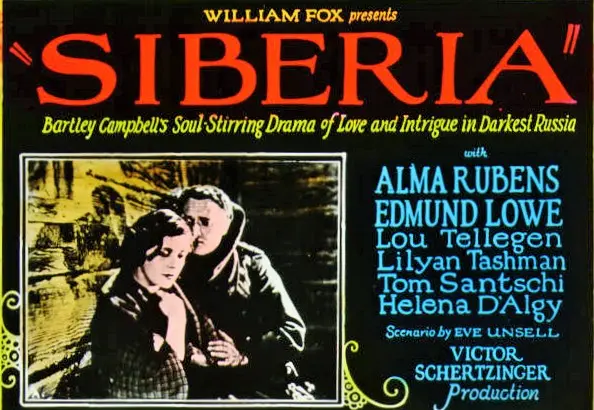
1) This film works because the physical production—real snow, real wolves, and real grit—creates a palpable sense of dread that modern CGI cannot replicate.
2) This film fails because the character of Egor is a cartoonish caricature of revolutionary zeal, lacking the complexity found in later cinematic portrayals of the era.
3) You should watch it if you want to see how early Hollywood translated massive geopolitical shifts into intimate, high-stakes survival horror.
Victor Schertzinger’s direction in Siberia is nothing short of ambitious. While many films of the mid-1920s were content with stagey interiors, Schertzinger takes the camera into the biting wind. The cinematography captures the isolation of the Siberian outpost with a bleakness that feels modern. Look at the scene where Sonia is first marched into the exile camp; the way the horizon swallows the line of prisoners is a haunting visual metaphor for the erasure of the individual by the state.
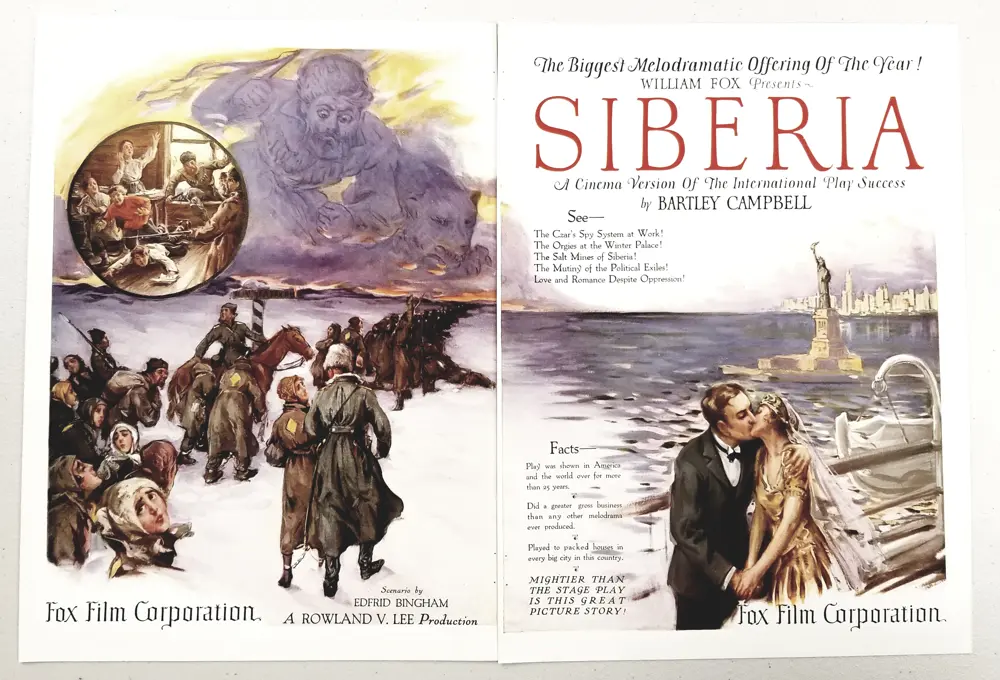
The use of light and shadow in the barracks scenes creates a claustrophobic tension. Petroff, played by Edmund Lowe, is often framed against the cold, hard lines of military architecture, emphasizing his role as a cog in an aging machine. The contrast between these rigid frames and the chaotic, wide-open spaces of the final chase sequence is a masterclass in visual pacing. It reminds one of the rugged outdoor energy seen in Tiger Rose, where the environment is as much a character as the actors.
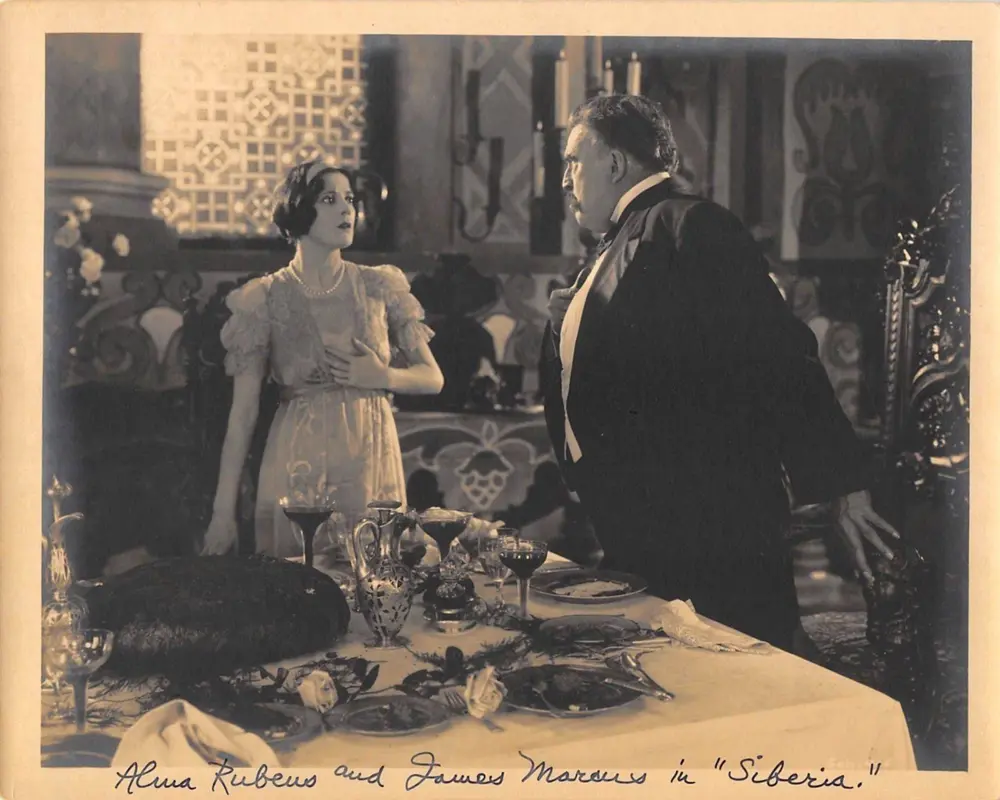
Alma Rubens brings a haunted quality to Sonia that transcends the silent film tendency toward over-acting. Her eyes convey a weariness that suggests her character has already seen the end of the world before the first reel is over. In the moment where she realizes the Bolshevik revolution has finally arrived, her expression isn't one of pure joy, but of a terrifying uncertainty. It is a nuanced beat in a film that often lacks nuance.
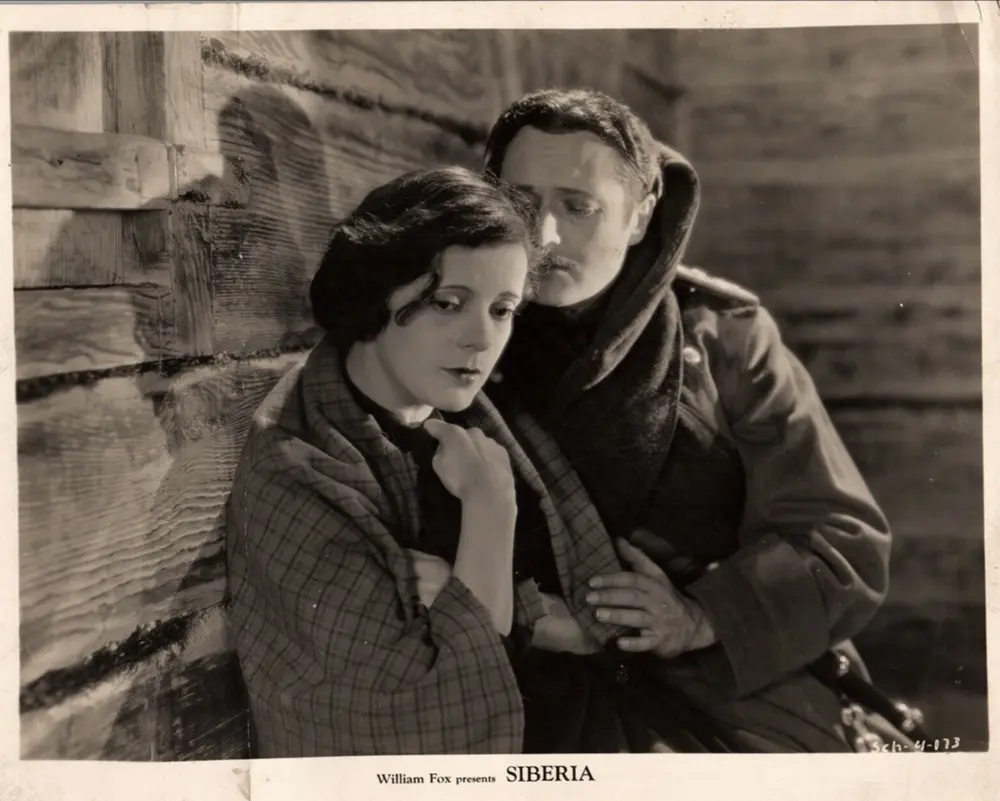
Edmund Lowe’s Petroff is the quintessential romantic lead of the era—stiff-backed, honorable, and slightly oblivious. However, his chemistry with Rubens provides the film's emotional core. Without their believable desperation, the final sledge chase would feel like a mere technical exercise. Their relationship is a domestic drama forced into a political theater, much like the tensions explored in Josselyn's Wife, though with significantly higher stakes.
Hollywood has always had a complicated relationship with the Russian Revolution. In Siberia, the political shift is treated less as a social movement and more as a convenient way to flip the power dynamics of the characters. Egor, played with mustache-twirling intensity by Lou Tellegen, becomes the face of the 'Red Scare' long before the term was popularized. He is a predator using a flag as a cloak. This lack of ideological depth is the film's biggest narrative hurdle.
Compare this to the treatment of military duty and political upheaval in The Firing Line. While that film also leans into melodrama, Siberia feels more visceral because it moves the conflict from the drawing room to the death-trap of the wilderness. The film doesn't care about the 'why' of the revolution; it only cares about the 'who' is being chased. The ice doesn't care about your politics.
Siberia (1926) is absolutely worth watching for anyone interested in the evolution of the action-thriller. While the first half suffers from some slow pacing and repetitive romantic longing, the final thirty minutes are a breathtaking display of silent-era stunt work. The pursuit by wolves across the frozen wastes is a sequence that still generates genuine tension today. It is a primitive, raw form of cinema that relies on physical presence rather than digital trickery.
If you are looking for a deep historical analysis of the fall of the Romanovs, you will be disappointed. If you are looking for a film that captures the sheer terror of being hunted through a landscape that wants you dead, Siberia delivers. It is a primal experience. It is cold. It is cruel. It is cinema.
The climax of the film involves a sledge race against both Egor and a pack of wolves. This isn't just an action scene; it’s an early example of survival horror. The wolves aren't just animals; they are the physical manifestation of the chaos following the revolution. The way the camera tracks the sledge, with the wolves nipping at the heels of the horses, is a technical feat that must have been incredibly dangerous to film. It has a grit that makes modern action feel sanitized.
“The film’s greatest achievement isn't its romance, but its ability to make the viewer feel the sub-zero temperatures through a flickering black-and-white screen.”
This sequence elevates the film from a standard melodrama to something more enduring. It’s an unconventional observation, but the wolves are actually more compelling antagonists than Egor. They are a force of nature, whereas Egor is just a man with a grudge. The film is at its best when it pits humanity against the elements, rather than when it tries to explain the complexities of Russian society.
Siberia (1926) is a fascinating artifact that bridges the gap between the theatricality of early silent film and the kinetic energy of the modern blockbuster. While its politics are thin and its villain is broad, its heart beats with a genuine sense of adventure. It is a film that understands the power of the landscape. It uses the environment to test its characters in ways that feel both ancient and cinematic. If you can push past the 1920s tropes, you will find a survival story that is as cold and sharp as a shard of ice. It is a flawed work, but its peaks are high enough to warrant a look. Don't go in for the history; go in for the chase.
IMDb 5.1
1928
Community
Log in to comment.