DbcultAccessing Vault...
5.4/10
Senior Film Conservator
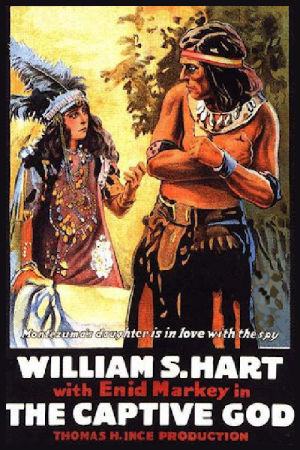
A definitive 5.4/10 rating for a film that redefined the boundaries of cult cinema. The Captive God remains a cornerstone of transgressive art.
Venturing into the annals of early cinema, one occasionally unearths a gem whose ambition and narrative scope transcend the technological limitations of its era. The Captive God, a 1919 silent film, stands as a testament to this audacious spirit, delivering an epic saga that weaves together elements of historical drama, romance, and adventure against the vivid backdrop of 16th-century Mexico. Penned by the imaginative Monte M. Katterjohn, this picture is not merely a film; it is a grand, sweeping narrative, a silent spectacle designed to transport its audience to a world both ancient and mystical, brimming with passion, power, and perilous intrigue.
The premise itself is a stroke of imaginative brilliance: a shipwrecked Spanish infant, a sole survivor cast upon an unknown shore, is discovered by the Tehuans, an indigenous tribe living in blissful isolation from the nascent European incursions. Their lack of exposure to 'white people' leads them to a profound, almost inevitable conclusion: this child must be divine. Thus, the boy is christened Chiapa, raised as a god, and imbued with an authority that grows with his stature. This foundational myth sets the stage for a compelling exploration of identity, destiny, and the unforeseen consequences of cultural collision. Chiapa's journey from an orphaned human to a revered deity, and then back to a man fighting for his love and his people, forms the emotional core of the film, a journey fraught with both privilege and profound struggle.
The narrative quickly introduces us to the complexities of Chiapa's adult life. As the undisputed leader of the Tehuans, his power is absolute, yet his heart becomes ensnared by Tecolote, a priestess. Enid Markey, portraying Tecolote, imbues the character with a tantalizing blend of allure and duplicity. Her beauty is undeniable, but her affections are as fleeting as the desert wind, a stark contrast to Chiapa's earnest devotion. She is, as the plot suggests, 'quite unworthy of him,' and her encouragement of other suitors foreshadows the betrayal that will inevitably follow. This early romantic entanglement establishes a crucial thematic thread: the distinction between genuine affection and superficial infatuation, a contrast that will be starkly drawn later in the film. The film explores how even a 'god' can be vulnerable to human frailties, particularly the intoxicating and often misleading power of desire.
The dramatic tension escalates with the ominous arrival of the Aztecs. Their empire, under the formidable Montezuma, is depicted as a relentless force of expansion, driven by conquest and a desire for tribute. Hearing of the Tehuans' prosperity under their 'white god,' Montezuma dispatches his chief general, Mexitli, a character brought to life with menacing gravitas by Robert McKim. McKim's portrayal of Mexitli is a masterclass in silent film villainy, conveying ruthless ambition and a predatory gaze through expression and posture alone. The ensuing battle is a pivotal moment, a clash of civilizations that shatters the Tehuans' peaceful existence. The conquest is swift and brutal, and Mexitli's appropriation of Tecolote as his personal slave serves as a stark reminder of the spoils of war and the objectification of women in such conflicts. This event ignites Chiapa's transformation from benevolent ruler to determined avenger, setting him on a perilous path into the heart of his enemies' territory.
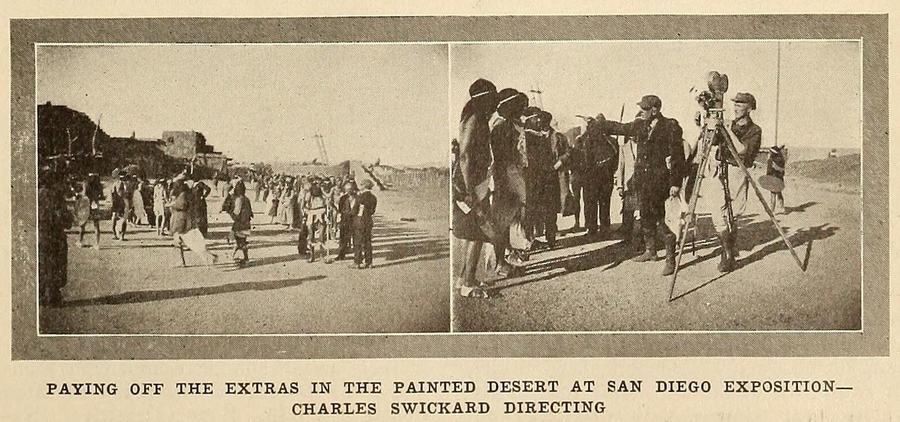
Chiapa's infiltration of the Aztec capital as a spy marks a significant shift in the film's tone, moving from epic battle sequences to a more intimate, suspenseful drama. His covert operations lead him to the magnificent gardens of Montezuma, where a fateful encounter leaves him wounded. It is here that the film introduces its true emotional anchor: Lolomi, Montezuma's beautiful daughter, portrayed with grace and sensitivity by Dorothy Dalton. Her compassionate act of saving Chiapa, a stranger and an enemy, immediately establishes her as a character of profound moral integrity, a beacon of light within the opulent yet often cruel Aztec court. The blossoming romance between Chiapa and Lolomi is arguably the film's most compelling element. It is a forbidden love, a dangerous liaison that defies tribal loyalties and societal expectations. Their connection is pure and deeply felt, a poignant contrast to the superficiality of Chiapa's earlier relationship with Tecolote. Dalton's performance, through subtle gestures and expressive eyes, conveys the depth of Lolomi's burgeoning affection and the immense risk she undertakes to protect Chiapa.
The plot thickens as Mexitli, growing weary of Tecolote, sets his sights on the princess Lolomi. This development creates a potent love triangle, or rather, a love square, where desires clash with devastating consequences. Mexitli's pursuit of Lolomi is driven by power and lust, contrasting sharply with Chiapa's genuine affection. Lolomi's steadfast refusal of Mexitli, her willingness to 'rather die than have him,' underscores her strength of character and her unwavering devotion to Chiapa. When Montezuma, unaware of his daughter's true feelings, grants Mexitli his consent, the stage is set for an inevitable confrontation. Mexitli's attempt to take the princess by force leads directly to the discovery of Chiapa, an event that seals his tragic fate: condemnation to the sacrificial stone at the year's end. This climactic betrayal and capture are handled with a heightened sense of dramatic urgency, typical of the silent era's flair for grand gestures and overt emotional expression.
The final act of The Captive God is a masterclass in silent film spectacle, a crescendo of action and suspense. Lolomi, her pleas to her father proving futile, takes matters into her own hands, sending a desperate message to the Tehuans that their god is captive. This act of defiance, born of love and desperation, ignites the spark of rebellion. An avenging army of Tehuans, galvanized by the plight of their former deity, sweeps down upon the Aztec stronghold, culminating in a sequence of 'thrilling scenes with a smashing finish.' This grand finale would have been a visual feast for audiences of the time, relying on expertly choreographed action, large crowds, and dynamic cinematography to convey the chaos and heroism of the battle. The resolution brings about a powerful sense of justice and reunion, affirming the strength of true love and loyalty over tyranny and betrayal.
Monte M. Katterjohn's screenplay is notable for its ambitious scope and intricate plotting. While historical accuracy might take a backseat to dramatic flair, the narrative successfully crafts a compelling world filled with memorable characters and high stakes. The themes explored—identity, love, power, betrayal, and redemption—are universal and timeless, allowing the film to resonate beyond its historical setting. Katterjohn's ability to weave together multiple character arcs and escalating conflicts into a cohesive and satisfying whole is commendable, especially considering the structural demands of silent film storytelling, where exposition often relied on intertitles and visual cues.
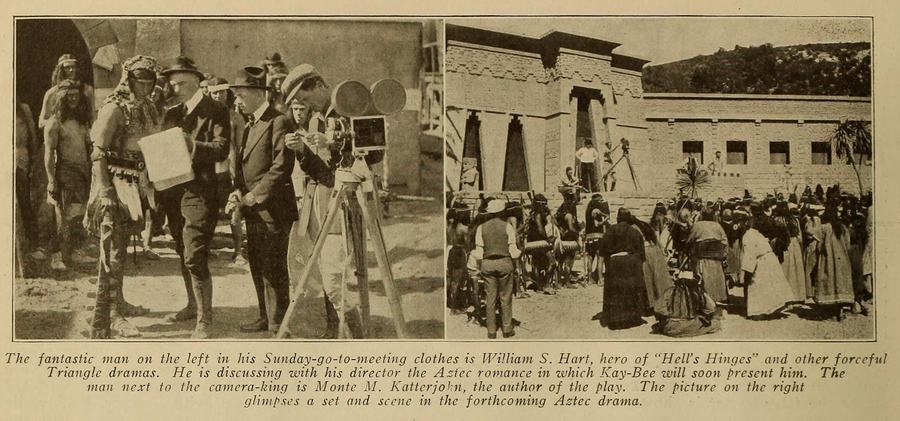
The performances in The Captive God are a vivid demonstration of silent era acting techniques. P. Dempsey Tabler, as Chiapa, carries the immense weight of the protagonist's journey, transitioning convincingly from a revered deity to a desperate lover and vengeful warrior. His expressive face and physical presence would have been crucial in conveying Chiapa's internal conflicts and external struggles. Robert McKim's Mexitli is a formidable antagonist, his villainy palpable even without spoken dialogue. Enid Markey's Tecolote is alluringly treacherous, while Dorothy Dalton's Lolomi radiates purity and strength, making her a sympathetic and heroic figure. The film also features a strong ensemble cast including William S. Hart, Herbert Farjeon, William Desmond, Bob Kortman, and Dorcas Matthews, each contributing to the rich tapestry of characters that populate this ancient world. The nuances of their performances, conveyed through exaggerated gestures, facial expressions, and body language, were essential in communicating the emotional depth of the story to an audience accustomed to interpreting visual cues.
Visually, silent films like The Captive God relied heavily on strong art direction, elaborate costumes, and dynamic cinematography to create their immersive worlds. One can imagine the grandeur of the Aztec capital, the lushness of Montezuma's gardens, and the stark beauty of the Tehuans' lands brought to life through painted backdrops, intricate sets, and carefully chosen locations. The battle sequences, particularly the 'smashing finish,' would have employed techniques like parallel editing and close-ups to heighten the sense of urgency and excitement. While specific details of its visual style are lost to time, the very ambition of the plot suggests a film that spared no expense in its production values for the era, aiming for a cinematic experience that was both grand and emotionally resonant. The use of light and shadow, a hallmark of early cinema, would have been critical in establishing mood and emphasizing dramatic moments, from the sacred rituals of the Tehuans to the ominous ceremonies of the Aztecs.
Comparing The Captive God to other films of its time or even later works reveals its unique position. Its epic scope and focus on a specific historical/cultural setting might draw parallels with films like Chûshingura, though that Japanese epic, while equally grand, delves into different cultural codes of honor and loyalty. The theme of a protagonist caught between two worlds, or a love that defies societal boundaries, echoes in countless narratives, but here it's imbued with a distinctively early 20th-century American lens on ancient civilizations. The portrayal of a 'femme fatale' figure like Tecolote, whose self-serving nature drives key plot points, can be seen in other films where female characters exert powerful, often destructive, influence, perhaps even touching upon themes explored in The Fox Woman, albeit through a very different mythological framework.
The underlying commentary, however subtle, on colonialism and the clash of cultures is also noteworthy. While the film doesn't explicitly frame the Spanish boy as a colonizer, his initial deification by the natives and subsequent entanglement with the dominant Aztec power structure offers a fascinating, if idealized, perspective on cross-cultural encounters. The narrative sidesteps the harsh realities of historical conquest, instead focusing on a more romanticized vision of indigenous societies and a personal quest for justice. This approach was common for the period, allowing for escapist adventure without delving into the more complex, often uncomfortable truths of history. One might consider The Lost Paradise as another example of films that explore idealized or isolated worlds, though without the specific historical backdrop.
The portrayal of betrayal, a central motif with Tecolote's fickle nature and Mexitli's ambition, is a powerful driver of the plot. This theme is a perennial favorite in cinema, explored perhaps with different nuances but similar emotional weight in films like The Traitress. Here, the betrayals are not merely personal but have tribal and imperial consequences, elevating the stakes considerably. The film's ability to craft such intricate emotional and political webs without the aid of spoken dialogue speaks volumes about the skill of its writers and actors. The sheer emotional force had to be conveyed through every gesture, every lingering glance, every dramatic pose.
Ultimately, The Captive God is a remarkable example of early 20th-century storytelling, a film that dared to dream big and deliver a narrative of immense scale and emotional depth. Its blend of exotic locale, dramatic romance, and thrilling action would have captivated audiences of its time, offering a window into a world far removed from their own. Even today, understanding its context and the ambitious craft involved, one can appreciate its enduring appeal as a testament to the power of cinematic narrative. It's a journey into a lost world, not just of ancient Mexico, but of a bygone era of filmmaking, where imagination and visual storytelling reigned supreme. The 'smashing finish' wasn't just a physical battle; it was the culmination of a hero's arduous journey, a triumph of love and loyalty against overwhelming odds, leaving audiences with a profound sense of satisfaction and wonder at the sheer spectacle they had just witnessed. It serves as a vivid reminder that the foundational elements of compelling cinema—strong characters, compelling plots, and high stakes—have remained constant, even as the medium itself has evolved dramatically. The legacy of films like The Captive God lies not just in their historical significance, but in their timeless capacity to transport and enthrall. These early epics laid the groundwork for the grand narratives that would define Hollywood for decades, proving that even without sound, a story well told can echo across generations and capture the human spirit in all its complex glory.

IMDb —
1916
Community
Log in to comment.