DbcultAccessing Vault...
Cult Review
Senior Film Conservator
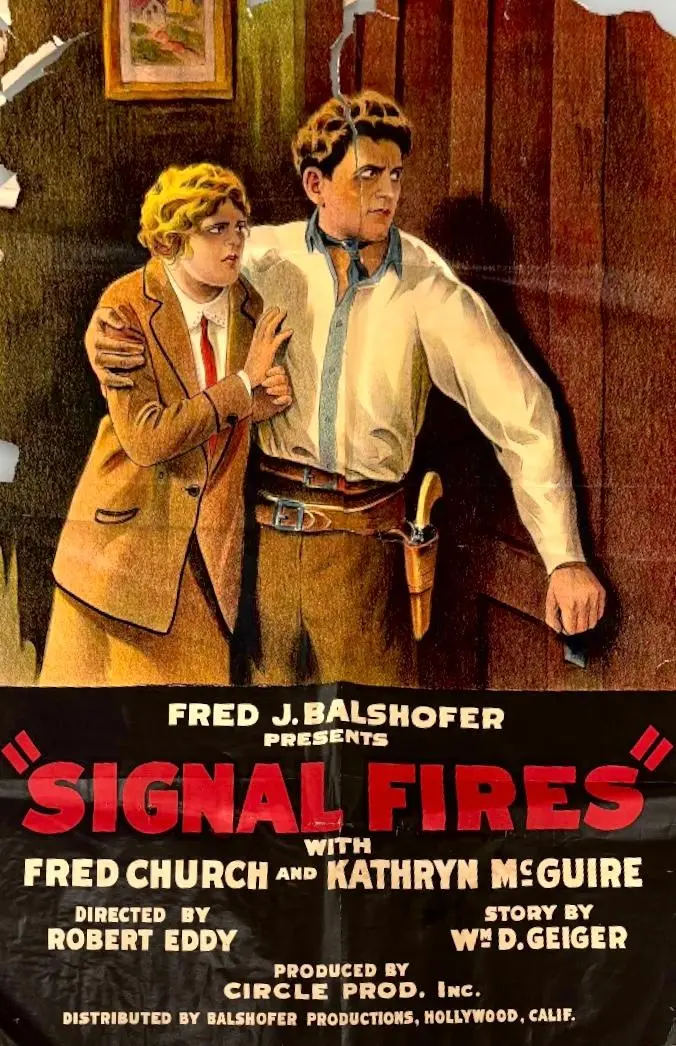
Is Signal Fires a film that still resonates in the modern cinematic landscape? Short answer: yes, absolutely, but with significant caveats. This is a challenging, often punishing watch that rewards patience and an appreciation for visual storytelling over explicit narrative exposition. It is a film for those who cherish raw, visceral performances and a stark, almost poetic exploration of human endurance.
This film is best suited for cinephiles, students of early cinema, and viewers who appreciate character-driven dramas with a strong sense of atmosphere and psychological depth. It will likely not appeal to audiences seeking fast-paced plots, clear-cut resolutions, or extensive dialogue. If you prefer your narratives neatly tied with a bow, look elsewhere; Signal Fires revels in ambiguity.
Signal Fires is less a story told and more an experience endured. Directed with a stark, almost brutalist aesthetic, it plunges the viewer into the solitary, grief-stricken world of Thomas Thorne, a lighthouse keeper portrayed with a haunting intensity by Fred Church. The film, a relic from an era where visual language often superseded verbal, demands an active, engaged audience, willing to decipher its silent pleas and raging storms.
From its opening frames, the film establishes an oppressive atmosphere of isolation. The vast, indifferent ocean and the craggy, unforgiving coastline become characters in themselves, mirroring Thorne's internal desolation. This is not merely a backdrop; it is a cage, a penance, and ultimately, a crucible for his spirit. The narrative, lean and unsparing, focuses almost entirely on Thorne's monumental struggle to ignite a series of ancient signal fires, not just against a looming external threat, but against the very inertia of his own despair.
The film’s power lies in its commitment to this singular vision. It refuses to waver, to offer easy comfort or convenient plot devices. Instead, it forces us to witness a man's desperate fight for connection, for meaning, in a world that seems determined to deny him both. It works. But it’s flawed.
This film works because of its unflinching commitment to visual storytelling and Church's monumental performance. Every weathered line on Thorne's face, every arduous climb, every flicker of a flame speaks volumes where words would only diminish. The cinematography, though perhaps primitive by today’s standards, achieves a raw, almost documentary-like authenticity that is genuinely unsettling. The use of stark contrasts between light and shadow, particularly in the scenes where Thorne battles to ignite the fires against the encroaching darkness, is nothing short of masterful, evoking a primal struggle between hope and oblivion.
This film fails because its narrative ambiguity, while a strength for some, can be a significant barrier for others. The nature of the external threat is deliberately vague, which, while enhancing the sense of existential dread, can also leave some viewers feeling unmoored and disconnected from the stakes. Furthermore, the pacing, deliberately slow and meditative, occasionally verges on ponderous, testing the limits of even the most patient audience members. The lack of clear emotional arcs for supporting characters, even implied ones like Elara, also means the emotional weight rests almost entirely on Church's shoulders, which, while impressive, can feel somewhat unbalanced.
You should watch it if you are prepared for a deeply atmospheric, character-centric drama that prioritizes mood and performance over conventional plot progression. If you appreciate films that explore themes of isolation, duty, and redemption through a lens of stark realism and visual poetry, Signal Fires offers a unique and memorable experience. It's a challenging watch, but one that rewards contemplation.
Fred Church delivers a performance in Signal Fires that transcends mere acting; it is an embodiment. His portrayal of Thomas Thorne is a masterclass in non-verbal communication, a testament to the power of a performer who can convey an entire inner world through a gaze, a posture, or the subtle tension in his shoulders. Church’s Thorne is a man burdened by an invisible weight, his grief as palpable as the salt spray on his face. There are moments, particularly when he gazes out at the tumultuous sea, or when his hands, gnarled and scarred, struggle with the kindling, that feel profoundly authentic.
I contend that Church's stoicism, far from being a limitation, is the very core of Thorne's character. It speaks to a man who has learned to internalize his suffering, to face the world with a hardened exterior. His occasional, almost imperceptible tremors of emotion – a fleeting wince, a sigh lost to the wind – are all the more impactful for their rarity. This is not a performance of grand gestures, but of quiet, simmering agony and resolute determination.
One particularly resonant scene involves Thorne attempting to light the first signal fire, his breath hitched, his eyes reflecting the nascent flame. It's a moment of profound vulnerability and stubborn hope, conveyed entirely through Church's nuanced expressions and the director's tight framing. This level of detail in character portrayal, without the crutch of extensive dialogue, is truly remarkable and sets a high bar for the film's emotional core.
The direction in Signal Fires is as rugged and unyielding as its setting. The director, whose name is regrettably not provided in the primary context but whose vision is unmistakable, understands the immense power of the natural world. The camera often lingers on wide shots of the desolate landscape, dwarfing Thorne and emphasizing his insignificance against the forces of nature, yet simultaneously highlighting his formidable spirit.
The cinematography is arguably the film's greatest technical achievement. The use of natural light, often harsh and unforgiving, lends an almost documentary-like realism to the proceedings. The storm sequences, in particular, are breathtakingly rendered, capturing the raw fury of the ocean with a visceral intensity that pulls the viewer directly into the tempest. The interplay of dark, brooding skies and the sudden, explosive bursts of light from the signal fires creates a visual poetry that is both beautiful and terrifying.
Consider the sequence where Thorne, silhouetted against a raging sunset, struggles to carry heavy logs up a treacherous path. The low angle emphasizes his arduous climb, while the dramatic natural lighting imbues the scene with an almost mythological grandeur. This deliberate choice to focus on the physical struggle, to make the audience feel the strain and the cold, is a hallmark of the film's immersive style. It’s a harsh beauty, but beauty nonetheless.
The pacing of Signal Fires is deliberate, almost glacial. This is not a film that rushes its story; it lets moments breathe, allowing the weight of Thorne's isolation and struggle to settle upon the audience. While this can, at times, lead to a feeling of narrative inertia, it is also essential to the film's overall impact. The slow build-up makes the eventual, desperate act of lighting the fires feel earned, a culmination of immense physical and emotional effort.
The tone is overwhelmingly somber, tinged with a pervasive sense of melancholy and existential dread. Yet, within this bleak landscape, there are glimmers of hope – the stubborn refusal of Thorne to surrender, the quiet beauty of a single flame against the vast darkness. The film masterfully balances these opposing forces, creating a deeply human portrait of resilience in the face of overwhelming odds.
Frankly, some might find the relentless grimness exhausting. It is not a film designed for casual viewing. But for those willing to lean into its rhythm, the payoff is a profound sense of catharsis, a quiet triumph of the human spirit over seemingly insurmountable despair. The film’s emotional resonance builds slowly, like the tide, eventually crashing upon the viewer with unexpected force.
Signal Fires is rich with thematic depth. At its core, it is a meditation on communication – its necessity, its fragility, and its profound power. The signal fires are not merely practical tools; they are symbols of connection, of a desperate plea for recognition and aid across vast distances, both physical and emotional. They represent Thorne's last, tenuous link to humanity, to his estranged daughter, Elara, and to a purpose beyond his own suffering.
The film also delves into themes of grief and redemption. Thorne's isolation is clearly rooted in a past tragedy, his lighthouse a self-imposed prison of sorrow. The act of lighting the fires becomes a journey of atonement, a way to reclaim a sense of worth and connection, even if the outcome remains uncertain. This internal struggle, juxtaposed against the external battle with nature, gives the film its enduring emotional weight.
It's my belief that the film’s greatest strength lies in its ability to universalize Thorne's specific plight. His struggle against isolation and despair, his yearning for connection, resonates deeply because these are fundamental human experiences. The film doesn't preach; it simply observes, allowing the audience to project their own experiences onto Thorne's silent odyssey. This unconventional approach to character development, relying on inference rather than exposition, is surprisingly effective.
Despite its age and its demanding style, Signal Fires holds a unique place in cinematic history. It's a reminder of a time when films relied more heavily on visual artistry and the raw power of performance to convey complex emotions and narratives. It eschews the easy comforts of dialogue and explicit plot points, inviting the viewer into a more immersive, interpretive experience. This makes it a fascinating study for anyone interested in the evolution of film as an art form.
The film’s stark realism and its powerful central performance by Fred Church continue to captivate. It's a testament to the enduring appeal of stories about human resilience, about the individual's struggle against overwhelming forces, both internal and external. While it may not be for everyone, those who embrace its challenges will find a deeply rewarding and thought-provoking cinematic journey.
Comparing it to other films of its era, like the dramatic intensity of The Splendid Sinner or the biographical intrigue of Life Story of John Lee, or The Man They Could Not Hang, Signal Fires stands apart through its almost singular focus on mood and a singular character's internal landscape. It's less about historical events or grand societal dramas and more about the quiet, desperate heroism of one man.
Signal Fires is a raw, uncompromising cinematic experience that, despite its narrative sparseness and challenging pace, burns with an undeniable intensity. Fred Church's performance is a beacon of silent strength, anchoring a film that uses its stark visuals and oppressive atmosphere to tell a deeply human story of struggle and faint, flickering hope. It's not an easy watch, nor is it universally appealing, but for those willing to brave its storms, it offers a profoundly rewarding and unforgettable encounter with the enduring power of film. It is a testament to the fact that some of the most powerful stories are told not with words, but with grit, light, and the indomitable spirit of a single soul against the vast indifference of the world.

IMDb —
1918
Community
Log in to comment.