DbcultAccessing Vault...
Cult Review
Senior Film Conservator
A Tale of Two Tomorrows
Class, Confinement, and the Illusion of Moral Clarity
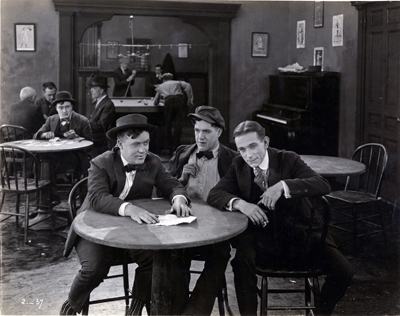
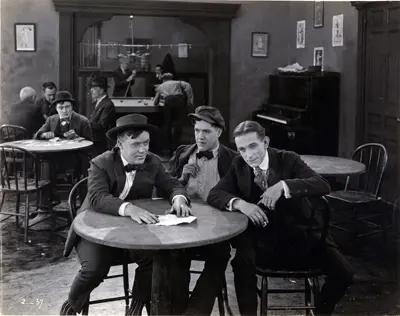
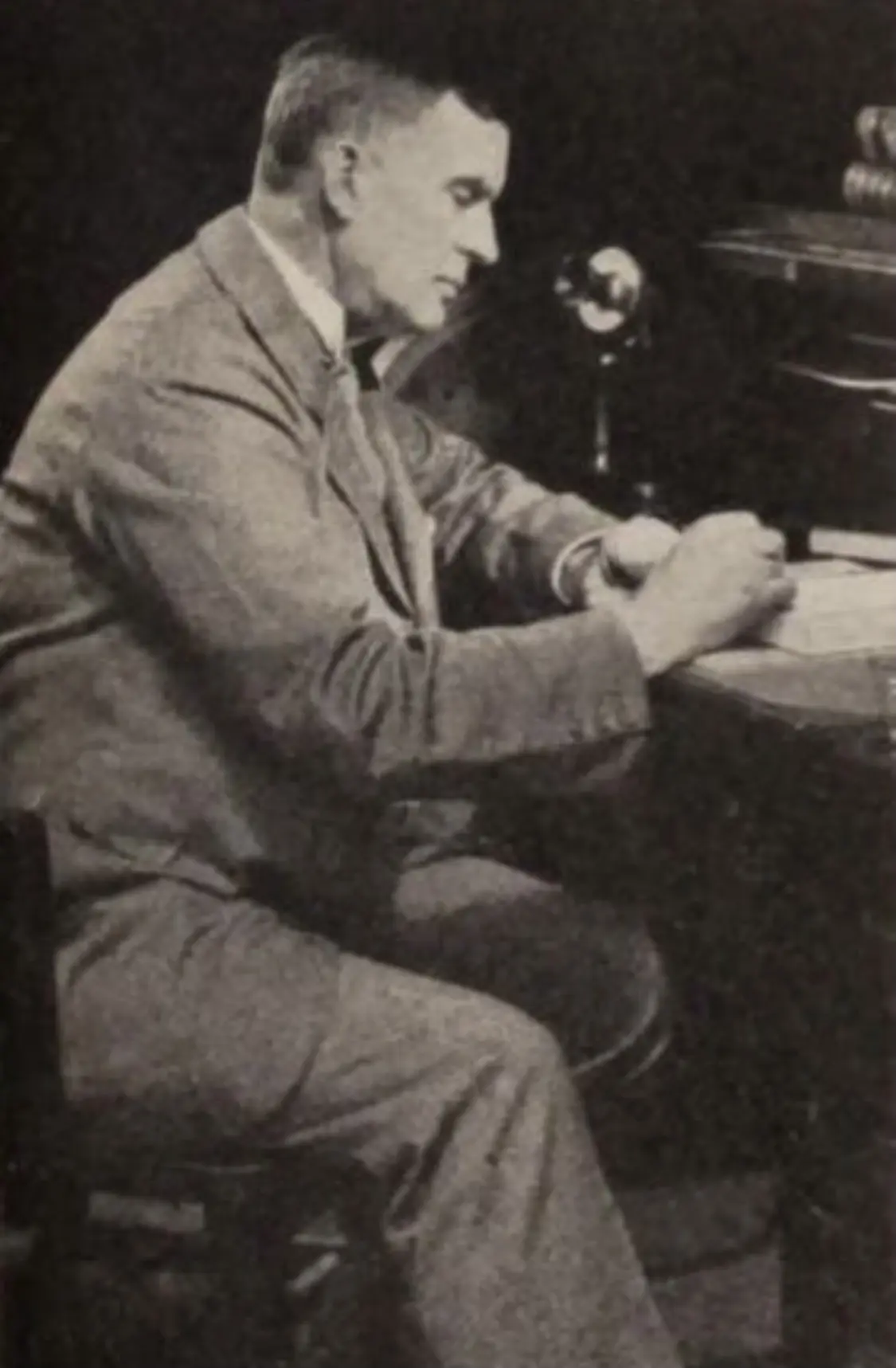
Thomas Mott Osborne and Basil Dickey’s The Right Way unfolds not as a mere crime thriller but as a socio-political dissection of early 20th-century America’s punitive machinery. At its core, the film juxtaposes Julian Marlowe’s (Sidney D’Albrook) brutal education in the art of survival with Thomas Whitmore’s (Tammany Young) privileged naivety, creating a dialectic that mirrors the broader cultural schism of the era. Julian, a product of the urban underbelly, is hardened by necessity; his ascent from reformatory pupil to criminal virtuoso is less a moral decay than an adaptation to a world that offers him no alternatives. Meanwhile, Thomas, cloaked in inherited wealth, stumbles into a system designed to crush the spirit as much as the body. Their collision—a collision of fate and ideology—is rendered with stark, unflinching realism.
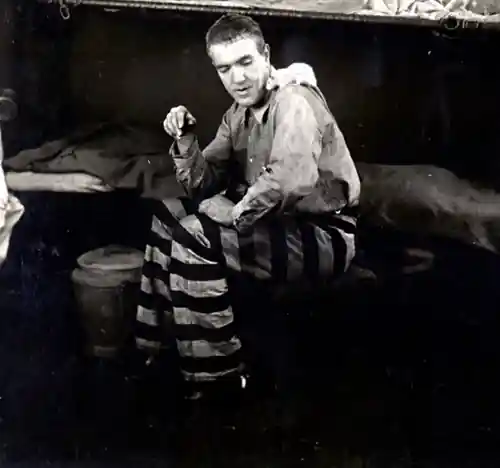
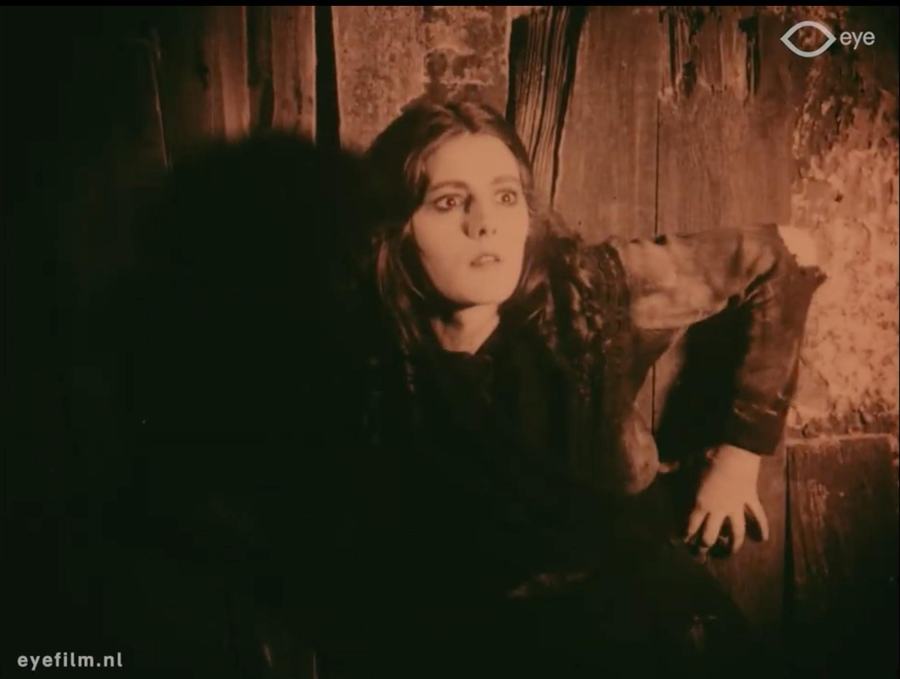
Osborne and Dickey’s script, though rooted in the silent film tradition, employs visual storytelling with a painterly precision that transcends its medium. The reformatory scenes, awash in sepia tones and shadowed corridors, evoke the suffocating inevitability of Julian’s path. His mentorship under a hardened warden—a figure both repellent and paternal—serves as a dark parody of institutional morality. When Julian later returns to the adult prison as a free man, now a seasoned schemer, the contrast between his calculated demeanor and the raw vulnerability of his first incarceration is rendered in fragmented close-ups that cut deeper than dialogue ever could.
Thomas Whitmore’s arc, by contrast, is a study in the fragility of bourgeois ideals. His forgery of his father’s signature—a crime trivial in legal terms but profound in its symbolic weight—becomes the catalyst for his immersion into a world where ethics are transactional and trust is a currency spent freely in the dark. The prison’s inhuman conditions, depicted with a grim verisimilitude that prefigures later works like The Fall of the Romanoffs, strip Thomas of his illusions. Yet it is precisely his outsider status that allows him to see the system’s inherent cruelty, a perspective Julian, now a veteran of its mechanisms, has long since lost.
The Architecture of Oppression
Brutality as Policy, and the Illusion of Order
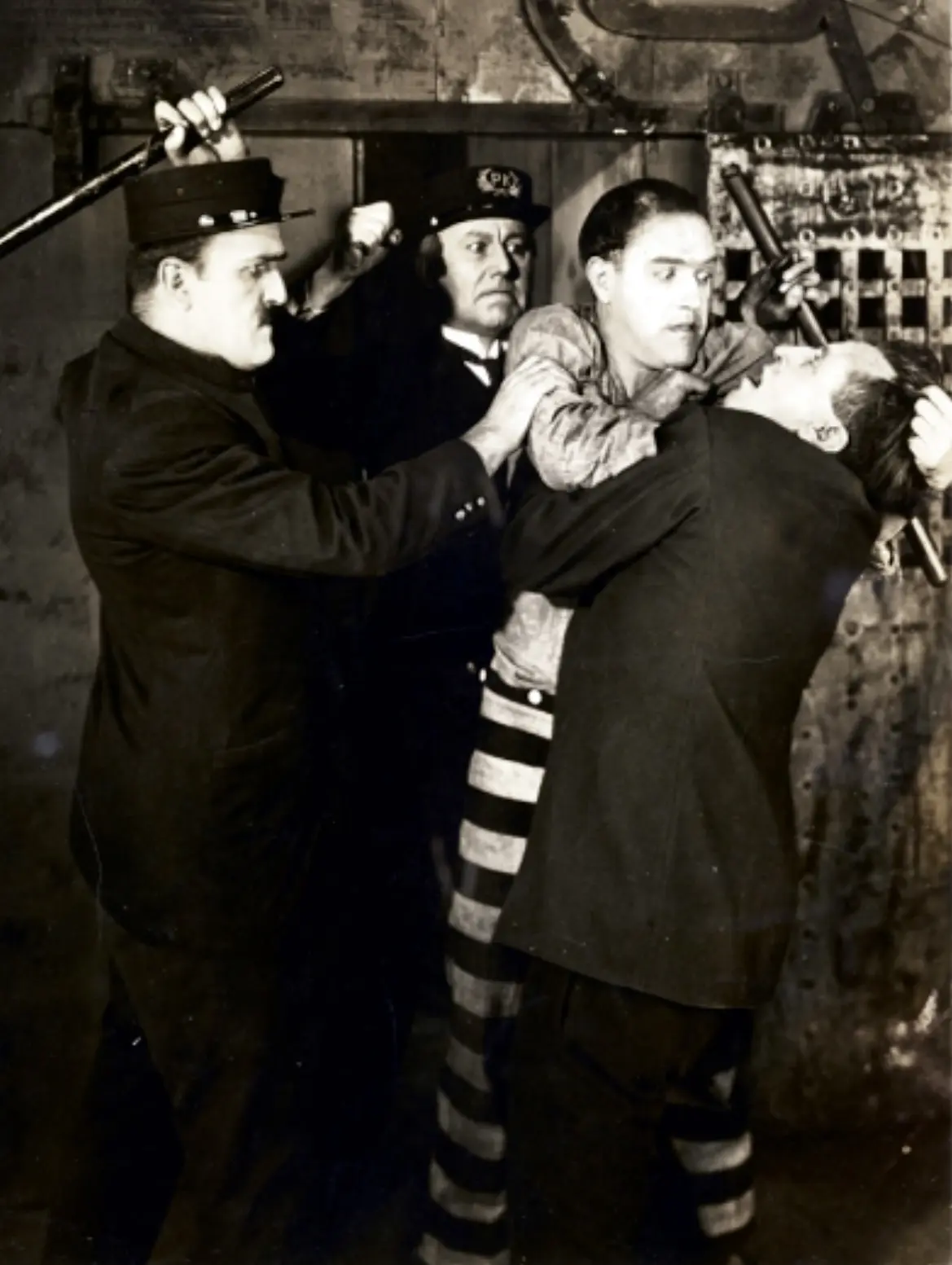
The prison sequences in The Right Way are masterclasses in spatial storytelling. The adult facility, with its labyrinthine cells and echoing hallways, becomes a character in its own right—a monolithic entity that devours individuality. The guards, clad in militaristic uniforms and moving with mechanical efficiency, embody the dehumanizing logic of institutional power. Their brutality is not incidental but structural; every slap, every forced march, every denial of dignity is a calculated act of control. This is not merely a prison but a theater of psychological warfare, where the line between punishment and extinction is perilously thin.
Julian’s return to this world as a free man-turned-criminal is a particularly poignant sequence. His familiarity with the prison’s rhythms grants him a veneer of authority, yet his every step is shadowed by the ghosts of his past. The film’s use of chiaroscuro lighting in these scenes—highlights on Julian’s face starkly contrasting with pools of darkness around him—visually encapsulates his duality: a man both in control and consumed by the very system he seeks to manipulate.
It is in their escape—a chaotic, high-stakes gambit to clear their comrade’s name—that the film’s thematic threads converge. The journey, fraught with moral compromises and fleeting moments of solidarity, becomes a metaphor for the broader struggle against institutionalized oppression. The decision to flee is not born of hope but of exhaustion, a recognition that within the prison’s walls, justice is an abstract concept, not a tangible pursuit.
Echoes in the Shadows
Legacy and Influence in the Silent Era
Though The Right Way is often overshadowed by its contemporaries, its influence ripples through early 20th-century cinema. The stark portrayal of prison life prefigures the existential despair of Hearts and Diamonds and the systemic critique of The Isle of Life, yet it distinguishes itself through its unflinching focus on the psychological toll of incarceration. The film’s exploration of class dynamics also finds echoes in Life's Greatest Problem, though Osborne and Dickey’s work is more explicit in its condemnation of the economic structures that perpetuate cycles of crime and punishment.
The use of color—though limited by the monochrome constraints of the era—is compensated by a masterful interplay of light and shadow. In the reformatory scenes, the pallid lighting evokes the sterility of institutional neglect, while the adult prison’s harsh, clinical illumination mirrors the dehumanization of its inmates. This visual language, coupled with the actors’ nuanced physical performances, creates an immersive experience that transcends the limitations of silent film.
Technically, the film is a marvel of its time. The editing, though rudimentary by modern standards, employs cross-cutting during the escape sequence to build tension with remarkable efficiency. The sound design, though nonexistent in the traditional sense, leverages the power of silence and ambient noise (the clanging of chains, the muffled cries of inmates) to create an auditory landscape as oppressive as the visual one. These elements, combined with the script’s incisive dialogue (rendered through intertitles with a literary precision), cement the film’s status as a proto-political thriller.
The Right Way’s Resonance in Modern Discourse
Over a century after its release, The Right Way remains a provocative lens through which to examine contemporary debates on mass incarceration, systemic inequality, and the myth of rehabilitation. Its portrayal of Julian Marlowe—a character neither romanticized nor demonized—challenges the audience to confront the societal forces that shape criminal behavior. In an age where the prison-industrial complex is under global scrutiny, the film’s message is as urgent as ever: that the line between criminal and victim is often drawn by circumstance, not character.
For modern viewers, the film’s relevance is compounded by its prescient critique of bureaucratic indifference. The guards’ cold efficiency, the administrators’ bureaucratic foot-dragging, and the public’s apathy toward institutional injustice all resonate in today’s discourse on prison reform. The film’s refusal to offer easy solutions—its insistence that the system’s flaws are both structural and inescapable—renders it not only a historical artifact but a cautionary tale.
In conclusion, The Right Way endures not merely as a relic of the silent film era but as a testament to the power of cinema as a medium for social critique. Its exploration of duality—between rich and poor, free and incarcerated, justice and injustice—remains as compelling today as it was in 1920. For those willing to engage with its unflinching gaze, the film offers not answers, but a mirror: a stark reflection of the world it depicts, and the world we continue to inhabit.
IMDb —
1922
Community
Log in to comment.