DbcultAccessing Vault...
Cult Review
Senior Film Conservator
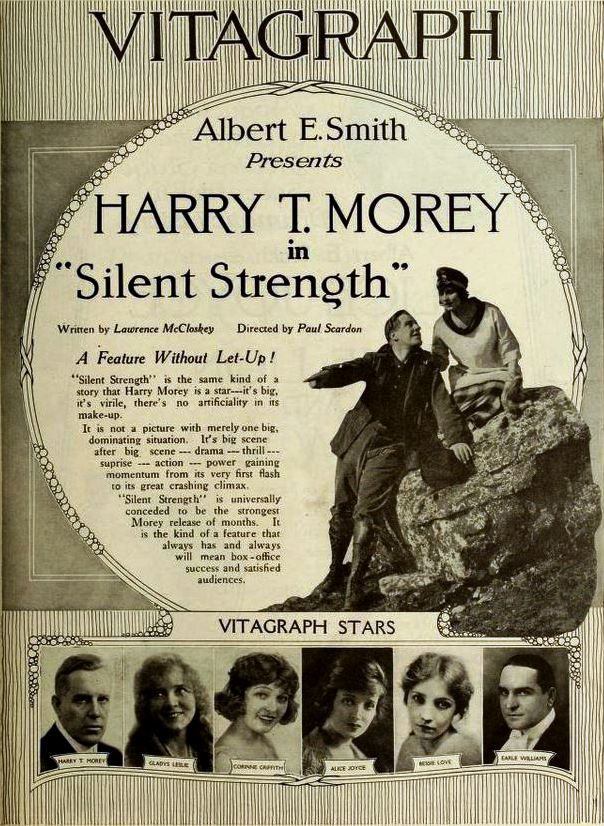
The cinematic tapestry of the early 20th century often wove narratives of stark moral contrasts, pitting the purity of nature against the corruption of civilization, and nowhere is this more eloquently, if melodramatically, explored than in the 1919 feature, Silent Strength. This film, a potent brew of mistaken identity, familial betrayal, and an arduous quest for justice, stands as a fascinating artifact, not merely for its intricate plot but for its ambitious exploration of human character in an era defined by visual storytelling. It asks profound questions about perception, the influence of environment, and the unwavering resilience of the human spirit, all without uttering a single spoken word.
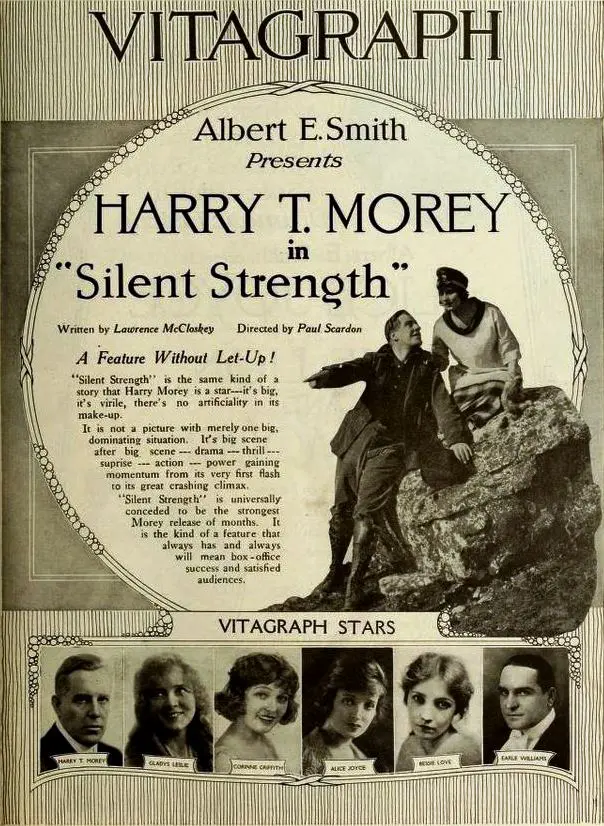
At its heart, Silent Strength leverages one of the oldest and most compelling narrative devices: the doppelgänger. Harry T. Morey, a prominent figure of the era, undertakes the formidable task of portraying two diametrically opposed characters, Dan La Roche and Henry Crozier, who are cousins and, crucially, look identical. This isn't a mere gimmick; it's the very engine of the film's dramatic thrust, a constant source of both agonizing misunderstanding and chilling villainy. Dan, the embodiment of the film's title, is a man forged by the untamed mountains, his character as unyielding and honest as the granite peaks surrounding his secluded cabin. His only confidant is the grizzled trapper, Tom Tripp, a character who serves as a grounding force, a symbol of the raw, unvarnished loyalty that defines Dan's world. This idyllic existence is disrupted by the revelation of a shared inheritance, drawing Dan into the orbit of his city-dwelling cousin, Henry Crozier. Crozier, in stark contrast, represents the corrosive influence of urban ambition and moral decay. His polished exterior belies a calculating mind, one that sees in Dan's resemblance not a familial bond, but an opportunity for exploitation.
The initial encounter between the cousins is pivotal, marked by a mutual astonishment at their uncanny likeness. This visual symmetry, however, only serves to underscore their profound moral divergence. Crozier, with predatory efficiency, convinces Dan to sign over valuable mining property in exchange for timber lands, a transaction that immediately signals his duplicitous nature. Dan, guileless and trusting, falls prey to his cousin's machinations, a testament to the inherent vulnerability of pure-hearted individuals in a world governed by avarice. This initial betrayal sets the stage for a cascading series of unfortunate events, each more heartbreaking than the last, demonstrating the film's commitment to exploring the full ramifications of deceit.
Upon his return to the mountains, Dan finds solace and burgeoning love in the presence of Ruth Madison, a city visitor whose spirit seems captivated by the wilderness. Their romance, blossoming amidst the pristine beauty of nature, is portrayed with a delicate sincerity, offering a brief respite from the encroaching shadows of Crozier's schemes. Betty Blythe, as Ruth, conveys a compelling blend of innocence and strength, a woman caught between two worlds and, ultimately, between two identical men. Her character’s journey is perhaps the most tragic, as she becomes the unwitting pawn in Crozier’s elaborate deception.
Meanwhile, Crozier's mismanagement of the mining property leads him to further villainy. He sells Dan his portion of the timber lands, concealing the crucial detail that these lands are secretly mortgaged. This act of double-dealing is a stark reminder of his relentless pursuit of self-interest, a trait that positions him firmly in the pantheon of early cinematic villains. The film doesn't shy away from showcasing the depths of his depravity, building a clear antagonist whose actions propel the narrative forward with relentless urgency. One might draw parallels to the intricate web of deceit found in films like The Liar, where personal gain often leads to the unraveling of moral fabric, or the calculated deceptions in The Master Crook, though Silent Strength adds the layer of mistaken identity to heighten the emotional stakes.
The narrative's most poignant and devastating turn occurs when Ruth, returning to the bustling city, encounters Crozier. In a moment of profound misidentification, she mistakes him for Dan, and in a cruel twist of fate, marries him. This sequence is a masterclass in silent film tragedy, relying heavily on Blythe's expressive acting and the audience's foreknowledge to convey the immense sorrow and dramatic irony. The subsequent treatment of Ruth by Crozier – his cruelty and eventual abandonment to evade capture for a stock swindle – paints a vivid picture of his irredeemable character. Such themes of unfortunate unions and the consequences of hasty decisions resonate with other films of the era exploring marital discord, perhaps even touching upon the underlying anxieties present in dramas like The Unfortunate Marriage, albeit with a unique doppelgänger twist.
Ruth, broken but not entirely defeated, returns to the mountains, clinging to a desperate hope that the transformative power of nature might have altered her husband. This belief in the redemptive quality of the environment is a recurring motif in early American cinema, often contrasting the corrupting influence of the city with the purifying essence of the wilderness. Her reunion with Dan, albeit brief and fraught with unspoken pain, leads to a night spent together, a moment of solace that quickly turns into another catalyst for misfortune. Dan is arrested for Crozier's crimes, framed by the very identity he shares with his malevolent cousin. This plot point brilliantly exploits the doppelgänger premise, creating a sense of inescapable doom for the innocent protagonist.
The film then shifts into a more action-oriented climax. Dan's escape from jail ignites a thrilling pursuit, culminating in a brutal confrontation. Crozier, the architect of so much suffering, reveals his ultimate cowardice by shooting Dan in the back. This act is not merely an attempt to silence Dan but a final, desperate affirmation of his own villainy, a complete rejection of any moral compass. However, justice, in this wilderness epic, is not solely the domain of the law. Tom Tripp, the loyal trapper, emerges as a figure of rugged retribution, avenging his friend by killing Crozier. Tripp's actions, while outside the formal legal system, provide a satisfying, if violent, resolution, aligning with the primal sense of justice often depicted in films set against untamed landscapes. The swift, decisive end to Crozier's life feels earned, a cathartic release after a prolonged period of torment and injustice. The theme of personal vengeance and the pursuit of wrongdoers, even outside the law, echoes the dramatic tension found in films like The Debt, where the weight of past wrongs demands a reckoning.
The final scenes of Silent Strength see Dan and Ruth finally united in marriage, their love having weathered the storm of deception, betrayal, and violence. It's a conclusion that, while perhaps conventional for the era, feels deeply earned. Their union represents the triumph of genuine character over superficial appearances, of enduring love over calculated deceit. The film, through its complex narrative and compelling performances, affirms the strength of integrity and the ultimate, if hard-won, victory of good over evil. The 'silent strength' isn't just Dan's individual stoicism; it's the quiet resilience of love, truth, and the natural world itself, which ultimately sheds the corrupting influence of the city.
Harry T. Morey's dual performance is undoubtedly the linchpin of Silent Strength. Distinguishing between Dan and Crozier, despite their identical physical appearance, required subtle yet distinct acting choices. Morey achieves this through nuanced body language, facial expressions, and even posture. Dan carries himself with an openness and groundedness, his gaze direct and honest. Crozier, conversely, often exhibits a furtive glance, a more rigid posture, and a subtle shift in his smile that hints at his manipulative nature. This differentiation, crucial for the audience to follow the intricate plot, is a testament to Morey's skill as a silent film actor. Betty Blythe, as Ruth, delivers a performance that balances vulnerability with a growing inner resolve. Her heartbreak, confusion, and eventual determination are clearly articulated through her expressive eyes and gestures, drawing the audience into her emotional turmoil. Bernard Siegel's portrayal of Tom Tripp, the loyal trapper, provides a rugged authenticity, a moral compass in Dan's world, and ultimately, the instrument of final justice.
The pacing of Silent Strength is characteristic of its era, allowing moments for emotional resonance and dramatic build-up. The narrative unfolds with a methodical precision, each plot twist carefully laid out to maximize its impact. The visual storytelling, essential in silent cinema, relies on clear intertitles, expressive acting, and evocative cinematography to convey the complex machinations of the plot. The contrast between the expansive, natural landscapes of the mountains and the confined, often opulent yet morally compromised interiors of the city is effectively utilized to underscore the film's thematic concerns. This visual dichotomy reinforces the narrative's central conflict: the clash between inherent goodness and acquired corruption.
In its entirety, Silent Strength is more than just a forgotten relic of early cinema; it is a robust narrative that explores timeless themes. The struggle for identity, the corrupting influence of greed, the power of love, and the ultimate triumph of justice, even when delivered by unconventional means, are all deeply embedded in its fabric. The film's ability to weave such a complex tapestry of human experience without dialogue speaks volumes about the ingenuity and artistry of silent filmmakers. It reminds us that compelling storytelling transcends spoken words, relying instead on the universal language of emotion, action, and visual metaphor.
For modern audiences, Silent Strength offers a fascinating glimpse into the narrative sophistication of early cinema. It challenges perceptions of what silent films could achieve, demonstrating a command of plot, character development, and thematic depth that rivals many later productions. While the conventions of the era might appear dated to some, the core human drama remains potent and engaging. The film’s exploration of duality, particularly through Morey’s compelling performance, stands as a testament to the enduring appeal of the doppelgänger motif in storytelling, a device that continues to captivate audiences across generations and genres. Its intricate plot, though at times reliant on incredible coincidences, ultimately serves to heighten the dramatic stakes and deliver a satisfying, albeit hard-won, resolution. It is a film that, despite its lack of audible dialogue, speaks volumes about the human condition and the enduring power of silent strength.
IMDb 5
1936
Community
Log in to comment.