DbcultAccessing Vault...
Cult Review
Senior Film Conservator
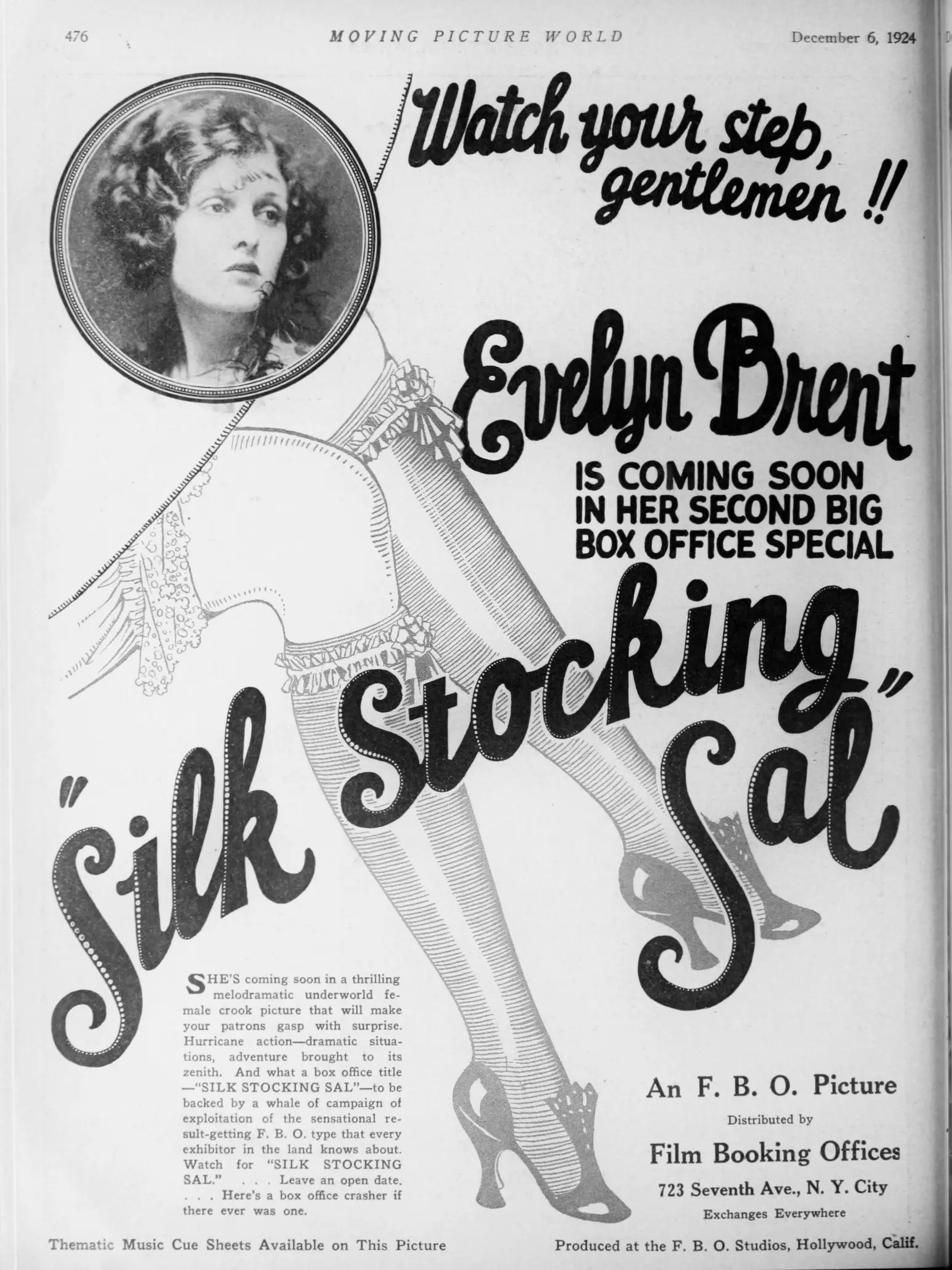
The silent era of motion pictures often oscillated between the melodramatic and the visceral, yet few films of the mid-twenties capture the intersection of social mobility and criminal intrigue as effectively as Silk Stocking Sal. This 1924 production serves as a luminous vehicle for Evelyn Brent, an actress whose ability to convey complex internal transitions through mere ocular shifts was unparalleled during the twilight of the silents. Unlike the more rugged portrayals found in The Brute Breaker, Brent brings a sophisticated vulnerability to the screen that elevates the 'reformed criminal' trope into something approaching high art.
The narrative commences not with a moralizing lecture, but with a confrontation. When Bob Cooper (Robert Ellis) discovers Sal burgling his palatial townhouse, the audience expects the standard punitive response. Instead, Richard Schayer’s screenplay opts for a more psychologically nuanced path. Cooper’s decision to offer Sal an honest vocation in his importing firm isn't merely an act of Victorian charity; it is an acknowledgement of her poise—a recognition that the skills required for high-stakes burglary are the same skills required for the navigation of the elite antique markets. This thematic thread of social adaptability is a recurring motif in the era, echoed in different contexts in films like A Flirt There Was.
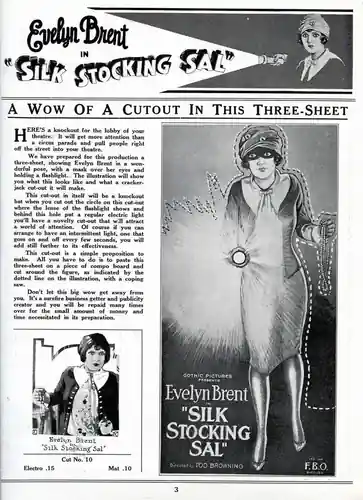
The tranquility of Sal’s new life is abruptly terminated by the violent death of Abner Bingham, Cooper’s business partner. The subsequent legal proceedings against Cooper are a masterclass in the depiction of judicial fallibility. The circumstantial evidence presented is suffocating, creating a sense of impending doom that rivals the tension found in The Blue Streak. As Cooper is sentenced to die, the film shifts gears from a drama of manners into a high-stakes espionage thriller. The transition is seamless, largely due to the atmospheric cinematography that utilizes deep shadows and sharp contrasts to mirror Sal’s descent back into the underworld she once inhabited.
Sal’s suspicion of Bull Reagen (Earl Metcalfe) provides the catalyst for the film's most innovative sequence. While many contemporary films, such as A Yankee Go-Getter, relied on physical prowess or accidental discovery to resolve their conflicts, Silk Stocking Sal introduces a proto-technological solution: the hidden microphone. This inclusion is particularly fascinating given the silent nature of the medium. The audience must visualize the sound, imagining the weight of the recorded words that will eventually serve as the instrument of Cooper's salvation. It is a brilliant use of the 'unseen and unheard' to drive the emotional stakes of the climax.
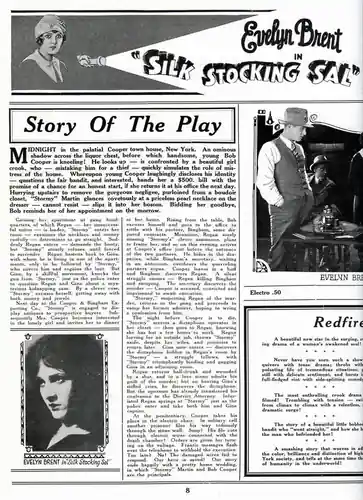
The confrontation in Bull Reagen’s apartment is the film’s pièce de résistance. Sal’s strategy is not one of brute force, but of psychological manipulation. She employs her femininity as a weapon, but not in the reductive 'vamp' style often seen in films like The Discard. Instead, she utilizes a shrewd understanding of the criminal ego. By taunting Reagen, accusing him of lacking the 'killer instinct,' she goads him into a boastful confession. The tension is palpable; every tilt of the bottle and every slur of Reagen’s speech is a heartbeat closer to Cooper’s execution. The intercutting between the rowdy apartment and the sterile, grim reality of the death house creates a rhythmic urgency that is modern even by today’s standards.
In comparison to the more whimsical tone of Jumping Beans or the localized drama of Iwami Jûtarô, Silk Stocking Sal carries a cosmopolitan weight. It deals with the fragility of reputation and the redemptive power of loyalty. When the District Attorney finally overhears the confession, the resolution is swift and cathartic. The film doesn't linger unnecessarily on the arrest of the gang; its primary interest remains the emotional core of its protagonists. The final union of Bob and Sal feels earned, a byproduct of shared trauma and mutual salvation rather than a mere genre requirement.
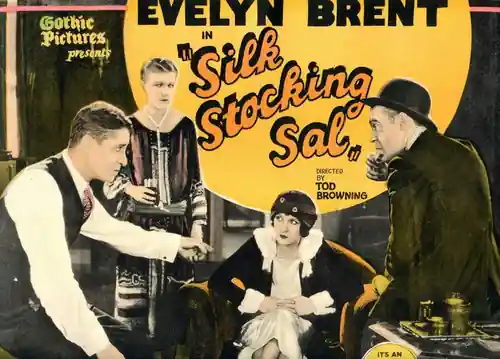
While many silent films have faded into the obscurity of vinegar syndrome and lost reels, Silk Stocking Sal remains a potent example of the 'crook drama' that would eventually evolve into the film noir of the 1940s. Its influence can be seen in the way it handles urban spaces—the townhouse as a site of potential transformation and the criminal hideout as a site of truth-telling. It lacks the pastoral simplicity of Bucking Broadway, opting instead for a gritty, soot-stained realism that reflects the anxieties of the post-war American city.
The supporting cast, including Marylynn Warner and Louis Fitzroy, provides a solid foundation, but the film undeniably belongs to Brent. Her performance here is a bridge between the theatricality of the early silents and the naturalism of the sound era. She avoids the histrionics common in productions like Les frères corses, choosing instead a subdued, smoldering intensity. This approach makes the moments of high drama, such as the microphone planting, feel grounded and believable. The film's pacing, supervised by director Tod Browning (though often attributed to the studio system's efficiency), ensures that the 60-minute runtime is packed with narrative density without feeling rushed.
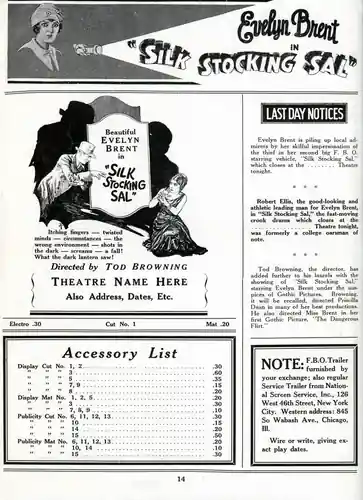
When examining Silk Stocking Sal alongside its contemporaries, its narrative economy becomes even more apparent. For instance, Dzhymmi Hihhins explores political and social upheaval through a much broader lens, whereas Sal focuses the lens tightly on the individual's battle against a rigged system. Similarly, while Up in the Air or Beach Nuts might offer escapist levity, this film demands a more serious engagement from its audience. It asks whether a person can truly shed their past, or if the shadows of previous transgressions will always loom, ready to engulf the present.
The technical aspects of the film, from the set design of the importing firm to the claustrophobic feeling of the closet where the microphone is hidden, contribute to a sense of 'enclosed' drama. This is a far cry from the expansive, outdoor energy of Boots or the chaotic fun of Join the Circus. Instead, the film creates a world of interiors—rooms where secrets are kept, lives are bartered, and justice is eventually brokered. Even the comedic elements, sparse as they are (a stark contrast to Why Smith Left Home), are tinged with a certain cynicism regarding the human condition.
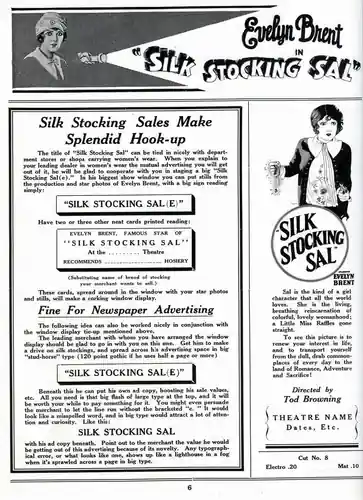
To view Silk Stocking Sal today is to view a pivotal moment in film history where the 'woman of action' was being defined. Sal is not a damsel in distress; she is the architect of her own redemption and the savior of the man who gave her a chance. The film eschews the moral simplicity of the previous decade, offering instead a world where the lines between the law-abiding citizen and the criminal are blurred and frequently crossed. It is a sophisticated, taut, and visually arresting piece of cinema that deserves a place in the pantheon of great silent thrillers.
Ultimately, the success of the film lies in its balance. It balances the thrill of the heist with the gravity of the courtroom, the charm of the romance with the grit of the underworld. It is a testament to the creative synergy between Evelyn Brent and Richard Schayer that nearly a century later, the tension of that final drunken confession still resonates with a visceral power. For students of the silent era and fans of early crime fiction alike, this is essential viewing—a sparkling gem in the dusty archives of 1920s Hollywood.
IMDb 5.5
1935
Community
Log in to comment.