DbcultAccessing Vault...
Cult Review
Senior Film Conservator
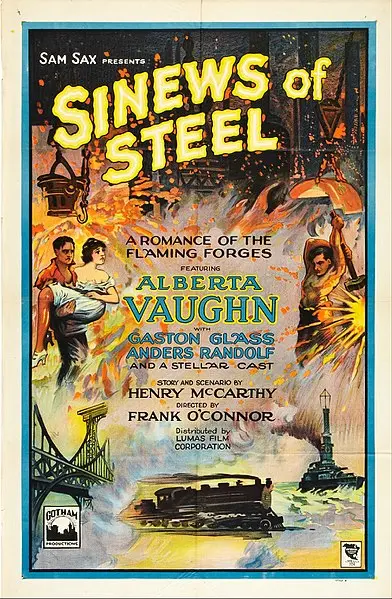
Is Sinews of Steel a film worth dedicating your time to in the modern cinematic landscape? Short answer: yes, but with significant caveats. It’s a compelling snapshot of its era’s social anxieties, offering a raw, if somewhat melodramatic, look at labor conflicts and familial duty. This film is for viewers who appreciate historical dramas, early cinema's unique storytelling rhythm, and character-driven narratives focused on moral dilemmas. It is decidedly NOT for those seeking fast-paced action, complex visual effects, or contemporary narrative sophistication.
The film’s power lies not just in its narrative, but in its ability to transport you to a time when the very fabric of society was being reshaped by industry and the burgeoning fight for workers' rights. It works. But it’s flawed. Yet, its flaws are often as illuminating as its strengths, revealing much about the filmmaking conventions and societal perspectives of its time.
Sinews of Steel, a film that, despite its age, still manages to spark debate and introspection, plunges us headfirst into the tumultuous world of early industrial America. It’s a narrative woven with the threads of ambition, exploitation, and the nascent stirrings of social justice, all set against the unforgiving backdrop of a steel mill. The film attempts to tackle monumental themes – the ethics of capitalism, the human cost of progress, and the unbreakable bonds of family – with a zeal that is both admirable and, at times, a little unwieldy.
At its core, the story follows John H. Gardener, a steel magnate whose empire is built on the backs of his tireless workers. He is a man carved from the very steel he produces: strong, unyielding, and seemingly impervious to the human suffering around him. This portrayal, while perhaps a touch one-dimensional by today's standards, serves its purpose in establishing the stark moral landscape of the film.
His daughter, played with a compelling blend of naiveté and burgeoning resolve by Alberta Vaughn, becomes the audience’s moral compass. Her journey from privileged ignorance to empathetic understanding forms the emotional backbone of the narrative. Vaughn’s performance, particularly in her more subtle reactions to the factory’s harsh realities, hints at a depth that the script, at times, struggles to fully explore.
Meanwhile, Anders Randolf’s rival industrialist serves as a classic antagonist, a shadowy figure lurking in the periphery, eager to capitalize on the internal strife. This element adds a layer of corporate espionage to the social drama, preventing the narrative from becoming purely a didactic exploration of labor rights. Paul Weigel, as the conflicted foreman, offers a nuanced performance, portraying a man torn between loyalty to his employer and a growing sympathy for his fellow workers. His internal struggle provides one of the film’s most humanizing elements, a quiet counterpoint to the grander, more theatrical conflicts unfolding around him.
The escalating tensions culminate in a structural failure at the mill, a literal and metaphorical crack in Gardener’s empire. This dramatic climax forces a confrontation with the true cost of unchecked ambition and the fragility of even the most formidable structures. It’s a powerful image, the bending and breaking of steel, mirroring the breaking points of the characters themselves.
The directorial choices in Sinews of Steel are undeniably a product of their time, yet they retain a certain raw effectiveness. The pacing, by modern standards, can feel deliberate, almost languid, allowing the weight of each scene to settle before moving on. This slow burn, however, is not without its merits; it forces the audience to inhabit the world of the film, to feel the oppressive atmosphere of the factory, and to witness the slow erosion of human spirit.
There are moments of genuine visual poetry, particularly in the sequences within the steel mill itself. The glow of molten metal, the rhythmic clang of hammers, and the sheer scale of the machinery are used to convey both the awesome power and the inherent danger of this industrial landscape. One particularly striking shot captures the foreman, Paul Weigel, silhouetted against a furnace, his face etched with concern, perfectly encapsulating his internal struggle without a single line of dialogue.
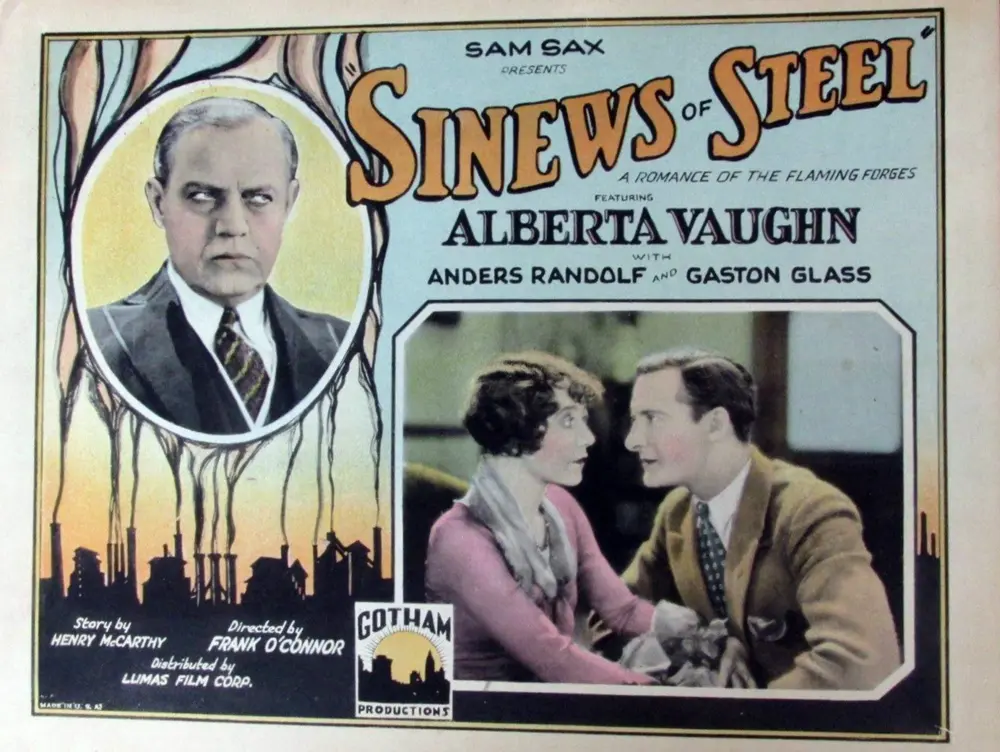
The cast, while operating within the often-exaggerated acting styles of the era, delivers performances that are largely convincing within their context. Alberta Vaughn, as the initially sheltered daughter, manages to convey a believable arc of awakening. Her subtle shifts in expression, from wide-eyed curiosity to genuine distress, are a highlight. She doesn't just react; she processes, and that makes her character’s transformation feel earned. This is a far more nuanced performance than one might expect from a film of this vintage, avoiding the pitfalls of pure melodrama that often plagued silent-era acting.
Gaston Glass, as the union firebrand, brings a necessary intensity to his role. He’s charismatic without being overly theatrical, embodying the passion of a movement rather than merely playing a caricature. His scenes, particularly those addressing the workers, crackle with an energy that still feels potent. His ability to convey conviction through posture and gaze is remarkable, especially considering the limited tools available to actors of the period.
The supporting cast, including Charles Wellesley and Nora Hayden, fill out the world with credible portrayals of various societal strata, from the indifferent elite to the struggling working class. Anders Randolf's villainous turn is archetypal but effective, providing a clear external threat that galvanizes the main characters.
The cinematography, though constrained by the technology of the day, is surprisingly effective in establishing mood and advancing the narrative. The use of deep shadows within the factory, contrasted with the harsh light of the furnaces, creates a palpable sense of danger and oppression. The camera often lingers on the faces of the workers, capturing their exhaustion and desperation, a clear attempt to humanize the often-faceless masses of the industrial workforce.
One particularly memorable sequence involves a tracking shot through the bustling factory floor, conveying the sheer scale of the operation and the relentless, almost dehumanizing, rhythm of labor. It's a testament to the filmmakers' ingenuity that they managed to evoke such a powerful sense of environment with relatively rudimentary equipment. The film’s visual language, while straightforward, is articulate in its portrayal of class divides and the stark realities of industrial life.
The tone of Sinews of Steel is predominantly serious, even somber, befitting its weighty subject matter. While there are moments of dramatic tension and emotional outburst, the film largely maintains a grounded, almost documentary-like feel in its depiction of the factory environment. This commitment to realism, within the bounds of its genre, is commendable.
The pacing, as mentioned, is deliberate. This isn't a film that rushes its story; it allows events to unfold naturally, building tension slowly but surely. While some modern viewers might find this challenging, it's crucial to understanding the film’s narrative rhythm. It’s a testament to the power of gradual escalation, culminating in a climax that feels earned, rather than artificially imposed. The film's measured approach allows for character motivations to be explored, even if subtly, and for the social commentary to seep in rather than be overtly preached.
One might argue that Sinews of Steel, despite its seemingly straightforward plot, offers a surprisingly nuanced critique of paternalistic capitalism. John H. Gardener isn't merely a moustache-twirling villain; he genuinely believes he's providing livelihoods, even if his methods are brutal. This complexity, however understated, elevates the film beyond simple good-versus-evil narratives. It suggests that even well-intentioned power can be blind to its own destructive force.
Furthermore, I believe the film's greatest strength, paradoxically, lies in its antiquated style. The melodramatic flourishes and the earnestness of its performances, which might be deemed 'over the top' today, lend it an undeniable authenticity as a historical artifact. It's a window into how people understood and dramatized their own struggles, making it a more valuable document than a slick, modernized retelling ever could be.
However, one could also contend that the resolution, while impactful, feels a little too convenient, a slightly too neat wrapping-up of deeply complex societal issues. The personal drama, while compelling, sometimes overshadows the broader, systemic problems it initially raises. This is a common pitfall in many social dramas, but it’s particularly noticeable here, given the film’s strong initial setup of industrial strife.
Sinews of Steel is far more than a mere historical curiosity; it’s a robust industrial drama that, despite its age, still possesses a tangible power. It asks difficult questions about power, ethics, and the human spirit, questions that remain remarkably pertinent in our own era of complex corporate structures and social divides. While its pacing and stylistic conventions may require a degree of adjustment from a contemporary audience, the film rewards that patience with compelling performances and a narrative that, quite literally, explores the breaking points of humanity and industry. It’s not a flawless film, but its imperfections are part of its charm, revealing the earnest ambition of its creators. For those willing to engage with its unique rhythm, Sinews of Steel offers a valuable and thought-provoking cinematic experience that stands as a testament to the enduring struggles of labor and capital. It’s a film that, like the steel it depicts, may show its age, but its core strength remains undeniable. If you’re looking for a compelling historical drama, consider pairing this with a viewing of The Down Grade or Rebuilding Broken Lives for a fascinating look at social change in early cinema.
IMDb —
1920
Community
Log in to comment.