DbcultAccessing Vault...
Cult Review
Senior Film Conservator
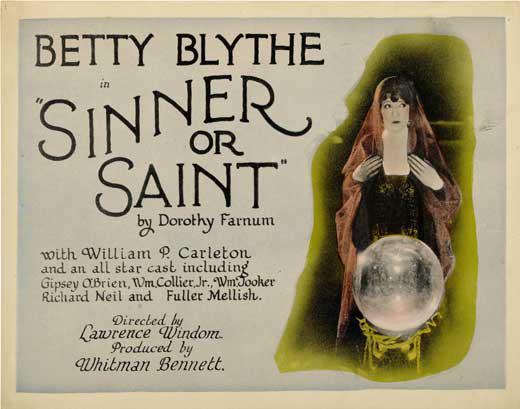
Step back into the nascent days of cinematic storytelling, a time when flickering images and evocative intertitles wove tapestries of human emotion without the aid of spoken dialogue. This was the era of the grand melodrama, where moral quandaries were writ large, and the battle between good and evil played out on screens across the globe. Among these venerable productions, a film like Sinner or Saint stands as a testament to the enduring power of narrative, even when stripped to its visual essence. It’s a compelling journey into the heart of societal judgment, individual resilience, and the relentless pursuit of truth, crafted with a sensitivity that belies its age. Dorothy Farnum, the prodigious writer behind this compelling narrative, masterfully navigates the complexities of character and circumstance, ensuring that even a century later, its core resonates with a profound, almost primal, understanding of the human condition.
The narrative of Sinner or Saint plunges us into the tumultuous life of Eliza Thorne, a character brought to life with heartbreaking sincerity by the remarkable Frances Miller. Following the abrupt demise of her father, Eliza finds herself cast adrift in the unforgiving currents of a sprawling, indifferent city. Destitution forces her into the vibrant, yet often morally ambiguous, world of a cabaret, where she adopts the stage moniker 'Liza the Lark.' Here, her inherent innocence and unblemished spirit are tragically misconstrued, viewed through the lens of societal prejudice that equates her profession with moral compromise. Yet, beneath the veneer of her public persona, Eliza remains a beacon of unwavering integrity, her every meager earning meticulously channeled towards the desperate needs of her ailing younger sister, Lily, portrayed with touching fragility by Gypsy O'Brien.
It is within this charged atmosphere that Eliza's destiny intersects with Robert Vance, a scion of a distinguished family and an ambitious district attorney, portrayed with a compelling blend of gravitas and burgeoning empathy by William P. Carleton. Their initial encounter, amidst the stark reality of a cabaret raid, is fraught with the tension of class and assumption. Vance, initially swayed by the superficial judgments of his social standing, is nonetheless captivated by Eliza's quiet dignity, a silent testament to a spirit far nobler than her surroundings suggest. This burgeoning connection forms the emotional core of the film, a delicate thread of burgeoning understanding in a world eager to condemn.
However, the threads of fate are not merely woven by chance and nascent affection. Lurking in the shadows is the malevolent figure of Silas Blackwood, a financier whose avarice knows no bounds, brought to chilling life by Fuller Mellish. Blackwood harbors a dark, concealed past inextricably linked to Eliza's late father, a past that now fuels his ruthless ambition. He schemes to acquire a priceless family heirloom—a deed to a rich mining claim—that Eliza unknowingly possesses. Aided by Lena Dubois, a morally ambiguous accomplice portrayed with nuanced complexity by Betty Blythe, Blackwood meticulously orchestrates a frame-up, implicating Eliza in the theft of a valuable necklace from a prominent socialite, Mrs. Harrington, likely played by a character actor like Horace Braham, adding to the film's ensemble depth.
As the fabricated evidence mounts, Eliza finds herself ensnared in a web of deceit, facing public scorn and the grim specter of imprisonment. The precarious health of her sister, Lily, exacerbates Eliza's desperation, pushing her to the brink. Robert Vance, torn between the strictures of his professional duty and an increasingly undeniable conviction of Eliza's innocence, embarks on his own clandestine investigation. What he uncovers is a labyrinthine conspiracy, layer upon layer of Blackwood's calculated malevolence. The narrative hurtles towards a dramatic courtroom confrontation, presided over by the stern but ultimately fair Judge Thornton, a role likely imbued with gravitas by William H. Tooker. It is here, amidst the searing rhetoric and the weight of public expectation, that the truth slowly, agonizingly, begins to surface. Lena Dubois, witnessing the unmitigated cruelty of Blackwood and moved by Eliza's unwavering plight, undergoes a profound transformation, ultimately providing the crucial piece of evidence that shatters Blackwood’s meticulously constructed facade. The climax is a breathless chase, a desperate scramble to retrieve the true stolen item, culminating in a confrontation with Blackwood that brings his reign of terror to an end. Eliza, her name gloriously cleared, her sister miraculously recovered, finally finds the peace and acceptance she so profoundly deserves, embraced by Robert's unwavering love. It is a powerful affirmation of virtue's ultimate triumph, a resounding declaration that even in the darkest corners of society, a saint can emerge from the shadows.
The silent era demanded a particular brand of artistry from its performers. Without dialogue, actors relied solely on their physicality, their facial expressions, and the nuanced language of gesture to convey the profound depths of human emotion. In Sinner or Saint, the ensemble cast rises magnificently to this challenge, delivering performances that are both grand in their theatricality and intensely intimate in their emotional resonance. Frances Miller, as Eliza Thorne, is nothing short of captivating. Her portrayal is a masterclass in silent acting, her eyes conveying volumes of despair, hope, and unwavering resolve. Miller doesn't just play Eliza; she embodies the very essence of a woman caught between the harsh judgments of the world and the purity of her own soul. Her subtle shifts in expression, from the quiet dignity of her cabaret performances to the raw anguish of her courtroom ordeal, are a testament to her profound talent. One might draw parallels to the nuanced suffering of the protagonist in The Reclamation, where a woman's strength is forged in adversity, but Miller's Eliza possesses a unique, almost ethereal vulnerability that sets her apart.
William P. Carleton, as the upright Robert Vance, provides the film with its moral compass and romantic anchor. Carleton projects an air of inherent nobility, his initial skepticism towards Eliza slowly giving way to a profound belief in her innocence. His character arc is beautifully rendered, demonstrating the power of empathy to dismantle preconceived notions. The burgeoning affection between Miller and Carleton is palpable, communicated through stolen glances and subtle gestures that speak more eloquently than words ever could. It’s a romance built on mutual respect and a shared pursuit of justice, a refreshing departure from purely superficial attractions often seen in period melodramas.
Fuller Mellish, in the role of the nefarious Silas Blackwood, delivers a performance that is deliciously villainous. Mellish understands the art of silent menace, his every sneer and calculating gaze dripping with avarice and deceit. He is the embodiment of the 'sinner' in the film's title, a stark contrast to Eliza's unwavering purity. His physical presence alone is enough to convey his sinister intentions, a testament to the power of non-verbal communication in this era. Similarly, Richard Neill, likely in a supporting role that adds to the film's dramatic tension, contributes to the intricate web of deceit with a subtle, yet effective, presence.
Perhaps one of the most intriguing performances comes from Betty Blythe as Lena Dubois. Blythe navigates the tricky waters of a character caught between loyalty and conscience. Her transformation, from Blackwood's accomplice to Eliza's unexpected savior, is handled with remarkable sensitivity. It’s a portrayal that adds layers of moral complexity to the narrative, reminding us that even those on the periphery of villainy can find their path to redemption. This nuanced depiction of a character's moral awakening is a highlight, offering a more intricate psychological landscape than many contemporary films dared to explore.
The supporting cast, including William H. Tooker as the judicious Judge Thornton, William Collier Jr. in a role that likely supports the protagonist's journey, and Horace Braham, contribute significantly to the film’s rich tapestry. Each actor, through carefully modulated gestures and expressions, helps to build a believable world, whether it be the stern authority of the courtroom or the bustling energy of the city streets. Gypsy O'Brien's portrayal of Lily, Eliza's fragile sister, is particularly poignant, serving as a constant reminder of Eliza's selflessness and the stakes involved in her struggle.
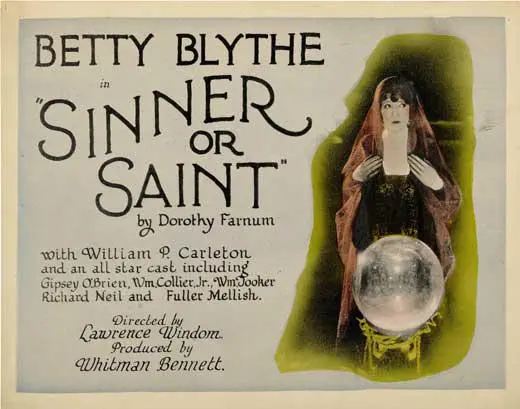
The structural integrity and emotional depth of Sinner or Saint owe an immense debt to its writer, Dorothy Farnum. In an era where screenwriting was still finding its voice, Farnum demonstrates an innate understanding of dramatic pacing, character development, and thematic resonance. Her script, conveyed through evocative intertitles and meticulously planned sequences, builds tension with an almost surgical precision. The plot, while adhering to the conventions of melodrama, avoids simplistic black-and-white morality for much of its runtime, particularly in its portrayal of Eliza's ambiguous public perception and Lena Dubois's moral struggle. Farnum understands that true drama lies not just in external conflict, but in the internal battles waged within the human heart.
The construction of Eliza as a character is particularly noteworthy. She is not merely a victim; she is an agent of her own destiny, fighting with quiet strength against overwhelming odds. Farnum imbues her with a resilience that makes her ultimate triumph feel earned and deeply satisfying. The subplot involving the mining claim and Blackwood’s past adds a layer of intricate mystery, elevating the narrative beyond a simple tale of good versus evil. Farnum’s ability to weave together these disparate elements into a cohesive and compelling whole is a testament to her skill. Her writing stands shoulder-to-shoulder with the more complex narratives of the era, perhaps even surpassing some in its psychological nuance. One could compare the intricate plotting to the dramatic turns found in The Great Accident, where character flaws and external pressures collide to create compelling conflict, but Farnum's work here has a distinct focus on the moral redemption arc.
Beyond the stellar performances and robust screenplay, the visual language of Sinner or Saint is a triumph in its own right. The direction, whoever helmed it (as the director isn't explicitly listed, the focus shifts to the overall visual execution), demonstrates a keen eye for composition and atmosphere. The contrast between the opulent, yet morally corrupt, high society and the grimy, yet often honest, underworld of the cabaret is vividly rendered. Lighting plays a crucial role, with Eliza often bathed in soft, ethereal glows that underscore her purity, even in the darkest of settings. Conversely, Blackwood is frequently framed in stark shadows, emphasizing his sinister nature. This deliberate use of light and shadow is a hallmark of silent cinema, and here it is employed with exceptional artistry.
The cinematography captures the bustling energy of the city, utilizing dynamic camera angles to convey movement and emotion. The courtroom scenes, in particular, are masterfully shot, building an almost unbearable tension through close-ups on the faces of the characters, highlighting their reactions and internal struggles. The visual storytelling ensures that even without spoken words, the audience is fully immersed in the emotional landscape of the film. The production design, though perhaps not on the colossal scale of epics like Quo Vadis?, is meticulously crafted, creating believable environments that ground the dramatic proceedings. From the lavish interiors of society homes to the bustling, smoke-filled cabaret, every detail contributes to the film's immersive quality. The film's aesthetic sensibility, though rooted in its time, possesses a timeless elegance that speaks to the power of visual narrative.
The very title, Sinner or Saint, encapsulates the central thematic struggle of the film: the arbitrary nature of societal judgment versus the inherent goodness of the individual. Eliza Thorne is branded a 'sinner' by circumstance and prejudice, yet her actions consistently reveal her to be a 'saint' – sacrificing, enduring, and maintaining her moral compass against incredible odds. The film challenges its audience to look beyond superficial appearances and question the very foundations of their own moral evaluations. It's a powerful indictment of hypocrisy, particularly within the upper echelons of society, where virtue is often merely a facade and vice thrives beneath a polished exterior.
The theme of redemption is also profoundly explored, not just through Eliza’s ultimate vindication, but notably through the character of Lena Dubois. Lena’s journey from complicity to conscience offers a more complex view of morality, suggesting that the line between 'sinner' and 'saint' is not always as clear-cut as society would like to believe. Her transformation underscores the film's message that true character is revealed not in one's origins or perceived status, but in one's choices when faced with moral dilemmas. This intricate exploration of character makes Sinner or Saint a far more nuanced film than many of its contemporaries, which often relied on more simplistic moral binaries.
Love, too, is presented as a redemptive force. Robert Vance's unwavering belief in Eliza, despite the societal pressures and professional risks, highlights the power of true affection to see beyond superficial judgments and champion justice. Their evolving relationship is a quiet testament to the idea that genuine connection can pierce through the darkest clouds of despair, offering solace and strength. The film’s thematic depth resonates with the introspective qualities found in a film like The Devil's Toy, which also delves into moral choices and their consequences, but Sinner or Saint frames it within a more direct, melodramatic battle for reputation and justice.
As a product of the early 1920s, Sinner or Saint occupies a fascinating place in cinematic history. It represents a period where silent film was reaching its artistic zenith, before the advent of sound would irrevocably alter the landscape. The film’s technical prowess, its compelling narrative, and its powerful performances demonstrate the sophisticated storytelling capabilities of the era. It stands as a valuable artifact, offering insights into the social mores, anxieties, and entertainment sensibilities of a bygone age. For modern audiences, watching Sinner or Saint is not merely an exercise in historical appreciation; it is an immersive experience that transcends the limitations of its format. The universal themes it explores—justice, redemption, the struggle against prejudice—remain as relevant today as they were a century ago.
Comparing it to other silent melodramas, Sinner or Saint holds its own with remarkable tenacity. While it might not possess the epic scope of a The Biggest Show on Earth or the frontier grit of Prairie Trails, its strength lies in its intense focus on character and moral dilemma. Its dramatic climax, particularly the courtroom sequence, echoes the tense revelations often found in legal dramas, and its exploration of urban vice and virtue can be seen as a precursor to later social commentaries. The enduring appeal of the film lies in its ability to evoke profound emotional responses without a single spoken word, relying instead on the universal language of human expression and meticulously crafted visual narrative. It's a reminder that true cinematic power resides not in technological novelty, but in the timeless art of storytelling.
In conclusion, Sinner or Saint is more than just a historical curiosity; it is a vibrant, emotionally resonant piece of cinema that continues to speak volumes about the human spirit. Its powerful performances, intricate plotting by Dorothy Farnum, and masterful visual storytelling combine to create a timeless classic that deserves to be rediscovered and celebrated. It is a poignant reminder of the enduring power of silent film to captivate, to provoke thought, and to move the heart, proving that the silent screen was anything but quiet in its impact.
IMDb —
1916
Community
Log in to comment.