Summary
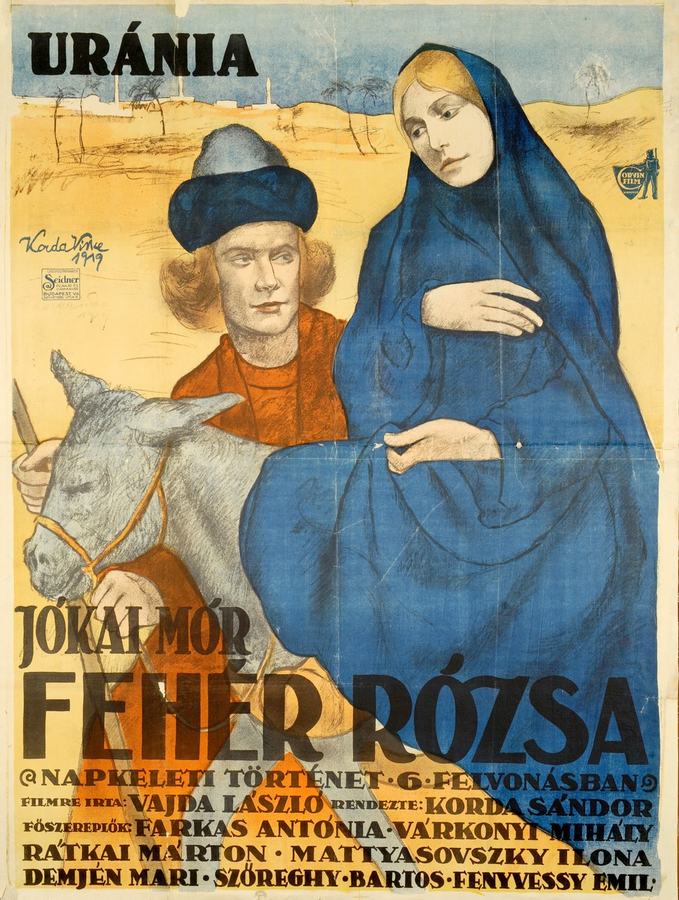
In the waning light of a post‑war Hungarian village, a solitary white rose blossoms against a backdrop of shattered promises and whispered betrayals. María Corda embodies Ilona, a young seamstress whose life is tethered to the mercurial whims of fate; her husband, the stoic Márton Rátkai, portrays János, a veteran whose war‑scarred psyche oscillates between tender devotion and volatile suspicion. The narrative unfurls as Ilona discovers a clandestine diary belonging to a vanished aristocrat, its ink still fresh with a confession of love for a woman named Eszter—an identity that mirrors Ilona’s own yearning. Nusi Somogyi, as the enigmatic Eszter, drifts through the story like a phantom, her presence felt more in silences than in dialogue. The plot thickens when a charismatic stranger, Victor Varconi’s Árpád, arrives bearing rumors of a hidden inheritance tied to the white rose, igniting a fevered scramble among villagers. As alliances shift, the film weaves a tapestry of jealousy, redemption, and the inexorable pull of destiny. Gyula Szöreghy and Gyula Bartos deliver nuanced portrayals of rival merchants, each vying for control of the rose’s symbolic capital. The climax converges in the village square, where the rose is finally revealed to be a token of sacrifice, its petals scattered by a storm that mirrors the characters’ inner turbulence. In the aftermath, Ilona confronts the ultimate choice: to cling to the illusion of love or to forge a new path illuminated by the stark, unadorned truth of the white rose’s wilted bloom.
Review Excerpt
"\nAesthetic Alchemy: Visual Palette and Mise‑en‑Scène\nFrom the opening frame, Fehér Rózsa immerses the viewer in a chiaroscuro world where darkness is not merely a backdrop but a character in its own right. The cinematographer exploits the stark contrast between the coal‑black that envelops the village and the occasional burst of sea‑blue (#0E7490) that glints off the Danube’s distant ripple. This chromatic decision feels intentional, echoing the emotional turbulence of Ilona (María Corda) as s..."