DbcultAccessing Vault...
4.4/10
Senior Film Conservator
A definitive 4.4/10 rating for a film that redefined the boundaries of cult cinema. Foreign Devils remains a cornerstone of transgressive art.
Short answer: Yes, but only if you view it as a preserved artifact of 1920s geopolitical anxiety. This is not a film for the casual viewer looking for modern pacing or nuanced cultural sensitivity.
This film is for the dedicated silent cinema enthusiast and those interested in the evolution of the action hero archetype. It is absolutely NOT for anyone who finds the 'Yellow Peril' tropes of the early 20th century too distracting to enjoy the technical craft on display.
1) This film works because of Tim McCoy’s commanding physical presence and the surprisingly high production values MGM poured into the siege sequences.
2) This film fails because it reduces complex historical grievances into a binary struggle between 'civilized' heroes and 'savage' antagonists.
3) You should watch it if you want to see how Hollywood transitioned from Westerns like The Night Horsemen to international adventure epics.
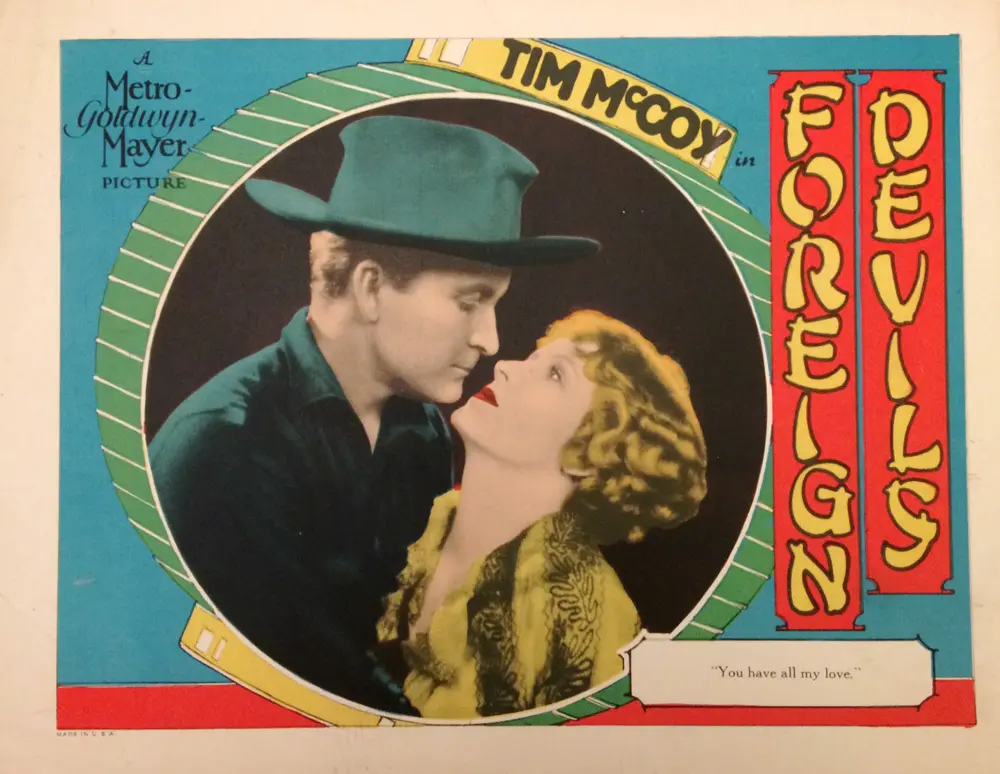
Foreign Devils is a fascinating study in contrast. On one hand, it is a technical marvel for 1927, utilizing deep focus and large-scale sets to recreate the claustrophobia of the Peking Legations. On the other, it is narratively stagnant, relying on the same damsel-in-distress tropes seen in The Girl Who Came Back. If you can stomach the period-typical prejudices, the film offers a masterclass in silent-era tension. It works. But it’s flawed.
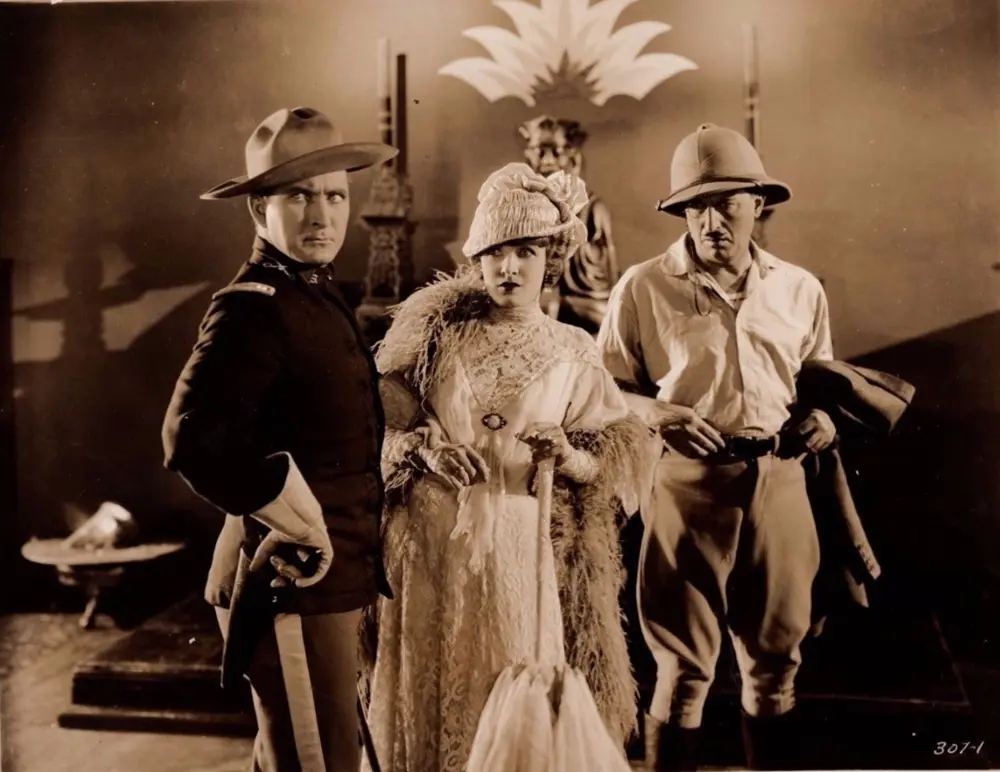
Tim McCoy was largely known for his rugged roles in frontier dramas like The Galloping Jinx. In Foreign Devils, he attempts to pivot toward a more sophisticated brand of heroism. As Captain Robert Kent, McCoy trades his spurs for a dress uniform, yet he retains that unmistakable steel in his eyes. There is a specific moment during the first breach of the legation walls where McCoy stands atop a barricade, sword drawn, that perfectly encapsulates his screen power. He doesn't just act; he occupies space with an authority that few of his contemporaries could match.
However, the script by Marian Ainslee and Ruth Cummings often fails him. While McCoy is ready for a gritty war drama, the writers keep pulling him back into a standard melodrama. This creates a tonal whiplash. One minute we are witnessing a genuinely harrowing depiction of a city under siege, and the next, we are subjected to a secondary romance plot that feels as thin as the celluloid it’s printed on.
The visual language of Foreign Devils is where the film truly earns its keep. Director W.S. Van Dyke, who would later find fame with more exotic adventures, shows an early knack for managing large crowds. The scenes of the Boxer forces swarming the compound are shot with a frantic, handheld-adjacent energy that feels surprisingly modern. Unlike the more static compositions found in Tamilla, this film breathes through its camera movement.
Consider the lighting in the underground tunnels during the rescue attempt. The use of high-contrast shadows creates a sense of dread that rivals the best German Expressionism of the time. It is a stark departure from the flat, bright lighting often found in mid-20s dramas like Miami or Under the Rouge. The cinematographer understands that the darkness is just as much a character as the actors themselves.
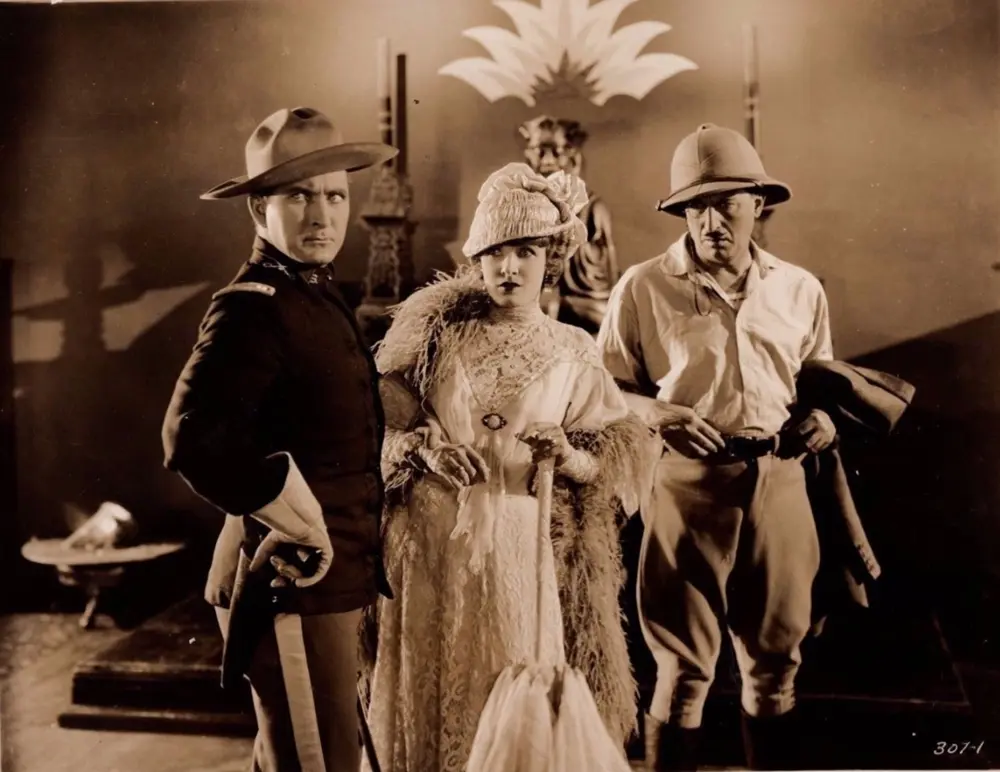
We cannot discuss Foreign Devils without addressing its politics. The film is a product of its time, which is a polite way of saying it is aggressively colonialist. The depiction of the Boxer rebels is devoid of any political context; they are presented as a monolithic, screaming force of 'otherness.' While Sôjin Kamiyama brings a certain gravitas to his role, he is nonetheless trapped in the 'sinister oriental' archetype that plagued Hollywood for decades.
This lack of nuance makes the film a difficult sit for a modern audience. It lacks the psychological depth found in international works like I my kak liudi or the humanistic approach of The Cyclist. Foreign Devils isn't interested in why the rebellion is happening; it only cares about the spectacle of the Westerners fighting their way out. It is a loud, proud propaganda piece for the British Empire, filtered through a California lens.
Pros:
Cons:
When you compare Foreign Devils to other films of the mid-to-late 20s, like The Combat or Miss Adventure, you see a clear divide. While many films of this period were content with small-scale domestic disputes or lighthearted escapades, Foreign Devils was swinging for the fences. It wanted to be a 'big' movie. It shares more DNA with the epic sweep of Jean Chouan than it does with the localized drama of Saturday.
Even the writing, handled by a trio of seasoned pros, feels different. Peter B. Kyne’s influence brings a sense of adventure that balances the more melodramatic tendencies of Ainslee and Cummings. It is a more 'masculine' film than Life Story of John Lee, focusing on the external conflict rather than the internal suffering of the protagonist. Whether that makes it a better film is debatable, but it certainly makes it a louder one.
Foreign Devils is a relic that shines and stings in equal measure. It is a testament to the power of the Hollywood machine to create breathtaking spectacles out of thin air, and a reminder of the narrow-mindedness that often fueled those spectacles. Tim McCoy is excellent, the action is top-tier for 1927, but the heart of the film is buried under layers of imperialist ego. Watch it for the craft, but keep your critical guard up. It is a piece of history that should be studied, not celebrated blindly. It’s an experience, but a complicated one.
IMDb 5.4
1926
Community
Log in to comment.