DbcultAccessing Vault...
Cult Review
Senior Film Conservator
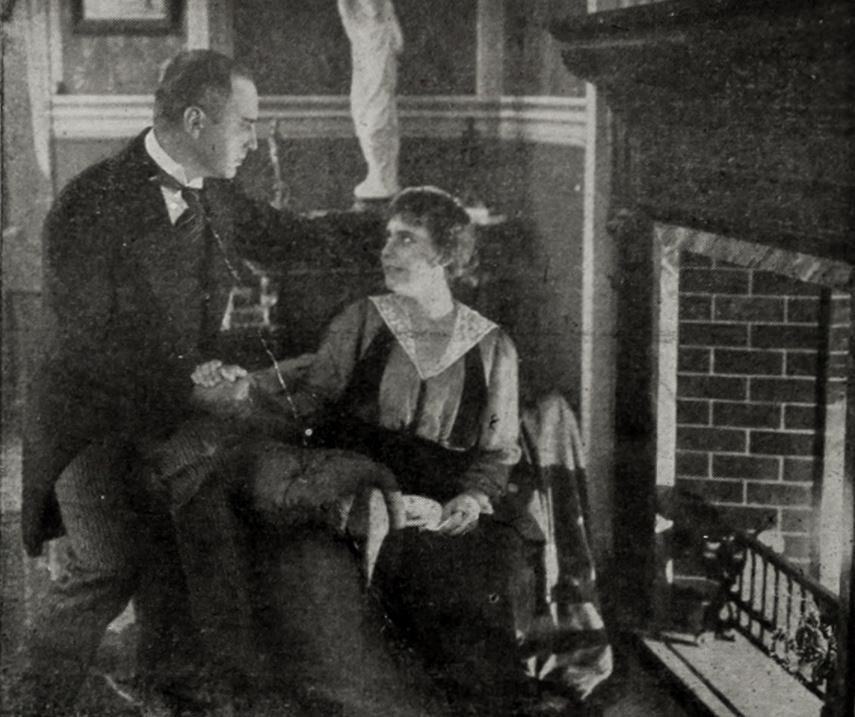
Stepping back into the cinematic landscape of 1916, one encounters films that, despite their age and the absence of spoken dialogue, resonate with an emotional intensity that transcends time. Among these, 'Sins of Great Cities,' a Danish production, stands as a potent testament to the power of early filmmaking, weaving a narrative steeped in melodrama, moral quandaries, and the enduring resilience of the human spirit. This is not merely a historical artifact; it is a vibrant, pulsating drama that explores themes of innocence, betrayal, and the often-perilous journey towards justice in a world fraught with hidden dangers. The film, directed with a keen eye for dramatic tension, plunges its audience into a world where appearances are deceiving, and the line between salvation and ruin is perilously thin.
At the heart of 'Sins of Great Cities' lies Dorothy Reynolds, portrayed with compelling vulnerability and strength by Ebba Thomsen. Her character's journey begins in the wake of profound loss, her father's sudden demise leaving her adrift in a society that offered little quarter to unattached women. It's a predicament not uncommon in the narratives of the era, reminiscent of the trials faced by protagonists in films like A Daughter of Australia, where female characters often navigate a treacherous social landscape. Dorothy finds temporary refuge and kindness with her friends, Paul and Irene Walter, a fleeting moment of respite before the city's darker currents begin to pull at her. This initial setup effectively establishes her as a sympathetic figure, a lamb led to slaughter, as it were, by the machinations of a truly villainous character.
Enter Monty Sullivan, brought to life with a chilling blend of charm and menace by Aage Hertel. Sullivan is not merely an antagonist; he is the embodiment of the titular 'sins' – a proprietor of the ill-famed 'Red Mouse,' a den of iniquity that preys on the vulnerable. His introduction to Dorothy is a masterclass in psychological manipulation. He presents himself as a former business associate of her late father, a calculated move designed to exploit her grief and trust. This deceptive facade allows him to insinuate himself into her life, ultimately arranging for her an engagement at his establishment. The 'Red Mouse' itself serves as a powerful symbol, a crimson trap in the urban jungle, much like the perilous environments depicted in a film such as The Yellow Traffic, where societal vices and exploitation are laid bare. Dorothy's reluctant acceptance, born of desperation rather than desire, marks the beginning of her descent into a morally ambiguous world.
The brilliance of 'Sins of Great Cities' lies not just in its intricate plot, but in the nuanced performances of its cast, particularly Ebba Thomsen. In the silent era, actors bore the immense responsibility of conveying complex emotions and narrative beats through gesture, facial expression, and body language alone. Thomsen, a celebrated figure in Danish cinema, rises to this challenge with remarkable grace and intensity. Her portrayal of Dorothy's initial naivety, her growing unease, the crushing realization of betrayal, and her subsequent resolve is nothing short of captivating. One can truly feel Dorothy's internal struggle, her distaste for the 'Red Mouse' palpable even without a single spoken word. This kind of expressive acting is what elevated many silent films beyond mere pantomime, transforming them into profound visual storytelling experiences. Her ability to pivot from profound sorrow to burgeoning hope, and then back to despair, before ultimately finding strength, is a masterclass in the art of the silent screen.
The film's pivotal moment, the mock-marriage orchestrated by Sullivan, is a scene steeped in dramatic irony and cruelty. A butler, garbed as a minister, officiates the sham ceremony at Sullivan's home, a grotesque parody of a sacred union. Dorothy's dawning realization of this elaborate deception is depicted with heart-wrenching clarity by Thomsen, a moment of profound shock and disillusionment that resonates deeply. This act of calculated villainy by Sullivan is a stark reminder of the film's title, exposing the moral depravity that can fester beneath the veneer of urban sophistication. It echoes the thematic concerns of films like The Sin of a Woman, where female characters are often victims of societal pressures and male deceit, their reputations and lives hanging by a thread.
Dorothy's escape from Sullivan's clutches marks a turning point, a testament to her inherent resilience. Returning to her steadfast friends, she finds not only solace but also a new opportunity at the Casino theater. Her successful debut there is a triumph, a moment of artistic and personal vindication. It is here that she encounters Judge Walcott, portrayed by Alf Blütecher, a character who embodies integrity and genuine affection. Their budding romance offers a glimmer of hope, a promise of a future free from the shadows of her past. Walcott's proposal is a symbol of legitimate love and societal acceptance, a stark contrast to Sullivan's manipulative charade.
However, the narrative ensures that the path to happiness is never straightforward. Sullivan, a persistent and malevolent force, cannot abide Dorothy's burgeoning joy. His reappearance, threatening to denounce her as his former mistress, is a cruel act of blackmail designed to shatter her reputation and destroy her relationship with Walcott. This is where the film delves into the devastating power of slander and the fragility of a woman's honor in that era, a theme explored in many contemporary dramas. The tension escalates dramatically when Paul, learning of Sullivan's insidious threats, takes matters into his own hands, shooting the villain. This act, while morally ambiguous, underscores the desperation felt by those trying to protect the innocent from malicious forces.
The film's climax is a masterstroke of dramatic intensity. Sullivan, in his final moments, orchestrates one last, devastating act of vengeance. He sends for Dorothy and Walcott, using his dying breath to brand her with a false accusation, a final, venomous lie designed to irrevocably tarnish her in Walcott's eyes. The immediate impact is profound; Walcott, initially swayed by the dying man's seemingly credible pronouncement, thrusts Dorothy aside, leaving her reeling in anguish. This scene is particularly effective in its portrayal of how easily truth can be distorted and how devastating a well-placed lie can be, especially from a man believed to be on his deathbed.
Yet, 'Sins of Great Cities' ultimately champions the power of truth and human connection. Dorothy's grief, though profound, is not final. The narrative, with a satisfying sense of moral rectitude, ensures that Walcott eventually learns the truth, piercing through the veil of Sullivan's final deceit. This revelation transforms Dorothy's sorrow into happiness, culminating in a reunion that promises a 'happy future.' It’s a classic melodramatic resolution, but one earned through the preceding trials and tribulations. The film, in this regard, offers a cathartic release, affirming that even in the face of the most heinous 'sins of great cities,' innocence can be vindicated and genuine love can prevail. This enduring message of hope and justice is a hallmark of many silent era dramas, providing audiences with a sense of moral order, even amidst chaotic narratives.
Beyond its captivating plot and powerful performances, 'Sins of Great Cities' offers a valuable window into the robust and often overlooked world of Danish silent cinema. Directors like August Blom (who directed this film, though not credited in the provided details, it's a common historical attribution for Nordic films of this era) and their contemporaries were adept at crafting visually rich and emotionally resonant stories, often with a darker edge than their Hollywood counterparts. The film's use of dramatic lighting, expressive sets, and careful framing all contribute to its atmospheric quality, immersing the viewer in its world of both glamour and grim realities. The visual storytelling, characteristic of the period, relies heavily on strong mise-en-scène and symbolic imagery, allowing the audience to infer deeper meanings without the aid of dialogue. The city itself becomes a character, a sprawling entity capable of both offering opportunity and harboring immense danger.
The film's thematic exploration of urban vice and moral corruption was a common thread in early 20th-century cinema, reflecting societal anxieties about rapid industrialization and the perceived decay of traditional values. Similar themes can be observed in other international productions of the era, such as Do Men Love Women?, which also delved into the complexities of human relationships and moral choices within a burgeoning urban landscape. What sets 'Sins of Great Cities' apart is its particular blend of high melodrama with a grounded sense of character psychology, making Dorothy's plight feel genuinely urgent and her eventual triumph genuinely earned.
In conclusion, 'Sins of Great Cities' is more than just a relic of the past; it is a compelling piece of cinematic art that speaks to universal themes. It explores the vulnerability of innocence, the corrosive power of deceit, and the unyielding strength of the human spirit in the face of adversity. Ebba Thomsen's performance anchors the film, providing an emotional core that remains powerful even a century later. The narrative, while adhering to the conventions of melodrama, is executed with a keen understanding of pacing and character development, ensuring that the audience remains invested in Dorothy's perilous journey. For those interested in the rich tapestry of early cinema, and indeed, for anyone who appreciates a well-told story of struggle and ultimate vindication, 'Sins of Great Cities' offers a profound and rewarding experience. It reminds us that while the 'sins' of society may be great, the capacity for human resilience and the ultimate triumph of truth can be even greater.
The film's portrayal of societal structures and the precarious position of women during this period is particularly poignant. Dorothy's journey from a dependent orphan to a self-sufficient actress, albeit one still vulnerable to manipulation, reflects the nascent stirrings of female agency amidst patriarchal constraints. The contrast between the predatory world of Monty Sullivan and the honorable intentions of Judge Walcott clearly delineates the moral landscape, allowing the audience to root unequivocally for Dorothy's escape and eventual happiness. The supporting cast, including Peter Jørgensen, Svend Kornbeck, Thorleif Lund, and Else Frölich, all contribute effectively to building this world, adding texture and depth to the narrative without overshadowing the central conflict. Margrete Bähncke's writing, though translated through visual performance, clearly lays the groundwork for this intricate and emotionally charged story.
Ultimately, 'Sins of Great Cities' stands as a powerful example of how silent cinema could tackle complex moral questions and deliver emotionally resonant stories without a single spoken word. Its enduring appeal lies in its timeless themes of good versus evil, the struggle for truth, and the unwavering hope for a better future. It's a film that asks us to look beyond the surface, to discern the true nature of character, and to believe in the eventual triumph of justice, no matter how formidable the 'sins' that stand in its way. This profound depth and humanistic core ensure its place not just in cinematic history, but in the hearts of those who discover its powerful narrative today.

IMDb —
1918
Community
Log in to comment.