DbcultAccessing Vault...
Cult Review
Senior Film Conservator
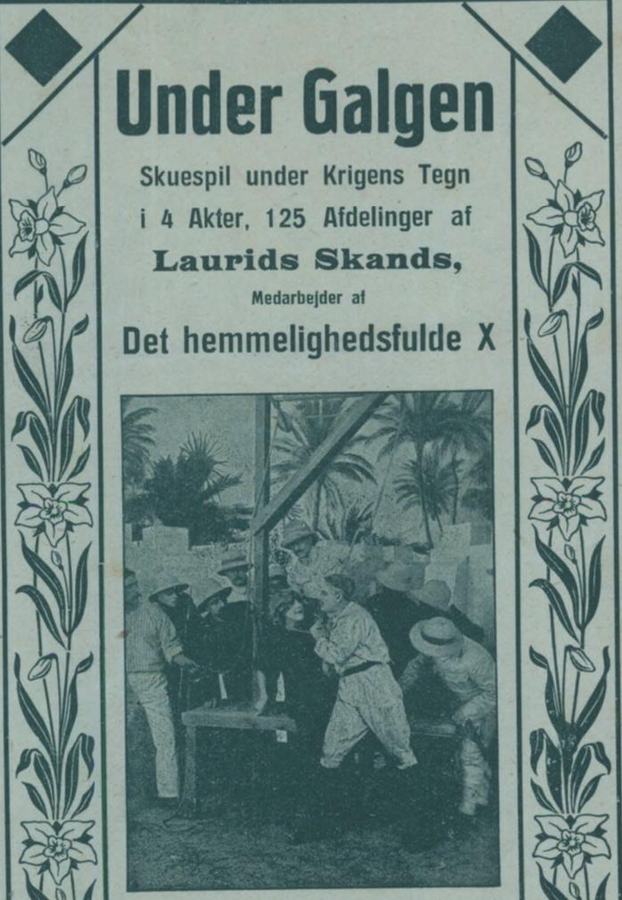
There's a particular enchantment to silent cinema, a world where gestures speak volumes and the flicker of an eye conveys more than a thousand spoken words ever could. 'Under galgen,' a Danish production from an era often overlooked in mainstream film discourse, stands as a testament to this unique artistry. It’s not merely a historical artifact; it is a vibrant, pulsating drama that delves into the timeless anxieties of human relationships, particularly the corrosive power of jealousy and the enigmatic allure of destiny. As a critic, I find myself continually drawn back to these early works, not just for their historical significance, but for their raw, unadulterated storytelling power. 'Under galgen' offers precisely that – a narrative stripped bare, focusing intensely on the psychological tremors that ripple through a seemingly stable domestic environment.
At the heart of 'Under galgen' lies the domestic turmoil of Colonel Bjelke, portrayed with a brooding intensity by Einar Zangenberg. His world, presumably one of military order and unwavering loyalty, begins to fracture under the weight of a most personal betrayal. The object of his disquiet is his wife, Yelva, brought to life with captivating nuance by Lilian Zangenberg, whose expressive face becomes a canvas for unspoken desires and nascent anxieties. Yelva's increasing proximity to Lieutenant Sparre, a character whose charm is subtly conveyed, ignites a slow-burning fuse of suspicion within the Colonel. This isn't a sudden, explosive revelation, but a gradual erosion of trust, a creeping doubt that permeates every shared glance and whispered conversation. The film excels in depicting this unspoken tension, allowing the audience to witness the minute shifts in body language, the lingering gazes, and the subtle discomfort that betray the burgeoning crisis.
What distinguishes 'Under galgen' from many contemporaneous dramas is its refusal to immediately resort to melodramatic outbursts. Instead, Laurids Skands, as the writer, meticulously constructs a scenario where the emotional stakes are raised through inference and implication. The audience becomes privy to Colonel Bjelke's internal struggle, his attempts to maintain composure while his inner world is in disarray. This psychological depth, often underestimated in early cinema, is a cornerstone of the film's enduring appeal. We are invited not merely to observe a plot unfold, but to empathize with the characters' complex emotional landscapes. Tilly von Kaulbach, Alfi Zangenberg, Fridjof von Kaulbach, and Anton de Verdier, though perhaps with less screen time, contribute to the tapestry, creating a believable social fabric around the central trio, enhancing the sense of a world where appearances must be maintained even as realities crumble.
In a particularly compelling narrative turn, Yelva, overwhelmed by the ambiguity and emotional weight of her situation, decides to consult a fortune teller. This act introduces an element of mysticism and fate that elevates 'Under galgen' beyond a mere domestic drama. The fortune teller serves as a symbolic figure, representing humanity's perennial quest for clarity in the face of uncertainty. It's a poignant reflection on how individuals, when confronted with overwhelming personal crises, often turn to the unknown, hoping for a glimpse into the future that might either confirm their fears or offer a path to salvation. This plot device, while common in literature and film of the period, is handled here with a delicate touch, emphasizing Yelva's vulnerability and her desperate need for direction. It poses fundamental questions about free will versus predetermination, a theme explored with varying degrees of success in films like The Danger Signal, but rarely with such a focus on the internal turmoil of the seeker.
The scene with the fortune teller, though perhaps brief, is pivotal. It externalizes Yelva's internal conflict, projecting her anxieties onto the predictions of an oracle. Does she seek absolution, a confirmation of her nascent feelings, or a warning to retreat? The film leaves much to interpretation, allowing the audience to ponder the implications of the fortune teller's pronouncements on Yelva's subsequent actions. This ambiguity is a strength, inviting deeper engagement rather than spoon-feeding a pre-determined outcome. It's a narrative technique that requires skilled direction and nuanced acting, both of which are evident here. The silent era, with its reliance on visual storytelling and the audience's active participation in interpreting emotion, was particularly adept at this kind of suggestive narrative.
The performances in 'Under galgen' are exemplary of the silent film era's unique demands. Lilian Zangenberg, as Yelva, navigates a complex emotional landscape with remarkable grace. Her gestures are precise, her facial expressions convey a spectrum of emotions from quiet contemplation to burgeoning fear, making her a truly compelling protagonist. Einar Zangenberg's portrayal of Colonel Bjelke is equally powerful, his stern facade slowly cracking under the weight of jealousy, revealing the vulnerability beneath the military uniform. The unspoken dialogue between these two characters, conveyed through lingering glances, averted eyes, and subtle physical distances, is a masterclass in non-verbal communication. It's a stark reminder that true acting transcends dialogue, finding its purest form in the ability to project inner life through external presence.
Comparing this to other works of the period, one can see parallels in the intensity of performance. While films like Uncle Tom's Cabin relied on broad, often exaggerated gestures to convey emotion to a large, diverse audience, 'Under galgen' leans into a more internal, psychological realism. This isn't to say it lacks dramatic flair, but its drama is often rooted in the quiet desperation of its characters. The ensemble cast, including Tilly von Kaulbach and Anton de Verdier, provides solid support, creating a believable world in which these heightened emotions play out. Their reactions, often in the background, serve to contextualize the main characters' plights, reflecting societal norms and expectations that further constrain the protagonists.
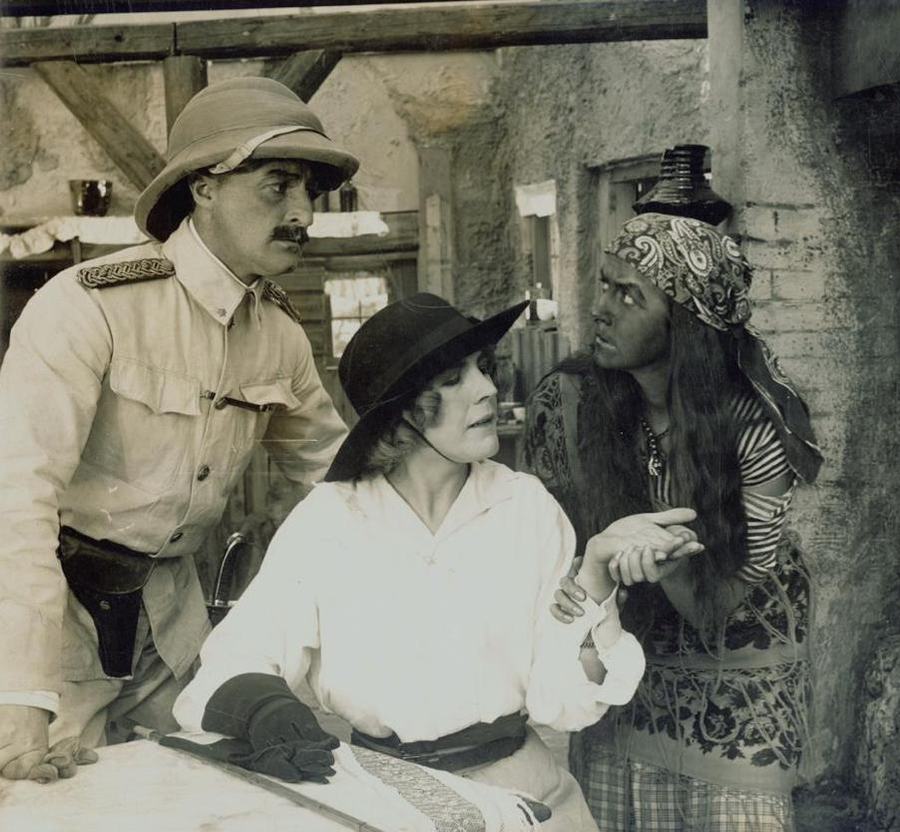
The visual language of 'Under galgen' is another area where the film truly shines. The cinematography, though perhaps rudimentary by modern standards, is remarkably effective in conveying mood and narrative. The use of lighting to emphasize shadows and create atmosphere, the framing of shots to isolate characters or highlight their interactions, all contribute to a rich visual tapestry. One can imagine the impact these images would have had on contemporary audiences, accustomed to a different mode of storytelling. The visual cues become paramount, guiding the viewer through the narrative without the crutch of spoken words. The Danish film industry of this period was a vibrant hub of innovation, and 'Under galgen' is a fine example of its output, demonstrating a sophisticated understanding of cinematic grammar.
The sets and costumes, while serving their practical purpose, also contribute significantly to the film's aesthetic. They ground the narrative in a specific time and place, lending authenticity to the domestic drama. The attention to detail in the visual composition, from the arrangement of furniture in a drawing-room to the bustling street scenes (if any are present, though the plot suggests a more internal focus), enhances the immersive quality of the experience. This meticulous approach to visual world-building is a hallmark of quality filmmaking, regardless of the era. It's a stark contrast to some films where the background feels purely functional; here, it feels like an extension of the characters' lives, subtly reflecting their social standing and emotional states.
Beyond the immediate plot, 'Under galgen' resonates with profound thematic concerns that remain relevant today. The film is a powerful exploration of loyalty – both marital and personal – and the devastating consequences when it is perceived to be broken. Colonel Bjelke's rigid adherence to duty and honor, likely instilled by his military background, makes him particularly susceptible to the sting of betrayal. Yelva's internal conflict, caught between societal expectations and burgeoning personal desires, speaks to the complexities of individual agency within constrained social structures. Her visit to the fortune teller further complicates these themes, introducing the idea of an external, uncontrollable force shaping human destiny. Is her fate sealed, or does she have the power to alter her course?
The film touches upon similar thematic territory as Loyalty, but perhaps with a more intimate focus on the psychological rather than the societal implications of infidelity. While some films of the era, such as The Clue or The Red Circle, leaned heavily into overt mystery and suspense, 'Under galgen' crafts its tension from the internal unraveling of its characters. The 'galgen' (gallows) in the title itself hints at a dark, inescapable fate, suggesting that the characters are not merely facing personal struggles but are perhaps under the shadow of a larger, preordained doom. This metaphorical weight adds considerable depth to the seemingly straightforward narrative.
Laurids Skands, the writer behind 'Under galgen,' demonstrates a keen understanding of human psychology and narrative construction. His script, even without the benefit of spoken dialogue, manages to convey intricate emotional states and complex motivations. The progression of Colonel Bjelke's jealousy, Yelva's conflicted feelings, and the subtle machinations that lead her to the fortune teller are all meticulously plotted. It’s a testament to Skands' skill that the story feels both inevitable and deeply personal. He avoids simplistic characterizations, presenting figures who are flawed and relatable, caught in circumstances that test their moral fiber. This level of character development is crucial for a silent film to truly resonate, as the audience must invest emotionally in the silent struggles unfolding before them.
Skands' work here, while perhaps not as widely known as some contemporary writers, holds its own in terms of dramatic impact. The narrative arc, from initial suspicion to the fateful consultation, builds tension effectively, drawing the audience into the characters' world. It’s a tightly constructed piece that doesn't waste a single frame, each scene contributing to the escalating sense of drama. This economy of storytelling is a hallmark of effective silent film writing, where every visual cue and intertitle must serve a clear purpose. The depth of the screenplay ensures that 'Under galgen' remains a compelling watch, inviting repeated viewings to uncover new layers of meaning and interpretation.
'Under galgen' is more than just a historical curiosity; it is a profound exploration of universal human experiences. The themes of jealousy, fidelity, the search for meaning, and the fear of the unknown are as pertinent today as they were over a century ago. The film serves as a powerful reminder of the enduring power of cinema, even in its earliest forms, to reflect and refract the complexities of the human condition. For those interested in the evolution of cinematic storytelling, particularly the nuanced art of silent drama, 'Under galgen' is an essential viewing. It showcases the talents of its cast and crew, who, working within the technological constraints of their time, managed to craft a work of remarkable emotional depth and psychological insight.
In an era where digital effects and rapid-fire dialogue often dominate, returning to a film like 'Under galgen' offers a refreshing perspective. It compels the viewer to engage actively, to interpret gestures, and to feel the weight of unspoken words. It's a meditative experience, allowing space for personal reflection on the nature of relationships and the role of fate in our lives. This film, with its quiet intensity and deep emotional resonance, stands as a testament to the fact that compelling cinema doesn't require sound or color to move an audience. It simply requires a potent story, nuanced performances, and a clear vision. 'Under galgen' delivers on all fronts, securing its place as a significant, albeit perhaps lesser-known, gem of early cinematic art. Its power lies in its ability to transcend its historical context and speak directly to the timeless anxieties and hopes that define the human spirit, much like the enduring appeal of profound narratives found in works such as The Last Egyptian or Liberty Hall, which, despite their varied settings, all tap into fundamental human struggles. It’s a journey worth taking for any cinephile seeking to understand the roots of cinematic drama and the timeless art of visual storytelling.

IMDb —
1925
Community
Log in to comment.