DbcultAccessing Vault...
7.1/10
Senior Film Conservator
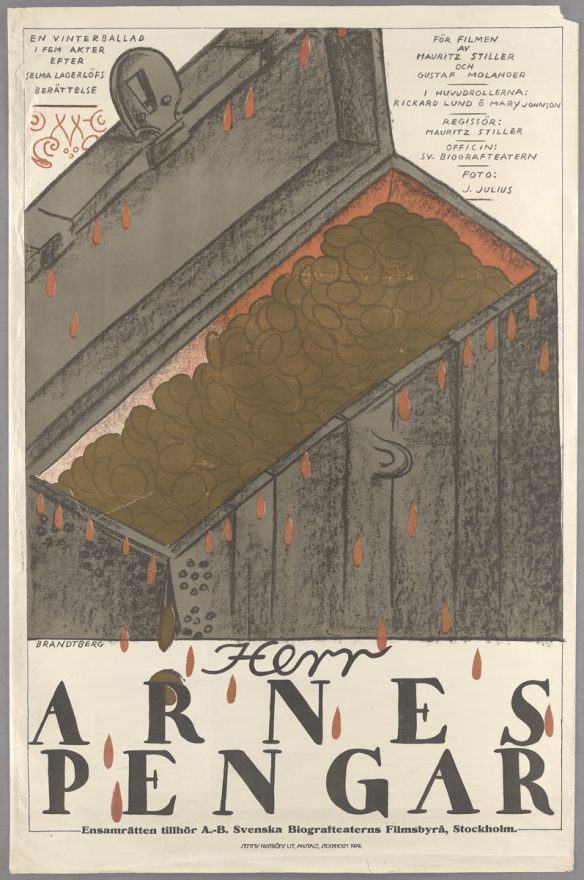
A definitive 7.1/10 rating for a film that redefined the boundaries of cult cinema. Sir Arne's Treasure remains a cornerstone of transgressive art.
Frigid winds howl through every frame of Mauritz Stiller's 1919 masterpiece, carving landscapes where human cruelty and supernatural retribution intertwine like frost on glass. Adapted from Selma Lagerlöf's novella, this Swedish silent epic transcends its historical trappings to become a primordial study of guilt, frozen time, and the ghosts we nourish through violence. Though often overshadowed by Victor Sjöström's The Phantom Carriage, Stiller crafts a more tactile nightmare—one where the cold isn't just atmospheric but a metaphysical prison.
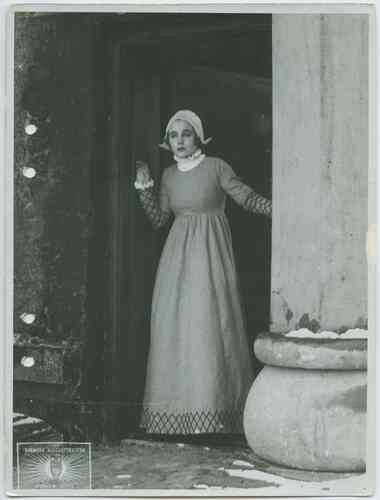
Stiller's visual genius manifests immediately in the mercenaries' introduction: cramped in a dank prison cell, their shadows looming larger than their emaciated bodies—a prescient visualization of moral diminishment. Gösta Gustafson's Sir Philip embodies Shakespearean contradictions; his piercing gaze conveys predatory focus during the massacre yet crumples into boyish vulnerability when courting Elsalill (Jenny Öhrström Ebbesen). Notice how Stiller films their first encounter: Philip's face emerges from darkness as Elsalill lights a candle, the flame trembling between them like a doomed promise.
The treasure itself becomes a character—a chest of silver thalers that clatters with the sound of damnation. Compare this to the pragmatic greed in The Pitfall, where wealth drives action but never acquires mythical weight. Here, each coin seems imbued with the dying breaths of Arne's household, physically weighing down the thieves' pockets as they flee.
"The ice isn't water's death—it's memory made visible. Winter preserves what summer forgets."
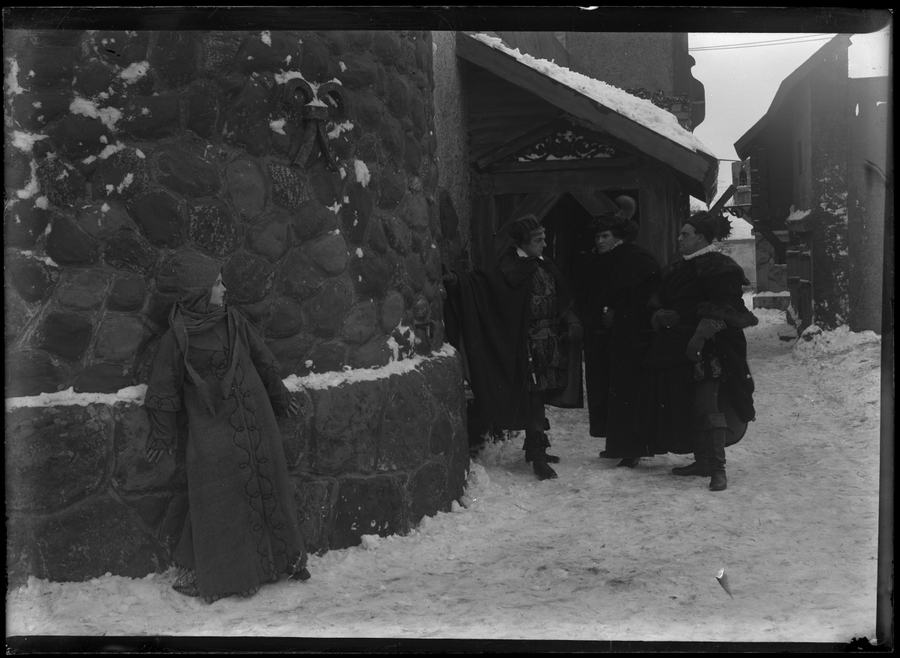
Julius Jaenzon's cinematography transforms the Baltic coast into an El Greco canvas of desolation. Watch how the massacre sequence avoids explicit violence: instead, shadows dance macabrely on walls while silverware scatters across floors like fallen stars. This restraint makes the aftermath more harrowing—a single tracking shot reveals frozen blood blooming crimson on snow, a visual rhyme with the red sunsets that later haunt Sir Philip.
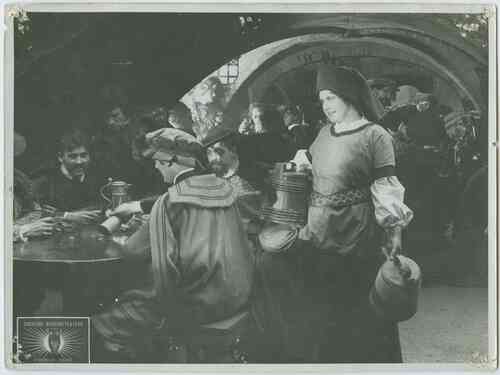
The frozen sea sequences remain unparalleled in silent cinema. Where A White Wilderness romanticizes Arctic expanses, Stiller's ice field is claustrophobic. Ships tilt at grotesque angles, their rigging encased in glassy tombs—nature's cathedral built for judgment. Elsalill's final pursuit across this wasteland achieves terrifying beauty: her black cloak streams against endless white like an ink stroke on parchment, guided by the ghostly hand of her murdered foster sister.
Ebbesen's Elsalill radiates devastating innocence. Her trembling hands—whether kneading bread or tracing Sir Philip's jaw—communicate volumes where intertitles dare not tread. In the film's cruelest irony, her love for Philip becomes the instrument of his downfall. Witness the scene where she serves him soup: her smile softens, unaware the ladle she holds fed his victims hours before. Stiller holds the shot until discomfort curdles into dread.
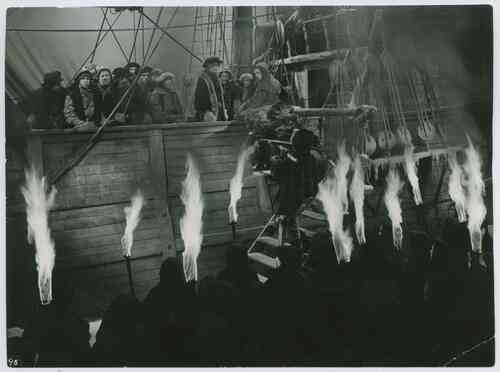
Josua Bengtson's Archie offers the counterpoint—a brute whose unraveling manifests in physical tremors. His delirium tremens aboard the ice-locked ship rivals Severo Torelli for psychological terror. When phantom fingers materialize to strangle him, Bengtson's bulging eyes seem to physically absorb the darkness around him.
Unlike the social realism of Proletardrengen, Stiller explores guilt as an environmental force. The unrelenting cold mirrors the killers' emotional freeze—their inability to feel remorse until nature itself rejects them. Superstition bleeds into reality: villagers interpret auroras as portents, dead birds as curses. In one haunting tableau, Sir Philip glimpses Elsalill's murdered sister reflected in an ice sheet beneath his feet—the past literally supporting his every step.
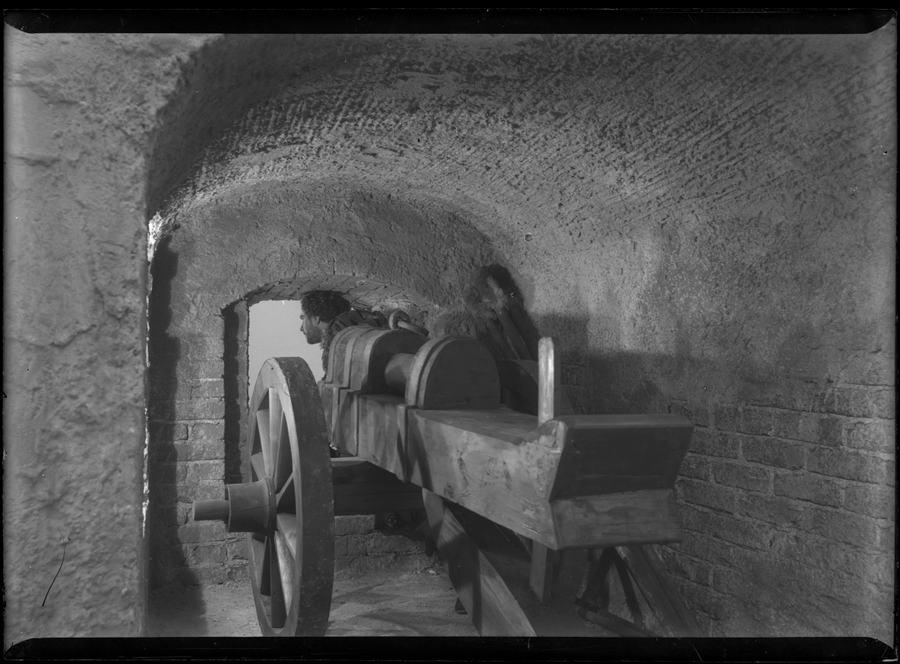
The treasure's curse operates not through supernatural mechanics but via psychological erosion. Silver coins discarded in the snow attract ravens whose cries become accusatory choir; a thaler melted for ale leaves dregs resembling coagulated blood. Stiller suggests that guilt transforms perception itself—a notion later echoed in Bergman's winter psychodramas.
Modern viewers often underestimate silent films' auditory imagination. Stiller composes a visual symphony of absence: creaking ship timbers trapped in ice scream through vibrating ropes; the scrape of a knife sharpening hangs over a dinner scene like a suspended note. When Donald (Richard Lund) tries to force a ship's bell to toll, its silent swing mocks human futility—a conceit more chilling than any score.
This meticulous sound-design-through-silence finds kinship only in Who Loved Him Best?'s wordless confrontations. Notice how Stiller edits the massacre aftermath: villagers gather, mouths agape in silent wails, while a swinging lantern casts strobe-like flashes—pure cinematic panic attack.
Elsalill's arc transcends victimhood. Her final act—sacrificing herself to ensure Philip's capture—transforms her into an avenging angel guided by spectral sisterhood. The murdered foster sister (Mary Johnson) materializes not as a fright prop but as a silent collaborator, her hand guiding Elsalill's dagger. This feminine collaboration beyond death contrasts starkly with the mercenaries' fractured brotherhood.
Compare this to the transactional relationships in As Men Love. Stiller grants Elsalill agency through martyrdom, a problematic trope by modern standards yet revolutionary for 1919. Her corpse, posed Pietà-like on the ice, becomes both indictment and benediction.
Why does this glacial tragedy resonate? Because Stiller understood that winter isn't merely seasonal—it's the climate of regret. When the mercenaries burn furniture for warmth, they're incinerating their last ties to civilization. The ice's refusal to crack becomes God's withheld absolution. Even daylight feels contaminated: Jaenzon filters sunshine through fish-scale clouds, casting everyone in sickly green pallor.
Contemporary parallels feel inevitable. In an era of climate catastrophe, the frozen sea evolves from plot device to prophecy—nature enforcing consequences human law cannot. The film's final tableau—Sir Philip's corpse abandoned on an ice floe, silver coins spilling from his coat like frozen tears—offers no catharsis, only cosmic balance. Stiller whispers: treasure weighs more in moral currency.
Nearly a century later, Sir Arne's Treasure remains less a relic than a glacier—slow-moving, majestic, and revealing buried truths as it thaws across generations. Its frost heaves still crack modern foundations.
IMDb —
1914
Community
Log in to comment.