DbcultAccessing Vault...
5.2/10
Senior Film Conservator
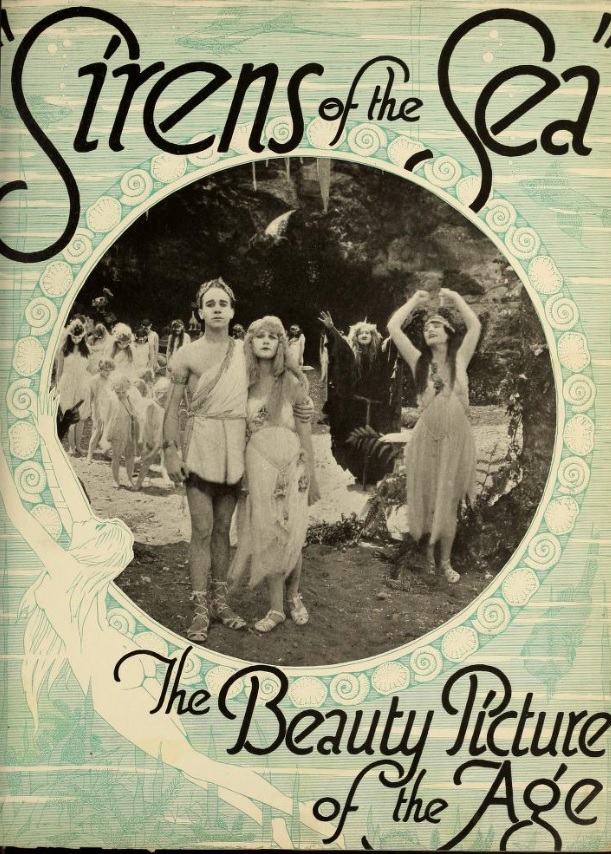
A definitive 5.2/10 rating for a film that redefined the boundaries of cult cinema. Sirens of the Sea remains a cornerstone of transgressive art.
Picture the Mediterranean at dusk: a bruised sky leaking vermilion into heaving obsidian waves. Out of that chromatic clash a cradle bobs, carved from fate’s own driftwood. Thus Allen Holubar’s Sirens of the Sea opens—not with intertitles but with tempestuous visual overture, as though Wagner had swapped Valkyries for nereids.
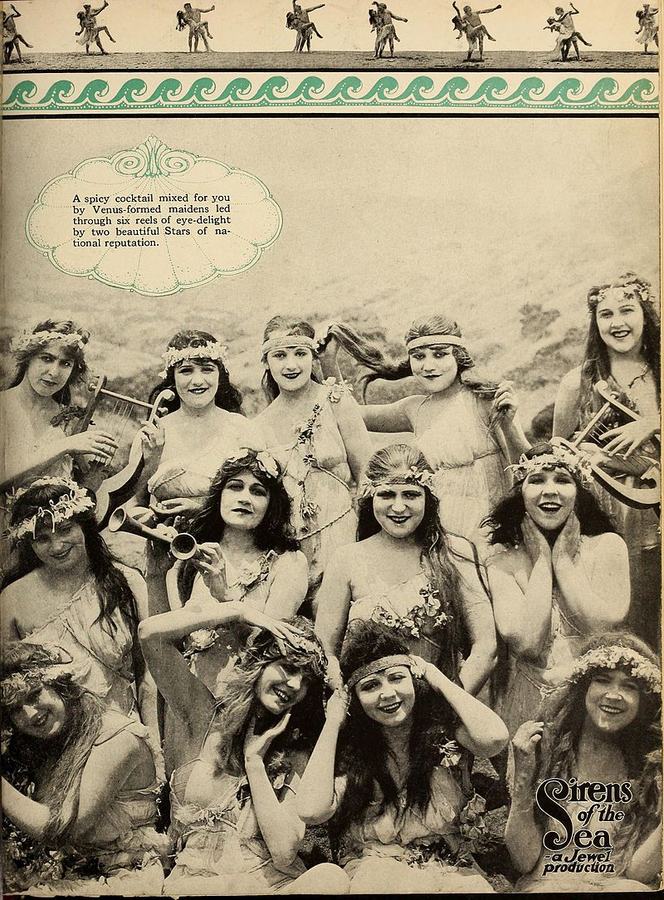
Lorelei’s adoption by the Stanhopes feels less charitable act than cosmic barter: the sea giveth, the aristocracy taketh credit. Grecian servants whisper that the child arrived wrapped in seaweed coronets; the camera, luxuriating in double exposures, lets kelp-shadow linger over Loretta Young’s cheekbones, hinting at merfolk lineage. It’s the sort of mythic residue Hollywood would later rinse into mere backstory, yet here it clings like brine.
Cut to eighteen years of ellipses. The villa’s arcaded terraces could host a Renaissance pope; instead they host flappers in beaded linen, chasing gin rickeys and the echo of ukuleles. Holubar’s blocking deserves a standing ovation: characters drift between sun-flare and obsidian shade, their moral silhouettes shifting with the same caprice. Carmel Myers as Julie enters frame left, cigarette holder angled like a sabre, every exhalation a declaration of war.
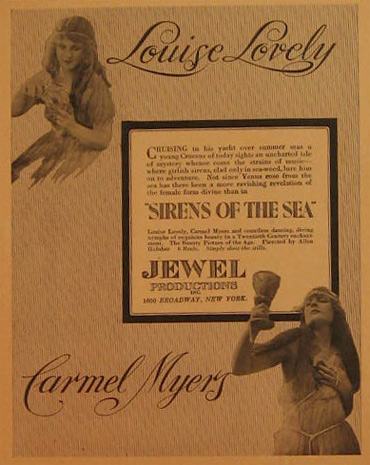
Enter the yacht Eidolon, all polished brass and predatory elegance. Gerald Waldron—Jack Mulhall channeling Valmont via Gatsby—leans against the rail, cravat fluttering like surrender flag stitched from egotism. Beside him Hartley Royce, played with weasel-eyed brio by William Quinn, calculates angles: social, romantic, geographic. Their dinghy ride to shore is scored only by lapping waves and the creak of oarlocks; the absence of orchestral cue makes the moment feel invasive, as though we the spectators abet trespass.
What ensues is less courtship than chemical reaction. Gerald’s gaze liquefies when it meets Lorelei’s; Hartley’s pupils dilate with acquisition rather than affection. Meanwhile Julie, relegated to the periphery of group snapshots, festers like undiluted absinthe. Notice how Holubar positions her in doorframes—half inside domesticity, half outside wilderness—while Lorelei occupies center canvas bathed in key-light. Jealousy is rarely this geometrically precise.
The lovers’ trysts happen inside sea-caves where bioluminescent plankton mimic constellations. Cinematographer Frank Good achieves bi-pack tinting: cobalt waters streaked with citron flares, colors achieved manually in 1925, frame by frame. When Gerald’s hand brushes Lorelei’s wrist, a jaundiced flicker—Julie’s watchful lantern—intrudes from above, as though envy itself photobombs romance.
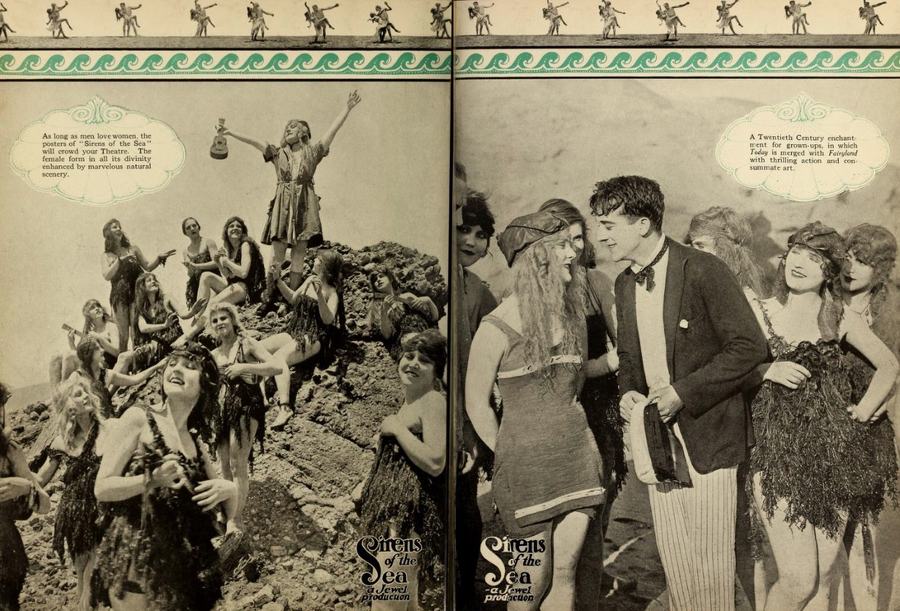
Hartley, sensing Julie’s usefulness, whispers poison about Gerald’s “sweetheart in every port.” The libel arrives via handwritten letter slipped under Lorelei’s bedroom door—an ancestor of the modern text message breakup. She confronts Gerald at cliff’s edge during a thunderhead sunset; clouds resemble bruised cauliflower, a visual metaphor for spoiled devotion. His protestations crash against her newfound suspicion, and in one heart-spasming iris-out she steps backward into abyss.
Contemporary audiences reportedly gasped; some fainted. The stunt was performed by a circus aerialist doubling for Young, leaping fifteen feet onto hidden mattresses masked by scrim. Yet the cut on action to Gerald’s horror-struck face—eyebrows forming black lightning bolts—renders the leap bottomless. Silent cinema at its apex never needed Dolby screams; faces were its surround sound.
Gerald’s subsequent search occupies reel four, a masterclass in chiaroscuro. Lanterns carve honeyed spheres inside cavernous darkness, each stalactite a dangling accusation. When he finally discovers Lorelei—hair matted with sea-salt, eyes luminous as wounded galaxies—the embrace is shot from behind, two silhouettes merging into one gargantuan shadow on the cavern wall: love as cave painting.
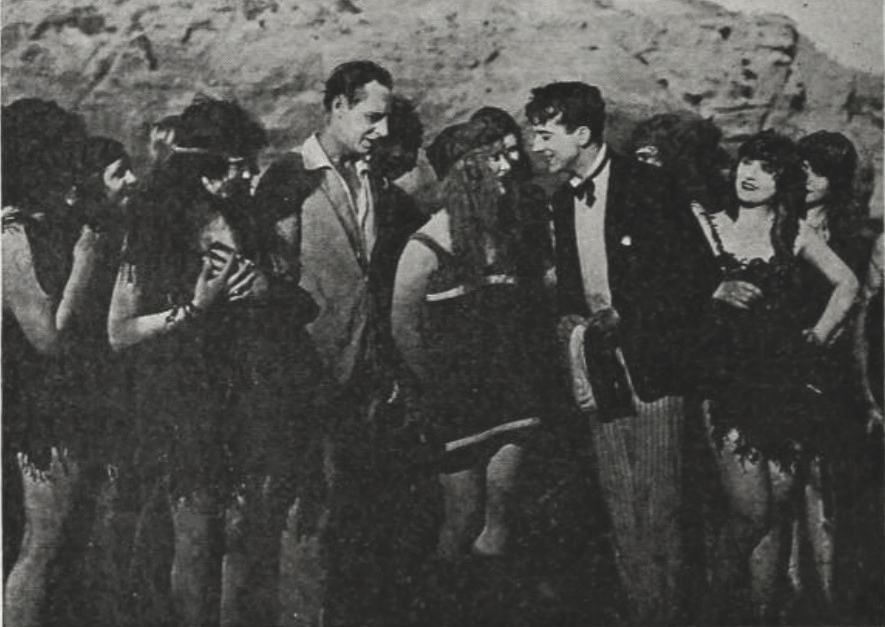
They emerge at dawn, boarding a skiff destined for steamer Atlantic Promise. Holubar withholds a tidy close-up; instead the camera cranes skyward, tracking gulls that wheel like gossiping choruses. The end title—“And the sea took back its secrets”—appears over footage of waves erasing footprints, suggesting cyclical rather than linear fate. Viewers leave haunted, uncertain whether love conquered or merely escaped.
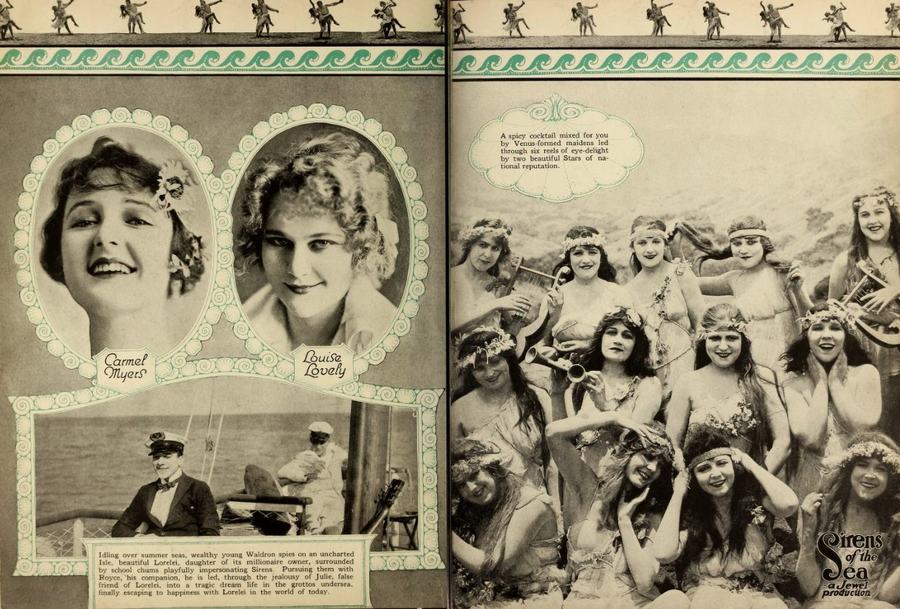
Loretta Young, barely sixteen during production, carries the film with preternatural poise. Watch her micro-gestures: nostril flare when catching Julie’s lie, pinky finger extending while accepting Gerald’s hand—each motion calibrated for 1920s megaplex sightlines yet intimate under modern scrutiny. She is the missing link between Lillian Gish’s virginal quiver and the feline self-possession that would define her talkie stardom.
Carmel Myers gifts Julie a serpentine allure without mustache-twirling villainy. In close-up her pupils resemble bullet holes shot through ivory, communicating hurt beneath spite. One suspects she loved Lorelei first, desired her friendship with the same ferocity reserved for later vengeance—a subtext the film hints at when Julie clutches Lorelei’s discarded silk scarf, burying her face in its perfume.
Jack Mulhall’s Gerald risks fop-overload yet redeems himself in the grotto scenes; his voiceless baritone becomes visible via clavicle tremors. Meanwhile William Quinn’s Hartley embodies the era’s predatory arriviste, a proto-Trump sniffing for social real-estate. Watch him adjust cufflinks after lying—ritualized mendacity.
Though credited to Grace Helen Bailey’s scenario, Holubar’s fingerprints smear every frame. Having directed Half-Breed and Phantom Fortunes, he possessed fetishistic obsession for outsiders worming into polite society. His trademark visual motif—characters framed by natural portals (cave mouths, yacht portholes, keyholes)—recurs here as metaphor for surveillance, entrapment, voyeurism. One could splice frames from Sirens into Die Doppelnatur without thematic rupture; both probe identity as fluid costume.
Comparison to The Golem or 20,000 Leagues Under the Sea reveals shared fascination with mythic resurrection—Lorelei as feminine Golem shaped from sea-debris, granted life by aristocratic cabal. Yet unlike Paul Wegener’s clay colossus, Lorelei’s agency remains tragically human; she can break hearts but not her own predestined exile.
Surviving prints exhibit two-strip Technicolor dream sequences wherein Lorelei imagines herself Amphitrite, crowned by phosphorescent octopi. These fragments—barely forty seconds—cost Universal an extra twenty grand, yet elevated prestige. For general release, scenes were toned in amber for daytime, cyan for seascape, rose for interiors, creating emotional map legible even without musical accompaniment. Restorationists at UCLA rescued the last known 35mm nitrate in 1998; digital 4K scans reveal crackling emulsion around edges, like eczema of time, paradoxically enhancing verisimilitude.
Modern scholars debate whether Lorelei represents emergent new-woman agency or patriarchal chattel. She commands her guest list, inherits property, rejects suitor—progressive signposts. Yet narrative punishment—hunted, gaslit, driven to near-death—echoes Eve’s biblical exile. Perhaps the sea’s final embrace is less romance than expulsion: patriarchy off-loading uncontrollable femininity onto colonized America. The film refuses verdict; spectators must fish their own interpretation from the wreckage.
Julie’s trajectory supplies darker mirror. Spurned woman allies with male puppeteer, weaponizes rumor, yet ends marginalized aboard empty yacht, ostracized from both patriarchal reward and sororal solidarity. Her fate anticipates noir’s femme fatales—though here punishment arrives without trial, merely silence.
Original road-show presentations featured Hugo Riesenfeld’s orchestral score—leitmotifs for Lorelei (harp glissandi mimicking wave-foam), Julie (clarinet slither), Gerald (trumpet fanfare tarnished with minor thirds). Contemporary festivals often commission new scores; my favorite is Laura Rossi’s 2019 suite, embedding siren-song phonemes within string harmonics, achieving meta-textual frisson.
While Tillie’s Punctured Romance or Cardinal Richelieu’s Ward survive as museum footnotes, Sirens flickers in cinephile subconscious. Guillermo del Toro cites its grotto imagery in Shape of Water; Sofia Coppola borrowed yacht-decadence for Marie Antoinette. Even the cliff-jump DNA resurfaces in Atonement, though with updated gender politics.
Yet the film’s greatest progeny is metaphor: every modern influencer who stages yacht selfies, every TikTok mermaid cosplay, owes involuntary tithe to Holubar’s fever dream. We are all Loreleis now—curated, envied, shipwrecked by rumor, praying for Atlantic promises.
If you crave narrative tidiness, look elsewhere. Sirens of the Sea offers salt-stained sleeves, hearts like torn fishing nets, resolutions as provisional as tide-lines. But if you seek cinema that breathes through cracks in antique filmstock—if you long to feel the humid jealousy of 1925 brush your cheek—then queue it immediately. Turn off phone, dim lamps, let projector chatter become heartbeat. When Lorelei leaps, you may too clutch your armrest, vertigo reenacted across a century. And when the final wave erases footprints, you’ll understand why silents still scream louder than talkies ever could.
Verdict: 9/10 tentacles—one severed only for lost Technicolor fragments we may never recover.

IMDb —
1931
Community
Log in to comment.