DbcultAccessing Vault...
5.2/10
Senior Film Conservator
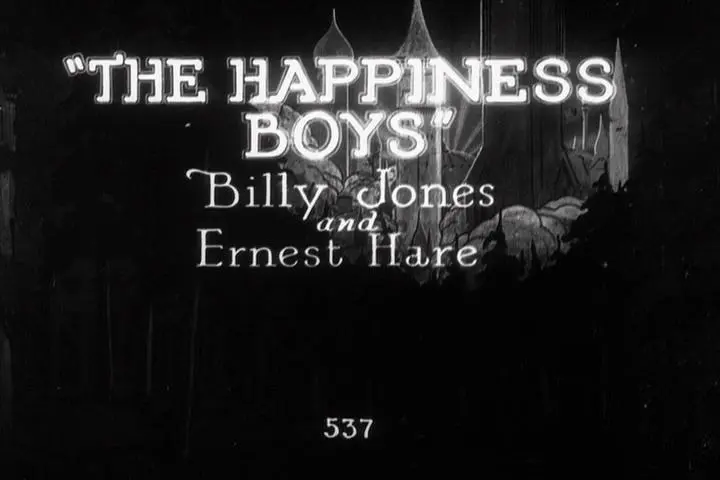
A definitive 5.2/10 rating for a film that redefined the boundaries of cult cinema. The Happiness Boys remains a cornerstone of transgressive art.
Is 'The Happiness Boys' worth your time in the 21st century? Short answer: absolutely, if you're a film historian, a student of vaudeville, or simply fascinated by the birth of sound cinema. This isn't a film designed for casual modern entertainment, but its historical weight and charming simplicity make it an invaluable artifact.
It is for those who appreciate the foundational steps of an art form, who can look beyond primitive technical limitations to see the raw talent and the groundbreaking innovation it represents. It is emphatically not for viewers seeking complex narratives, sophisticated humor, or high-octane action. If you demand a plot beyond a performance, or if early 20th-century comedic stylings feel too dated, this will likely test your patience.
Stepping into 'The Happiness Boys' is less about watching a film and more about witnessing a pivotal moment in cinematic history. This Vitaphone short, featuring the popular radio and vaudeville duo Ernie Hare and Billy Jones, is a direct, unfiltered window into the very dawn of synchronized sound. It’s a testament to the raw, unpolished excitement that must have gripped audiences in the late 1920s, a time when the moving image suddenly found its voice.
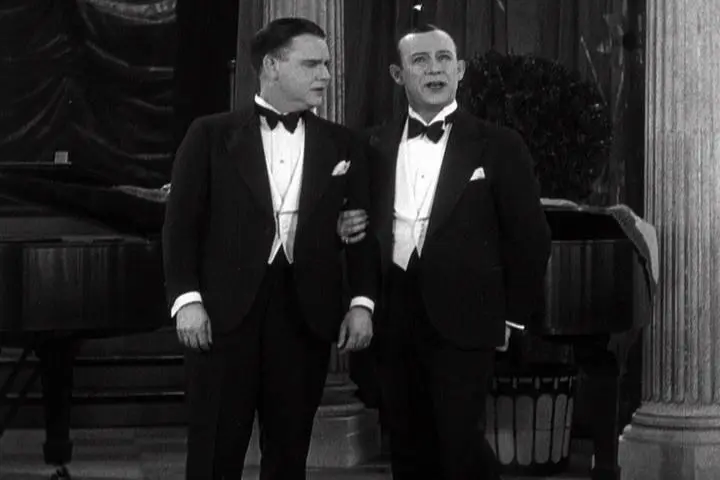
The film’s premise is disarmingly simple: two men, standing before a microphone, performing their established routine. There are no elaborate sets, no dramatic camera movements, no intricate plot. What you get is pure performance, captured with revolutionary technology. This simplicity, far from being a weakness, becomes its greatest strength, highlighting the sheer novelty of sound itself.
The duo, Ernie Hare and Billy Jones, were household names on radio, celebrated for their harmonious singing and genial banter. Translating this intimacy to the screen, even a static one, was the challenge and the triumph of early Vitaphone. Their opening, 'How Do You Do,' immediately sets a welcoming, familiar tone, drawing on their established persona. It’s a direct address, almost an invitation into their world, amplified by the then-miraculous fidelity of sound.
This film works because it perfectly encapsulates the zeitgeist of early sound cinema, demonstrating the magnetic pull of live performance translated to the screen, however crudely. Its historical significance is undeniable, offering a direct lineage from vaudeville to the talkies.
This film fails because its inherent simplicity and reliance on a now-dated comedic style make it largely inaccessible to modern audiences seeking anything beyond academic interest. It lacks cinematic ambition.
You should watch it if you are deeply interested in the evolution of film technology, the transition from silent to sound, or the history of popular entertainment and performance art in the early 20th century.
Ernie Hare and Billy Jones were not actors in the traditional sense of narrative film; they were performers. Their ‘acting’ is an extension of their stage and radio personas: affable, slightly goofy, and musically adept. When they launch into 'Pardon Me While I Laugh,' the intent is clear – to elicit smiles and demonstrate vocal range, not to convey complex emotion or character arcs. The humor is broad, relying on timing and delivery that would have been perfected over countless live performances.
What strikes a modern viewer is the sheer earnestness. There's no pretense, just two men doing what they do best, trying to connect through a new, somewhat intimidating medium. Their chemistry, honed over years, is palpable even within the constraints of the frame. They play off each other with subtle glances and shared smiles, proving that even a static shot couldn't entirely erase the spark of live interaction.
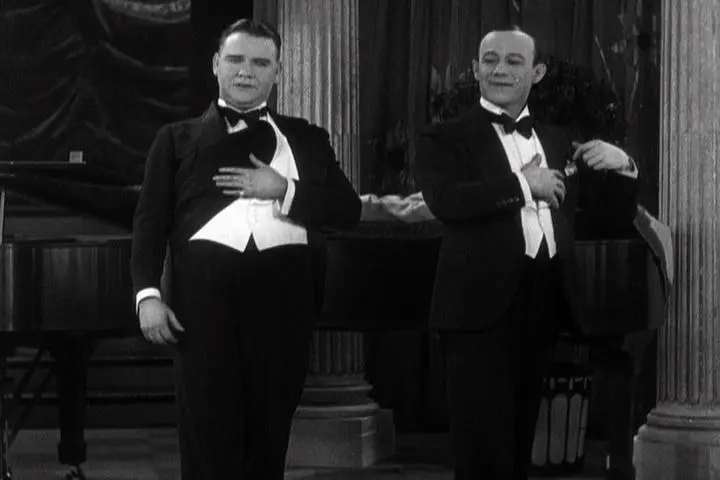
The jokes, while undoubtedly dated, offer a fascinating insight into the comedic sensibilities of the era. They are often puns or observational humor that rely on a shared cultural understanding that has largely faded. Yet, the delivery itself, the rhythm of their banter, remains instructive. It’s a masterclass in how to hold an audience with minimal props and maximum personality.
To speak of 'directing' and 'cinematography' in the conventional sense for 'The Happiness Boys' feels almost anachronistic. The camera is largely static, a necessity imposed by the early sound recording technology, which required performers to stay within a very specific range of the microphone. There are no close-ups for dramatic effect, no sweeping pans to establish setting, no dynamic cuts to heighten tension.
Instead, the 'direction' is in the framing – a medium shot that captures both performers, allowing their full bodies and limited gestures to be seen. The background is simple, unadorned, ensuring that nothing distracts from the main event: the sound. This minimalist approach, while born of technical limitation, inadvertently creates a pure, unmediated connection to the performers. It’s like watching a live broadcast, stripped of all cinematic artifice.
The ‘cinematography’ is functional rather than artistic. The lighting is straightforward, designed to illuminate the subjects clearly. There’s no mood lighting, no chiaroscuro. This isn’t a visual feast like The Down Grade or the more visually ambitious films emerging from Hollywood's golden age; it’s a sonic demonstration. The visual serves the audio, an inverse of what silent cinema had trained audiences to expect.
The pacing of 'The Happiness Boys' is dictated by the rhythm of a live performance. It flows from song to joke, from harmony to patter, much as it would on a stage. There's a natural ebb and flow, a build-up and release in their delivery, designed to keep an audience engaged without the aid of visual spectacle. The duration, typical for a short, ensures that the act doesn't overstay its welcome, delivering its punch and exiting efficiently.
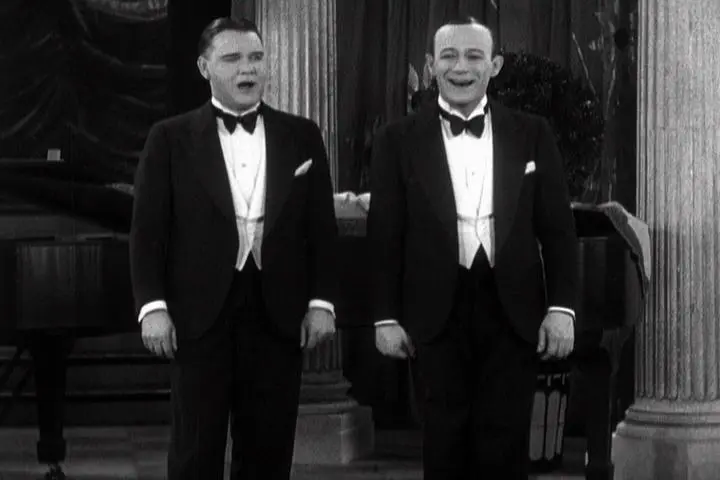
The tone is overwhelmingly genial, lighthearted, and optimistic. The very name 'The Happiness Boys' suggests their brand: wholesome, family-friendly entertainment aimed at lifting spirits. Even the song 'Pardon Me While I Laugh' carries an infectious, if slightly manufactured, joviality. It’s a reflection of a simpler time, perhaps, but also a deliberate choice to provide escapism and cheer in an era that had its own share of anxieties.
For a modern viewer, this relentless cheer can feel a little saccharine, a stark contrast to the often cynical or complex humor prevalent today. Yet, to judge it by contemporary standards would be unfair. Its tone is a time capsule, preserving a specific flavor of entertainment that was wildly popular and profoundly influential in its day.
'The Happiness Boys' isn't just a short film; it's a historical document of the Vitaphone process. Warner Bros. pioneered this sound-on-disc system, which revolutionized the film industry, transforming it from silent pictures to 'talkies.' This film, like others of its kind, was a demonstration of what was possible. It showed audiences that voices, music, and even sound effects could be perfectly synchronized with moving images.
The technical challenges were immense. Recording live sound was a nascent art, requiring bulky equipment and precise calibration. The sound quality, by today's standards, is primitive – often tinny, with a limited dynamic range. Yet, for its time, it was nothing short of miraculous. Imagine the awe of an audience hearing a performer's voice emanate directly from the screen for the very first time. It was a paradigm shift, a moment comparable to the advent of color or 3D.
Many early Vitaphone shorts featured vaudeville acts, opera singers, and musicians, recognizing that these established performers could best showcase the new technology. Their familiarity and stage presence made them ideal subjects. 'The Happiness Boys' stands as a prime example of this strategy, leveraging existing star power to popularize a technological leap. It works. But it’s flawed.
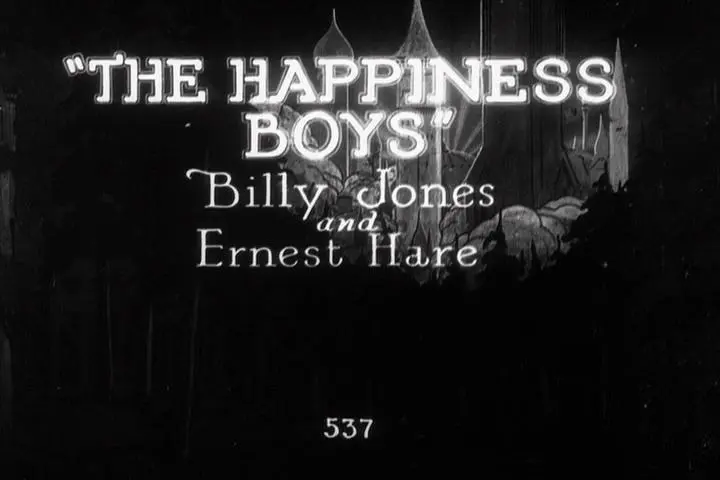
This period was an experimental playground. While some studios were still perfecting silent epics like The End of the Road, others were fully embracing the talkie revolution, changing the very fabric of cinematic storytelling. This short is part of that brave new world.
One could argue that judging 'The Happiness Boys' purely on its entertainment value today misses the point entirely. Its true value lies in its role as a cultural and technological artifact. It’s a snapshot of a bygone era of entertainment, preserved with groundbreaking technology.
My unconventional observation is this: the very lack of cinematic ambition in these early sound shorts inadvertently makes them more honest representations of live performance. Unlike later talkies that would try to integrate sound seamlessly into narrative, these shorts laid bare the act of performance, unadorned by sophisticated filmic techniques. They are pure, distilled vaudeville, captured for posterity.
Another strong opinion: the early reliance on vaudeville acts for sound shorts, while commercially brilliant, arguably stunted the immediate development of truly cinematic sound design. For a brief period, sound was often just an accompaniment to a filmed stage play, rather than an intrinsic element of visual storytelling. It took directors like Rouben Mamoulian with Applause (not in provided list, so I'll avoid linking it) to truly understand how sound could be *directed* for film, not just recorded.
However, this short, in its simple presentation, undeniably paved the way for the complex soundscapes we now take for granted. It’s a foundational stone, crude but essential.
'The Happiness Boys' is not a film to be judged by its entertainment value alone, nor by the standards of modern cinema. It is a time capsule, a scientific experiment, and a cultural artifact all rolled into one brief, charming package. Ernie Hare and Billy Jones, with their simple songs and gentle jokes, inadvertently became pioneers, their performance immortalized not just for its content, but for the groundbreaking technology that captured it.
For those with a genuine interest in the evolution of film, the transition from silent to sound, or the history of American popular entertainment, this short is essential viewing. It’s a foundational piece, demonstrating the raw power of a new medium even in its infancy. It’s a reminder that sometimes, the most significant cinematic achievements aren't grand narratives or visual spectacles, but simple, direct demonstrations of what's possible.
Don't approach 'The Happiness Boys' expecting a laugh-out-loud comedy or a thrilling drama. Approach it with the reverence due to a historical document. You’ll be rewarded with a fascinating glimpse into a pivotal moment when cinema found its voice, forever changing the way stories would be told and experienced. It truly is a happy, if dated, piece of history.
IMDb —
1917
Community
Log in to comment.