DbcultAccessing Vault...
Cult Review
Senior Film Conservator
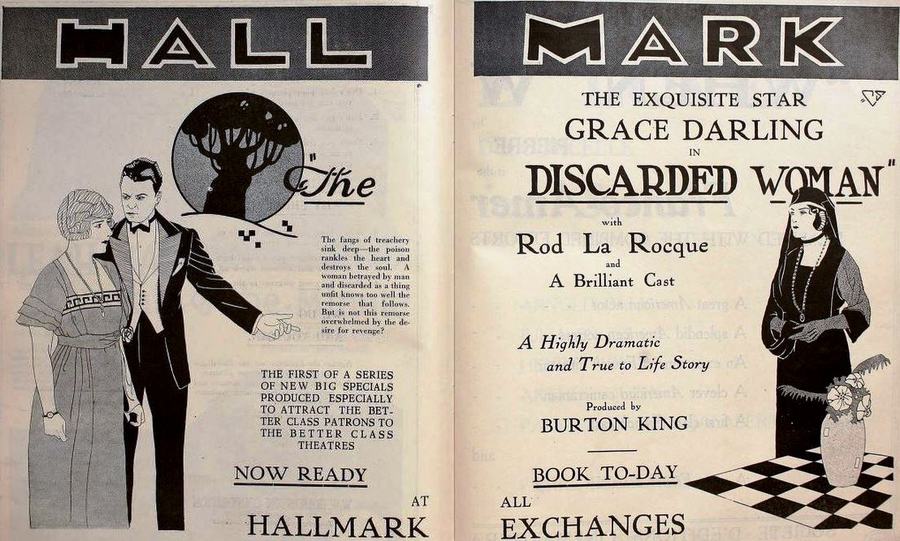
Melodrama has always been cinema’s way of laundering dirty linen in public, but few early silents scrub as viciously—or as vulnerably—as The Discarded Woman.
If you believe the 1920s only offered flappers and Keystone chaos, this staggeringly obscure gem will rewire your retinas. Picture a locomotive slicing through bruised violet dusk, steam curling like cigar smoke around the marital death-spiral of Martin and Esther Wells. In the first reel alone, the film stages an act of desertion so casual it feels like negligent homicide: Martin—tailored, pomaded, soul evaporated—simply vacates the compartment, evaporating into the corridor while the train barrels onward. The camera lingers on Esther’s gloved hand suspended mid-air, holding nothing but receding footfalls. It is a visual sentence on the disposable feminine that lands harder than most dialogue ever could.
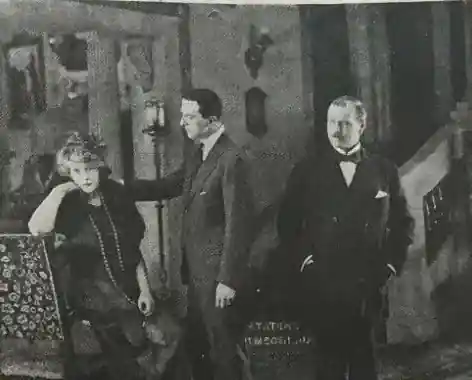
Rod La Rocque essays Martin with the unctuous charm of a bored god; his smile never reaches the eyes because the eyes have already clocked the exit. The performance is calibrated at the intersection of matinee idol and sociopath, a balance he would later soften in The Saphead. Opposite him, Madelyn Clare’s Esther travels the spectrum from ornament to feral survivor without ever betraying the core tremor of someone who once believed in the contract of marriage. The transition occurs wordlessly—one of the miracles of pure cinema—when she steps off the train into the pine-choked ether, fog devouring the hem of her traveling coat. That single dissolve signals a birth: the discarded wife dies; the autonomous woman emerges.
Enter Samuel Radburn—prospector, drunkard, Prospero of a ramshackle Sierra cabin—played by John Nicholson with a volatile mix of melancholia and menace. The cabin sequence is the film’s nerve-shredding fulcrum: kerosene lamplight licking rough-hewn logs, a battered phonograph bleating a cracked waltz, the smell of whiskey and old blankets practically oozing through the screen. Radburn’s assault, handled with startling frankness for 1920, is suggested via shadow play: a silhouette arm yanking a curtain, the phonograph arm scratching across vinyl, the abrupt plunge into silence. Director A.W. Tillinghast refuses to aestheticize the violence; instead he aestheticizes the aftermath—Esther fleeing barefoot across frost, moonlight turning each blade of grass into a guilty witness.
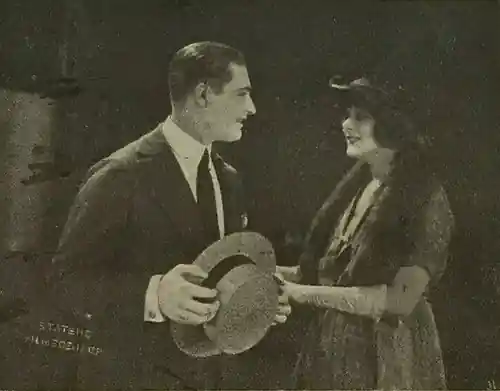
Fast-forward months: the Sierra gold seam has swollen Radburn’s fortune, while Esther, now in New York, is a radiant enigma draped in couture, her pregnancy either a monument to trauma or miracle—an ambiguity the film courts with mischievous dignity. Radburn, unaware that the widowed Mrs. Wells and his timid cabin escapee are the same person, courts her anew, propelled by guilt and the magnetic pull of narrative fate. Their Manhattan reunion glows with the ochre shimmer of streetlights; the metropolis becomes a coral reef of机遇 and menace. When he offers marriage, the scene is filmed through a cab-window, rain streaking the glass like Morse code: two silhouettes shaking hands on a covenant neither fully comprehends.
Of course paradise has serpents. The Graeber gang—three velvet-gloved extortionists—surface waving documents that threaten to detonate Esther’s dual identity. William Corbett’s lead Graeber exudes the reptilian bonhomie of a Wall Street broker moonlighting as Mephistopheles. Their scheme is elegantly simple: coerce Esther into signing over her half of the mine or face public disgrace. The tension here mutates from physical survival to social annihilation, proving that even in 1920 the weaponization of reputation was a potent plot turbine.
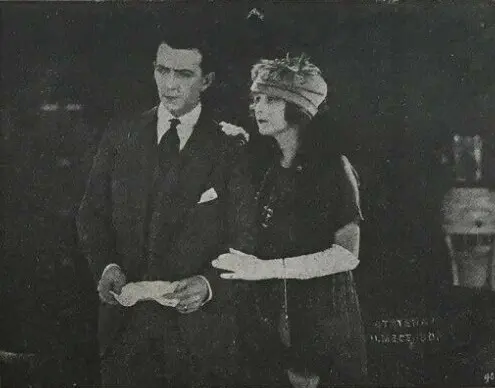
Esther’s confession, staged in a cavernous drawing room paneled with enough mahogany to build a warship, is the film’s emotional D-Day. Madelyn Clare unleashes a torrent of silent-era semaphore—eyes that ricochet between defiance and supplication, shoulders folding like broken wings. Radburn’s response, a single tear tracked in close-up, feels revelatory. Forgiveness arrives not as saccharine absolution but as recognition of mutual damage: he the assailant-turned-benefactor, she the victim-turned-deceiver, both complicit in the alchemy that converted pain into possibility.
The resolution—gold secured, villains scattered, marriage intact—should feel preposterous, yet the film sells it through sheer kinetic sincerity. Cinematographer James Cooley floods the final two-shots with a honeyed luminosity that suggests redemption is less a miracle than a stubborn act of will. Lawrence McCloskey’s intertitles, usually the Achilles heel of silent storytelling, ascend into terse poetry: “The past is a mine we deed to tomorrow.”
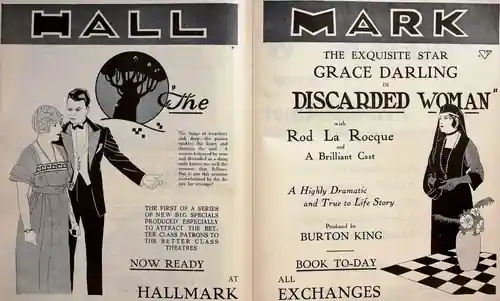
Contextually, The Discarded Woman occupies a liminal pocket between Victorian moralism and Jazz-Age emancipation. Compare it with Anna Boleyn’s regal tragedy or Do Men Love Women?’s flapper froth, and you’ll appreciate how Tillinghast hybridizes domestic melodrama with proto-feminist self-rescue. The movie anticipates tropes that would later flower in noir—The Law of Compensation and Obmanutaya Yeva both echo its fascination with identity as negotiable currency.
Technically, the print survives only in a 16mm reduction at MoMA, flecked with nitrate acne and graced by a contemporary score that veers from Debussy-esque harp shivers to Appalachian fiddle. The tinting strategy—amber for interiors, viridian for exteriors, rose for romantic détente—acts as an emotional barometer. Spot the cyan flash when Esther confesses: an involuntary gasp rendered in color theory.
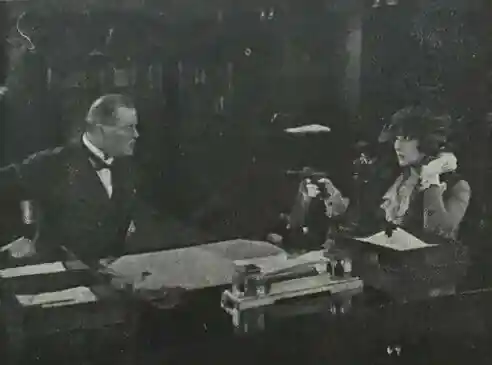
So why has history orphaned this picture? Blame the star-devouring vortex of 1920: a year that spat out over six hundred features, many stitched by itinerant companies that folded before the reels cooled. The Discarded Woman was financed by the short-lived Aurora Producing Corp., whose offices evaporated in a securities fraud scandal, sending negatives to creditors and copyright registrations into limbo. Rediscovery required a chain of flukes: a projectionist who saved reels as coasters, a curator’s hunch, a Kickstarter fueled by cinephiles who’d rather resurrect a nitrate ghost than stream another algorithmic zombie.
Today the film feels eerily topical—an #MeToo parable avant la lettre, a cautionary fable about wealth’s moral alchemy, a frontier epic that ends in a Manhattan brownstone. It wrestles with complicity, commodification of women, and the American habit of reinventing oneself by erasing someone else. Yet it also believes, perhaps naïvely, that confession can cauterize, that marriage can be re-coded as partnership rather than property.
Flaws? Certainly. The Graeber gang evaporates too conveniently, a courtroom coda got snipped by censors, and the racial homogeneity reeks of its era. But flaws are celluloid wrinkles; they prove the film once breathed.
Watch The Discarded Woman if you crave silent cinema that scalds rather than soothes, that brandishes melodrama like a switchblade. Watch for Madelyn Clare’s face—an epic in itself—shifting from porcelain doll to flint-knapped warrior. Watch because history is a selective amnesiac, and every resurrection is a tiny revolution. And when the final iris closes on Esther cradling her child—Radburn’s arm a steady bracket around the fractured family—you might, against all odds, believe that sometimes the discarded refuse to stay trash, that sometimes the frontier’s grit becomes the metropolis’ pearl.
Verdict: a bruised, blazing triumph—5/5 canary diamonds mined from cinema’s forgotten bedrock.
IMDb —
1919
Community
Log in to comment.