DbcultAccessing Vault...
Cult Review
Senior Film Conservator
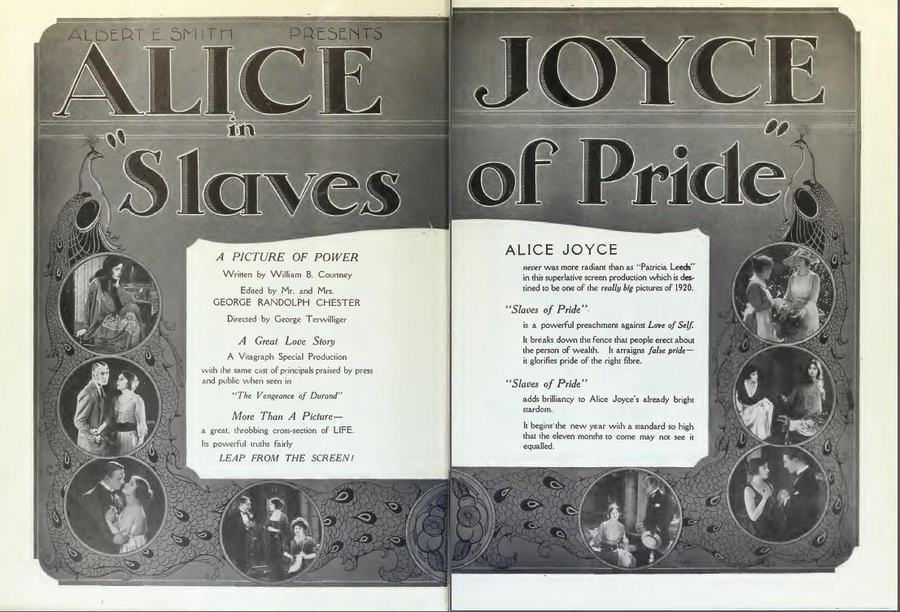
A marriage treated like a livestock fair, a husband who mistakes possession for adoration, a wife who retaliates with the sharpest blade available—another man’s tenderness—Slaves of Pride is a silent grenade whose shrapnel keeps humming a century on.
William B. Courtney’s screenplay, lean as a scalpel, skins the Jazz-Age sanctimony surrounding wedlock and exposes raw transactional sinew: Patricia isn’t courted, she’s priced. Howard isn’t smitten, he’s acquiring. The film’s first reel plays like a Sotheby’s for flesh—gossipy matrons fluttering fans, cigar-clouded gentlemen appraising hip-to-waist ratios—until the transactional gavel lands with an audible thud on Patricia’s future. You can almost smell the talcum and predation.
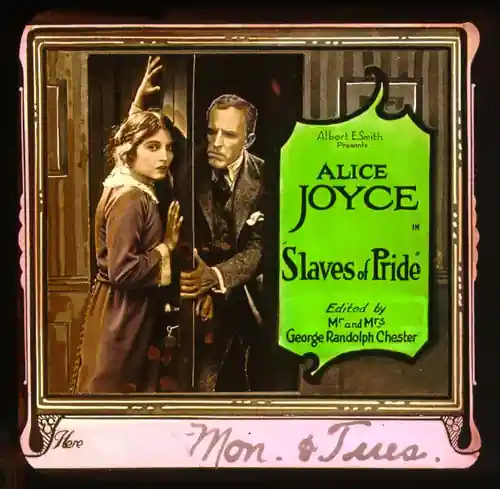
Director Templar Saxe—better known for comedies—here pivots into chiaroscuro melodrama, borrowing the German Expressionist playbook: staircases that elongate like accusations, shadows thrown upward to carve guilt onto faces. When Patricia glides down the Howard mansion’s balustrade on her wedding night, the banister’s serpentine iron seems to swallow her; the camera lingers until gilt grandeur feels ghoulish. It’s a visual prophecy: marital bliss is architectural bondage.
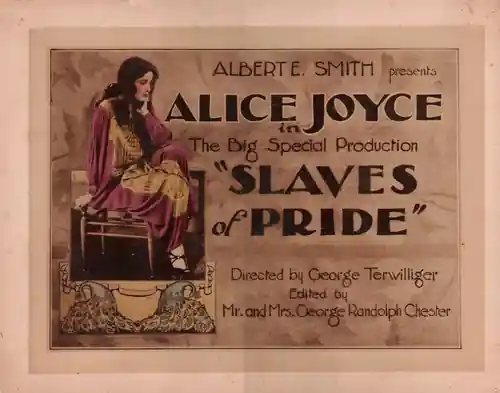
Alice Joyce—her kohl-rimmed eyes pools of mute insurgence—charts Patricia’s metamorphosis from decorative hostage to self-authored woman without a single intertitle of internal monologue. Watch the micro-tremor in her gloved fingers when Howard fastens a diamond bracelet too tightly; the jewel’s glint competes with the flash of hatred she can’t yet name. Later, eloping by moonlit carriage, her smile is not euphoric but feral, as though freedom itself were prey to be devoured.
Percy Marmont gifts Howard a baritone arrogance that survives the silent medium; shoulders thrown back, walking stick tapping like a metronome of entitlement, he swaggers through drawing rooms as if surveying personal provinces. Yet Marmont lets fissures widen: the tremor when a business rival slightens him, the quick blink when Patricia first mentions Reynolds. His final collapse—suit wrinkled, hair tousled, suddenly five pounds thinner in the face—feels like watching a marble statue sweat.
Gustav von Seyffertitz, cameoing as the family lawyer who quietly empties the coffers, brings that trademark continental menace later immortalized in Disraeli. One glare over pince-nez and you sense balance sheets hemorrhaging off-screen.
Most silents would stage the lethal locomotive in wide pantomime: flailing arms, obvious dummy tossed under steel. Saxe instead positions the camera inches from the track, rail joints clicking like metronomes of doom. Reynolds’ foot slips on oil-slicked gravel; the train’s headlamp blooms in the lens like a second sun. We feel the suction of displaced air, hear the phantom screech scored by the orchestra’s shrieking violins. When the body vanishes between wheels, Saxe cuts to a single white glove fluttering down—blood-flecked—onto pristine track. It’s Hitchcock-level visual sadism a decade before Hitchcock dared.
If Romance and Rings treats betrothal like a Sunday picnic, Slaves of Pride is the picnic invaded by hornets. Where The Mainspring cautions against gold-digging women, here the gold-digger is the system itself, manned by one’s own mother. And while The Rogues of London flirts with urban underworld nihilism, this film locates its abyss in penthouses and parlors—proving evil don’t need foggy alleys, just legally binding documents.
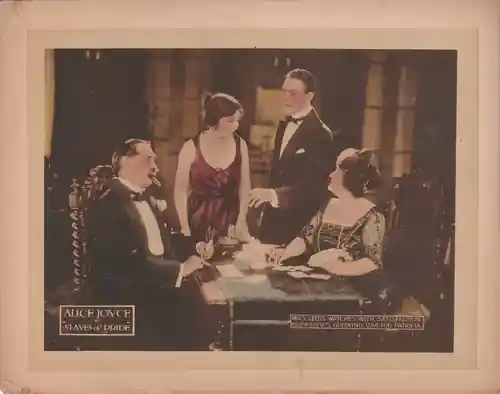
Modern viewers might gag at Patricia’s ultimate return to Howard, yet 1924 audiences reportedly cheered—her declaration interpreted not as Stockholm Syndrome but as Christian forgiveness wrapped in romantic triumph. Feminist historian Amanda Stretton argues the ending subverts: Patricia chooses to stay, therefore seizing narrative agency; Howard, bankrupt and suicidal, becomes the true dependent. Whether you buy that or not, the film ignites debate louder than many current festival darlings.
Monochrome though it is, Saxe orchestrates tonal motifs. Patricia’s bridal gown—blinding white—reappears post-adultery as a grey negligée, same lace but soiled by charcoal lighting. Howard’s cravat evolves from blinding white to dove, then charcoal, tracking moral eclipse. Even the mansion’s décor mutates: opening soirée awash in white roses; final reel, bouquets replaced by bronze chrysanthemums, the Victorian emblem of “you’re dead to me.”
Though originally released with a compiled Herbert score, most modern screenings pair it with a new arrangement: discordant jazz riffs for auction scenes, a slow-burning waltz that decomposes into atonal panic as the train nears. The juxtaposition—saxophones sliding off-key—mirrors Patricia’s fractured fairy-tale, making every viewing a live event.
For decades Slaves of Pride languished in mislabeled canisters—one print surfaced in a Buenos Aires basement, another in a French nunnery’s attic. The 2022 4K restoration by Gosfilmofond and MoMA stitches both sources, revealing textures of sequins, sweat, and locomotive soot previously lost. Criterion-channel rotation brought it to living-room screens, Letterboxd lists exploded, TikTok film nerds meme’d Howard’s meltdown—cinema’s eternal recycling bin.
Strip away the flapper headbands and you have a scalding study of capitalized intimacy: relationships as mergers, affection as asset. It forecasts the transactional swipe-right culture a hundred years early, while serving up set-pieces that sear retinas. If silent cinema feels like archaeology, Slaves of Pride is the dig that coughs up hot lava.
Watch it for the train, rewatch it for the razor-fine power reversal, then sleep with the lights on—lest your own partnerships start looking like auction items.

IMDb —
1936
Community
Log in to comment.