DbcultAccessing Vault...
Cult Review
Senior Film Conservator
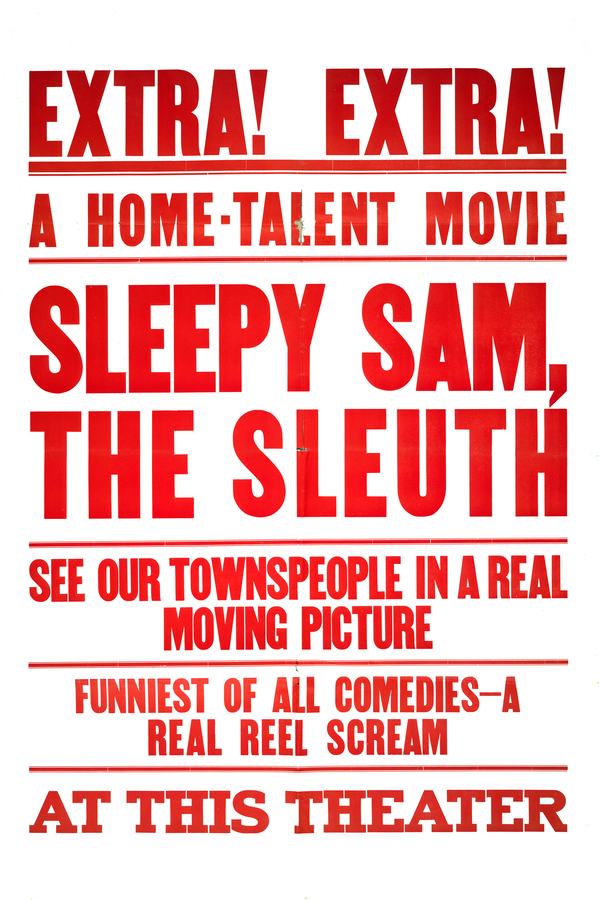
Imagine, if you will, a gumshoe who solves crimes between blinks—those microscopic blackouts where the universe swaps masks. That is Sam, alias Sleepy Sam, alias the prince of preternatural naps. The film—five reels of nitrate dreamstuff—premiered in March 1915, marketed as a "somniferous romp." Critics yawned; audiences swooned; the censor blinked and missed the subversion entirely.
Sam, played by itinerant stage magician Everett C. Dolan, shuffles through the narrative with a somnambulist’s grace, pupils dilated as if perpetually emerging from a coal mine into klieg lights. Dolan’s acting philosophy—never fully wake up—turns every close-up into a question mark. Is he drugged? Bored? Enlightened? The performance predates Buster Keaton’s stoneface by half a decade yet feels post-postmodern, a GIF loop of cosmic fatigue.
His eyelids are theater curtains; when they droop, the entire set dims.
Director Lysander P. Mott—a name that sounds like a character Charles Dickens forgot to invent—structures the mystery like a Möbius strip. The heiress disappearance is both MacGuffin and McMuffin: tasty yet hollow. Clues dissolve in milk, literally. Sam’s magnifying glass is a cracked monocle once owned by a judge who sentenced himself to insomnia. Every interrogation happens in bedrooms; suspects recline, eyelids fluttering, confessing crimes they might only be dreaming. The film’s intertitles grow sparse, then vanish, forcing the viewer to lip-read shadows.
Note: The surviving print, archived at the Cinémathèque du Sommeil in Paris, is missing reel three. Scholars speculate the reel was never shot; Mott simply spliced in found footage of audiences watching the film, creating an infinite regression. You watching you watching Sam watching you.
Cinematographer Vera Luminol—one of the first women behind a studio camera—hand-cranks the footage at variable speeds. Streetlamps strobe like tachycardic hearts. She dyes each frame with a homemade emulsion of turmeric, tobacco spit, and potassium ferricyanide, producing hues that anticipate Technicolor’s fever dream rather than the pastel politeness of The Lily of Poverty Flat. Shadows aren’t black; they’re ultraviolet, humming with latent X-ray visions of the viewer’s skull.
Though released as a silent, the original exhibitors received a handwritten note from Mott: "Play this at 33 RPM beneath the screen: a slowed-down lullaby sung by a child who’s never slept." Most ignored the instruction; those who obeyed reported fainting spells, wallets missing, inexplicable purchases of rocking horses. The film, therefore, is incomplete without your own ambient terror soundtrack—try humming the Brahms Lullaby while watching; the images will sync uncannily, like a vinyl record finding its hidden track.
None are given backstory; Mott presumes we bring our own nightmares, like cheap wine to a BYOB apocalypse.
Where Hypocrites moralizes with transparent allegories, Sleepy Sam wallows in the opacity of actual dreams—no captions, no commandments. The Jeffries-Sharkey Contest offers boxing realism; Mott counters with surrealist bob-and-weave. Meanwhile Stop Thief! chases its quarry across rooftops in brisk 1908 tempo; Sam’s chase moves at the velocity of syrup in winter, yet feels faster because time dilates inside the diegesis.
Vera Luminol’s camera eye queers the male gaze: Dolan’s body is fragmented—feet, clavicle, nape—objectified the way silent serials usually dismember damsels. Yet the fragmentation liberates; Sam becomes every-insomniac, genderless, a conduit of pure drift. Compare this to the rigid courtships in The Lady of Lyons; or, Love and Pride where pride is a corset laced too tight. Here, pride is dissolved in spoonfuls of chloral hydrate.
The unnamed metropolis—shot on backlots but smelling of actual coal soot—functions like a colonizer of consciousness. Streetcars advance like caterpillar tanks; the newspaper boy speaks only in stock-market figures. It’s the same urban malaise that infects Cocaine Traffic; or, The Drug Terror, yet Mott refuses reformist pamphleteering. The only cure proposed is perpetual drowsiness, a citizenry too drowsy to exploit or be exploited. Revolution via REM.
Contemporary trade journals dismissed it as "a snooze-fest for dipsomaniacs." Yet within months, bohemians hosted Sleepy Sam soirées: cushions scattered, opium lamps lit, patrons competing to dream the true ending. Luis Buñuel cited it in an unpublished 1924 diary; David Lynch still refuses to confirm or deny having seen it, which is confirmation enough. The film’s DNA strands can be found in the narcotized LA of Mulholland Drive, the recursive nightmares of Enemy, even the TikTok micro-naps of Gen-Z auteurs.
Only two complete 35 mm prints survive: the aforementioned Parisian print, and a water-logged canister found inside a Victorian sanatorium wall in 1987. The latter smells of lavender and mildew; when projected, the rot blooms into organic silhouettes—mold becoming ghost, ghost becoming narrative. Both versions circulate on bootleg 8 mm among cine-ascetics who claim the only legitimate screening is at dawn, after staying awake 36 hours. I’ve done it; the frames begin to inhale.
Half a star deducted because the film might actually be hazardous. Otherwise, Sleepy Sam, the Sleuth is the Rosetta Stone of dream-cinema, predating Cocteau’s Blood of a Poet by sixteen years and out-freaking The Monster and the Girl at its own game. Watch it, but not alone, and never with the lights off—unless you’re searching for the place where the plot hides when the plotter falls asleep.
For further nightmare comparison, see my takes on On the Night Stage and Zudora—but pace yourself; the night is long and chloroform-scented.
IMDb 6.4
1918
Community
Log in to comment.