DbcultAccessing Vault...
Cult Review
Senior Film Conservator
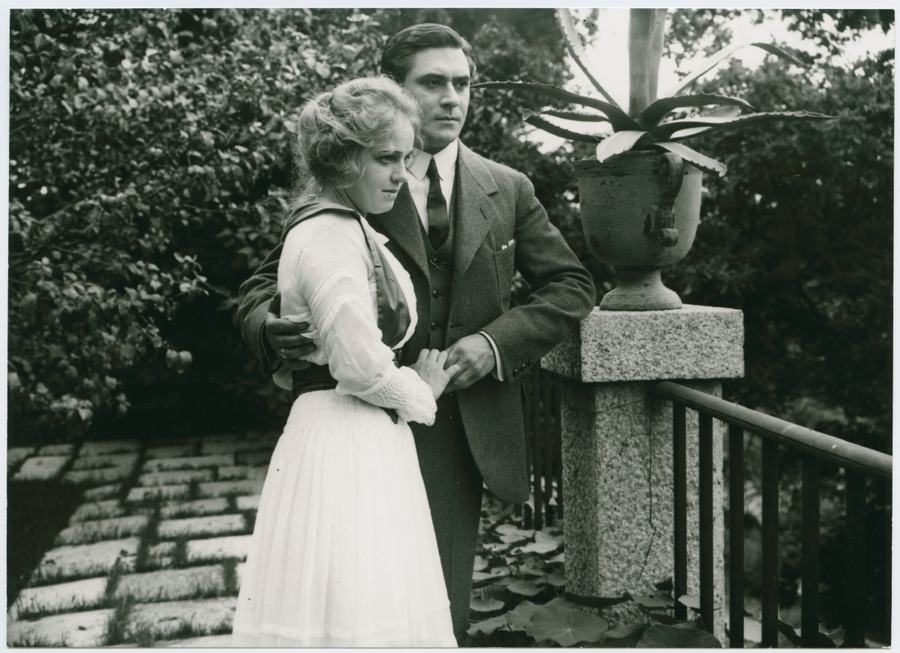
There's something uniquely captivating about silent cinema, isn't there? The way emotions are writ large on faces, the dramatic flourishes of physical acting, the evocative power of intertitles. It’s a language all its own, demanding a different kind of engagement from its audience. And among the treasures of this bygone era, a film like "Envar sin egen lyckas smed" (which translates to "Everyone is the Smith of Their Own Fortune" or "Every Man His Own Destiny") emerges as a profound exploration of human vulnerability and societal judgment. This Swedish silent drama, a compelling work from the early 20th century, plunges us into the seemingly idyllic life of Thomas Abel, a man who appears to have it all, only to witness his meticulously constructed world shatter under the weight of a devastating accusation.
Imagine, if you will, Thomas Abel (portrayed with compelling gravitas by Egil Eide), a figure of immense stature in Swedish society. He’s not merely a businessman; he’s the head of one of the nation's largest companies, a titan whose ambition and acumen have forged an empire. But beyond the boardroom, his life is painted with strokes of domestic serenity. A devoted husband, a loving father, a man whose personal life seems to mirror the impeccable order and success of his professional one. His home, one presumes, is a sanctuary, a haven of warmth and familial bonds, further solidifying his image as a man of unimpeachable character and fortune. He is, to all outward appearances, the embodiment of the film’s very title – a man who has indeed forged his own magnificent destiny.
Yet, the very fabric of this enviable existence is revealed to be terrifyingly fragile. The narrative, penned by Carl Gandrup, masterfully orchestrates a sudden, cataclysmic shift. An accusation, unspecified in its exact nature but clearly grave in its implications, is hurled against Abel. It’s a whisper that quickly escalates into a roar, threatening to dismantle not just his career, but his very identity. The beauty of silent film here is in the subtle, yet powerful, visual cues: the sudden furrow of a brow, the tremor in a hand, the widening of eyes that convey the shock and disbelief as Abel grapples with this unforeseen enemy. This isn't merely a business scandal; it's an existential threat, a challenge to the very core of his being as a husband, father, and respected citizen.
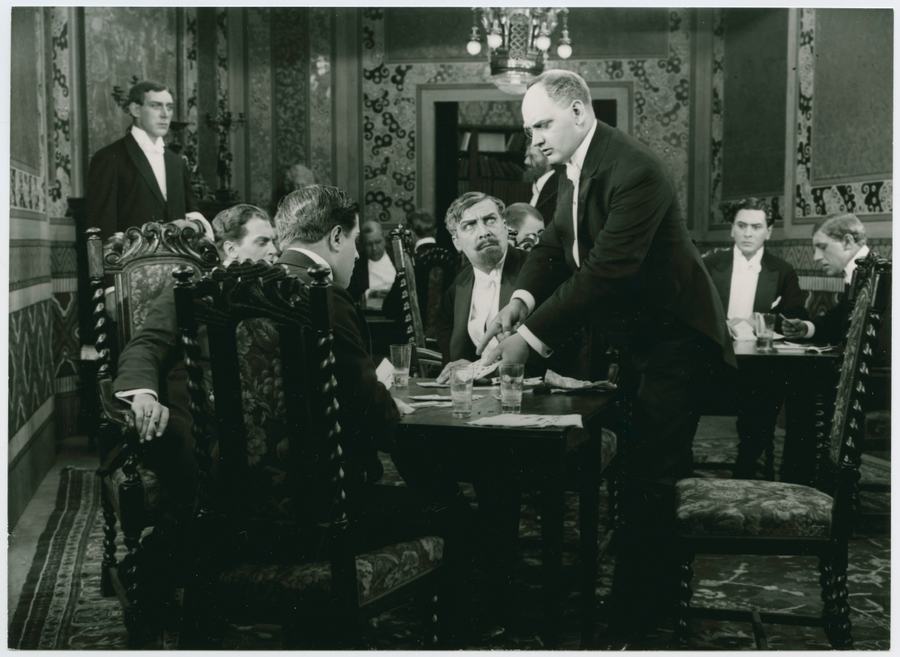
The power of "Envar sin egen lyckas smed" lies significantly in the nuanced performances of its ensemble cast. Silent cinema demands a particular artistry, where the absence of dialogue elevates every gesture, every facial expression, to a heightened form of communication. Egil Eide, as Thomas Abel, delivers a performance that is both commanding and deeply vulnerable. We witness his initial shock morph into a desperate struggle for vindication, his pride slowly eroding into despair. It’s a masterclass in conveying the internal turmoil of a man whose public persona is under siege, and whose private world is crumbling.
Then there's Edith Erastoff, whose portrayal of Abel's wife must have been a beacon of strength and suffering. In such dramas, the wife often serves as both the moral compass and the most direct victim of a man's downfall. Her silent expressions would have communicated the agony of watching her husband, her family, and her own reputation dragged through the mud. The silent film actress, particularly during this era, had to be adept at conveying complex emotions with a glance, a posture, a single tear – and Erastoff, one can surmise, was a master of this craft.
Adolf Niska, Greta Almroth, and Richard Lund round out a cast that would have contributed essential layers to the unfolding drama. Niska, perhaps as an antagonist or a conflicted ally, would have added tension and moral ambiguity. Almroth and Lund, in their respective roles, would have populated Abel’s world, reflecting the societal reactions – the whispers, the judgment, the tentative support – that define his new reality. Each actor, without uttering a single word, becomes a conduit for the film's emotional landscape, painting a vivid picture of a community grappling with scandal and a family fighting for its survival. Their collective ability to project character and motivation through pure physicality and expression is what makes silent films like this so enduringly powerful. It's a reminder that true acting transcends dialogue, finding its purest form in the language of the human body and soul.
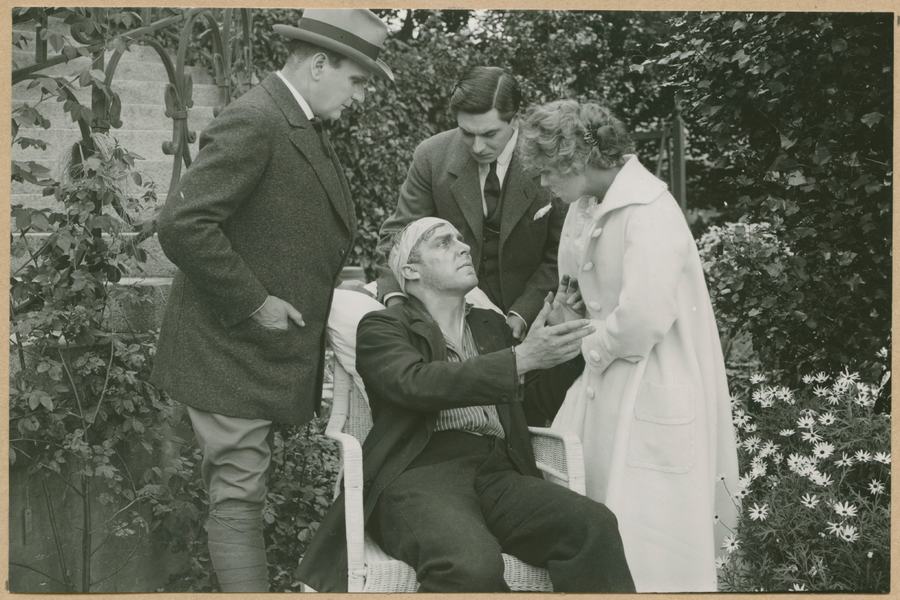
The narrative backbone of "Envar sin egen lyckas smed" is, of course, the work of its writer, Carl Gandrup. In the silent era, the screenwriter’s role was paramount, often serving as the primary architect of emotional impact and plot progression through meticulously crafted intertitles and scene descriptions. Gandrup's genius lies in his ability to sketch a compelling portrait of a man's rise and precipitous fall, using the stark canvas of silent film to highlight universal themes. He doesn't just present a plot; he constructs a moral dilemma, inviting the audience to ponder the nature of truth, the weight of public perception, and the resilience of the human spirit.
Gandrup's script, even without knowing its specifics, clearly delves into the psychological toll of an accusation. How does a man, accustomed to respect and authority, cope with sudden vilification? How does a family navigate the social ostracism that often accompanies such a scandal? These are questions that Gandrup implicitly poses, allowing the visual storytelling to provide the answers. His writing ensures that Thomas Abel is not a caricature, but a complex individual whose journey resonates because it taps into the primal fear of losing everything we hold dear, not through our own fault, but through the machinations of others or the vagaries of fate.
At its heart, "Envar sin egen lyckas smed" is a profound meditation on the fragility of reputation and the often-unforgiving nature of public judgment. Thomas Abel’s story is a stark reminder that even the most formidable edifice of success can be brought down by a single, potent accusation. The film probes the very essence of justice – is it about objective truth, or is it merely a reflection of prevailing opinion? In a world where news travels fast, even in the silent era, the speed with which a man's good name can be tarnished is terrifyingly relevant even today.
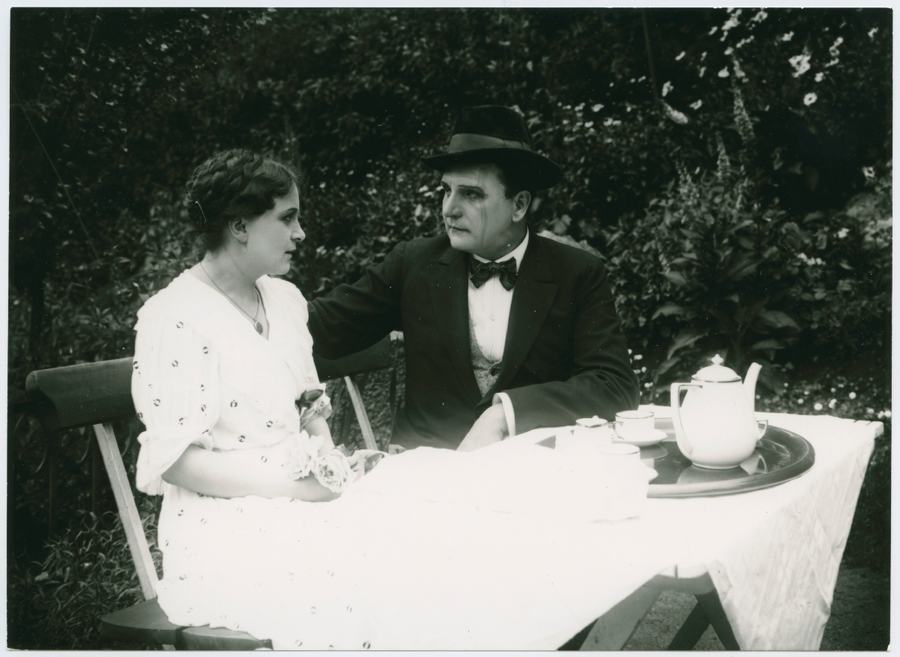
The film also explores the theme of resilience. How does one fight back when the cards are stacked against them? Does Abel retreat into despair, or does he muster the strength to clear his name? This internal battle is as compelling as any external conflict. The silent medium, ironically, amplifies this struggle, forcing us to project our own understanding of human fortitude onto Abel’s stoic, yet tormented, expressions. It's a testament to the power of cinema to convey complex psychological states without the crutch of dialogue.
Moreover, the film implicitly critiques the societal structures that allow such accusations to gain traction, sometimes without sufficient evidence. It's a commentary on the mob mentality, the readiness to condemn, and the difficulty of reclaiming one's good standing once it has been compromised. In this sense, "Envar sin egen lyckas smed" transcends its historical context, speaking to timeless anxieties about cancel culture and the power of narrative to shape reality. The struggle for truth in the face of overwhelming public opinion is a battle as old as time, and this film captures its essence with remarkable clarity.
The film also touches upon the strength of familial bonds. When the world turns its back on Abel, where does he find solace and support? His wife and children become his anchor, his reason to fight. This aspect adds a deeply emotional layer to the drama, transforming it from a mere legal or social battle into a deeply personal quest for redemption and the preservation of his family's honor. It highlights the profound impact such events have not only on the individual but on their entire domestic sphere, radiating outward in waves of distress and uncertainty.
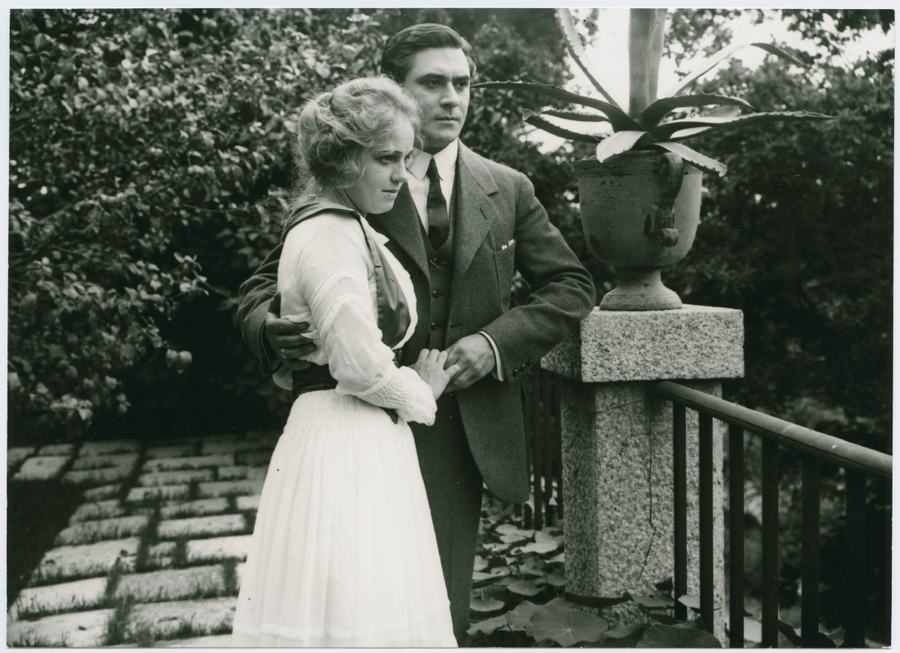
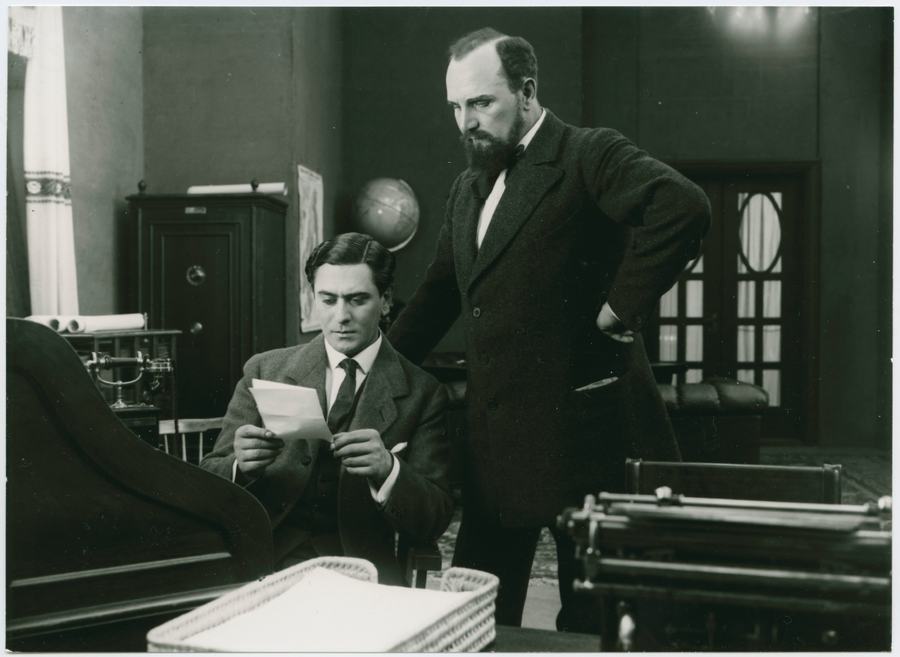
Even without knowing the specific director, the craftsmanship of "Envar sin egen lyckas smed" is evident through its ability to convey such a complex narrative through purely visual means. The silent era was a crucible for innovative storytelling, where filmmakers had to rely on composition, lighting, editing, and the sheer expressive power of their actors. One can imagine the use of dramatic close-ups to emphasize a character's emotional state, or sweeping wide shots to establish the grandeur of Abel’s corporate world contrasted with the claustrophobia of his personal crisis.
The pacing, a crucial element in silent films, would have been carefully orchestrated to build suspense and convey the slow, agonizing descent of Abel's fortunes. Intertitles, far from being mere text, would have been integrated artfully, providing not just dialogue or plot points but also poetic commentary, guiding the audience's emotional response. The use of shadow and light, a hallmark of expressionistic silent cinema, would undoubtedly have been employed to symbolize Abel's internal darkness and the looming threat to his reputation. This film, like many of its contemporaries, would have been a masterclass in visual rhetoric, demonstrating how much can be said without uttering a single word, relying instead on the universal language of human experience.
The themes explored in "Envar sin egen lyckas smed" resonate across cinematic history, finding parallels in numerous films that tackle injustice, reputation, and the fight for truth. One might draw comparisons to films like Telegramtyvene, another silent picture that likely delved into themes of crime, accusation, and societal reaction, albeit perhaps from a different angle of an actual criminal act versus a false accusation. The feeling of being wrongly targeted, or of having one's life irrevocably altered by external forces, is a potent dramatic device shared by both.
The struggle for vindication and the resilience required to overcome immense adversity certainly brings to mind the spirit of The Sting of Victory, a title that suggests a narrative arc of overcoming hardship, perhaps even a surprising triumph against overwhelming odds, much like Abel's potential fight for his good name. Similarly, the concept of a hidden truth or a dark secret coming to light, disrupting an established order, finds a thematic cousin in The Dark Silence, where the unspoken can be far more powerful and destructive than anything overtly stated.
When considering the broader societal impact and the dramatic journey of a central character facing a turning point, one could even look to films like Il fiacre n. 13, which likely portrays a fateful journey or a pivotal moment that irrevocably alters a character's path, much like the accusation does for Thomas Abel. The intricate web of intrigue and the looming threat of exposure also echo elements one might find in a film such as The Club of the Black Mask, where secrets and hidden agendas drive the plot, creating an atmosphere of suspicion and danger around the protagonist.
Even moral dilemmas and the consequences of one's actions, or perceived actions, can be seen in The Foolish Virgin, which, despite a likely different narrative focus, would still tackle questions of virtue, judgment, and societal expectation. These comparisons highlight that while "Envar sin egen lyckas smed" is a product of its specific time and place, its core narrative about a man battling for his integrity against a formidable, often unseen, adversary is a universal story that continues to resonate across generations and cinematic traditions. It’s a testament to the enduring power of human drama, regardless of the technological advancements in filmmaking.
In conclusion, "Envar sin egen lyckas smed" stands as a compelling testament to the power of early Swedish cinema and the enduring relevance of its themes. It's more than just a historical artifact; it's a vibrant, emotionally charged drama that speaks to the timeless human experience of ambition, vulnerability, and the relentless pursuit of truth. The performances, particularly Egil Eide's portrayal of Thomas Abel, along with the astute writing of Carl Gandrup, ensure that this film remains a potent exploration of how quickly fortune can turn and how fiercely one must fight to reclaim their destiny. It reminds us that while we may be the smiths of our own fortune, external forces can just as easily try to shatter our anvil and quench our fire. A true classic of the silent era, it deserves to be rediscovered and appreciated for its profound insights into the human condition.
IMDb 5.2
1936
Community
Log in to comment.