DbcultAccessing Vault...
6.1/10
Senior Film Conservator
A definitive 6.1/10 rating for a film that redefined the boundaries of cult cinema. Slick Sleuths remains a cornerstone of transgressive art.
Is 'Slick Sleuths' worth watching today? Short answer: yes, but with significant caveats that demand a particular viewing mindset. This silent-era detective comedy, a curious relic from 1926, offers a fascinating window into early cinematic innovation and comedic sensibilities, making it a compelling watch for film historians, aficionados of early trick photography, and those with a deep appreciation for the foundational elements of slapstick.
However, for modern audiences accustomed to intricate plots, rapid pacing, and sophisticated humor, 'Slick Sleuths' will likely feel slow, simplistic, and at times, utterly baffling. It is decidedly not for casual viewers seeking contemporary entertainment value without a historical lens.
At its core, 'Slick Sleuths' exists as a testament to the ingenuity of early filmmakers working within the constraints of their time. It's a film that, despite its narrative shortcomings, manages to captivate through its sheer ambition and the earnest performances of its leads. My initial viewing left me with a sense of wonder at how much could be conveyed with so little, and how creative the solutions were to technical problems that are now trivial.
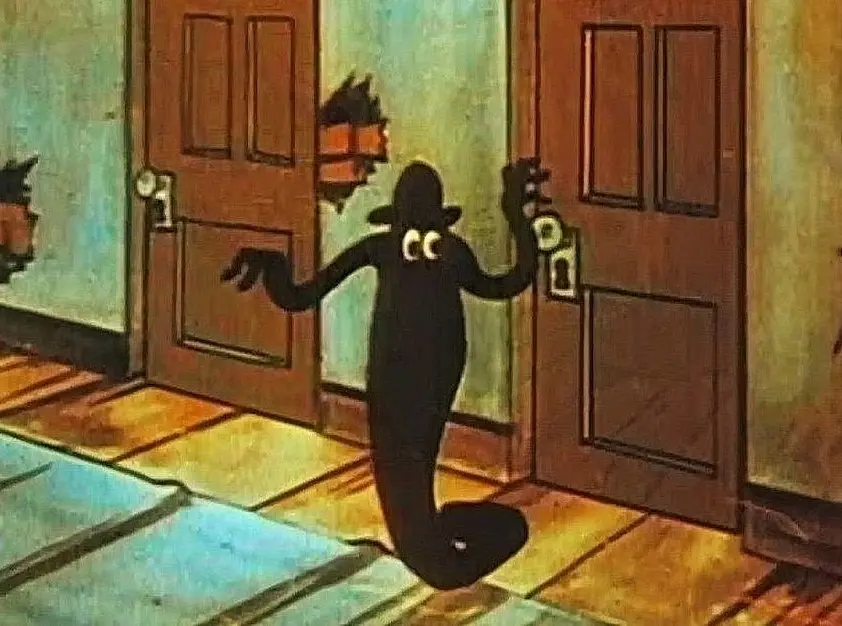
This film works because of its audacious use of early special effects to bring the 'shape-shifting' Phantom to life, which, for its era, was genuinely groundbreaking and remains surprisingly effective in conveying a sense of mystical elusiveness. It works because Charles R. Bowers, as one half of the detective duo, possesses an undeniable screen presence and a flair for physical comedy that transcends the decades, anchoring the film with a human, if exaggerated, element.
This film fails because its plot, while conceptually intriguing, is remarkably thin, often feeling like a series of disconnected gags rather than a cohesive narrative progression. The pacing can be glacial, particularly for those unaccustomed to the rhythms of silent cinema, and some of the humor simply hasn't aged well, relying on outdated tropes or prolonged visual jokes that lose their punch.
You should watch it if you are a student of film history, an admirer of early cinematic visual effects, or someone who cherishes the foundational era of slapstick comedy. It's a key piece in understanding the evolution of the detective genre and special effects, even if it doesn't always deliver a consistently engaging story.
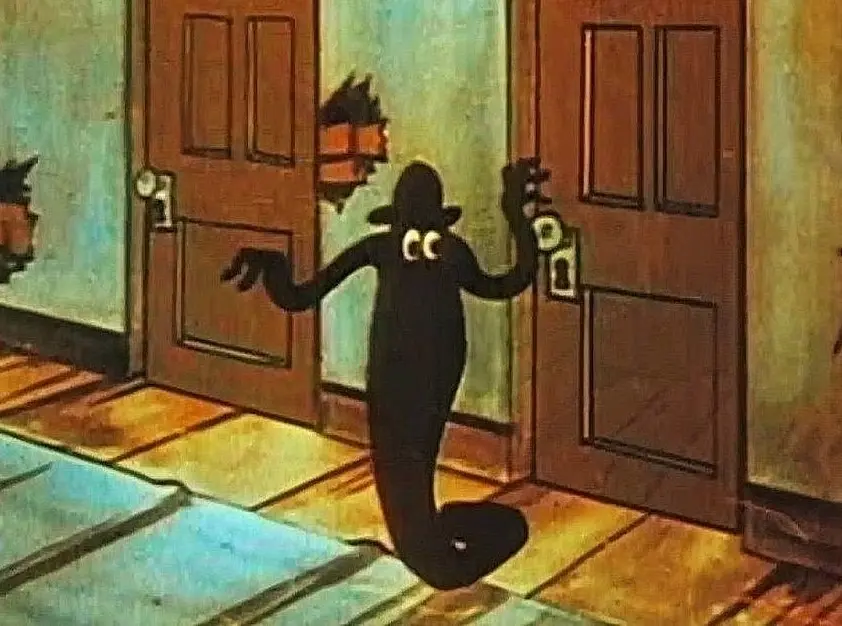
The central draw of 'Slick Sleuths' undeniably lies in its depiction of the Phantom. The plot, as provided, describes a 'ghostly shape-shifting criminal,' and it's in realizing this concept that the film truly shines as a technical marvel of its period. Director Bud Fisher, also credited as a writer, clearly understood the power of visual trickery. The methods employed to show the Phantom's transformations—dissolves, double exposures, and stop-motion effects—are surprisingly sophisticated for 1926.
Consider a particular sequence where the Phantom seems to melt through a wall, or vanish from one frame to the next, only to reappear in an impossible location. These moments, while crude by today's standards, would have been genuinely astonishing to contemporary audiences. They speak to a burgeoning artistry in cinematic illusion, laying groundwork for countless effects that would follow. It's not about photo-realism, but about the *idea* of the impossible made visible. This commitment to visual spectacle over narrative logic is a hallmark of many early experimental films, and 'Slick Sleuths' is a prime example.
The cinematography, while largely functional, makes clever use of light and shadow to enhance the Phantom's ethereal quality. There are scenes bathed in low light, creating an atmosphere of mystery and unease that contrasts sharply with the broader comedic elements. This juxtaposition is one of the film's more interesting, if perhaps unintentional, achievements. It suggests a director grappling with tone, trying to marry the spooky with the silly, a challenge that even modern blockbusters often struggle with.
However, it’s important to acknowledge that the effect, while innovative, can feel repetitive. Once you understand the trick, some of the magic dissipates. This isn't a flaw of the film's execution, but rather a natural consequence of time and technological advancement. Yet, appreciating the historical context, these sequences remain the film’s most memorable and enduring contributions to cinema. They are a direct lineage to the visual effects that would define later genres, from sci-fi to horror, and even the fantastical elements of comedies like The Monster and the Girl.
The comedic heart of 'Slick Sleuths' rests squarely on the shoulders of its two lead actors, Charles R. Bowers and Bud Fisher, portraying the titular private eyes, Mutt and Jeff. Their dynamic is classic silent comedy fare: one tall, gangly, and often bewildered (Mutt, likely Bowers), the other shorter, more assertive, and prone to exaggerated reactions (Jeff, likely Fisher). Their performances are rooted in the physical comedy tradition, relying heavily on pratfalls, chases, and over-the-top facial expressions to convey emotion and drive the humor.
Charles R. Bowers, in particular, demonstrates a remarkable talent for physical comedy. His movements are fluid, almost rubbery, and he possesses an uncanny ability to convey exasperation and determination through his entire body. There's a particular scene where he attempts to scale a wall, only to repeatedly slide back down in increasingly undignified ways, that is genuinely funny and showcases his mastery of the form. His timing, even without dialogue, is impeccable.
Bud Fisher, while perhaps less flamboyant in his physical performance, provides a solid foil. His reactions often ground Bowers' more outlandish antics, providing a necessary balance. Their chemistry, while not as refined or iconic as later duos like Laurel and Hardy, is palpable. They bounce off each other with a comfortable ease that suggests a genuine understanding of their characters and the demands of silent slapstick.
However, the characterizations themselves are quite thin. Mutt and Jeff are largely defined by their roles as detectives and their physical attributes, rather than deep personal histories or complex motivations. This is not uncommon for the era, especially in comedies, but it does limit the emotional investment a modern audience might feel. Their relentless pursuit of the Phantom is driven more by plot necessity than any compelling internal drive. While this allows for a focus on the gags, it also prevents the film from achieving any significant emotional resonance or character development, a trait shared with many early comedies such as Laughing Gas.
The narrative of 'Slick Sleuths' is, to put it mildly, rudimentary. The premise – two detectives chasing a shape-shifting criminal – is strong, but the execution often feels more like a series of loosely connected vignettes than a tightly woven mystery. The plot progresses in fits and starts, propelled by the Phantom's sudden appearances and disappearances, which often feel like convenient plot devices to move Mutt and Jeff from one comedic set-piece to the next.
Pacing is perhaps the film's biggest hurdle for contemporary viewers. Silent films operate on a different rhythm, often allowing scenes to play out longer, with more emphasis on visual information and less on rapid-fire dialogue or plot twists. 'Slick Sleuths' exemplifies this. There are moments where a chase sequence, or a comedic struggle, extends beyond what modern sensibilities might deem necessary, testing the patience of those not attuned to this older style.
The detective aspect, too, is more of a framework for comedy than a genuine mystery. Mutt and Jeff don't engage in deductive reasoning or complex investigative work; they primarily react to the Phantom's presence and engage in physical pursuit. Any 'clues' are visual gags, and the 'solution' often involves more luck and physical comedy than intellectual prowess. This isn't necessarily a flaw, as the film clearly prioritizes humor over suspense, but it does mean that anyone expecting a intricate whodunit in the vein of later detective stories will be disappointed. It's a chase, pure and simple, much like the relentless pursuit in The Cradle of Courage.
The film’s structure, while typical for early comedies, lacks the rising tension and satisfying resolution often found in more mature narratives. The ending, without spoiling specifics, feels less like a grand culmination and more like a convenient way to conclude the latest escapade. It works. But it’s flawed. This simplicity, however, can also be seen as a strength, allowing the audience to focus on the immediate visual gags without getting bogged down in complex exposition.
The predominant tone of 'Slick Sleuths' is lighthearted and comedic, firmly rooted in slapstick. There's a playful energy throughout, even when the Phantom is supposedly menacing. The humor is broad, relying on exaggeration, physical mishaps, and the inherent absurdity of two bumbling detectives chasing a spectral entity. This unwavering commitment to levity is perhaps one of its most endearing qualities; it never takes itself too seriously, allowing the audience to simply enjoy the visual antics.
However, the film's thematic ambition is minimal. It doesn't delve into deeper societal commentary, character psychology, or complex moral dilemmas. It exists primarily as entertainment, a showcase for early special effects and physical comedy. While some might argue that the Phantom's elusive nature could be interpreted as a commentary on the unseen forces of criminality, or the futility of human efforts against the truly inexplicable, this feels like an over-reading of a film clearly designed for simpler pleasures.
The film's most unconventional observation might be how it inadvertently highlights the anxieties of a rapidly modernizing world. The Phantom, with its ability to defy physical laws, represents a kind of chaotic force that traditional methods (like detective work) are ill-equipped to handle. In a world increasingly defined by science and order, the Phantom is a delightful, if fleeting, embrace of the illogical. It’s a subtle undercurrent beneath the overt gags, a surprising layer of philosophical intrigue in an otherwise straightforward comedy.
Yes, 'Slick Sleuths' is absolutely worth watching today, but with a clear understanding of its historical context. It is not a film that will resonate with audiences seeking modern narrative complexity or fast-paced action. Instead, its value lies in its status as a significant artifact of early cinema.
The film serves as an excellent example of pioneering special effects. It showcases the foundational elements of physical comedy. It offers a glimpse into the comedic sensibilities of the 1920s. For film students, historians, or anyone curious about the origins of cinematic storytelling, it's an essential viewing experience. Expect innovation, not perfection.
Slick Sleuths is an essential, if not always enthralling, piece of cinematic history. Its true value lies not in its ability to compete with modern entertainment, but in its audacious spirit and pioneering technical achievements. For those willing to approach it as an archaeological expedition into the foundations of film, it offers a rich tapestry of early special effects, robust physical comedy, and a charmingly simple narrative that speaks volumes about the innocence and boundless creativity of the silent era. It's a film that demands contextual appreciation, rewarding patient viewers with a glimpse into a nascent art form grappling with its own potential. While it might not keep everyone on the edge of their seats, its historical significance and moments of genuine inventive brilliance secure its place as a fascinating watch for the discerning cinephile. It’s a peculiar watch, but a worthwhile one.

IMDb 5.5
1933
Community
Log in to comment.