DbcultAccessing Vault...
5.8/10
Senior Film Conservator
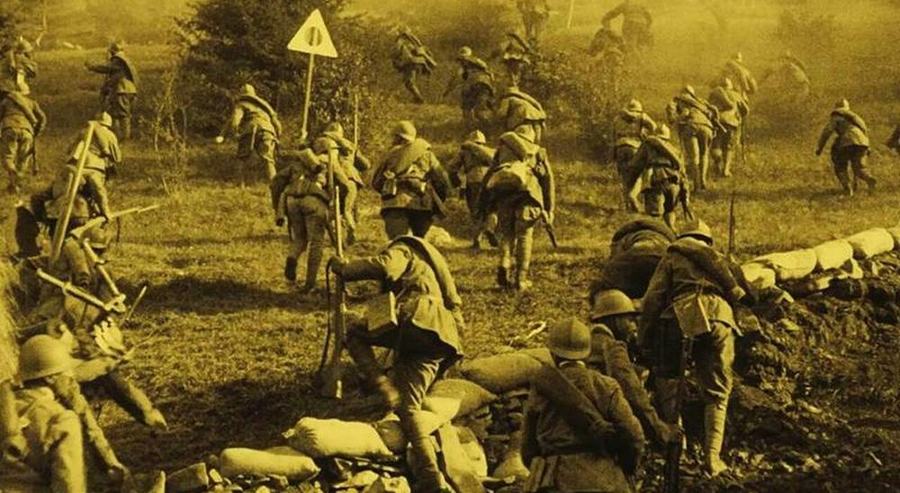
A definitive 5.8/10 rating for a film that redefined the boundaries of cult cinema. Battaglia dall'Astico al Piave remains a cornerstone of transgressive art.
There is a moment—roughly forty-one minutes into Battaglia dall’Astico al Piave—when the camera tilts up from a corpse-choked ditch and tilts down again to find the same bodies rearranged like chess pieces. The cut is invisible, the geography impossible, the effect nauseating. You realize you are not watching a reconstruction of the Italian Front; you are inside its delirium.
Silvio Laurenti Rosa, credited here as both director and regista della memoria, wields absence as others wield artillery. Dialogue cards appear sparingly, often mid-blur, as though the film itself is short of breath. Intertitles quote fragments from the Arditi trench gazette, then evaporate before you can finish parsing the dialect. The result is a narrative that feels excavated rather than edited—an archeological splice of stock-footage marble, staged tableaux, and what looks suspiciously like genuine 1918 combat reels bought from a Vienna flea market in 1922.
Most war films move like bayonets—forward, with occasional twist. Rosa’s structure mirrors the Piave’s 1918 flood: advance, recede, meander, burst. One reel opens on a field hospital where orderlies play scopa with tarot-sized X-rays; the next reel drops us onto a cinema inside Udine where newsreels burn in the projector, the heat warping the very images we have just seen. The reflexivity is not postmodern chic—it is shell-shock formalized. Every splice asks: who gets to remember, and who gets burned?
“We did not retreat; the river advanced.”—anonymous Alpini corporal, quoted on-screen then scratched out with a bayonet.
The aspect ratio mutates: early establishing shots luxuriate in 1.33 Academy, but as the Austro-Hungarian offensive accelerates the frame squeezes to 1.19, the same boxy chokehold Gelöste Ketten used to dramatize claustrophobia. Yet Rosa pushes further, perforating the celluloid with pinpricks so that when light passes through the projector the theater ceiling glitters like tracer fire. You walk out of the screening carrying the battle on your skin.
Because no cast list survives, every face arrives unbranded, semi-mythic. The nurse—identified only by the cracked Red Cross badge she wears as a hairpin—communicates in micro-gestures: a blink timed to distant howitzers, a swallow when morphine levels dip. She is the ethical spine of a film otherwise allergic to spine. Opposite her, the Carabiniere who believes he is already dead wanders through scenes in reverse gait, footprints preceding him like breadcrumbs back to life.
Rosa’s direction to performers reportedly consisted of a single typewritten line: “Forget the camera; remember the mud.” The advice pays off. When these non-actors convulse from mustard-gas exposure, their spasms sync with the flicker-rate of the era’s carbon-arc projectors, creating a stroboscopic ghosting that makes viewer stomachs lurch in sympathy. It is the inverse of For the Defense, where polished emoting glamorized advocacy; here raw corporeality indicts history.
Although shot monochromatically, the 2021 restoration daubs certain sequences with hand-tinted washes: a cyan flare over Monte Grappa, arterial crimson seeping into the river, jaundiced yellows on the parchment of field maps. Color becomes accusation. When a flare bursts cyan, the frame freezes for eight frames—just enough for retinal persistence to brand the hue onto black-and-white footage that follows. You keep seeing blue ghosts minutes after tinting disappears, a visual echo of trauma.
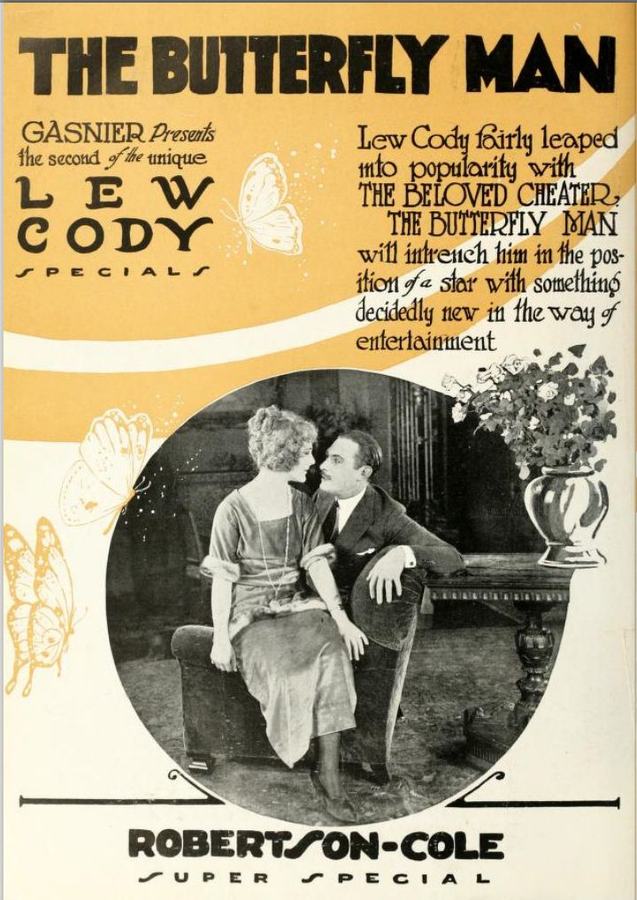
Compare this selective palette to the full-spectrum bravado of Attack on the Gold Escort, where color signifies adventure. In Rosa’s world chromatic restraint equals historical honesty: only what the mind can retain under duress deserves pigment.
Original exhibition shipped with a live brass band instructed to “play until lungs bleed, then cease mid-phrase.” Contemporary screenings favor curated silence—no score, only the shuffle of audience members crossing legs, the wheeze of vintage projectors, the ambient creak of theater rafters settling like old bones. Paradoxically this muteness amplifies sonic memory; you swear you hear nonexistent shell whistling. Psychoacoustics weaponized.
Archivist Luca Severi uncovered a crate labeled “Intonarumori Piave” containing scrap-iron noise machines built by Futurist Luigi Russolo, allegedly intended for the 1919 premiere that never happened due to postwar quarantine. Their absence from the final cut becomes part of the film’s negative space, a sonic trench you fall into regardless.
Rosa’s cutter, the pseudonymous “T.”, alternates between frenetic Russian-style montage and languid Italian longueurs. A 14-second shot of boots dissolving into river stones precedes a flurry of 47 two-frame cuts—too fast for the eye, yet registered by the amygdala. The oscillation destabilizes viewer rhythm, mimicking the lull-then-lunge cadence of trench warfare. Contemporary editors like Marguerite Beaugé (who sliced The Good Bad-Man) pursued clarity; T. pursues concussion.
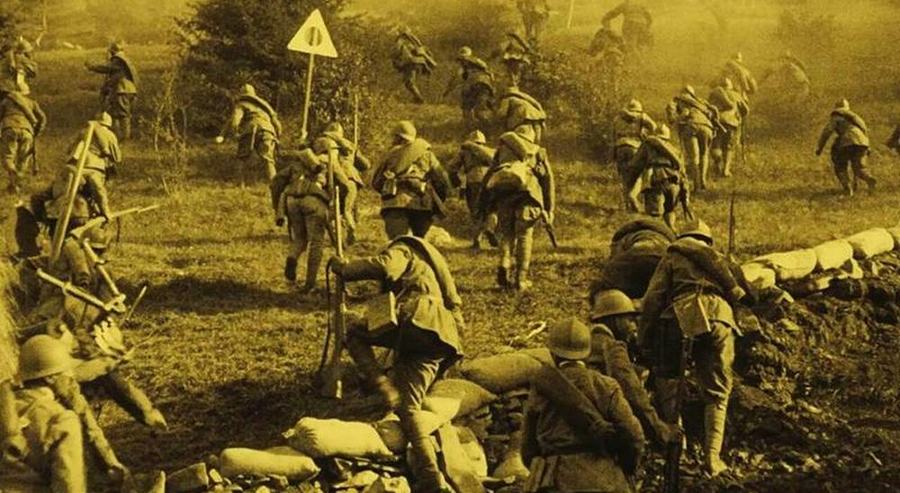
Film scholars still argue whether the notorious “missing reel”—rumored to contain footage so graphic that military censors burned it—ever existed. Rosa’s surviving notebooks mention “a sequence where the camera keeps rolling inside a mass grave, until the lens itself is covered by lime.” Whether apocryphal, the myth feeds the film's aura: every viewing feels incomplete, a wound that refuses coagulation.
Rosa’s feminism is tactical, not ideological: he recognizes that survival in liminal spaces often falls to those society sidelines. Their victories, measured in centimeters of reclaimed riverbank, feel more radical than any cavalry charge.
Released months after the armistice, the film functioned as both requiem and propaganda, though its tonal dissonance undermined jingoism. The Italian High Command hoped for a heroic counterpart to Philip Holden - Waster; what they got was a visceral treatise on the expendability of foot soldiers. Consequently distributors buried it in rural tent shows, away from major cities still counting casualties. Prints were lost, duplicated, cannibalized for newsreel filler. By 1924 only one nitrate copy survived, stored inside a disused Alpine church bell tower where bats gnawed the emulsion, leaving white crevices that now read like bullet holes.
Modern restorations interpolate digital ice-baths to halt vinegar syndrome, yet preserve these bat-gouges as historical testimony. Every scratch tells.
Stack Battaglia beside A Question of Right and you see two antipodal approaches to moral inquiry: the latter prosecutes ethical dilemmas through articulate speeches; the former evacuates language, leaving only gesture and geography. Rosa anticipates the corporeal minimalism later fetishized by Kak oni lgut, yet surpasses it by rooting nihilism in documented soil rather than abstract ennui.
Against The Royal Pauper’s class-reversal whimsy, Rosa offers a democracy of decomposition: baron and sharecropper rot at identical speeds, their uniforms indistinguishable under lime.
Projectionists report that after screenings, audience members exit arm-in-arm, unconsciously adopting the staggered gait of trench foot. The film’s final loop—river water surging then reversing, achieved by bi-directional hand-crank—imprints a physical cadence that lingers like sea legs. You leave the auditorium tasting iron, imagining you wear damp puttees. Rare art forces somatic complicity; Battaglia demands it.
Is it responsible to curate agony this raw? Critics cite the 1919 Paris Peace Conference where delegates were invited to a clandestine screening; some delegates left midway, signing treaties with trembling hands. The film thereby argues that witnessing carnage can deter repetition—an idealism contradicted by the ensuing decades. Yet Rosa’s refusal to romanticize remains weaponized testimony. To censor it would be to repeat the initial betrayal of veterans, the first act of forgetting.
Long after credits—there are none; the film simply jams, melts, and is replaced by white glare—the river persists behind your eyelids. You recall the nurse’s iodine-caked fingernails, the Carabiniere’s rosary of shrapnel, the ballerina’s semaphore pirouettes. These are not symbols; they are scar tissue. Rosa has accomplished the near-impossible: a war film that declines to relate history, opting instead to secrete it under your skin, an emulsion of memory impossible to scratch off without drawing blood.
Watch it once, and the screen battles you. Watch it twice, and you battle the screen. A third viewing collapses the distinction: you become the river, swollen with rain and bones, forever rushing toward a sea that refuses to absorb the story you carry.
IMDb —
1914
Community
Log in to comment.