DbcultAccessing Vault...
Cult Review
Senior Film Conservator
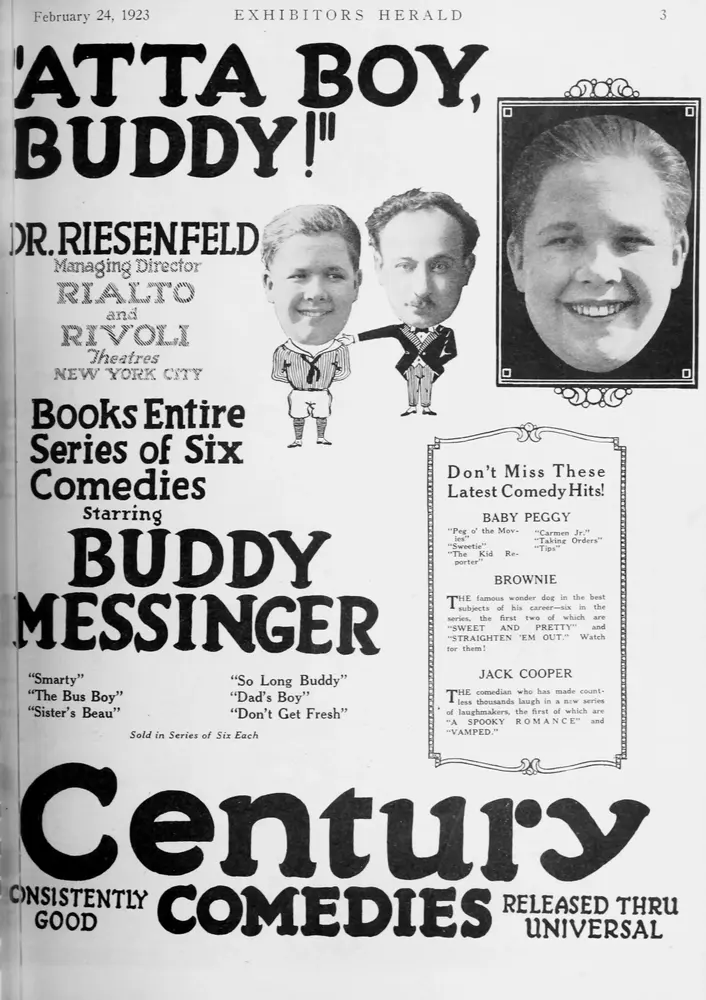
When we peer back through the sepia-toned lens of 1924, we often expect the polite artifice of a burgeoning medium. However, Smarty, directed by the often-underappreciated Harry Edwards, shatters those expectations with the force of a well-aimed spitball. This isn't just a relic; it is a vibrant, breathing document of comedic subversion that feels surprisingly modern in its cynicism. While other films of the era, such as The Birth of a Race, were grappling with the heavy-handed weight of national identity and social reform, Smarty was content to set the teacher's coattails on fire. It represents the 'id' of silent cinema—unfiltered, mischievous, and delightfully cruel.
The film’s brilliance lies in its spatial awareness. The schoolroom is not just a setting; it’s a meticulously rigged trap. Buddy Messinger, playing the titular 'Smarty,' navigates this environment with the grace of a seasoned saboteur. Unlike the more innocent mischief found in Betty to the Rescue, Messinger’s performance carries a sharp edge. There is a specific scene involving a rigged inkwell that transcends simple physical comedy; it becomes a commentary on the fragility of adult composure. The way the ink spreads, mirroring the schoolmaster’s spreading panic, is a visual metaphor for the loss of institutional control.
Harry Edwards, who would later refine his craft alongside comedy legends like Harry Langdon, displays an early mastery of the 'slow burn.' He allows the tension to simmer as the schoolmaster, played with a brittle dignity by Fred Spencer, attempts to maintain a veneer of civilization. The contrast between Spencer’s stiff-backed rigidity and Messinger’s fluid, almost serpentine movements creates a visual friction that drives the film forward. It’s a dynamic we see echoed decades later in international slapstick, such as the frantic energy of Sadhu Aur Shaitan, proving that the language of the 'annoying prankster' is truly universal.
One cannot discuss Smarty without acknowledging the formidable presence of Blanche Payson. Standing as a literal and figurative giant of silent comedy, Payson brings a physical gravity to the film that anchors Messinger’s flighty antics. Her interactions with the cast provide a necessary counterweight; if Messinger is the needle, Payson is the anvil. The physical disparity between the two is exploited for maximum comedic effect, yet there is a nuanced timing to her reactions that prevents her from becoming a mere caricature. She represents the immovable object against which the unstoppable force of youth constantly collides.
In many ways, the film’s exploration of domestic and pedagogical strife mirrors the darker comedic undertones of Finnish cinema, such as Kun isällä on hammassärky. Both films find humor in the total breakdown of the paternal or authoritative figure. In Smarty, the schoolmaster’s descent into madness is played for laughs, but there’s a haunting quality to his wide-eyed realization that he is powerless against a mere child. This subversion of the age-hierarchy is something that would later be explored with much more disturbing implications in works like Lolita, but here, in the safe harbor of 1920s comedy, it remains a joyous rebellion.
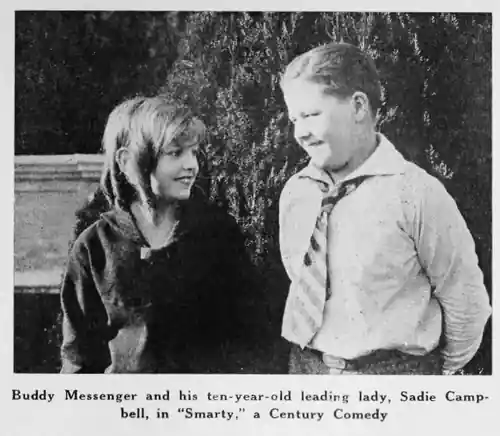
Technically, Smarty is a marvel of its time. The editing is crisp, avoiding the lethargic pacing that plagues many shorts from the mid-20s. Edwards utilizes close-ups to capture the micro-expressions of his cast—the glint in Messinger’s eye before a prank, the twitch of Spencer’s mustache in the aftermath. This focus on character-driven comedy, rather than just wide-shot pratfalls, elevates the film above its peers. It shares a certain DNA with the suspenseful comedy of The Dummy, where the audience is kept in a state of anticipatory glee, waiting for the inevitable disaster to strike.
"The film operates as a percussive instrument, where every gag is a beat in a larger, more chaotic rhythm of social defiance. It is the antithesis of the moralistic tales of the era, suggesting that perhaps, some children simply cannot be mended."
This lack of a moralistic 'lesson' is perhaps the film’s most radical feature. In an era where many narratives were pressured to conclude with a redemptive arc—think of the didacticism in It Is Never Too Late to Mend—Smarty remains stubbornly unrepentant. The boy doesn't learn his lesson; he simply refines his technique. This nihilistic streak is what makes the film so enduring. It acknowledges the inherent friction between the vibrant, messy reality of childhood and the sterile, artificial demands of the classroom.
Comparing Smarty to other films of the period reveals a fascinating trend toward the 'anarchic child' archetype. While Kentucky Brothers might focus on rugged fraternal bonds, Smarty focuses on the isolation of the genius-level prankster. The film feels like a precursor to the more elaborate 'Rube Goldberg' style of comedy that would dominate the late silent era. There is a sequence involving a series of pulleys and ropes that feels like a spiritual cousin to the mechanical madness found in The Iron Strain, albeit on a much more intimate, schoolroom scale.
The writing by Harry Edwards is deceptively simple. On the surface, it’s a series of vignettes, but the pacing suggests a deeper understanding of psychological escalation. By the time we reach the climax, the schoolroom has been transformed into a battlefield. This isn't the melodrama of The Crimson Dove or the high-stakes intrigue of The Fatal Fortune; it is the high-stakes survival of a man’s sanity against the onslaught of a pint-sized terror. Even when compared to the domestic comedies like Around Corners, Smarty stands out for its sheer velocity.
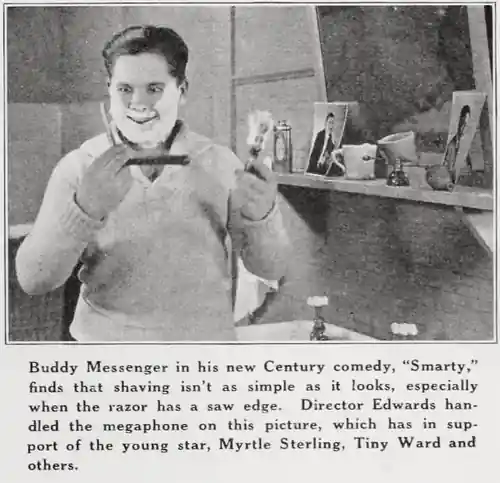
Sadie Campbell and Charles Hatton provide excellent supporting turns, fleshing out a world that feels lived-in despite the absurdity. Campbell, in particular, manages to convey a sense of weary resignation that many teachers will find all too relatable. The ensemble work here is tight, a hallmark of the Century Comedy shorts which often functioned as a well-oiled machine. This level of coordination is rare, often missing from more disjointed efforts like Venganza de bestia, where the comedy feels more incidental than intentional.
As we analyze the film's place in history, it’s impossible not to see it as a bridge. It bridges the gap between the primitive 'chase' films of the early 1910s and the sophisticated character comedies of the 1930s. It lacks the overt sentimentality of Sunday, opting instead for a gritty, chalk-covered realism that is simultaneously fantastic. The boy’s pranks are the weapons of the weak, a way for a disenfranchised child to exert power in a world that gives him none. It is, in its own small way, a political statement.
In the final analysis, Smarty is a testament to the enduring power of the 'prank' as a cinematic device. It taps into a primal human desire to see authority humbled and the status quo disrupted. Buddy Messinger’s performance remains a high-water mark for child actors of the silent era, possessing a grit and a comedic timing that few of his contemporaries could match. The film doesn't ask for your pity or your moral judgment; it only asks for your laughter, and perhaps a bit of your respect for the sheer audacity of its protagonist.
Harry Edwards crafted a film that survives not just as a historical curiosity, but as a genuinely funny piece of entertainment. It reminds us that while technology and social norms may change, the delight found in a perfectly executed prank is eternal. Whether you are a scholar of silent cinema or a casual viewer looking for a laugh, Smarty offers a window into a world where the only rule is that there are no rules—at least, not until the schoolmaster catches you. And even then, as Messinger’s mischievous grin suggests, the game is far from over. It is a cinematic experience that, much like its lead character, refuses to sit still and behave.
Verdict: A riotous, unrepentant explosion of silent comedy that proves the 'bad boy' archetype was perfected long before the advent of sound. A must-watch for anyone who has ever wanted to talk back to a teacher.
IMDb —
1932
Community
Log in to comment.