DbcultAccessing Vault...
Cult Review
Senior Film Conservator
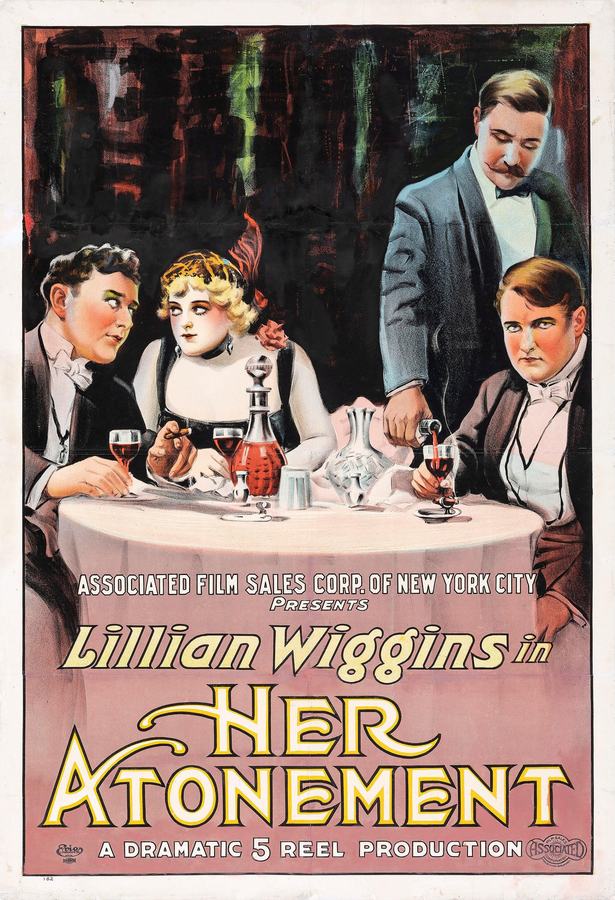
Stepping back into the early 20th century, the cinematic landscape was a vibrant, rapidly evolving canvas where narratives unfolded through the powerful language of pantomime and intertitles. Among the myriad tales etched onto nitrate film, Her Atonement emerges as a fascinating, if perhaps overlooked, example of the era’s melodramatic prowess. It’s a compelling journey through the treacherous terrain of human desire, moral compromise, and the arduous path to redemption, painted with broad strokes of villainy, tragic misadventure, and eventual, hard-won peace. This isn't just a story; it's a moral fable, a cautionary whisper from a bygone age that still resonates with surprisingly potent echoes today.
At the heart of this intricate web of deceit lies John De Forrest, a character who embodies the sophisticated malevolence of the era’s antagonists. He is not merely a common swindler but the orchestrator of a fashionable gambling den, a gilded cage designed to ensnare the unsuspecting wealthy. His methods are as insidious as they are effective, relying on the allure of opulence and the potent charm of his accomplice, Lil. Lil, a beautiful blonde, is initially portrayed with a chilling detachment, her heart seemingly as cold as the fortunes she helps dismantle. She is the serpent in De Forrest’s Garden of Eden, a captivating lure that promises pleasure but delivers only financial ruin. Their partnership is a study in symbiotic corruption, each feeding the other’s avarice, each a cog in a well-oiled machine of exploitation. The film wastes no time in establishing this dynamic, painting a vivid picture of a world where appearances are deceiving and trust is a currency easily counterfeited. It brings to mind the moral ambiguities explored in films like The Money Master, where the pursuit and loss of wealth drive characters to extreme measures, often blurring the lines between victim and perpetrator.
Enter Jack Bryce, a young millionaire, whose naiveté becomes his undoing. Drawn into De Forrest’s den, perhaps by the thrill of the game or the intoxicating presence of Lil, Bryce soon finds himself stripped bare of his entire fortune. The film poignantly captures his profound disgrace, a public humiliation that leaves him shattered and utterly bereft. His subsequent flight to the West is not merely a geographical relocation but a symbolic journey into the wilderness, a desperate attempt to escape the ghosts of his past and the shame of his present. This trope of the ruined gentleman seeking solace and reinvention in the rugged frontier was a popular narrative device in early cinema, offering both a dramatic escape and the promise of a fresh start. It’s a narrative arc we see in various forms, from the tragic downfall of a protagonist in The Port of Doom to the quest for new beginnings in The Sunny South or The Whirlwind of Fate. In Bryce’s case, his salvation comes not from gold or glory, but from an act of heroism. Saving the life of a local minister, he finds an unexpected ally and a glimmer of hope in the desolate landscape. This moment, though seemingly small, plants the seeds for his future transformation, hinting at a spiritual awakening that will redefine his purpose.
While Bryce endeavors to rebuild his life amidst the dusty plains, De Forrest continues his predatory machinations. His next target is Phillis, Bryce's former sweetheart, a woman whose innocence makes her an easy mark. Their marriage is a cruel twist of fate, a further testament to De Forrest’s ruthlessness and his uncanny ability to exploit vulnerability. This development adds a layer of tragic irony, as the woman Bryce loved now unwittingly becomes entangled with the very man who ruined him. Simultaneously, De Forrest’s relationship with Lil sours. Having served her purpose, she is unceremoniously discarded, given a pittance and told to vanish. This act of callous dismissal is a pivotal moment for Lil. Stripped of her partner in crime and her comfortable existence, she too finds herself adrift, ironically landing in the very same mining town as Bryce. Here, she reinvents herself as a singer in Gus Ward’s gambling den, a parallel existence to her former life, but now on the fringes, without the protective shield of De Forrest’s influence. The film masterfully sets up these converging paths, creating a simmering tension as the characters unknowingly draw closer to a dramatic collision. Lil’s transformation, initially driven by resentment rather than remorse, begins when De Forrest refuses her desperate plea for more money. His rejection ignites a fierce anger, leading her to inform against him – an act of betrayal that sets off a chain reaction of violence and pursuit. The ensuing police raid, De Forrest’s brutal killing of a policeman, and his subsequent escape underscore the escalating stakes and the inherent dangers of his criminal enterprise. This desperate flight from justice adds a thrilling, almost noir-ish element to the narrative, showcasing the grim consequences of a life lived outside the law.
The narrative truly shifts when Bryce and Lil’s paths finally cross in Gus’s den. In a moment charged with revelation, Lil, driven by her newfound animosity towards De Forrest and perhaps a nascent pang of conscience, exposes the full extent of his schemes to Bryce. This confession is a cathartic release, not just for Lil, but for the audience, as the pieces of the puzzle begin to fall into place. Armed with this devastating truth, Bryce returns home, only to find another profound change awaiting him: the minister, his benefactor and friend, has passed away. The minister’s will, however, presents Bryce with an extraordinary proposition: he is bequeathed a substantial fortune, on the condition that he forsakes his past and embraces a life of ministry. This is a powerful turning point, offering Bryce not just financial recovery, but a spiritual redemption, a chance to atone for his own past mistakes and to serve a higher purpose. It’s a classic melodramatic contrivance, perhaps, but one that effectively propels the narrative towards its moral climax, echoing the profound choices faced by characters in dramas like Evidence, where moral dilemmas dictate the course of destiny.
The threads of fate continue to intertwine as Phillis, too, arrives in the very same mining town, securing employment in the same den where Lil now sings. The encounter between the two women is inevitable and explosive, a clash of past grievances and present anxieties. Bryce intervenes, separating the quarreling pair, and in that moment of intervention, recognizes Phillis, his lost love. The revelation that follows is swift and decisive: Bryce presents Phillis with a notice of De Forrest’s death. This news, though seemingly definitive, is a cleverly deployed narrative device, a temporary resolution that allows for the main characters to move forward. Freed from her entanglement with De Forrest, Phillis is now free to marry Bryce, and they embark on a new life together, presumably under the shadow of his new ministerial calling. This rapid shift from turmoil to tentative happiness is characteristic of the period’s dramatic pacing, where emotional beats were often condensed for maximum impact. The sense of a fresh start, however, is tinged with dramatic irony, as the audience is well aware that De Forrest’s escape means his death is merely a convenient fabrication, a temporary respite before the inevitable storm.
A year passes, a period of apparent tranquility for Jack and Phillis, now blessed with a child. Their peaceful existence, however, is shattered by the re-emergence of De Forrest, a ghost from the past who refuses to stay buried. His accidental sighting of the happy family – Bryce, Phillis, and their baby – ignites a furious rage, a potent cocktail of jealousy and a desire for revenge. De Forrest, ever the opportunist, immediately seeks out Lil, who has undergone a remarkable transformation. No longer the heartless accomplice, she is now a dedicated charity worker, her past sins seemingly purged by a commitment to good works. This stark contrast between her past and present self highlights the film’s central theme of atonement, setting the stage for her ultimate test. De Forrest’s attempt to enlist her in a blackmail scheme against Phillis, demanding money under threat of exposure, is met with an unwavering refusal. Lil, having found her moral compass, stands firm, her resolve a testament to her profound change. This scene is the dramatic crucible for Lil’s character, a moment where her past and present collide, forcing her to choose between complicity and true redemption. The ensuing quarrel is fraught with tension, a culmination of years of betrayal, resentment, and the desperate yearning for a clear conscience. In a climactic struggle, fate intervenes once more: De Forrest accidentally kills himself. This sudden, violent end to the antagonist is a classic melodramatic resolution, a dramatic stroke that neatly ties up the loose ends and ensures the triumph of good over evil.
The final moments of Her Atonement belong unequivocally to Lil. As she witnesses De Forrest’s demise, a profound sigh of relief escapes her. It is not a sigh of triumph, but of weary peace, a recognition that through her steadfast refusal and the tragic turn of events, she has, indeed, saved two innocent lives. Her journey, from a cold-hearted accomplice to a woman dedicated to charity and ultimately, a protector, is the film’s most compelling arc. It posits that true atonement is not merely about regretting past wrongs, but actively working to prevent further harm, even at personal risk. This transformation elevates the film beyond a simple tale of crime and punishment, imbuing it with a deeper moral resonance. Lil's story offers a powerful commentary on the possibility of moral regeneration, suggesting that even those who have strayed furthest can find a path back to grace. Her final act of refusal, leading indirectly to De Forrest’s demise, is her ultimate sacrifice, her ultimate act of atonement. It’s a narrative thread that resonates with the struggles for moral clarity seen in films like Jeanne Doré or The Woman Who Dared, where female protagonists often navigate complex ethical landscapes. The film concludes with a sense of closure, leaving the audience with the comforting notion that justice, in its own circuitous way, has been served, and that love and goodness, however challenged, ultimately prevail.
While silent films are often viewed through a historical lens, Her Atonement proves that the core human dramas they depicted are timeless. The film’s exploration of greed, betrayal, and the arduous journey toward redemption remains as potent today as it was over a century ago. The characters, though portrayed with the broad strokes characteristic of silent cinema, embody universal archetypes: the cunning villain, the innocent victim, the conflicted accomplice, and the steadfast lover. The narrative, with its dramatic coincidences and last-minute reversals, is pure melodrama, a genre that, despite its occasional excesses, effectively taps into fundamental human emotions. The film’s strength lies in its ability to weave together these disparate elements into a cohesive and emotionally resonant whole. The visual storytelling, though limited by the technology of the time, would have relied heavily on the actors' expressive performances, their gestures and facial expressions conveying the depth of their characters' inner turmoil and triumphs. The interplay of light and shadow, the carefully constructed sets, and the evolving landscapes – from the opulent gambling dens to the rugged Western frontier – would have all contributed to the immersive experience. It's a testament to the enduring power of storytelling that even without spoken dialogue, such a rich tapestry of human experience could be conveyed. The film's resolution, while perhaps a touch convenient in its dramatic finality, offers a satisfying sense of moral order restored, affirming the belief that even the most tangled webs of deceit can be unravelled, and that atonement, however costly, is always within reach. This enduring appeal to fundamental moral values is precisely what makes such classic melodramas continue to captivate audiences, offering both escape and profound reflection on the human condition. In an era where moral clarity sometimes feels elusive, Her Atonement reminds us of the timeless pursuit of justice and the transformative power of a changed heart.

IMDb 6
1927
Community
Log in to comment.