DbcultAccessing Vault...
Cult Review
Senior Film Conservator
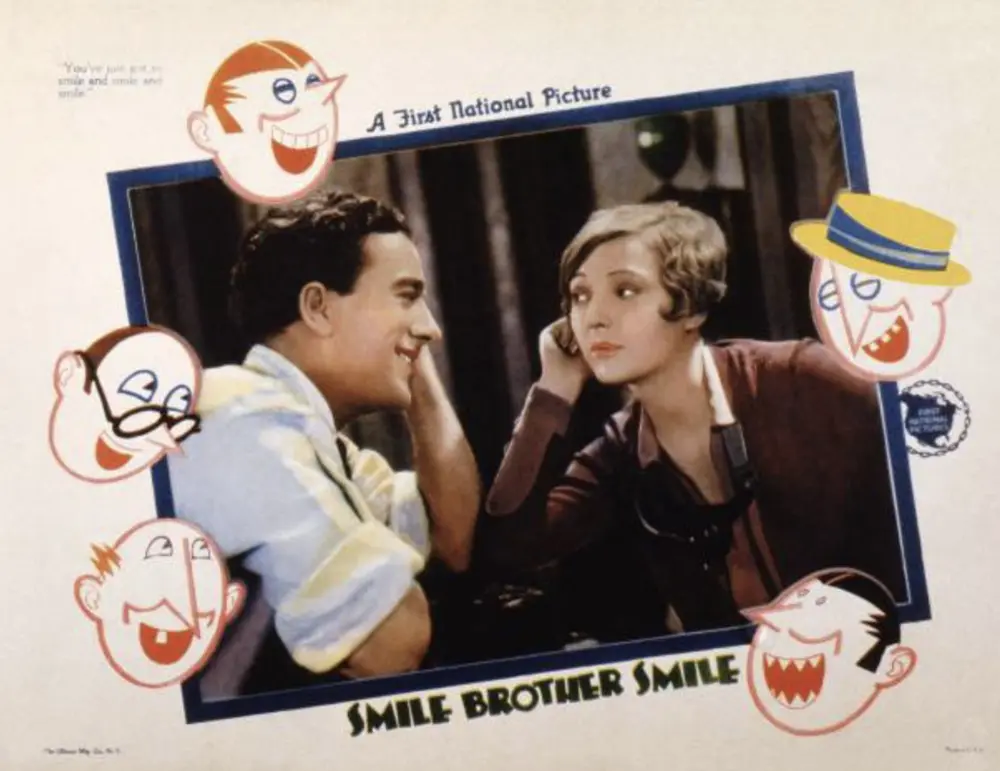
Is 'Smile, Brother, Smile' a forgotten classic deserving of rediscovery? Short answer: not quite, but it offers a fascinating glimpse into an era of filmmaking that prioritizes earnestness over polished wit. This film is best suited for ardent film historians and those with a deep appreciation for early cinematic comedies, particularly those interested in the nascent stages of genre tropes and the evolution of comedic timing. However, general audiences seeking laugh-out-loud humor or a tightly constructed narrative will likely find its charms elusive and its pacing somewhat deliberate.
It's a curious watch. But its impact fades fast.
This film works because of its surprisingly ambitious premise for the era, attempting a blend of corporate intrigue and romantic comedy that was still quite novel. Its core mystery, though simple, provides a narrative backbone that many contemporary comedies lacked. The performances, while broad, often display a genuine enthusiasm that can be infectious, particularly from the more experienced character actors in the ensemble.
This film fails because its comedic sensibilities feel profoundly dated, relying on exaggerated physical humor and predictable misunderstandings that rarely land with genuine comedic force. The pacing is inconsistent, often dragging through exposition before rushing through its resolutions, and the central 'spy' plot, while promising, never quite achieves the tension or cleverness it aims for. The script, despite having four writers, feels disjointed and lacks a singular, cohesive comedic voice.
You should watch it if you are a cinephile keen on tracing the lineage of screwball comedies or a film student examining early sound-era narrative structures. It’s also a worthwhile watch for anyone curious about the early careers of its lesser-known cast members, offering a window into their craft before the advent of more sophisticated filmmaking techniques. Otherwise, there are countless other films from the period that offer more consistent entertainment.
In the pantheon of early sound-era comedies, 'Smile, Brother, Smile' occupies a peculiar, almost liminal space. It’s a film that promises a zesty blend of corporate espionage and romantic entanglements, yet often delivers something far more understated, occasionally even clunky. Directed with a workmanlike approach, the film attempts to capitalize on the burgeoning popularity of office-set narratives, placing its central conflict squarely within the high-stakes world of cosmetics sales. The premise is genuinely intriguing: a vibrant young salesman, played by E.J. Ratcliffe, finds his career trajectory threatened by his company’s inexplicable financial woes, only to discover the culprit isn't market forces but an internal saboteur. This setup, on paper, is ripe for comedic gold, a sort of proto-screwball mystery that could have been genuinely innovative.
However, the execution often struggles to match the ambition. The film’s primary comedic engine relies heavily on the broad physical reactions of its cast and a series of increasingly convoluted misunderstandings. While actors like Ratcliffe and his co-star, the ever-reliable Alyce McCormick as his secretary, throw themselves into their roles with admirable zeal, the script by Rufus McCosh, Rex Taylor, Dwinelle Benthall, and Al Boasberg often leaves them adrift. The dialogue, at times, feels less like organic conversation and more like a series of setups for gags that don’t quite land. One memorable (or perhaps, unmemorable) scene involves Ratcliffe's character attempting to subtly follow a suspect through the office, leading to an almost painfully extended sequence of him hiding behind potted plants and oversized filing cabinets. It's a comedic trope that feels more at home in a silent film short, lacking the sharp timing and verbal wit needed to truly elevate it in the sound era.
The cast of 'Smile, Brother, Smile' is a fascinating mix of character actors and rising stars of the era, each bringing a distinct flavor to the corporate chaos. E.J. Ratcliffe, in the lead, embodies the youthful exuberance and underlying anxiety of a man whose livelihood is on the line. His performance is characterized by an almost frantic energy, a constant state of mild panic barely concealed beneath a salesman's practiced smile. He’s charming enough, but his comedic delivery often leans into overt mugging rather than subtle character work. There’s a particular moment where he tries to deliver a passionate sales pitch to a potential client while simultaneously trying to signal to McCormick that he suspects the client of being the spy; his contorted facial expressions and strained voice are a prime example of the film’s reliance on overt, rather than nuanced, humor.
Alyce McCormick, as the sharp-witted secretary, provides a much-needed grounding presence. Her character is arguably the most intelligent and capable in the film, often serving as the true brains behind the espionage operation. McCormick’s understated reactions and dry wit offer a refreshing contrast to Ratcliffe’s more theatrical performance. While the film doesn’t fully explore her character’s potential, she hints at a depth that could have elevated the entire production. Her ability to convey exasperation with a mere glance or a slight sigh is far more effective than many of the film's more elaborate physical gags. This is a testament to her skill, especially in an era where female roles were often relegated to mere romantic interests or damsels in distress.
The supporting cast, featuring familiar faces like Ernest Hilliard and Jed Prouty, provides solid, if unremarkable, turns. Hilliard, often typecast as villains or tough guys, here gets to play a more ambiguous role, adding a layer of suspicion that keeps the audience guessing, even if the eventual reveal feels somewhat anticlimactic. Prouty, known for his avuncular roles, provides a degree of comic relief, though his character often feels like a stock figure rather than a fully fleshed-out individual. The ensemble works well together, creating a believable, if somewhat caricatured, office environment, a testament to the era's strong stable of dependable character actors.
The direction of 'Smile, Brother, Smile' is, for lack of a better word, functional. It’s clear the primary goal was to tell the story efficiently and capture the comedic beats as written, without much in the way of stylistic flourish. The camera work is largely static, favoring medium shots and straightforward compositions that prioritize clarity over visual dynamism. This is understandable given the technical limitations and evolving language of cinema in the early 1930s, but it does contribute to a certain flatness in the visual storytelling. There are few inventive camera angles or expressive lighting choices to elevate the material.
However, there are moments where the film hints at a more playful visual style, particularly during the more overt comedic sequences. For instance, a scene involving a frantic chase through the office corridors, while not groundbreaking, does utilize some quick cuts and slightly more dynamic camera movements to convey a sense of urgency and chaos. This, however, is the exception rather than the rule. The cinematography is clean and well-lit, ensuring that the actors and their expressions are always visible, which was crucial for conveying the broad humor. Yet, it rarely strives for anything beyond basic competence, leaving the film feeling visually dated even for its time. Compare this to the more adventurous camera work seen in films like Fig Leaves (1926), which, despite being a silent film, often felt more visually inventive.
The pacing of 'Smile, Brother, Smile' is perhaps its most inconsistent element. The film often starts with a brisk energy, establishing the corporate setting and the looming threat with commendable speed. However, once the central mystery of the 'spy' is introduced, the narrative tends to meander, indulging in protracted scenes of suspicion and investigation that often feel repetitive. There's a particular stretch in the second act where the protagonists' attempts to gather evidence against the suspected spy become bogged down in predictable gags and drawn-out conversations, causing the momentum to falter significantly.
The tone is a somewhat jittery blend of lighthearted comedy and mild dramatic tension. The stakes, while presented as high (job loss, company collapse), never quite feel truly perilous due to the overarching comedic framework. This creates a peculiar dissonance: the film wants you to care about the characters' predicament, but it also wants you to laugh at their bumbling attempts to solve it. This isn't inherently a flaw, as many successful comedies manage this balance, but 'Smile, Brother, Smile' rarely achieves it with grace. The comedic moments often undercut any genuine tension, and the dramatic beats aren't strong enough to provide a compelling counterpoint. It’s a film that struggles to commit fully to either its comedic or its dramatic impulses, leaving the audience in a state of mild amusement rather than genuine engagement.
For the casual viewer, 'Smile, Brother, Smile' is unlikely to offer a profoundly rewarding experience. Its humor feels largely outmoded, and its narrative, while fundamentally sound, is executed with a lack of polish that might deter those accustomed to more sophisticated storytelling. However, for those with a keen interest in film history, particularly the transitional period of early sound cinema, it absolutely holds value. It’s a fascinating artifact, showcasing the evolving techniques of comedic filmmaking and the early attempts at blending genres. It allows us to observe how actors adapted from the broad gestures of silent film to the more nuanced demands of dialogue, and how directors navigated the new technical challenges of sound recording. It's a stepping stone, not a destination.
Pros:
- Intriguing premise blending corporate intrigue with comedy.
- Strong, enthusiastic performances from the ensemble cast.
- Offers a valuable historical perspective on early sound-era filmmaking.
- A relatively unique genre blend for its time.
Cons:
- Dated comedic sensibilities that often fall flat.
- Inconsistent pacing, with significant lulls.
- Lack of visual innovation or directorial flair.
- The 'spy' plot feels underdeveloped and predictable.
- Dialogue sometimes feels stilted and unnatural.
'Smile, Brother, Smile' is less a forgotten triumph and more a fascinating footnote in cinematic history. It’s a film that tried to do something interesting with its premise but was ultimately hampered by the nascent state of sound comedy and perhaps an overabundance of writers pulling in different directions. While it won't ignite widespread rediscovery, it serves as a valuable document for understanding the evolution of genre and performance in the early 1930s. Its charm, when it appears, is largely due to the earnest efforts of its cast, particularly Alyce McCormick, who shines even when the material doesn't. Approach it not as a laugh-riot, but as a historical curiosity, and you might find something to appreciate in its peculiar, slightly awkward grin. It’s a film that prompts more scholarly interest than genuine entertainment, and that’s perfectly fine for what it is. It’s a film that had potential. But it never quite reached it.
IMDb —
1927
Community
Log in to comment.