DbcultAccessing Vault...
5.7/10
Senior Film Conservator
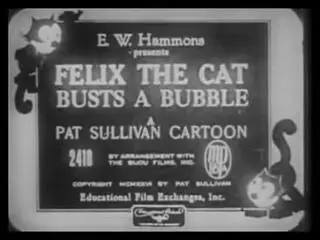
A definitive 5.7/10 rating for a film that redefined the boundaries of cult cinema. Felix the Cat Busts a Bubble remains a cornerstone of transgressive art.
Should you watch Felix the Cat Busts a Bubble today? Short answer: only if you are an animation historian or a glutton for the uncomfortable gender politics of the 1920s. It is a fascinating technical artifact, but it is not a 'fun' watch in the modern sense.
This film is for students of the 'rubber hose' animation style and those interested in how early Hollywood viewed female independence. It is definitely NOT for anyone looking for a wholesome, family-friendly cartoon or a protagonist you can actually root for.
1) This film works because Otto Messmer’s visual imagination remains unparalleled in the silent era, using the medium’s flexibility to create gags that live-action could never touch.
2) This film fails because the central motivation—a male lead actively trying to destroy a woman’s career for his own convenience—is fundamentally repellent to modern sensibilities.
3) You should watch it if you want to understand the DNA of every cartoon that followed, from Mickey Mouse to Looney Tunes.
Yes, it is worth watching for its historical significance. It represents a time when Felix was the biggest star in the world, even rivaling Charlie Chaplin. However, it requires a thick skin to look past the narrative of domestic entrapment. It is a short, sharp burst of 1920s surrealism that explains where the logic of animation began.
To understand this film, you have to understand Otto Messmer. While Pat Sullivan’s name was on the marquee, Messmer was the soul of the inkwell. In this short, we see the peak of his 'thought-bubble' logic. When Felix thinks, his question marks become physical objects. When he is frustrated, his tail becomes a weapon. This isn't just drawing; it is a rejection of physics.
Consider the scene where Felix first arrives in Hollywood. The way he moves through the environment is liquid. He doesn't just walk; he flows. This fluidity was revolutionary. At a time when live-action films like Circus Days were bound by the limitations of the physical world, Felix was rewriting the rules of what could be seen. He was the first truly 'filmic' character who didn't need to obey gravity.
However, the technical brilliance is often overshadowed by the mean-spiritedness of the gags. Felix isn't just a prankster here. He is a saboteur. He ruins lighting, trips actors, and creates chaos with a calculated precision that feels more like a thriller than a comedy. It’s mean. It’s clever. It’s dated.
The plot of Felix the Cat Busts a Bubble is essentially a manual on how to be a toxic partner. His girlfriend wants a life outside of his shadow. She wants the agency that characters in films like A Virtuous Vamp or Daring Youth were beginning to explore on the silver screen. Felix’s response is to gaslight and destroy.
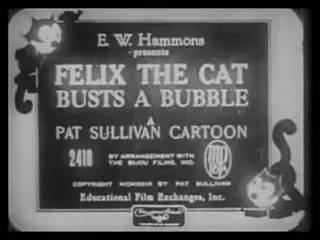
There is a specific moment during a screen test where Felix uses a bubble to distort her image. It is a literal 'busting' of her dreams. From a technical standpoint, the transparency of the bubble and the distortion of the lines behind it are masterclasses in early ink-and-paint techniques. But narratively? It’s a gut punch. He isn't saving her from a mistake; he's stealing her future.
We see similar themes of domestic control in other films of the era, such as Marriage for Convenience, but those usually carry a moral weight. Here, the joke is on the woman for ever thinking she could leave. It is a brutally simple sentence: Felix is a jerk. But in 1924, this was considered top-tier comedy.
The 'cinematography' of a 1924 cartoon is really about the layout and the timing of the gags. Messmer uses a very flat, stage-like perspective, much like the vaudeville acts that inspired him. Yet, he breaks the fourth wall constantly. Felix looks at the audience. He invites us into his scheme. This makes the viewer an accomplice to his sabotage.
The pacing is frantic. Unlike the slower, more character-driven moments in Ruggles of Red Gap, this short moves at the speed of a heartbeat. Every three seconds, there is a new visual pun. This was necessary because silent animation relied entirely on visual clarity to tell the story. There are no intertitles to explain Felix’s jealousy; we see it in the twitch of his ears.
One standout moment involves Felix using his own tail as a ladder to scale a studio wall. It is a moment of pure, unadulterated visual joy that reminds you why this character became a global icon. It’s just a shame that the ladder is being used to commit a crime of the heart.
When you look at other films from the mid-20s, like Hearts and Flowers or Shore Leave, there is a recurring theme of the 'restless woman' and the 'steady man.' Felix the Cat Busts a Bubble takes this to a grotesque extreme. While live-action films often used melodrama to resolve these conflicts, animation used violence and absurdity.
The animation in this short is significantly more advanced than what we see in Nothing But Nerve. Messmer had mastered the art of anticipation—the way a character prepares for a movement before executing it. This gives Felix a weight and a presence that other contemporary cartoons lacked. He feels like a solid object, even when he’s stretching into a thin line.
Pros:
Cons:
Felix the Cat Busts a Bubble is a masterpiece of technical execution and a disaster of thematic content. It is a vital piece of cinema history that shows us exactly how far we have come—and how much we owe to the animators who first learned how to make ink move like water. It works as a museum piece. But it’s flawed. Watch it to learn, but don't expect to like the cat by the time the credits roll.

IMDb 6.2
1930
Community
Log in to comment.