DbcultAccessing Vault...
5.6/10
Senior Film Conservator
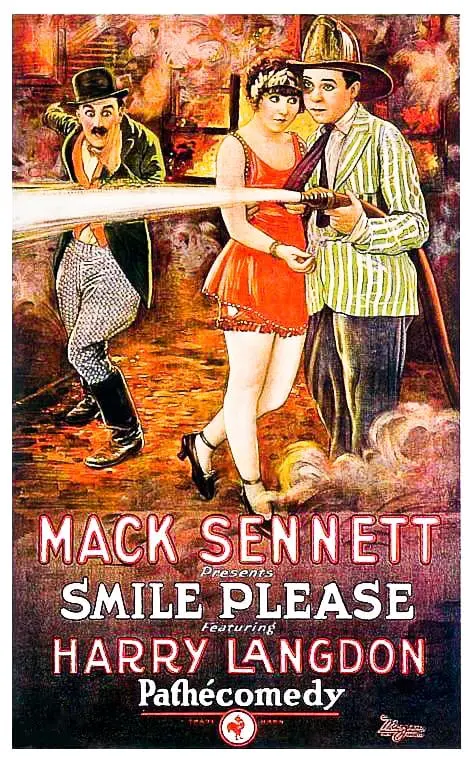
A definitive 5.6/10 rating for a film that redefined the boundaries of cult cinema. Smile Please remains a cornerstone of transgressive art.
In the realm of cinematic storytelling, few films manage to balance the delicate interplay of character-driven drama and plot-centric narrative as adeptly as 'Smile Please'. This film, penned by John A. Waldron, presents a unique exploration of duality through its protagonist, Harry, a man who embodies two distinct roles within his community: that of a local photographer and a sheriff. This dichotomy sets the stage for a rich tapestry of themes, including chaos, responsibility, and the pursuit of order.

The film's plot is set in motion by a series of arson attacks, which Harry, as the sheriff, is tasked with investigating and thwarting. This pursuit is interwoven with his personal life, as he must also contend with the visit of his in-laws, whose lack of photogenic appeal adds a layer of humor and lightheartedness to the narrative. The casting, featuring Jack Cooper, Louise Carver, Alberta Vaughn, Madeline Hurlock, Gordon Lewis, Cecille Evans, Tiny Ward, Jackie Lucas, among others, brings to life a diverse array of characters, each contributing to the film's dynamic.
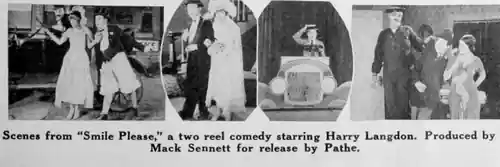
One of the most striking aspects of 'Smile Please' is its ability to juxtapose the seriousness of arson and law enforcement with the seemingly trivial concerns of family visits and aesthetic preferences. This juxtaposition serves to highlight the multifaceted nature of human experience, where moments of levity and gravity coexist and inform one another. The performance of Harry Langdon, in particular, stands out, as he navigates the complexities of his dual role with a nuanced blend of humor and gravitas.
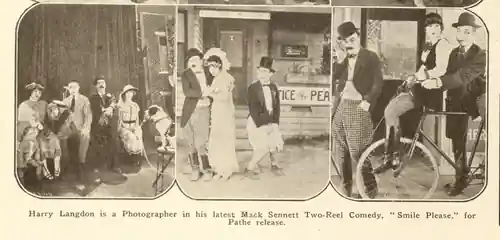
In analyzing 'Smile Please', it is useful to draw comparisons with other films that explore similar themes of duality and chaos. For instance, The Sin of a Woman also navigates the complexities of personal and public responsibilities, albeit within a different narrative context. Similarly, American Buds and Billy the Janitor present explorations of identity and role within a community, each offering unique insights into the human condition.
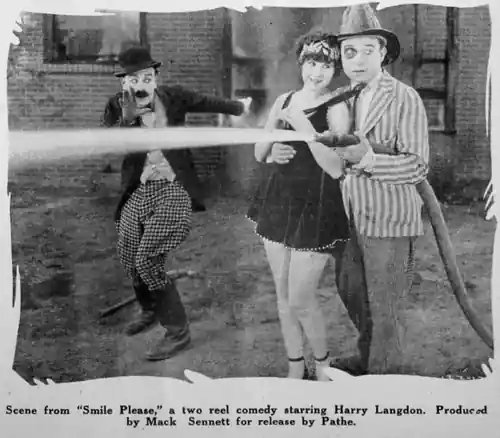
The cinematography in 'Smile Please' deserves special mention, as it effectively captures the quaint, rural setting that serves as the film's backdrop. The interplay of light and shadow, particularly in the sequences involving Harry's photography work, adds a layer of depth to the visual narrative, underscoring the themes of perception and reality. This attention to detail extends to the film's use of color, where the sea blue hues of the rural landscape contrast with the yellow tones of the arson scenes, creating a visual dichotomy that mirrors the film's thematic concerns.
Furthermore, the score of 'Smile Please' complements the on-screen action, with a dark orange tint to the title sequence that sets the tone for the narrative's blend of drama and humor. The music itself, though not prominently featured, provides a subtle underscore to key scenes, enhancing the emotional impact of Harry's journey.
In conclusion, 'Smile Please' is a film that masterfully navigates the complexities of duality and chaos, presenting a richly textured narrative that rewards close attention. Through its exploration of a man who serves as both a photographer and a sheriff, the film offers a nuanced examination of responsibility, identity, and the human condition. With its talented cast, effective cinematography, and thoughtful score, 'Smile Please' stands as a testament to the power of cinema to capture the intricacies of human experience.
For those interested in exploring films with similar themes, Giuliano l'apostata, Common Ground, and The Antics of Ann offer additional perspectives on duality, chaos, and the human condition, each within their unique narrative contexts.
IMDb 6.8
1931
Community
Log in to comment.