DbcultAccessing Vault...
Cult Review
Senior Film Conservator
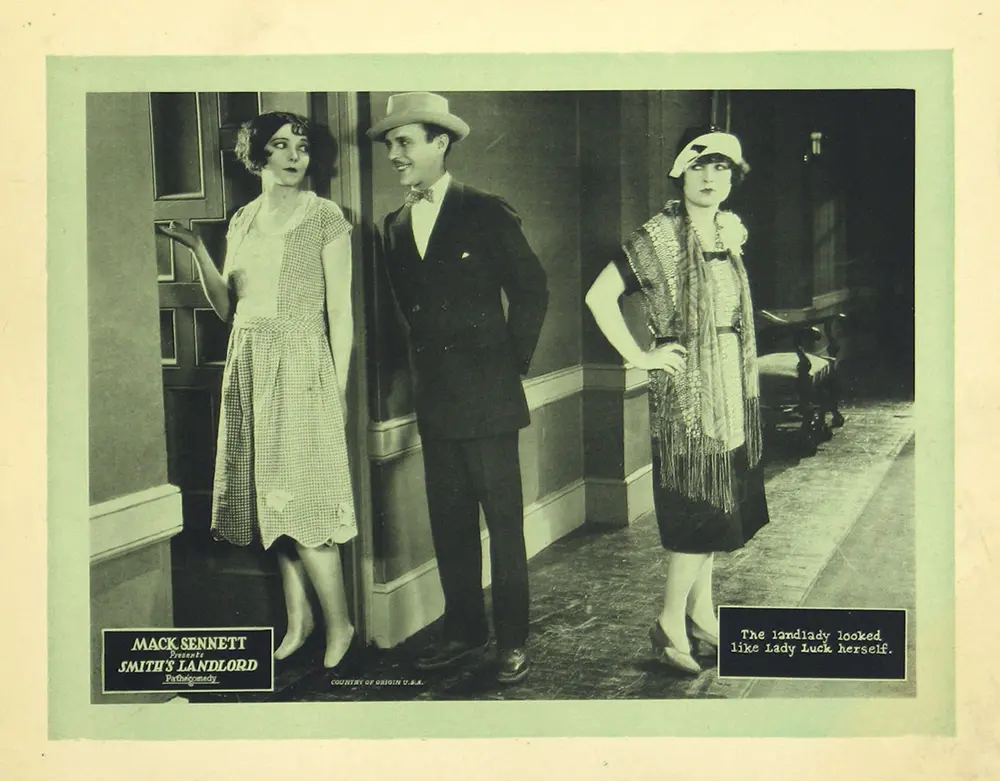
Is Smith's Landlord worth your time in the modern era? Short answer: yes, but only if you appreciate the frantic, logic-defying pace of late-1920s slapstick. This film is a must-watch for historians of the Mack Sennett 'Smith Family' series and fans of Billy Gilbert’s explosive frustration, but it is certainly not for those who require their comedy to be grounded in any semblance of reality or narrative consequence.
This film works because it embraces the absolute absurdity of its premise without trying to explain the 'how' or 'why' of a baby acting as a magnet for farm animals. It fails because the resolution feels rushed and relies on a trope that was already tired by 1927. You should watch it if you want to see a masterclass in slow-burn frustration leading to a physical payoff.
Smith's Landlord is a fascinating artifact of the 'Smith Family' shorts, a series that attempted to find comedy in the mundane struggles of middle-class life, only to inevitably veer into the surreal. The premise here—that a baby possesses a supernatural ability to lure animals—is handled with a straight face that makes the visual gags land harder. When a cow wanders into a living room, the film doesn't treat it as a miracle; it treats it as a housekeeping nuisance. This grounded approach to the bizarre is what separates Sennett’s productions from the more whimsical output of the era, such as Bubbles.
The acting is led by Roger Moore—no, not that one—who plays the harried father with a mix of exhaustion and optimism. He is the perfect foil for the animals, but the real star is the supporting cast. Billy Gilbert, before he became famous for his sneezing fits in Disney films and Laurel and Hardy shorts, provides a blueprint for the 'angry authority figure' that would define his career. His reactions to the encroaching zoo are the highlight of the film. Every time Gilbert’s face turns a shade of cinematic grey that implies high blood pressure, the movie finds its rhythm.
For a film released in 1927, the pacing is remarkably modern. There is very little 'fat' on this short. The transition from the first eviction to the search for a new apartment is handled with a series of quick cuts that emphasize the desperation of the housing market—a theme that feels surprisingly relevant today. While it lacks the high-concept drama of something like The Ship of Doom, it compensates with a relentless focus on physical comedy.
The cinematography by the Sennett regulars is functional but effective. There is a specific shot where the camera pans from the baby’s crib to a line of animals entering through the window that is perfectly timed. It doesn't rely on trick photography; it relies on animal training and patient blocking. Compared to the more static framing seen in Trilby, Smith's Landlord feels like a film that understands the movement of comedy. The camera is always exactly where it needs to be to catch the landlord's impending meltdown.
If you are looking for a deep emotional resonance or a complex character study like Dombey and Son, you will be disappointed. However, as a twenty-minute exercise in escalating tension, it is highly effective. The 'mysterious refreshment' scene in the closet is a highlight, serving as a thinly veiled nod to the Prohibition-era audience. It’s a moment of subversion where the 'hero' essentially bribes an official with booze to solve a problem. It works. But it's flawed. The ending is abrupt, almost as if the production ran out of film or the animals got too difficult to manage.
Smith's Landlord is worth watching for the performance of Billy Gilbert alone. His ability to convey total psychological collapse through a simple twitch of a mustache is a lost art. It provides a lighter, more frantic counterpoint to the heavy-handed morality plays of the same period, such as The Power Within.
Pros:
The animal gags are genuinely funny and well-executed. The chemistry between the 'Smith' family members feels lived-in. The film moves at a breakneck speed that prevents boredom. It offers a fascinating glimpse into 1920s domestic anxieties regarding housing and children.
Cons:
The plot is paper-thin and relies on a massive coincidence. The 'baby magnet' concept is never fully explored, just used as a catalyst. Some of the slapstick elements feel recycled from earlier Sennett shorts like A Hickory Hick.
One unconventional observation: Smith's Landlord is secretly a horror movie about the loss of autonomy. The Smiths have no control over their child, their environment, or their housing security. The baby is essentially a localized gravitational anomaly that destroys their social standing. While the film plays this for laughs, there is an underlying sense of panic that mirrors the more serious social dramas of the time, such as A City Sparrow. The 'closet' ending isn't just a funny resolution; it's a surrender to the chaos of the era.
Smith's Landlord is a loud, messy, and frequently hilarious example of the late silent era's obsession with domestic disruption. It lacks the polish of a Keaton or Chaplin feature, but it has a raw, energetic spirit that is infectious. While the 'Smith Family' series would eventually be overshadowed by the coming of sound, this entry stands as a testament to the power of a well-timed reaction shot and a very confused goat. It is a minor work, but a memorable one. If you've already exhausted the filmography of the greats and are looking for something with more bite than The Palm Beach Girl, give the Smiths a chance. Just don't expect the landlord to be happy about it.
IMDb 6.8
1927
Community
Log in to comment.