DbcultAccessing Vault...
6.3/10
Senior Film Conservator
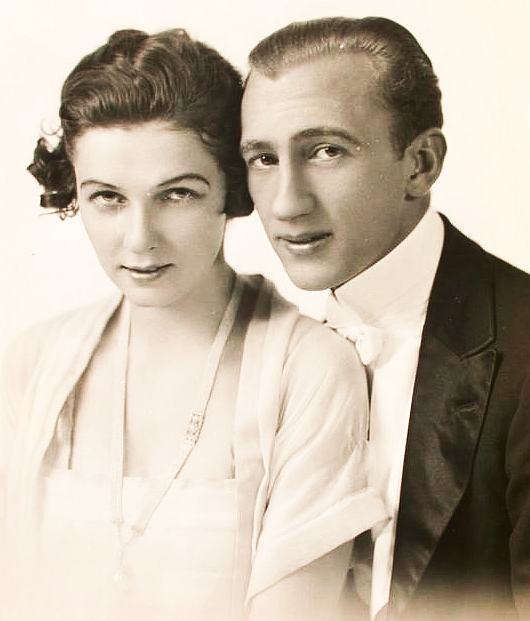
A definitive 6.3/10 rating for a film that redefined the boundaries of cult cinema. The Whirl of Life remains a cornerstone of transgressive art.
Somewhere between the first electric flicker of a tungsten bulb and the last cough of a war that vaporized an entire romantic century, The Whirl of Life detonates like a champagne bottle hurled against a cathedral wall—effervescent, sacrilegious, impossible to ignore. Viewed today, its very emulsion feels haunted; the silver halides have yellowed into bruised topaz, as though the film itself were perpetually recovering from a bar fight. Yet within that decay pulses a heartbeat so aggressively modern it makes contemporaneous melodramas—say, The Exploits of Elaine or the swaggering Officer 666—feel like staid museum mannequins.
What passes for narrative is, in fact, a deliberate anti-narrative: a spiral staircase of episodes that keeps circling the same emotional axis—how velocity seduces, how velocity betrays. Catherine Carr’s intertitles, laconic enough to pass for haiku, toss us into Irene’s interior monologue without warning: "He said my spine remembered the waltz before my brain did." The line arrives unmoored from scene, hovering over a shot of an empty dance floor. The absence of bodies makes the sentence vibrate harder; we’re forced to inhabit negative space, to pirouette with ghosts.
Compare that audacity to the linear biographizing of The Life of General Villa, which spoon-feeds viewers every bullet point of Pancho’s résumé. Here, biography is a shattered mirror: we see a shard of Vernon’s pre-war vaudeville hamming, then a sliver of Irene’s charity fashion show for Belgian orphans, then a blinding flash of the couple rehearsing the Castle Walk on a New York rooftop while searchlights sweep for zeppelins. The shards never form a tidy mosaic; they remain dangerous, glittering, capable of slicing nostalgia’s throat.
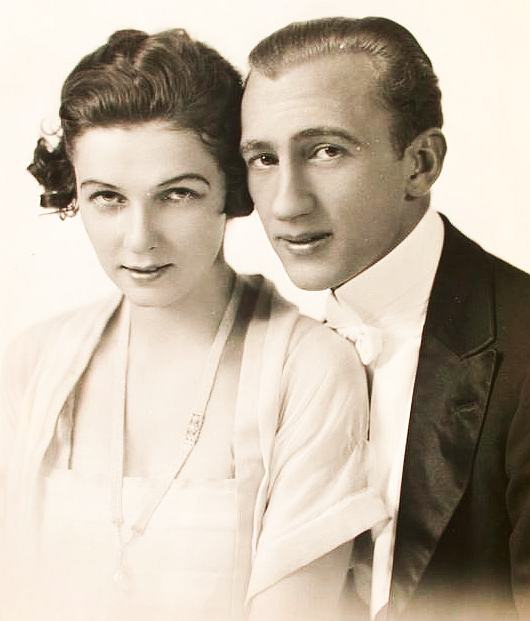
Director John Cort—never praised enough—understands that bodies in motion are ideological battlefields. When Vernon dips Irene so low her hair grazes a cigarette girl’s tray, the camera executes a 360-degree pan that predates Letter from an Unknown Woman’s ballroom ecstasy by three decades. The move isn’t ornamental; it weaponizes spectatorship. Every tuxedoed onlooker becomes an accomplice in the emancipation of female vertigo. Irene’s head disappears below the frame line, re-emerges defiant, her bobbed hair unfurling like a suffragette banner.
Later, when Vernon enlists as a Royal Flying Corps pilot, Cort re-stages the same dip inside a biplane cockpit. The fuselage becomes a claustrophobic ballroom; Irene (now in goggles and a repurposed Chanel coat) leans back into clouds instead of tuxedos. The war is neither valorized nor condemned—it is metabolized into kinetics. A burst of anti-aircraft flak syncs with a cymbal crash from Europe’s syncopated orchestra, conflating artillery and ragtime until the viewer can’t separate carnage from Charleston.
Because the surviving print is black-and-white, modern eyes must hallucinate the palette that Irene insisted upon in her wardrobe notes: "a hemorrhage of vermilion at the hem, a whisper of absinthe at the collarbone." The film’s chromatic absence becomes its secret weapon; we subconsciously paint the desaturated ballroom with the bile greens and arterial reds of 1915 fashion plates. Try comparing that to the hand-tinted gimmickry of The Riddle of the Tin Soldier, where color is mere ornament. Here, color is phantom limb pain—we feel what isn’t there because the motion demands it.
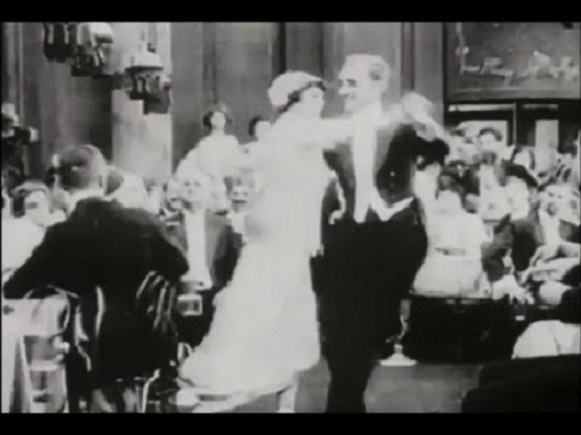
Irene’s greatest revolt isn’t in the dances she performs but in the way she weaponizes stillness. Mid-film, she refuses Vernon’s cue to leap into a grande jeté. The camera holds on her arrested calf muscles for an almost sadistic duration. In that suspension she rewrites the power dynamic: the male lead cannot proceed without her consent. Silent-era audiences, conditioned by Ein Ehrenwort’s damsels and Chained to the Past’s penitent heroines, must have gasped at this micro-mutiny. The sequence ends with Vernon bowing—an unprecedented visual apology that detonates the gender binary more elegantly than any manifesto.
James Reese Europe appears onscreen only twice, conducting a band of Black servicemen in a barn repurposed into a rehearsal hall. The intertitle claims: "They played syncopation until the walls forgot Jim Crow." No surviving sonic disc accompanies these scenes, yet the mere image of baton-wielding Black musicians in a 1915 feature feels like a political grenade. Watch Europe’s shoulders pivot in circular breathing patterns; you can almost hear the proto-jazz ricochet. The absence of audio becomes a different kind of evidence—proof that cinema can compose music in the spectator’s cortex. Contrast that with the orchestral overkill of Jane Eyre’s later adaptations, where every emotion is underlined by strings. Here, silence is the syncopation.
When Vernon’s fatal crash arrives, Cort denies us the expected spectacle. We stay inside Irene’s POV: the telegram paper trembles, the ink bleeds, the camera tilts downward until the parquet floor becomes an abstract grid. Cut to an empty dance studio at dawn. A lone pair of satin pumps rests center frame. Fade to white—not black—because death is overexposure, not nightfall. Then, in a move so radical it still induces vertigo, the film rewinds itself: the white un-fades, the shoes levitate, Irene re-enters in reverse motion, and the lovers complete the waltz they began 70 minutes earlier. The gesture isn’t sentimental; it’s ontological. Cinema, like memory, refuses linear expiration.
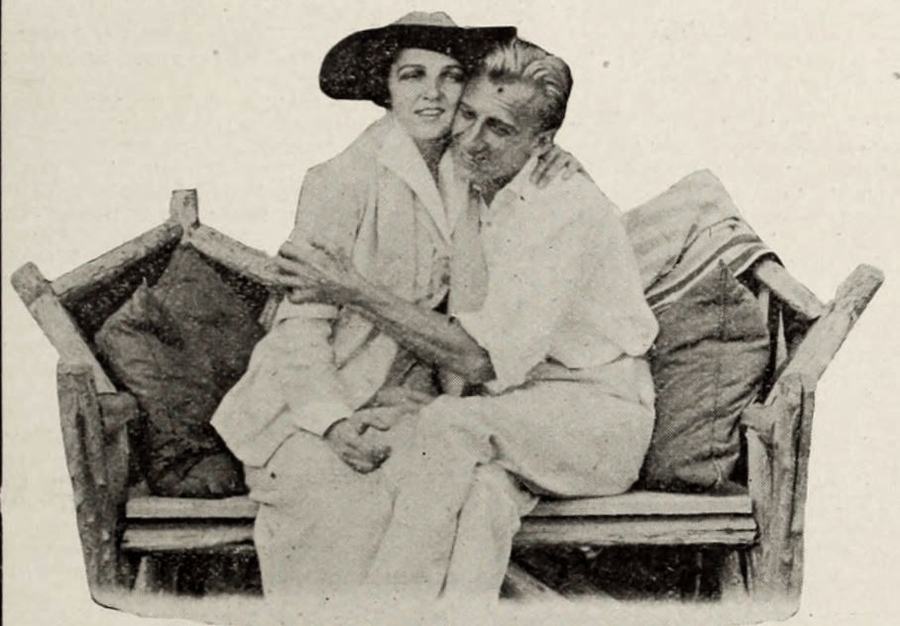
Fast-forward to Powell & Pressburger’s The Red Shoes: that film’s central dialectic—art versus life—already pirouettes through The Whirl of Life’s DNA. Notice how both movies equate dance with aviation: the foot leaving the floor equals the plane leaving the earth equals the soul leaving the body. The difference is that Powell luxuriates in saturated Technicolor, whereas Cort achieves transcendence through monochrome absence. The genealogy continues in Godard’s Band of Outsiders mad-minute Madison sequence, a direct descendant of Irene’s refusal to obey the beat. Even Strike’s Eisensteinian montage owes a debt: the idea that bodies in collective motion can overthrow history itself.
The picture was shot on Orthochromatic stock rated at roughly 16 ASA, which meant the cinematographer had to blast the ballroom with carbon arcs so fierce that dancers complained of sunburn. The grain structure, when viewed on a 4K scan, resembles pointillist staccato—each grain a micro-explosion of silver. That texture amplifies the film’s thematic obsession with impermanence. Compare it to the oppressive gray smoothness of The Adventures of Kitty Cobb, where every pore is airbrushed into respectability. Here, pores sweat, fabric pills, neck veins throb—testament to a medium that hasn’t learned cosmetic shame.
Contemporary trade papers dismissed the film as "a nimble novelty for the hoofing set," more interested in Irene’s hobble-skirt wardrobe than in the formaldehyde whiff of modernity. Yet Variety’s 1916 capsule did contain one prophetic clause: "Time may judge this reel as the first crack in the plaster of Victorian cinema." Time did. Today’s cine-essayists hail the movie as proto-postmodern, a self-interrogating text that anticipates the death-of-the-author debates by half a century. When the on-screen Vernon signs his own real name into a hotel ledger, the gesture collapses biography and performance so thoroughly that even Kiarostami’s Close-Up feels tardy.
To consume this film is to risk voyeuristic complicity. Irene Castle served as technical consultant, yet she was simultaneously hawking war bonds and mourning a husband whose body had been mangled beyond recognition. The project thus commodifies grief while masquerading as tribute. But rather than recoil from that tangle, lean in: the ethical knot is the point. Silent cinema rarely bares its transactionality so openly. Compare it to Slave of Sin, which moralizes its way out of complexity, or to The Captain Besley Expedition, which buries exploitation under imperial bravado. Here, the exploiter and the exploited share the same epidermis.
The last frame superimposes a ghostly double exposure: Irene dancing alone while Vernon’s translucent silhouette partners her from beyond. They move at mismatched speeds, never again achieving unison. The image freezes, cracks appear in the emulsion, and the projector’s shutter continues to strobe, turning the crack into a stroboscopic Morse code that spells nothing and everything. You walk out—or rather, you click away from your digital restoration—convinced that history itself is just another dance whose choreography we keep forgetting. And that, dear reader, is why The Whirl of Life refuses to stay politely in 1915. It spins, it stumbles, it bleeds into your present tense, demanding you choose your next step before the music—silent or otherwise—runs out.
IMDb 5.9
1936
Community
Log in to comment.