DbcultAccessing Vault...
Cult Review
Senior Film Conservator
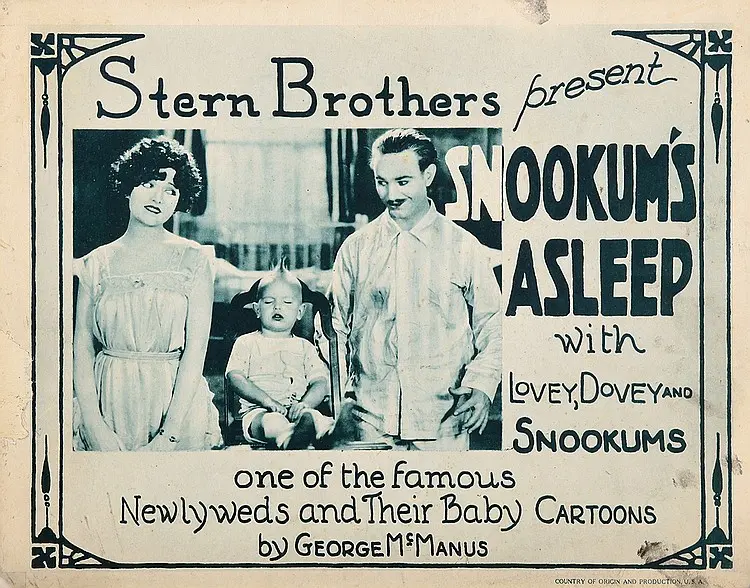
Is 'Snookums Asleep' worth revisiting in the modern era? The short answer is yes, but primarily for a very specific audience. This obscure silent comedy is a delightful, if fleeting, glimpse into the slapstick sensibilities of the 1920s, making it essential viewing for silent film scholars and enthusiasts, yet largely inaccessible for casual modern viewers seeking conventional narrative or high production value.
This film works because it offers a raw, unadulterated slice of early cinematic humor, showcasing the foundational elements of physical comedy that would influence generations. It fails because its humor, while historically significant, is undeniably dated and lacks the universal appeal or sophisticated storytelling often required to captivate a contemporary audience without a strong appreciation for the era. You should watch it if you possess a genuine curiosity for silent film, a love for the uninhibited energy of slapstick, or an interest in the careers of its energetic cast.
Stepping into the world of "Snookums Asleep" is akin to opening a time capsule. This film, a product of the roaring twenties, embodies the spirit of an era where cinema was still finding its voice, often through exaggerated gestures, frantic chases, and the universal language of physical comedy. It’s a testament to the ingenuity of filmmakers who had to convey entire narratives without a single spoken word, relying instead on the power of performance, visual gags, and the occasional intertitle.
The film, penned by George McManus, known for his comic strip work, likely translates that same brand of episodic, character-driven humor to the screen. Silent comedies of this period weren't just entertainment; they were a cultural phenomenon, reflecting the anxieties and exuberance of a rapidly changing world. They offered an escape, a communal laugh, and a shared experience that transcended social strata.
While the specific plot details of "Snookums Asleep" might be lost to the mists of time for many, its essence as a silent comedy short is clear. It’s a genre built on simple premises that escalate into glorious pandemonium. Think of the intricate, Rube Goldberg-esque chaos of a Buster Keaton, or the everyman struggles of a Charlie Chaplin, albeit on a perhaps smaller, more direct scale. This film, in its very structure, speaks volumes about what captivated audiences nearly a century ago.
The performances in "Snookums Asleep" are, without a doubt, the film's driving force. In silent cinema, actors were not just performers; they were storytellers, relying on their entire physicality to convey emotion, intent, and comedic timing. Syd Saylor, a prolific character actor of the era, brings his distinctive blend of rubber-faced expressiveness and gangly physicality to the screen. His presence alone suggests a certain brand of frantic, well-meaning incompetence that often forms the core of silent slapstick.
One can easily imagine Saylor, perhaps as a bumbling guardian or an overzealous suitor, attempting to maintain the 'asleep' status of Snookums. His contorted expressions and exaggerated movements would have been key to selling every near-miss and catastrophic success. Consider a scene where he might be tiptoeing across a room, only to trip over an unseen obstacle, his limbs flailing in a desperate attempt to regain balance, each movement perfectly synchronized for maximum comedic impact, much like the precision often seen in films such as A Wild Goose Chase.
Sunny Jim McKeen, another staple of early comedy, likely provides a contrasting dynamic. Often playing the straight man or the slightly more grounded, though still susceptible to chaos, accomplice, McKeen's reactions would have amplified Saylor's antics. Picture him with a look of growing exasperation, perhaps trying to quietly fix a problem that Saylor inadvertently makes ten times worse, his subtle eye-rolls or head shakes communicating volumes without sound.
Ethlyne Clair, a celebrated beauty of the silent screen, would have added a layer of charm and often served as the emotional center. Her role might have been that of the exasperated love interest, the concerned mother, or the charming catalyst for the men's foolishness. Her ability to convey both allure and amusement amidst the unfolding chaos would have been crucial. For instance, her subtly raised eyebrow or a knowing smile, perhaps as Saylor attempts a precarious stunt to avoid waking Snookums, would ground the outlandishness in relatable human reaction.
The pacing of "Snookums Asleep," like many silent shorts, would have been brisk and relentless. Silent comedies rarely lingered; they moved from one gag to the next with an almost breathless energy. The film likely builds from a simple premise to a series of escalating complications, culminating in a frenetic, often destructive climax. This rapid-fire delivery was essential to maintain audience engagement in an era without dialogue, relying on the sheer momentum of physical gags and quick cuts to keep the laughter rolling.
In the absence of spoken dialogue, the visual language of "Snookums Asleep" would have been paramount. Cinematography in silent comedies, while not always aiming for artistic grandeur, was incredibly effective at serving the gag. Wide shots would have been common, allowing the audience to fully appreciate the scope of Saylor's physical comedy and the resulting destruction. Close-ups would have been reserved for reaction shots, capturing the nuanced expressions of Clair or the bewildered face of McKeen, delivering punchlines with silent precision.
Lighting, though perhaps less sophisticated than later eras, would have been used to highlight the performers and delineate the comedic action. The sets, likely modest and functional, would have been designed to facilitate slapstick – doors to slam, furniture to trip over, and props to be comically misused. Think of the simple, yet effective, domestic settings that often formed the backdrop for films like Please Excuse Me.
The tone of "Snookums Asleep" would have been unequivocally lighthearted and farcical. There's a curious innocence to the destruction in these films; no real stakes, just the joy of pure, unadulterated mayhem, a childlike glee in disorder. This isn't comedy with a dark edge or deep social commentary; it's escapism in its purest form, designed to elicit immediate, visceral laughter. The film’s charm lies in its unpretentious commitment to making its audience giggle, even if the methods are now considered quaint.
One could argue that the relentless pursuit of a single gag, as likely seen here, is both its greatest strength and its most pronounced weakness. It allows for a laser focus on comedic execution but can feel repetitive to modern sensibilities accustomed to more complex narrative arcs. Yet, this simplicity is also its appeal – a direct line to the comedic heart of the era.
Silent comedy, often dismissed as mere historical artifact, holds a raw, untamed energy that modern cinema rarely dares to touch. It’s a testament to the power of visual storytelling, where every gesture, every fall, and every expression had to carry the weight of the narrative. "Snookums Asleep", in its very obscurity, reminds us of this forgotten art.
For the casual moviegoer, "Snookums Asleep" is likely not a must-see. Its humor is from another time, and without the context of silent film appreciation, it might feel slow or dated. However, for those with a keen interest in film history, particularly the evolution of comedy, it offers invaluable insight.
If you enjoy dissecting comedic techniques, observing the performance styles of early actors, or simply appreciate the charm of a bygone cinematic era, then yes, this film is absolutely worth your time. It provides a window into the foundational elements of physical comedy and the craft of silent storytelling. It’s a piece of the puzzle, a building block in the vast architecture of cinematic humor.
It works. But it’s flawed. Its historical significance often outweighs its immediate entertainment value for a broad audience. Yet, for the right viewer, its charm is undeniable.
There's something profoundly charming about these early comedies. They represent a period of boundless experimentation, where filmmakers were inventing the very grammar of cinema. "Snookums Asleep" is not trying to be a profound work of art; it's simply trying to make you laugh. And in that, it likely succeeded for its original audience, and continues to succeed for those who can tune into its particular frequency today.
It's easy to dismiss silent films as quaint relics, but to do so is to miss the foundational genius embedded within them. The ability to tell a story, to evoke emotion, and to create laughter without a single spoken word is an art form in itself. The performances by Saylor, McKeen, and Clair are not just historical curiosities; they are masterclasses in physical storytelling, a craft that, in many ways, has been diluted by the advent of sound and dialogue.
This film, like many of its contemporaries such as Tricked or Uneasy Money, offers a direct lineage to the comedic sensibilities that would evolve into the screwball comedies of the 30s and beyond. Its influence, though perhaps subtle and uncredited, is woven into the fabric of cinematic humor. It reminds us that laughter, in its purest form, often needs no translation.
"Snookums Asleep" is more of a historical artifact than a universally engaging watch for the modern audience. Its value lies less in its ability to compete with contemporary entertainment and more in its capacity to transport us to a different era of filmmaking and comedic expression. For the dedicated silent film enthusiast, it’s a delightful, if minor, entry into the vast catalog of 1920s slapstick, offering authentic performances and a quintessential example of the genre's unbridled energy. For everyone else, it serves as an educational curio, a foundational piece in the grand tapestry of cinematic history. It's a film that deserves to be seen, not necessarily for its groundbreaking artistry, but for its honest, unpretentious charm and its vital contribution to the evolution of screen comedy.
IMDb 6.2
1930
Community
Log in to comment.