DbcultAccessing Vault...
6.8/10
Senior Film Conservator
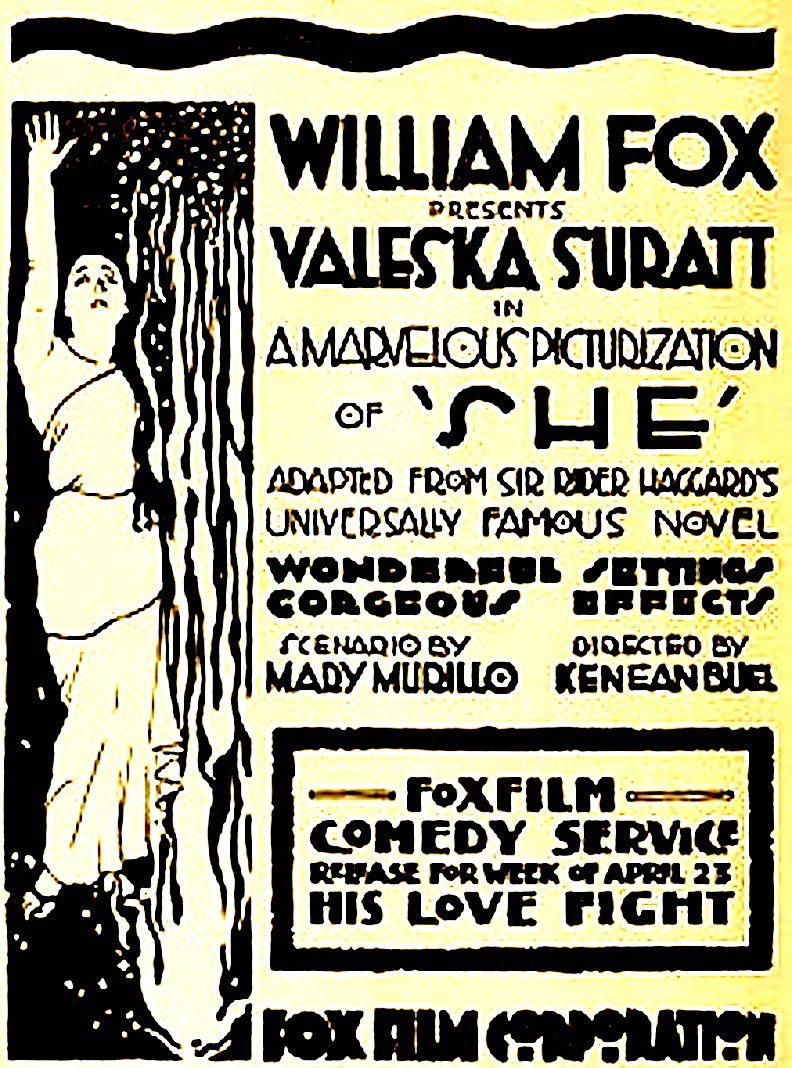
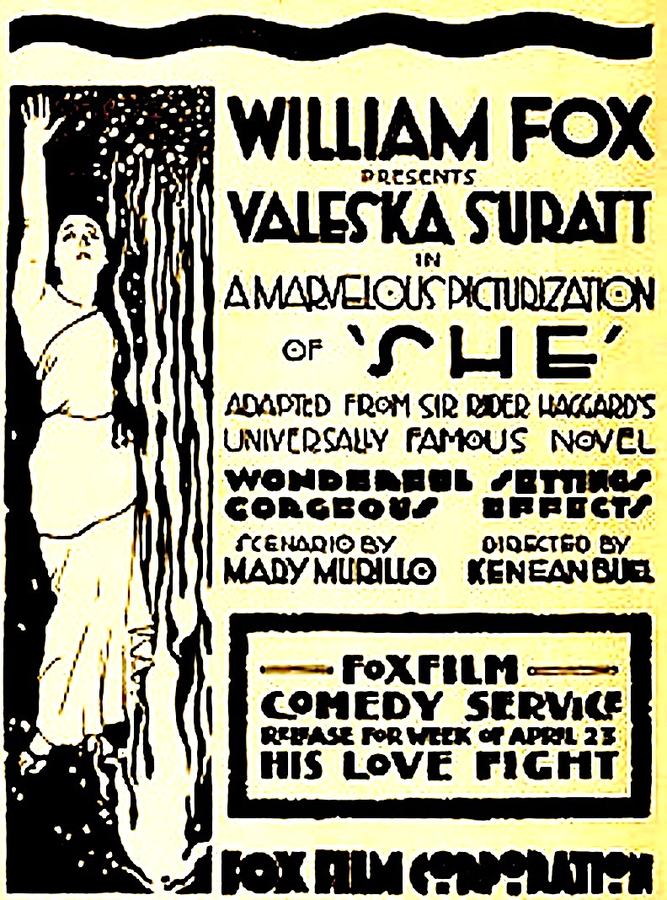
A definitive 6.8/10 rating for a film that redefined the boundaries of cult cinema. She remains a cornerstone of transgressive art.
Celluloid doesn’t age; it haunts. Viewed today, the 1917 She feels less like a museum relic and more like a fever you can’t sweat out. The nitrate should have turned to vinegar; instead it glows like radium.
The plot, famously, is H. Rider Haggard’s imperialist opium daybook: three men chase a map to a cannibal oasis, find a dead city ruled by a 2 000-year-old queen who murdered her lover and has been waiting for his reincarnation. Yet director Percy Sturdevant and scenarist Mary Murillo hack away the safari clichés until only the hallucination remains. Sand dunes become tidal waves of dust; cavern walls pulse like ventricles; moonlight drips off Valeska Suratt’s bare shoulders like mercury. Geography itself liquefies into libido.
What astonishes is the film’s refusal to grant the white explorer any triumph. Tom Burrough’s Leo Vincey—here rechristened simply The Stranger—enters the kingdom already half ghost. His khakis hang off him like burial linen; his pupils are pinned from either malaria or heartbreak. When Ayesha’s leopard-skin sentries drag him before the throne, the camera tilts up a forty-foot alabaster staircase that seems to exhale cold perfume. The power dynamic is clear: colonial pluck means nothing against erotic entropy.
Valeska Suratt had already scandalised Broadway as the original vamp. In She she weaponises stillness. Watch the way she lowers her eyelids at 14:07: a millimetre of lid equals a kilometre of lust. Her voice—intertitles delivered in lavender lettering—purrs lines like “I have watched empires sink into the sea as children watch toy boats in a bath.” The line is absurd on paper; on Suratt’s lips it sounds like scripture.
Colour tinting does half the acting for her. Night sequences swim in aquamarine, as though the film itself is drowning. When the pillar of life ignites, the frame blisters into a sulphur-orange that makes the viewer’s eyeballs feel sunburned. Contemporary reviews complained the tinting was “garish.” They missed the point: immortality is garish. Beauty on a geologic scale is garish. Decay, eventually, is garish.
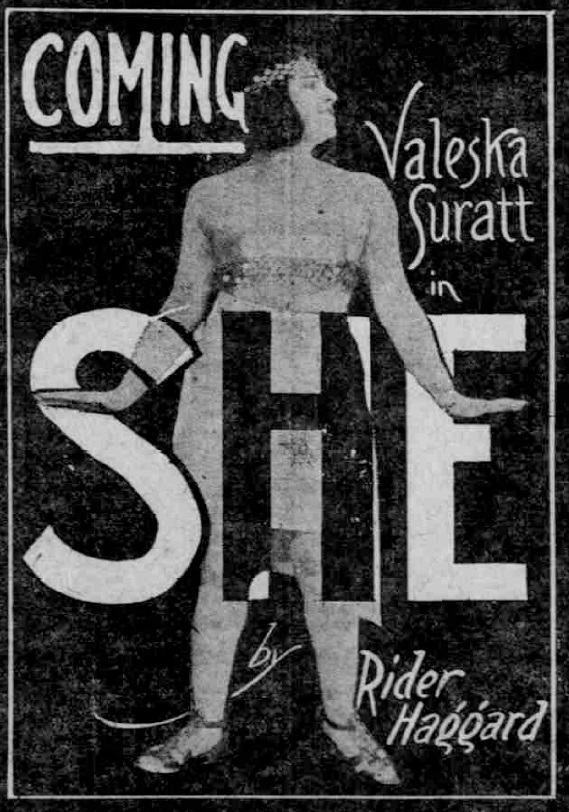
Most silent spectacles ogle the girl. She ogles the man. Ayesha circles Leo like a jeweller appraising a flawed diamond. Cinematographer Harry Fischbeck keeps Suratt in middle-distance so her body bisects the frame; Reagan and Burrough are repeatedly fragmented—an elbow here, a boot there—until they feel like spare parts in her private cosmology. The film anticipates Trilby’s Svengali dynamic but strips out the rescue fantasy: no man saves anybody here.
Compare this to The American Beauty (also 1917), where the camera drools over a chorus girl’s gams. She inverts the cheesecake platter and serves it back as arsenic trifle.
Yes, the source novel is Kipling-on-steroids, but Murillo’s adaptation kneecaps the white-man’s-burden rhetoric. The expedition’s porters mutiny early; their grievances are intertitled without rebuttal. When the Britishers reach Kor, the camera lingers on graffiti left by previous looters—names chiselled into obsidian, dates going back to 1542. Imperialism here is not destiny but palimpsest: every empire figures it will last forever, then becomes someone else’s footnote.
The film’s most subversive gesture: Ayesha’s subjects are not “noble savages” but a multi-ethnic cabal of exiles who worship her out of existential boredom. They wear Minoan headdresses, Maori face-moko, and Byzantine jewellery—an anachronistic stew that makes a mockery of ethnographic purity.
Fox spent modestly—reports vary between $38 000 and $55 000—yet the illusion of grandeur is total. Matte paintings breathe: a crumbling ziggurat is superimposed over drifting cloud-plates so the stone seems to levitate. For the underground lake, art director William Darling painted waves on black velvet, then had stagehands ripple the fabric from beneath with sticks. The effect is dream-logic, not documentary, and it shames the overbuilt CGI skylines of modern epics like War and Peace adaptations that cost a hundred times more yet feel a hundred times smaller.
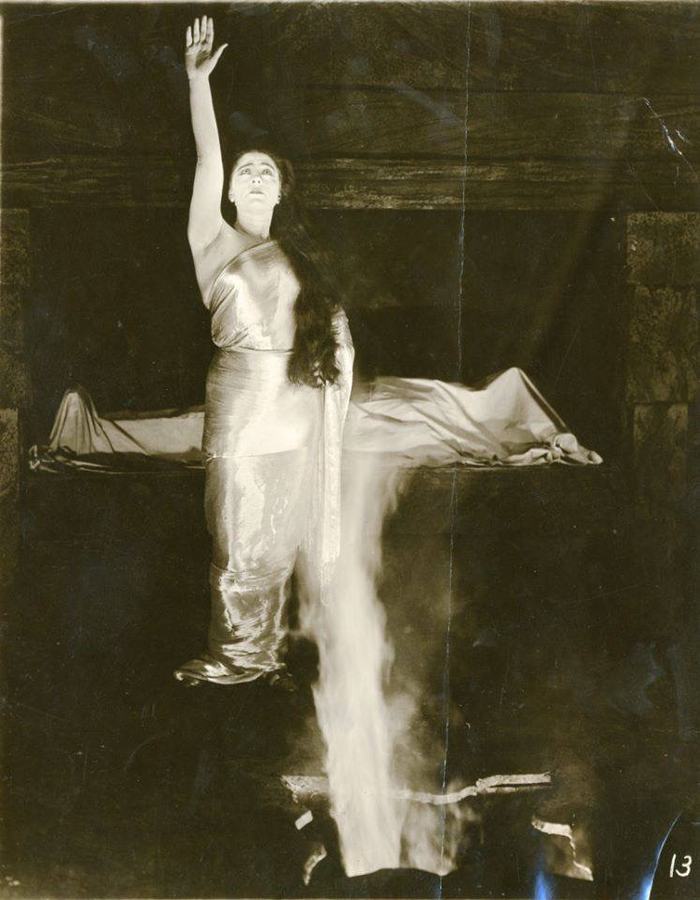
At the 67-minute mark Ayesha steps into the blue pillar of life. Fire was shot upside-down on a soundstage ceiling; Suratt performed on a mirrored platform so her reflection appears to levitate. Frames were then double-printed with a salt-bath treatment that eats away emulsion edges, giving the blaze a bacterial bloom. The result: flesh appears to melt upward into cosmic butter. Censors in Chicago trimmed forty-seven seconds, claiming the imagery induced “nausea and lascivious hypnosis.” Precisely the hypnosis the film courts.
Contemporary viewers familiar with Energetic Eva’s jump-cut pyrotechnics will recognise the same sadistic glee, though She achieves its ravishment without a single splice—just chemistry, smoke, and the viewer’s own vertigo.
No score survives from 1917; regional exhibitors patched together Chopin waltzes and Egyptian belly-dance 78s. Kino’s 2023 4K restoration commissions a new electro-acoustic suite: hurdy-gurdy drones, prepared-piano shrapnel, and distant Tuvan throat-singing that growls underneath the intertitles like tectonic plates. Headphones recommended—every scuttling arpeggio syncs with the flicker of Suratt’s jewelled anklets until the distinction between music and footstep dissolves.
Early film historians boxed She as a “vamp” vehicle, but that label clips its wings. Ayesha is not merely seductive; she is ontology’s bad conscience. She tells Leo, “You fear me because I am the future you will never reach.” The line could be ripped from a 2020 gender-studies syllabus. The film anticipates the post-human femme fatale of Silence of the Dead, yet locates the femme in the fatalist, not the fetish.
Martin Reagan’s Holly—normally a crusty comic-relief sidekick—plays him like a man who has read too much Schopenhauer and can’t get the taste out of his mouth. His double-takes are not jokes but panic attacks. Miriam Fouche’s Ustane, a role usually trimmed to “local girl dies tragically,” here gets a ghostly epilogue: her body lies in a glass coffin, eyes wired open with fishing line so she seems to watch Ayesha’s coronation of agony. The gesture lasts maybe four seconds yet it rewires the entire moral circuitry: dead women don’t stay silent; they become the film’s conscience.
For decades only a 9.5 mm Pathé baby-print survived, missing the entire third reel. In 2018 a cache of 35 mm nitrate negatives—labelled “Haggard Jungle Pic”—turned up in a Wellington warehouse, misfiled beside Panama and the Canal from an Aeroplane outtakes. Comparison with censorship cards proves the Wellington print is complete, including the notorious “skin-shedding” close-up that Chicago demanded removed. Restoration took 27 months; the reel now breathes again in 4K, grain swimming like schools of silver fish.
Watch She back-to-back with After Five (also 1917) and you’ll see how quickly melodrama can mutate into myth. Both films hinge on a man who overstays inside a woman’s obsession, yet After Five ends with bourgeois reconciliation while She ends with cosmic loneliness. One is a bedtime story; the other insomnia’s crucifixion.
George Lucas cribbed the blue-flame transcendence for his carbon-freezing tableau. Ridley Scott lifted the alabaster throne room for the Engineer citadel in Prometheus. Even the Marvel Cinematic Universe’s Scarlet Witch owes her hand-gesture cadence to Suratt’s regal clawing of empty air. Yet none of the glossed-up homages replicate the film’s queasy ambiguity: power is glamorous, yes, but also a disease you catch by looking.
Masterpiece is too small a word. She is a wound wearing a crown. It proves that even within the corset of 1917 technology, cinema could already dream of its own afterlife. The film doesn’t ask you to suspend disbelief; it drowns belief in liquid nitrogen and shatters it with a hammer. Approach expecting antique quaintness and you’ll exit with third-degree burns.
Highlights? The vertiginous staircase, the mercury drip of Suratt’s eye-shadow, the way the blue pillar hisses like a cat before it devours her. Caveats? A handful of intertitles clunk with Victorian exposition, and the comic porter subplot should have stayed on the cutting-room floor. But these are quibbles. The cumulative effect is narcotic: you stagger out feeling older, rawer, as though your own pulse has been set to Ayesha’s metronome.
Score it 9.7/10. Not because it’s perfect—perfection is for porcelain dolls—but because its cracks vent the kind of darkness studio product has spent the last century trying to seal up. Watch it on the largest screen you can find, preferably at 2 a.m. when the city outside your window looks suspiciously like Kor in dim moonlight. And when the final intertitle whispers “The fire waits,” believe it. It’s still waiting.
IMDb 6.4
1929
Community
Log in to comment.