DbcultAccessing Vault...
5.4/10
Senior Film Conservator
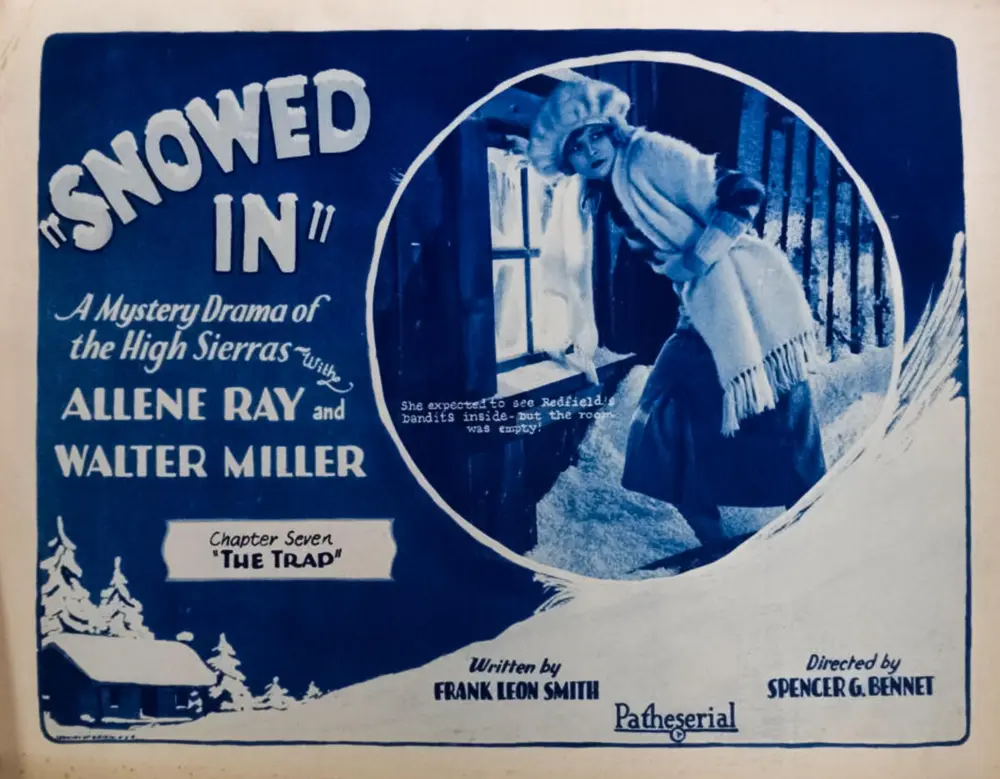
A definitive 5.4/10 rating for a film that redefined the boundaries of cult cinema. Snowed In remains a cornerstone of transgressive art.
Is this film worth watching today? Short answer: Yes, but only if you have the patience for the rhythmic, episodic pacing of the silent era. This film is for those who appreciate atmospheric tension and the 'unseen villain' trope, but it is definitely not for viewers who require the hyper-kinetic editing of modern survival thrillers.
This film works because the environmental hazards are treated with more respect than the human antagonists, creating a genuine sense of peril. This film fails because the middle chapters inevitably recycle the same 'escape and recapture' loops common to 1920s serials. You should watch it if you want to see a proto-type for the modern 'locked room' mystery set against a brutal wilderness backdrop.
Snowed In is a fascinating relic that manages to feel surprisingly modern in its use of psychological dread. While many films from 1926 rely on broad melodrama, director Ray Taylor (though often uncredited in contemporary lists, his influence is felt) leans into the claustrophobia of the setting. The blizzard isn't just a plot device; it's a character that dictates the movement of every scene. If you enjoy seeing how early cinema handled limited locations and high-concept mysteries, this is a mandatory watch.
The most compelling aspect of Snowed In is the phantom presence of Charles Redfield. In an era where villains were usually mustache-twirling caricatures, Redfield is a sophisticated narrative vacuum. None of the bandits have seen him. He exists only as a series of orders and a reputation. This creates a level of paranoia among the cast that elevates the film above standard 'cops and robbers' fare. It’s a trick we’ve seen used later in films like The Shadow of a Doubt, where the threat is often more potent when it remains off-screen.
Consider the scene in the third chapter where the bandits argue over whether Redfield is actually among them in disguise. The camera lingers on each face—Frank Austin, Charles West, Walter Miller—forcing the audience to play detective. It’s a primitive but effective use of ensemble tension. The lack of a physical presence for the primary antagonist allows the blizzard itself to stand in as his surrogate. Every time a door blows open or a lantern flickers out, the characters react as if Redfield himself has entered the room. It’s a masterclass in low-budget suspense.
The visual language of Snowed In is defined by its harsh contrasts. The interior of the cabin is a world of deep blacks and sharp greys, while the exterior is a blinding, overexposed white. This isn't just a limitation of the film stock; it’s an intentional aesthetic choice. The cinematography makes the cabin feel like a sinking ship in a sea of milk. When Natalie Warfield’s character looks out the window, the lack of visible horizon lines creates a genuine sense of vertigo. It's far more effective than the more grounded approach seen in The Woman from Nowhere.
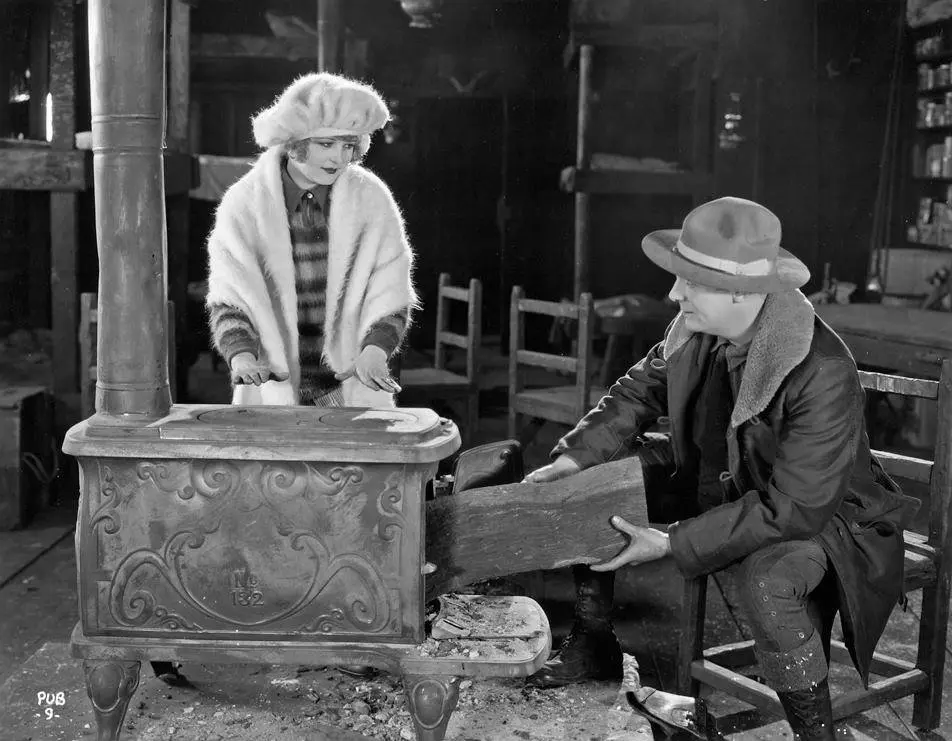
The stunts, too, deserve a mention. This was the age before CGI, and when characters are shown struggling through waist-deep snow, they are clearly struggling. There is a moment in the fifth episode where a fight breaks out on a narrow ledge obscured by 'snow' (likely bleached cornflakes or gypsum). The physical labor involved in these sequences adds a layer of grit that modern audiences might find refreshing. It works. But it’s flawed by the repetitive nature of the choreography. You can only watch a man tumble down a snowy hill so many times before the novelty wears off.
Frank Austin plays the forest ranger with a level of restraint that was rare for the time. He doesn't over-emote; he moves with the deliberate weight of a man who knows the mountains will kill him if he makes a mistake. Opposite him, Natalie Warfield is a revelation. She isn't a damsel in distress waiting for a rescue. She is an 'adventuress,' a term that in 1926 cinema often meant a woman with her own agency and hidden motives. Her chemistry with Austin is built on mutual survival rather than forced romance, which makes their partnership feel earned.
The supporting cast, particularly the bandits, provide the necessary color. They are a desperate, fractious bunch, and their internal squabbles often provide more entertainment than the actual plot progression. J.F. McCullough and Walter Miller stand out as the more volatile members of the gang. Their constant suspicion of one another keeps the energy high during the long dialogue sequences (presented via intertitles). Unlike the more theatrical performances in Fires of Rebellion, the acting here feels grounded in the physical reality of the cold.
We have to address the elephant in the room: the serial format. Snowed In was released in ten chapters, and watching them back-to-back in a modern setting can be a grueling experience. Each episode ends with a cliffhanger that is usually resolved in the first thirty seconds of the next chapter in the most convenient way possible. This 'reset' button can feel cheap. However, if you view it through the lens of its time—as a weekly ritual of suspense—the structural flaws become part of its charm. It’s a predecessor to the modern binge-watchable TV show, just with fewer pixels and more pipe tobacco.
Pros:
The use of the blizzard as a primary antagonist is brilliant for 1926. The set design of the isolated cabin is incredibly evocative. Natalie Warfield delivers a strong, capable female lead that feels ahead of its time. The mystery of Redfield’s identity provides a consistent hook that survives the slower chapters.
Cons:
The 10-chapter length leads to significant narrative padding. Some of the 'outdoor' shots are clearly studio-bound, breaking the immersion. The intertitles can be a bit wordy, slowing down the action during critical fight scenes.
Snowed In is a surprisingly gritty piece of silent cinema that punches above its weight class. It’s not just a historical curiosity; it’s a well-constructed thriller that understands the power of isolation and the fear of the unknown. While it suffers from the structural baggage of the 1920s serial format, the core conflict is timeless. It captures a specific kind of winter madness that feels as cold today as it did nearly a century ago. If you can handle the silence, the reward is a chillingly effective mystery. It’s a minor classic that deserves more than to be buried in the snows of time.
IMDb 7.4
1925
Community
Log in to comment.