DbcultAccessing Vault...
Cult Review
Senior Film Conservator
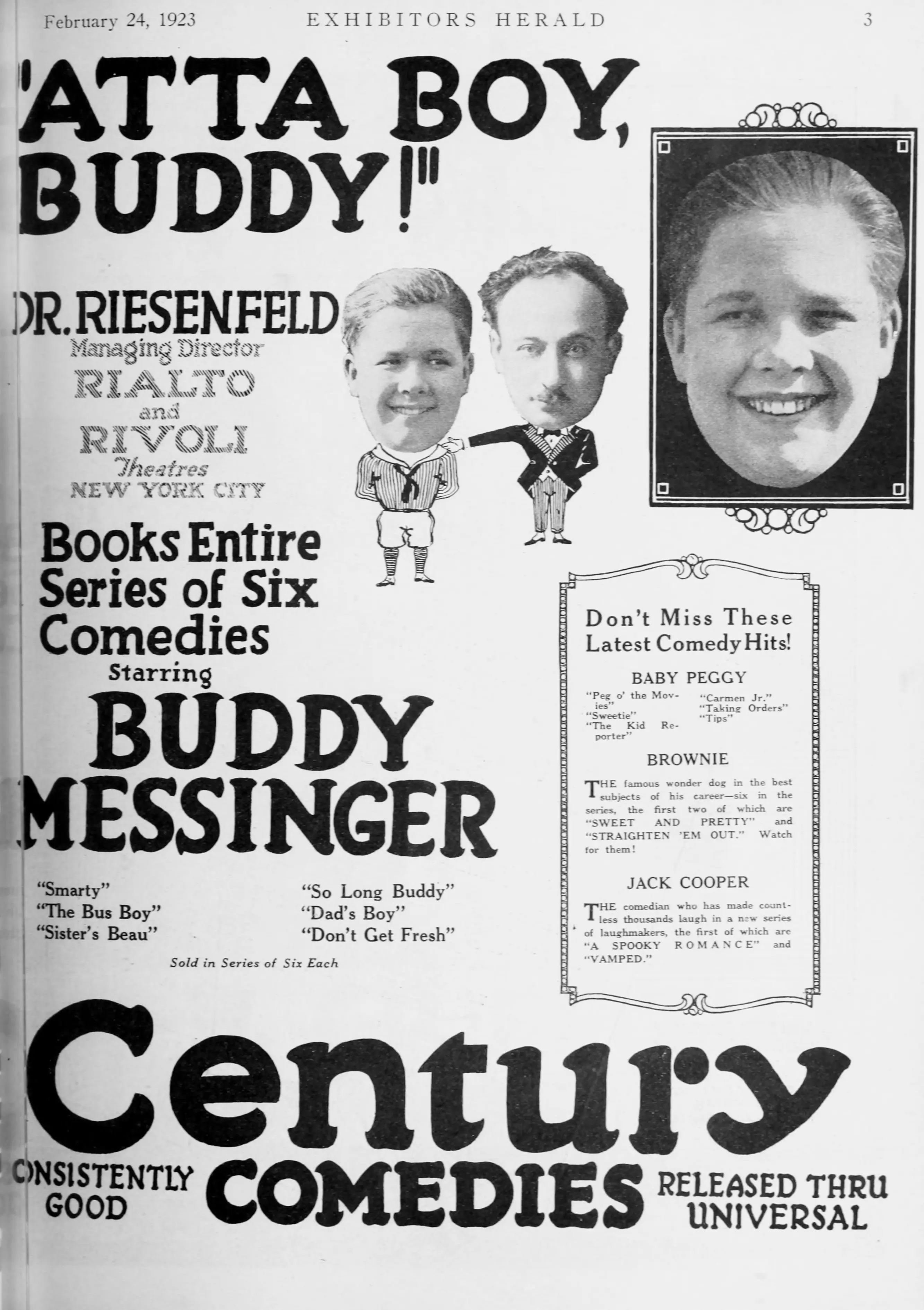
The year 1923 remains a watershed moment in the evolution of the short-form comedy, and So Long, Buddy stands as a testament to the era's burgeoning fascination with the subconscious. While the premise appears deceptively simplistic—a boy fishing where he ought not—the execution suggests a far more complex engagement with the concept of the forbidden fruit. Buddy Messinger, an actor whose comedic timing was honed in the crucible of the Get Your Man era, brings a palpable sense of adolescent ennui to the role. Unlike the more dramatic leanings of contemporary works like Raskolnikov, which explored the weight of guilt through a lens of existential dread, this film utilizes the dream state to externalize internal anxieties through the medium of slapstick.
The opening sequence establishes a serene, almost pre-lapsarian environment. The water’s surface is a mirror, reflecting both the sky and the protagonist's own disregard for the 'No Fishing' sign that looms like a silent sentinel. This sign is not merely a prop; it is a manifestation of the panopticon of early 20th-century social order. When Buddy falls into his slumber, the film undergoes a tonal metamorphosis. The transition from the bucolic reality to the frantic dreamscape is handled with a sophistication that rivals the psychological depth found in Simple Souls. The game warden, played with a relentless, mechanical vigor by Frank Earle, becomes a specter of the state—a force that cannot be reasoned with, only evaded.
Messinger’s performance is a masterclass in the physicality of the silent era. His movements are not merely for the sake of humor; they represent a desperate struggle against an encroaching authority. One might compare his plight to the characters in The Terror of the Range, where the law is often a formidable and unforgiving presence. However, in So Long, Buddy, the threat is localized within the mind. The chase through the reeds and over the undulating terrain is captured with a kinetic energy that predates the more polished action sequences of late-silent cinema. The cinematography utilizes the natural light of the outdoors to create a sense of exposure—Buddy is never truly hidden, a feeling many viewers can relate to in our modern age of surveillance.
The supporting cast, including Jean Laverty and Sadie Campbell, provides a necessary grounding for the surrealist elements. Their presence suggests a world that continues to function while Buddy is trapped in his psychological loop. The inclusion of the McKenzie sisters, Ida Mae and Ella, adds a layer of ensemble chemistry that was a hallmark of the Century Comedies. Their interactions, though brief, hint at a broader social fabric, much like the intricate character webs in A Kentucky Cinderella. Frank Weatherwax also delivers a performance that, while understated, contributes to the film's overall atmosphere of impending domestic or social consequence.
Technically, the film is a fascinating artifact. The editing during the dream sequence employs a rapid-fire pacing that was quite revolutionary for 1923. It creates a sense of breathless disorientation that mirrors the protagonist's own state of mind. This is not the slow-burn tension of Oath-Bound, but rather a sudden, jarring explosion of movement. The use of the 'No Fishing' sign as a recurring visual motif serves to anchor the dream in reality, reminding the audience that the source of the nightmare is a tangible, real-world infraction. This thematic circularity is a sophisticated narrative device, often overlooked in the analysis of early shorts.
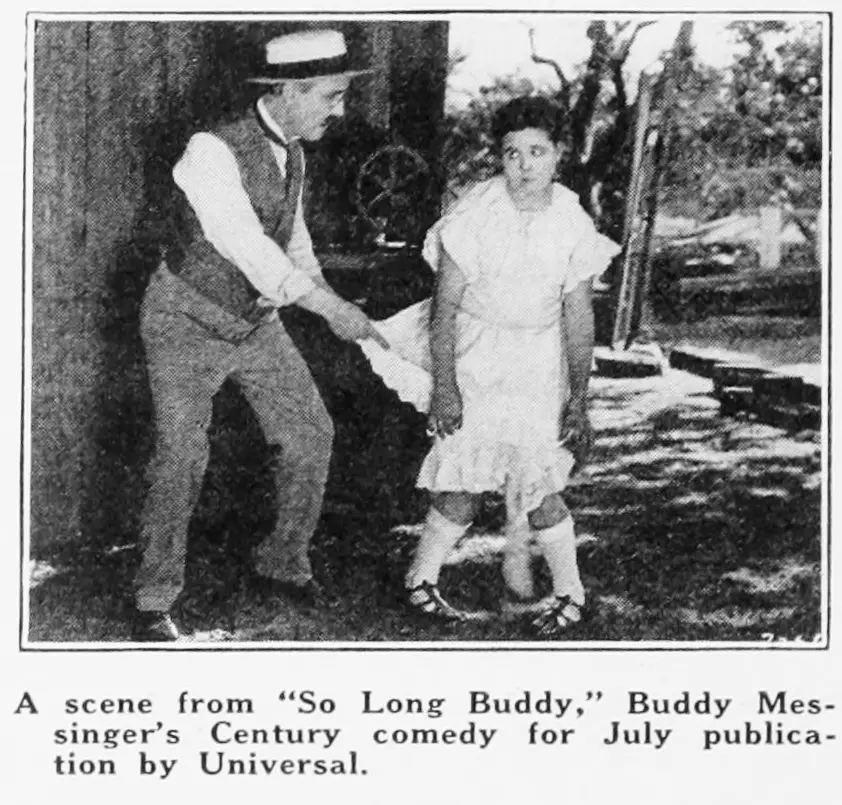
When comparing this work to The Delicious Little Devil, one notices a stark difference in how comedy is derived from social status. While the latter focuses on the masquerade of class, So Long, Buddy focuses on the primal fear of the rule-breaker. It is a more universal, perhaps more visceral, form of humor. The film’s brevity is its greatest asset; it does not overstay its welcome but instead leaves the viewer with a lingering sense of the ephemeral nature of peace. The way the light dances on the water in the final frames is reminiscent of the atmospheric beauty in Sagan om de sista örnarna, emphasizing the contrast between the tranquility of nature and the chaos of human systems.
Looking back from a contemporary perspective, the film serves as a precursor to the surrealist comedies of the later 20th century. It understands that the funniest things are often the things that terrify us most in our sleep. The game warden is not just a man in a uniform; he is the super-ego personified, chasing the id across a field of dreams. This psychological subtext elevates the film from a mere slapstick short to a piece of art that demands closer inspection. Even in a film as seemingly lighthearted as Monty Works the Wires, we see a similar fascination with the intersection of technology, labor, and the individual, but So Long, Buddy remains more focused on the internal landscape.
The film also invites comparison to the themes of memory and identity found in The Man Who Forgot. While the latter deals with a literal loss of self, Buddy Messinger’s character experiences a temporary loss of reality. Both films explore the fragility of the human experience when confronted with overwhelming external pressures. Furthermore, the sense of national or regional identity that permeates Scotland Forever or Louisiana is present here in the specifically American pastoral setting—the lake as a site of both recreation and regulation.
Ultimately, the film's resolution—Buddy waking up—is both a relief and a subtle tragedy. The dream is over, but the sign remains. The fish are still there, yet they are still forbidden. This circularity suggests that the conflict between desire and duty is an inescapable loop. In the grand tapestry of silent cinema, alongside works of high drama like Patriotism or the pursuit of fortune in Jagd nach dem Glück, So Long, Buddy carves out a niche as a poignant, hilarious, and deeply insightful exploration of the human psyche. It reminds us that even in our moments of deepest repose, the 'No Fishing' signs of the world are never truly far from our thoughts.
A definitive piece of 1920s short-form storytelling, this film remains essential viewing for those who appreciate the intersection of comedy and the subconscious. It is a vibrant, albeit brief, journey into the heart of silent-era creativity.
IMDb —
1918
Community
Log in to comment.