DbcultAccessing Vault...
Cult Review
Senior Film Conservator
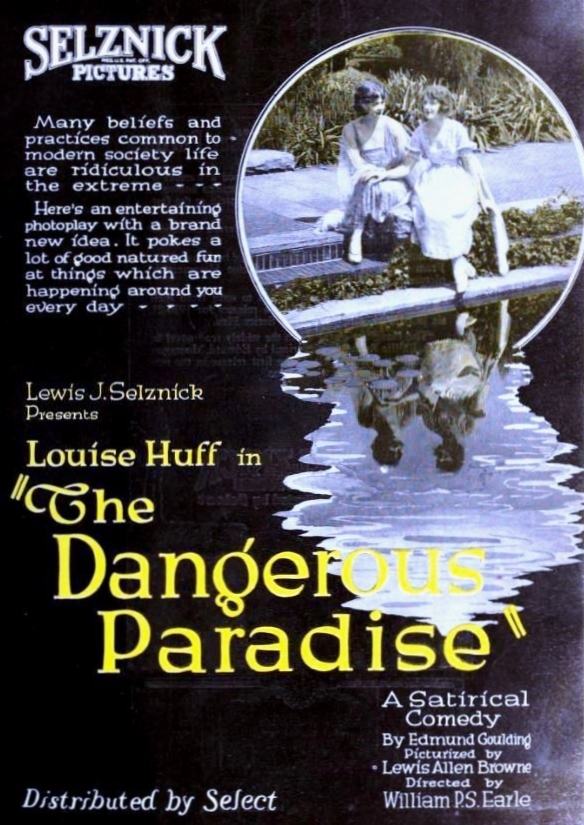
To understand the cinematic tapestry of 1920 is to acknowledge a world in flux, a society shedding the Victorian chrysalis for the frenetic energy of the Jazz Age. The Dangerous Paradise, directed with a deft hand and written by the burgeoning talent of Edmund Goulding and Lewis Allen Browne, serves as a poignant artifact of this transition. It is a film that navigates the treacherous waters of social standing and the performative nature of gender roles with a sophistication that often eludes its contemporaries. Unlike the gritty, visceral realism found in The Cradle of Courage, this film opts for a polished, almost ethereal aesthetic that mirrors the insulated lives of the New York elite.
At the heart of this narrative is Louise Huff’s Ivis Van Astor, a character who embodies the burgeoning spirit of female agency, albeit channeled through the limited avenues available to her. The premise—hiring a husband to avoid an unwanted marriage—is a trope that has since been exhausted by modern romantic comedies, yet here it feels fresh, infused with the genuine stakes of a woman fighting for her autonomy. The lexical richness of the intertitles and the nuanced physical performances suggest a depth of character that transcends the simple 'sweet young thing' archetype Norman Kent initially projects onto her.
As the setting shifts to Newport, the film’s visual language evolves into a lush, almost decadent display of wealth. The cinematography captures the sprawling estates and the rhythmic movement of the ocean with a clarity that belies the era's technical limitations. It is within this 'paradise' that the danger truly manifests—not through physical peril, but through the erosion of truth. The masquerade orchestrated by Ivis and Horatio Worthington (played with a delightful, slightly mercenary charm by Harry Benham) is a masterclass in silent comedy. The tension between their private arrangement and their public performance provides a fertile ground for Goulding’s wit.
When we compare this to the frenetic energy of Manhattan Madness, we see a stark contrast. While the latter thrives on the chaotic pulse of the city, The Dangerous Paradise finds its rhythm in the slow, deliberate machinations of the upper class. The film’s pacing is patient, allowing the audience to savor the irony of every interaction. Norman Kent’s discovery of the ruse marks a pivotal shift in tone, moving from lighthearted social satire to a more psychologically complex game of cat and mouse.
The climax of the film—the staged duel—is a sequence that deserves rigorous analysis. John Raymond’s Norman Kent decides to teach Ivis a lesson by engaging in a piece of theater that rivals her own. The duel is choreographed with a sense of gravity that initially tricks the audience just as effectively as it tricks Ivis. Here, the film touches upon themes of retribution and the ethics of 'teaching lessons' through trauma. It is a dark turn that reminds one of the moral weight found in The Reckoning, where actions have profound, often irreversible consequences.
The brilliance of the performance in this scene cannot be overstated. Louise Huff’s portrayal of 'proper chagrin' is a visceral display of grief and regret. It is in this moment that Ivis is stripped of her socialite armor, revealing a vulnerability that is both heart-wrenching and essential for her character’s growth. The fact that Norman’s 'recovery' is met with forgiveness rather than further deception is perhaps the film’s most optimistic, albeit slightly unrealistic, turn. It reflects the era's desire for a 'happily ever after,' even when the journey there is paved with manipulation.
In the broader context of silent cinema, The Dangerous Paradise occupies a unique space between the slapstick and the melodrama. It lacks the overt darkness of Dope or the mystical haunting of Das Irrlicht im Osten, yet it possesses a sharp intellectual edge. The way it handles the theme of identity reminds me of the dualities explored in The Twin Pawns, though Goulding’s focus is more on the social mask than the psychological fracture.
Even the secondary plots, such as the aunt falling for the hired husband, serve a greater thematic purpose. It suggests that love is often found in the most 'improper' places, subverting the very social structures the aunt initially sought to uphold. This subplot mirrors the whimsical nature of The Kid Is Clever, providing a lighthearted counterpoint to the central drama. The film manages to balance these disparate tones with a dexterity that was rare for 1920.
Edmund Goulding, who would go on to direct Grand Hotel, already shows signs of his penchant for ensemble dynamics and sophisticated staging. The use of space in the Newport sequences is particularly effective; characters are often framed by the architecture of their privilege, emphasizing the confinement of their social roles. The lighting, while primarily flat in the standard style of the time, occasionally breaks into expressive shadows during the duel scene, heightening the sense of impending doom.
We must also credit the writers, Lewis Allen Browne and Goulding himself, for a script that avoids the pitfalls of excessive sentimentality. The dialogue (via intertitles) is crisp and often biting. It lacks the melodrama found in international works like A Dolovai nábob leánya or the operatic scale of Die Herrin der Welt. Instead, it maintains a distinctly American pragmatism, focusing on the transactional nature of marriage and the pursuit of personal happiness within a rigid system.
Reflecting on The Dangerous Paradise over a century later, its relevance is surprisingly intact. The central conflict—the struggle to define oneself against the expectations of family and society—remains a universal human experience. While the resolution may feel a bit too tidy for modern tastes, the journey there is filled with genuine insight and wit. It stands as a testament to the talent of Louise Huff, whose career often doesn't get the retrospective attention it deserves compared to the Gishes or Pickfords of the era.
In the pantheon of 1920s cinema, this film is a vibrant thread. It doesn't have the existential dread of Die Teufelskirche, nor does it strive for the investigative intrigue of Beatrice Fairfax Episode 11: The Wages of Sin. Instead, it occupies the 'middle ground' of high-quality entertainment—a film that seeks to delight its audience while gently prodding at the absurdities of their own lives. It is a 'paradise' that is dangerous only because it reveals the truth behind the masks we all wear.
Ultimately, The Dangerous Paradise is a triumph of silent era storytelling. It manages to be both a product of its time and a precursor to the sophisticated screwball comedies of the 1930s. For those interested in the evolution of the romantic comedy, or for those who simply appreciate a well-told tale of deception and redemption, this film is an essential watch. It reminds us that even in the most structured societies, the human heart will always find a way to improvise.
IMDb —
1928
Community
Log in to comment.