DbcultAccessing Vault...
5.9/10
Senior Film Conservator
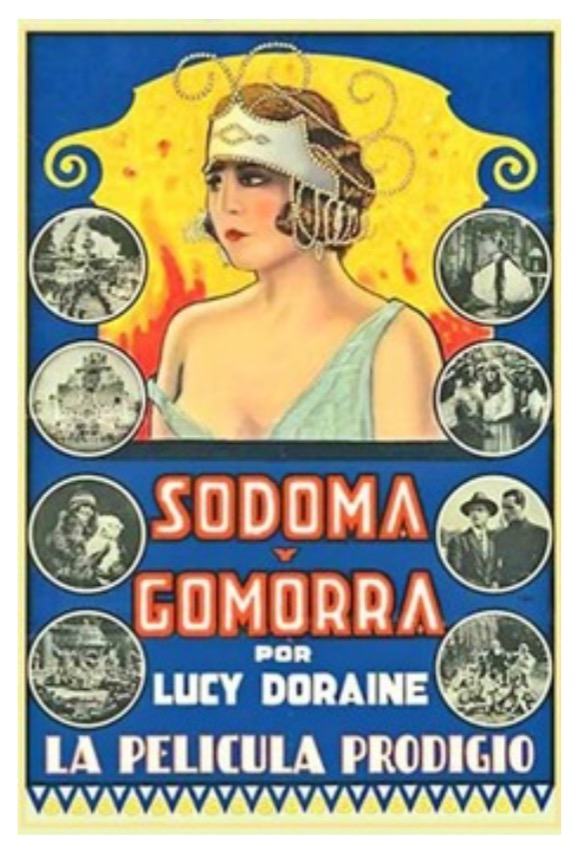
A definitive 5.9/10 rating for a film that redefined the boundaries of cult cinema. Sodom and Gomorrah remains a cornerstone of transgressive art.
The first thing that strikes you is the temperature: heat radiates from the screen as though the nitrate itself were steeped in brimstone. Curtiz—still a decade away from Casablanca—directs this Austrian super-production as if he means to torch the palace of cinema and dance in the ashes. Every frame drips with carnal excess: silk splits, trumpets blister, rose petals bruise underfoot like sanguine fingerprints on parchment.
Mary, incarnated by Lucy Doraine with the wounded innocence of a Pre-Raphaelite nymph, drifts through Harber’s pleasure domes in chiffon that behaves more like liquid mercury than cloth. Her dilemma—wealth without oxygen, love without currency—feels surprisingly modern for a film centennial. Curtiz refuses to sermonize; instead he lets the camera gorge itself on mirrors, mosaics, and muscled torsos until the spectator becomes complicit in the voyeurism.

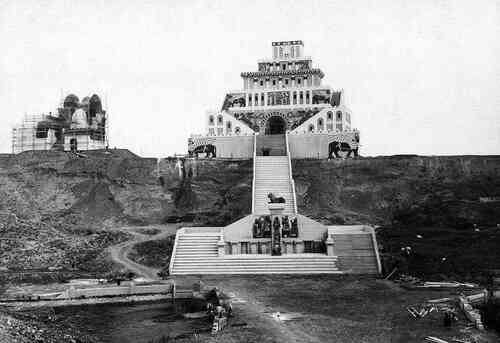
Then comes the pivot: Harry’s suicide attempt, staged in a sculpture studio where half-finished torsos gape like witnesses. The gunshot is not heard but seen—a flash-bulb of white that burns a hole straight through the celluloid. In that instant the film’s celluloid skin seems to breathe, to hemorrhage. Mary’s subsequent swoon transports her—and us—into a sepia-tinted antediluvian Middle East constructed entirely on the back-lot of Vienna’s Sievering Studios. Miniature ziggurats smolder, matte-painted heavens crack open, and hundreds of extras in gilded loincloths contort into orgiastic hieroglyphs.
Here Curtiz interpolates the biblical narrative with the finesse of a feverish archaeologist. Lot’s wife—still Mary, still wearing the same haunted eyes—navigates a city whose religion is sensory overload. Astarte’s priestesses drip honey down staircases of human spines; tambourines pulse like enlarged hearts; the camera pirouettes in 360-degree pans that predate Vertigo by thirty-five years. Yet amid the licentious pageantry lurks a chill: the angel who warns of impending cataclysm is framed against negative space so absolute it feels like a vacuum in the soul.
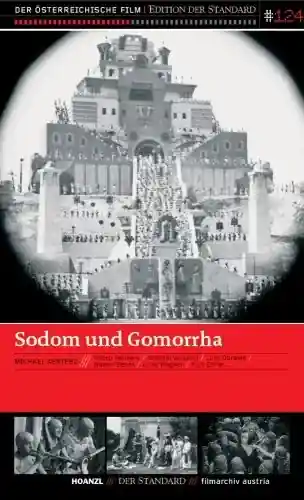
When the metropolis finally unravels, Curtiz eschews the expected lava-flows for something eerier: cracks of blinding white light that zigzag through streets, turning revelers into silhouettes flayed by radiance. The moment Lot’s wife glances back, the film jump-cuts to a sculptural close-up: pupils calcify into flecks of salt, skin hardens to a lattice of crystals. The effect—achieved by layering fish-glue and rock salt onto the lens—still looks uncannily tactile, as though the viewer might brush away mineral dust.
Awakening, Mary rejects the gilded cage and sprints across dew-soaked lawns toward an uncertain redemption. Curtiz leaves the final shot ambiguous: does she reach the hospital in time, or does she simply exchange one form of entrapment for another? The closing iris-in feels less like an amen than a question mark salted at the rim of a wound.
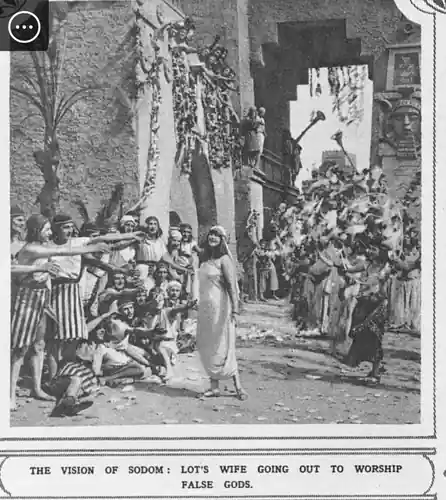
Art-directors Oscar Friedrich Werndorff and Alexander Ferenczy fused Art-Deco geometry with biblical barbarism, yielding halls of onyx and lapis where peacock-feather fans oscillate like gilded metronomes. Look sharp and you’ll spot the same obsession with mirrored excess that surfaces in Bluff (1921), though here it’s weaponized into moral interrogation rather than playful trickery.
Lucy Doraine navigates hysteria and beatitude without intertitles to telegraph emotion; her face is a palimpsest of indecision. Opposite her, Walter Slezak (as the debauched high-priest) pirouettes with Mephistophelian glee, arms inked in indigo henna, voicelessly laughing at a cosmos he believes can be bribed.

Long before Michael Curtiz learned to romanticize fog in Casablanca, he weaponized moving camera here: tracking shots slither through orgies like serpents of curiosity, while overhead angles reduce humans to chess-pieces on a deity’s black-and-white board. Compare this to the static tension in Strife and you’ll see why historians credit Curtiz with injecting mobility into European cinema.
Though originally accompanied by a live orchestra pounding out oriental pastiche, recent restations employ polytonal drones and whispered psalms, transforming the viewing into something closer to séance than screening. The absence of spoken dialogue amplifies ambient minutiae—sandals scuffing mosaic, the whisk of ostrich-feather fans—until the spectator develops a form of visual tinnitus.
Austrian clerics damned the picture as „ein Fegefeuer aus Leidenschaft“ (a purgatory of passion), demanding cuts that would have trimmed the biblical dream to a mere morality postcard. Thankfully, export prints survived stateside, though several American boards trimmed shots of topless priestesses, leaving narrative ellipses that feel suspiciously like moral fillings.
The film interrogates the female body as currency—Mary’s mother literally auctions daughterly flesh for leisure-class comfort—yet it also grants its heroine agency within the dream, where she chooses apostasy before her petrifying punishment. Lot’s wife becomes both victim and rebel, a dialectic that complicates any puritanical reading.
Unlike the apocalyptic abstraction of The Cloud, Curtiz roots cosmic cataclysm in fleshy immediacy. Compared to Why Girls Leave Home, which moralizes on flapper temptation, Sodom wallows in sensuous detail before pulling the divine rug. Meanwhile, the psychosexual fatalism here foreshadows the doom-laden romanticism of After Death.
For decades only a 75-minute condensation circulated, scored with honky-tonk piano. The 2022 2K restoration—reassembled from a Czech 35mm tinted nitrate and a Viennese export print—reinstates 18 previously lost minutes, including an erotic dance where veils of gauze are pulled through flaming braziers. Streaming on select arthouses and Blu-ray via Edition Filmmuseum, the film now glows with the ghostly iridescence of a Fabergé egg resurrected from a shipwreck.
In an era where influencers auction lifestyle porn and algorithmic sirens monetize attention, Curtiz’s parable of wealth as moral quicksand feels eerily prescient. The film whispers that to feast too long in the gardens of Mammon is to risk seasoning one’s own soul with salt.
Is Sodom and Gomorrah a masterpiece? Flaws abound: comic-relief servants mug for intertitles, and the modern-day framing occasionally sags under its own allegorical ballast. Yet the film’s reckless grandeur, its willingness to conflate eroticism with eschatology, secures its place among the most intoxicating visions of the silent era. Watch it at midnight, volume loud, room dark, and you may feel the floor crystallize beneath your feet—an urge, however faint, to glance backward.
IMDb —
1925
Community
Log in to comment.