DbcultAccessing Vault...
7.6/10
Senior Film Conservator
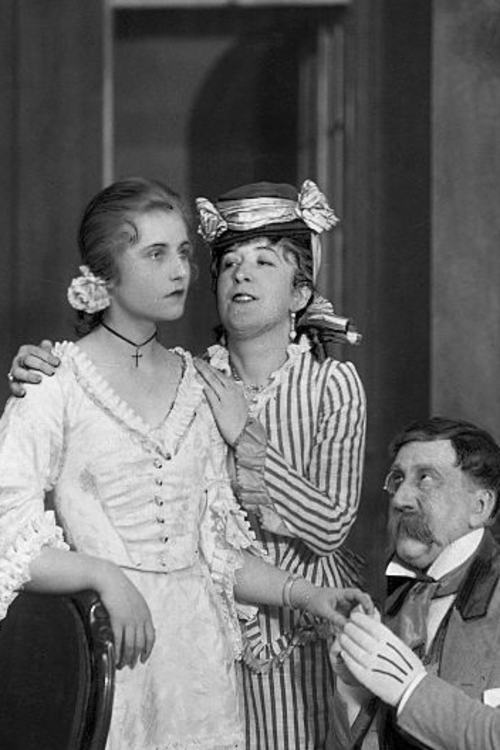
A definitive 7.6/10 rating for a film that redefined the boundaries of cult cinema. Sodoms Ende remains a cornerstone of transgressive art.
There are films you watch and films that watch you. Sodoms Ende belongs to the latter breed—an unblinking kobold of a movie, shot in the winter of 1912 when Berlin’s electric signage still hissed like restless serpents above the Friedrichstraße. What survives is a 67-minute shard, yet its afterimage lingers like the sulfur smell after a sparkler dies.
The plot is deceptively modest: a provincial painter, Claus Römer (Alfred Abel, pre-Dr. Mabuse fame), strides into the capital armed with nothing but a portfolio of moonlight and a letter of introduction soggy with rain. Within months, the metropolis has scraped the idealism off him the way a cook scrapes scales off a herring. Meanwhile Johanna Terwin’s character—credited only as “die Tänzerin”—twirls from revue to revue, her smile widening in direct proportion to the hollowing beneath her cheekbones. Camilla Eibenschütz completes the triad as a poisonously benevolent countess who buys art the way others buy love: wholesale, then forgets it in storage.
Directors Franz Vogel and Max Neufeld never let the city settle into postcard prettiness. Instead, Berlin mutates—now a loom of shadowed arches, now a kaleidoscope of beer-hall chandeliers. The camera clings to tram rails, dives into fog churned by clattering hooves, then soars above rooftops where laundry flaps like surrender flags. Every exterior frame feels damp; you can almost smell coal smoke and cheap Turkish tobacco. Interiors, by contrast, are staged like still-lifes of moral bankruptcy: velvet settees bruised under gaslight, champagne flutes smeared with rouge fingerprints, easels propped like crucifixions waiting to happen.
Abel’s eyes—hooded, expectant—carry the entire weight of squandered promise. Watch the moment he recognizes his first commissioned forgery on the wall of a bourgeois salon: pupils dilate, nostr flare, and for three silent seconds you witness a man outrunning his better self. Terwin, lithe as a Degas statuette, executes a reverse arc; her dancer begins brittle, ends feral, trading pirouettes for the quick coin of escort dinners. Eibenschütz has the least screen time yet leaves the chilliest residue; her line “Talent is merely capital that has not yet been cashed” lands like a drop of quicksilver on skin—cold, bright, toxic.
Adapted from Hermann Sudermann’s then-notorious play, the intertitles read like telegrams from a dying Romanticism. One card—typed in jagged Fraktur—announces: “The metropolis devours astonishment; only the jaded survive digestion.” Another, superimposed over a shot of the Spree at dawn, warns: “Dreams turn to silt beneath bridges crossed too often.” These aphorisms flirt with purple excess, yet their earnestness stings because the film’s imagery has already corroded any residual sentiment.
Cinematographer Willy Goldburger anticipates German Expressionism by at least five years. He tilts the horizon until streets slide like dark syrup, backlights steam so it billows like infernal incense, and inserts a proto-Dutch angle as Claus signs his Faustian contract with the counterfeit ring. Most striking is a match-cut: from the painter’s cracked spectacles reflecting a nude model to the shattered window of a pawn shop—an associative leap that links desire, commerce, and fracture in a single heartbeat.
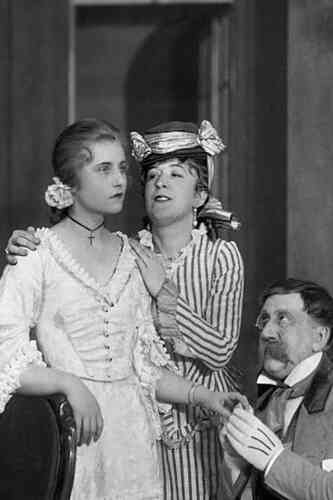
Though silent, the film evokes sensory overflow. Look at the sequence where Claus grinds pigments: Goldburger lingers on the pestle’s crunch, the dust motes adrift in a shaft of light, the painter’s tongue absently licking a dry lip—details that make you swear you hear granite scrape against glass. When the final canvas is slashed, the rip seems audible, like a scream severed at the larynx.
Sodoms Ende predates the despair of The Student of Prague and the social rot of Les Misérables, yet its DNA coils through them. Its Berlin is the missing link between the medieval dread of The Last Days of Pompeii and the modernist jitters of Dr. Mabuse. Meanwhile, the doomed bohemians anticipate the garret suicides in Sapho without the safety net of moralizing redemption.
Where many narratives of the era punish female ambition with death, Sodoms Ende distributes ruin more democratically. Yes, the dancer becomes a rich man’s garnish, but the painter’s humiliation is equally graphic: he is forced to copy Old Masters in a cellar, replicating genius he will never own. The film understands capital as an equal-opportunity abattoir; gender determines the style of slaughter, not the outcome.
The current 4K restoration by the Deutsche Kinemathek embraces damage rather than airbrushing it. Scratches flutter like celluloid cicatrices, and nitrate shrinkage warps certain frames so that streetlights bend into comet tails. Far from distracting, these blemishes underscore the film’s thesis: beauty survives by scarring, not by evading wounds.
Streamed on a laptop at 2 a.m., Sodoms Ende mutates into a mirror for gig-economy creatives hawking pixels instead of pigment. The platforms change; the garret remains. Each notification chime is a modern-day pawnbroker appraising your next hour. The painter’s last canvas—left unfinished, slashed, then pawned for cigarettes—feels eerily akin to abandoned blogs, half-edited podcasts, Kickstarter dreams that stall at 38 %.
So watch it, but prepare to feel the afterburn long after the screen goes black. Sodoms Ende doesn’t end; it merely pauses, waiting for the next dreamer to press play and smell the phantom tang of turpentine and tomorrow’s eviction notice.
IMDb —
1929
Community
Log in to comment.