DbcultAccessing Vault...
Cult Review
Senior Film Conservator
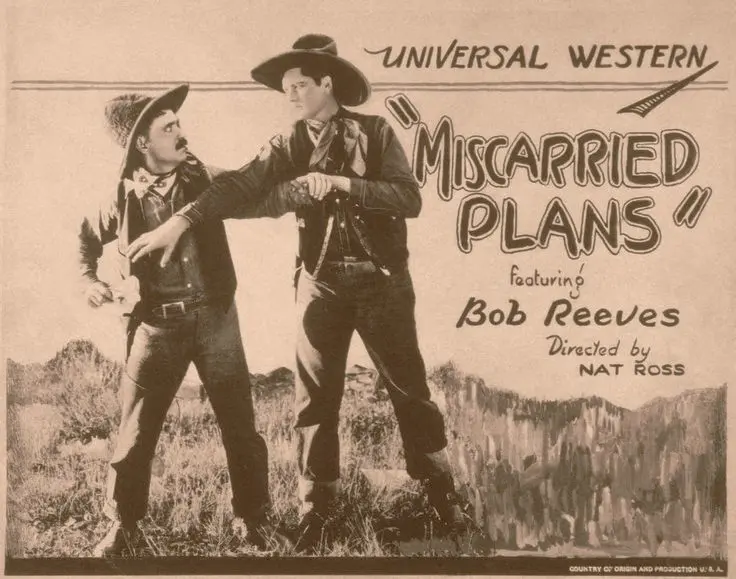
Stepping into the flickering glow of early 20th-century cinema, one encounters a fascinating tapestry of nascent storytelling, where the grandeur of the American West often served as a primal canvas for narratives of justice, peril, and burgeoning romance. Among these celluloid relics, a film like Miscarried Plans, though perhaps not a household name in contemporary discourse, offers a compelling window into the foundational elements that would define the Western genre for decades to come. It's a testament to the raw energy and straightforward narrative drive that characterized much of the silent era's output, particularly in its capacity to weave together elements of a crime thriller with the rugged individualism of the frontier.
The Western, as a genre, has always held a mirror to the American psyche, reflecting ideals of self-reliance, the struggle against lawlessness, and the often-brutal establishment of order in untamed lands. Miscarried Plans, with its straightforward premise of a sheriff pursuing an outlaw gang, taps directly into this rich vein. Sheriff Tom Merrit, portrayed with stoic resolve by Bob Reeves, embodies the archetypal Western lawman: a figure of unwavering moral compass in a world teetering on the edge of chaos. His pursuit of Butch Barlow and his cohorts isn't merely a professional duty; it's a personal crusade to uphold the fragile peace of Yucca County, a familiar trope that resonates deeply with the genre's enduring appeal.
Ewart Adamson's screenplay for Miscarried Plans, while adhering to many of the conventions of its time, skillfully constructs a narrative arc that, despite its simplicity, maintains a surprising degree of tension and forward momentum. The initial discovery of a lifeless body in a thicket immediately establishes a tone of somber mystery, propelling Sheriff Merrit not just into a routine investigation but into a path fraught with unforeseen dangers. This initial plot point, seemingly a mere catalyst, sets off a chain of events that rapidly escalates from a local inquest to a county-wide manhunt. The film's ability to pivot quickly from the quiet solemnity of a death investigation to the adrenaline-fueled urgency of a bank robbery is a testament to Adamson's understanding of pacing, ensuring the audience remains perpetually engaged.
The introduction of Hilda, Dr. Wills' daughter and Tom's love interest, injects a vital human element into the unfolding drama. Their nascent romance, briefly glimpsed before the chaos erupts, provides a personal stake for the audience, elevating Tom's mission beyond mere duty. It's a classic narrative device, certainly, but one that remains effective in grounding the larger-than-life heroics in relatable human emotion. When Hilda insists on joining Tom in the chase, it’s not just a plot contrivance; it's a subtle nod to the evolving role of women in early cinema, hinting at agency beyond the traditional damsel-in-distress archetype, a theme we might also observe in other films of the era that challenged conventional gender roles, albeit subtly, like perhaps The Stimulating Mrs. Barton, which explored female independence in a different social context.
Bob Reeves, a prolific actor of the silent era, brings a rugged authenticity to Sheriff Tom Merrit. His performances often relied on a physical presence and an understated intensity, qualities perfectly suited to the stoic, action-oriented heroes of the Western genre. In Miscarried Plans, Reeves' portrayal is less about nuanced emotional displays – a characteristic often difficult to convey in the absence of spoken dialogue – and more about conveying determination through his posture, his unwavering gaze, and his decisive actions. He is the quintessential man of action, capable of both thoughtful investigation and swift, uncompromising pursuit. While his acting style might appear broad by today's standards, it was perfectly aligned with the visual language of silent film, where gestures and expressions carried significant narrative weight. One might compare his straightforward, heroic persona to other leading men of the era who became synonymous with their adventurous roles, such as those seen in action-packed features like The Sea Wolf, where physical prowess and moral fortitude were paramount.
Ewart Adamson, a writer whose name graces numerous silent film credits, demonstrates in Miscarried Plans a clear understanding of the genre's requirements. The plot, while straightforward, is tightly constructed, moving from one crisis to the next with commendable efficiency. The introduction of the poison gas, for instance, is a surprisingly innovative and perilous twist for a film of this period, demonstrating a willingness to introduce elements of technological menace into the otherwise conventional frontier setting. This unexpected danger not only ups the ante dramatically but also provides a clever mechanism for stranding Tom and Hilda, leading them directly into the bandits' lair. Adamson's writing is characterized by its economy; every plot point serves to advance the narrative, creating a lean, impactful story that avoids unnecessary digressions. This directness was crucial for silent films, which relied heavily on visual clarity and brisk pacing to maintain audience engagement without the aid of spoken dialogue.
The silent era, often mistakenly viewed as a primitive precursor to sound film, was in fact a period of immense artistic innovation and technical ingenuity. Filmmakers of the time developed a sophisticated visual language, relying on expressive acting, evocative cinematography, and dynamic editing to convey complex emotions and intricate plot details. Miscarried Plans exemplifies this artistry, particularly in its action sequences. The car chase, for instance, despite the technological limitations of the era, would have been a thrilling spectacle for contemporary audiences, showcasing the burgeoning power of the automobile as a cinematic device. The wreck, though perhaps simply staged, would have underscored the danger inherent in the pursuit, intensifying the audience's investment in the protagonists' fate.
The sequence involving the poison gas and the subsequent car wreck stands out as a particularly memorable moment in Miscarried Plans. This creative use of a chemical weapon by the outlaws is a testament to the script's attempt to inject novel forms of peril into the standard Western formula. It's a departure from mere gunfights or fist-to-cuff skirmishes, introducing an element of psychological warfare and technological threat that would have been quite impactful for audiences of the 1920s. The resulting crash, while perhaps not executed with the pyrotechnics of modern cinema, serves its narrative purpose effectively, isolating our heroes and forcing them into an even more precarious situation. This ingenuity in devising new obstacles for the protagonists is what kept early cinema fresh and exciting, much like the imaginative escapades found in films such as De røvede Kanontegninger, which similarly relied on clever plot devices to drive its adventure.
One of the most compelling aspects of Miscarried Plans is the character of Hilda. Far from being a mere decorative love interest, Hilda displays remarkable courage and initiative. Her insistence on accompanying Tom, her resilience after the crash, and particularly her heroic ride to fetch the posse, all paint a picture of a woman who is not only capable but pivotal to the resolution of the conflict. In an era where female characters were often relegated to passive roles, Hilda's active participation in the climax — effectively saving Tom from certain death — is a significant detail. It speaks to a nascent understanding in some corners of Hollywood that women could be more than just objects of rescue; they could be agents of their own destiny, and indeed, the saviors of others. This proactive portrayal, while not overtly feminist by contemporary standards, certainly nudges the boundaries of traditional gender roles in frontier narratives, offering a glimmer of the strong female characters that would become more prominent in later decades.
While Miscarried Plans might not possess the grand scale of an epic like The Queen of Sheba or the intricate social commentary of The Old Nest, its significance lies in its embodiment of the bread-and-butter filmmaking that kept the silent era churning. It's a prime example of a well-executed B-picture, designed to entertain and thrill audiences with a concise, action-packed story. These films, often produced quickly and efficiently, formed the backbone of the movie-going experience, providing consistent entertainment and helping to solidify genre conventions. Its narrative structure, focusing on a clear antagonist and a heroic pursuit, is a blueprint for countless Westerns that would follow, highlighting the timeless appeal of good versus evil in a rugged setting.
The very title, Miscarried Plans, hints at the unpredictable nature of crime and justice, where even the most meticulously laid schemes by outlaws can unravel due to unforeseen circumstances or the sheer tenacity of law enforcement. It's a film that, despite its age, still communicates the raw excitement of a chase and the relief of a timely rescue. The silent film format, requiring a heightened sense of visual storytelling, forces the audience to engage more deeply with the actors' expressions and physical actions, making the impending lynching scene, for instance, all the more visceral and suspenseful. The urgency of Hilda's ride and the dramatic arrival of the posse would have been moments of genuine exhilaration for contemporary viewers, demonstrating the power of visual narrative without the need for dialogue. The film's reliance on clear, unambiguous action and character motivation ensures that its story remains accessible and engaging even a century later.
In the grand scheme of film history, Miscarried Plans may not occupy the same hallowed ground as some of its more celebrated contemporaries, but its existence and continued availability are invaluable. It serves as a tangible link to a bygone era of filmmaking, showcasing the talents of actors like Bob Reeves and writers like Ewart Adamson, who, through their prolific output, helped to shape the nascent art form. It reminds us that cinematic innovation wasn't solely the domain of lavish productions; it also thrived in the efficient, effective storytelling of films designed for mass appeal. The film’s ability to deliver a compelling narrative within the constraints of silent cinema, utilizing visual cues and dynamic action, underscores the ingenuity of early filmmakers. It stands as a testament to the foundational principles of genre filmmaking, where clear stakes, identifiable heroes and villains, and a dramatic resolution form the bedrock of audience satisfaction. Viewing it today is not just an exercise in historical appreciation, but a reminder of the enduring power of a well-told story, regardless of the technological era it hails from. It's a piece of cinematic archaeology that continues to resonate with the thrill of the chase and the triumph of justice, offering a glimpse into the very origins of what would become one of America's most iconic genres. Its understated charm and relentless pace make it a worthwhile watch for any enthusiast of early cinema or the timeless Western. It's a journey back to the roots of cinematic adventure, where the stakes were high, the heroes were stoic, and the West was truly wild.
IMDb 6.8
1936
Community
Log in to comment.