DbcultAccessing Vault...
Cult Review
Senior Film Conservator
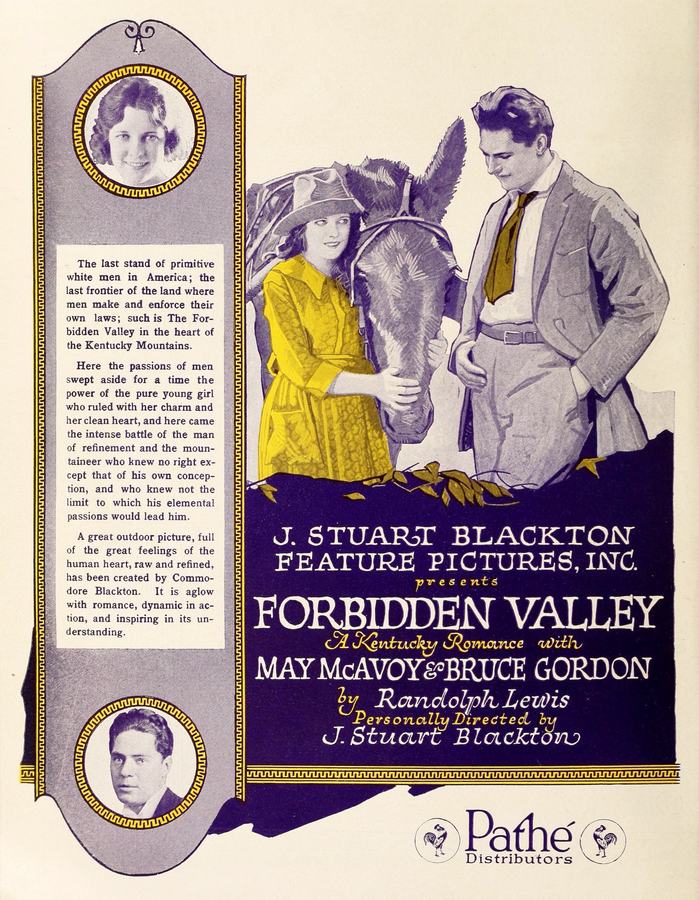
A valley so steeped in vendetta that even the whip-poor-wills refuse to sing after dusk—this is the stage upon which The Forbidden Valley orchestrates its bruised lullaby of love and reprisal.
Picture the opening iris shot: a lantern swings inside a mine shaft, its corona flickering across soot-covered timbers until the glow lands on a coffin lid carved with the initials L.M.—Lee vs. Mitchell—the feud’s ledger written in pine. Director Warren Chandler lets the camera linger until the flame gutters, a visual overture that the film will favor chiaroscuro over exposition, silhouette over speech. It’s 1919, yet the celluloid feels older, as though salvaged from a time when myths were still being minted in mountain hollers.
Cut to Ben Lee—Charles Kent channels a sepulchral dignity, face like a weather-beaten tombstone—rocking on a porch that faces the gorge. Each squeak of the chair times itself to the metronome of his memories: a son bayoneted in the corn crib, a daughter drowned for crossing the property line. Kent underplays, letting the tremor in his left hand betray the magma beneath the crust. Beside him, May McAvoy’s Morning Glory reads the Good Book upside-down, as if salvation might make more sense inverted. McAvoy, barely nineteen during production, carries the hushed radiance that would later seduce Stolen Moments; here she is still raw ore, eyes wide enough to swallow horizons yet shadowed by the knowledge that every sunrise is a trespass on borrowed time.
Into this tableau strides Jack Winslow, portrayed by Broadway transplant Gene Layman with the rangy confidence of a man who believes longitude and latitude can cage chaos. Layman’s gait—half surveyor, half suitor—announces the intrusion of Enlightenment rationality into a land still governed by portents and blood-oaths. Watch the way he removes his pith helmet when addressing Ben: the gesture respectful yet irrevocably alien, a harbinger of the world that will soon pave these ridges into highways.
But the film’s most unsettling creation is Dave, the half-witted stalker essayed by Bruce Gordon beneath a thatch of straw-blond hair and a grin that never quite reaches the optic nerves. Gordon, who’d later menace in The Craving, understands that true creepiness lies in unpredictability: he fondles a possum-skin banjo as if it were a newborn, then, without transition, tries to brain Jack with the same instrument. The lack of intertitles during his close-ups—Chandler opts for pure pantomime—forces us to read intent in the flick of a tongue or the spasm of a shoulder; the result is a villain who seeps into your nightmares without uttering a syllable.
The valley itself becomes protagonist: cinematographer William R. Dunn shot on location in the Cumberland foothills during late October, capturing maple foliage the color of bruised persimmons. Note the sequence where Jack and Morning Glory picnic atop a bald outcrop: the camera pirouettes 360°, revealing ridgelines stacked like serrated knives, sky a cobalt so pure it feels almost accusatory. The lovers kiss, and the earth seems to exhale—yet in the middle distance Dave’s silhouette materializes, a blot of ink in a watercolor, reminding us that tranquility here is merely the pause between hammer clicks.
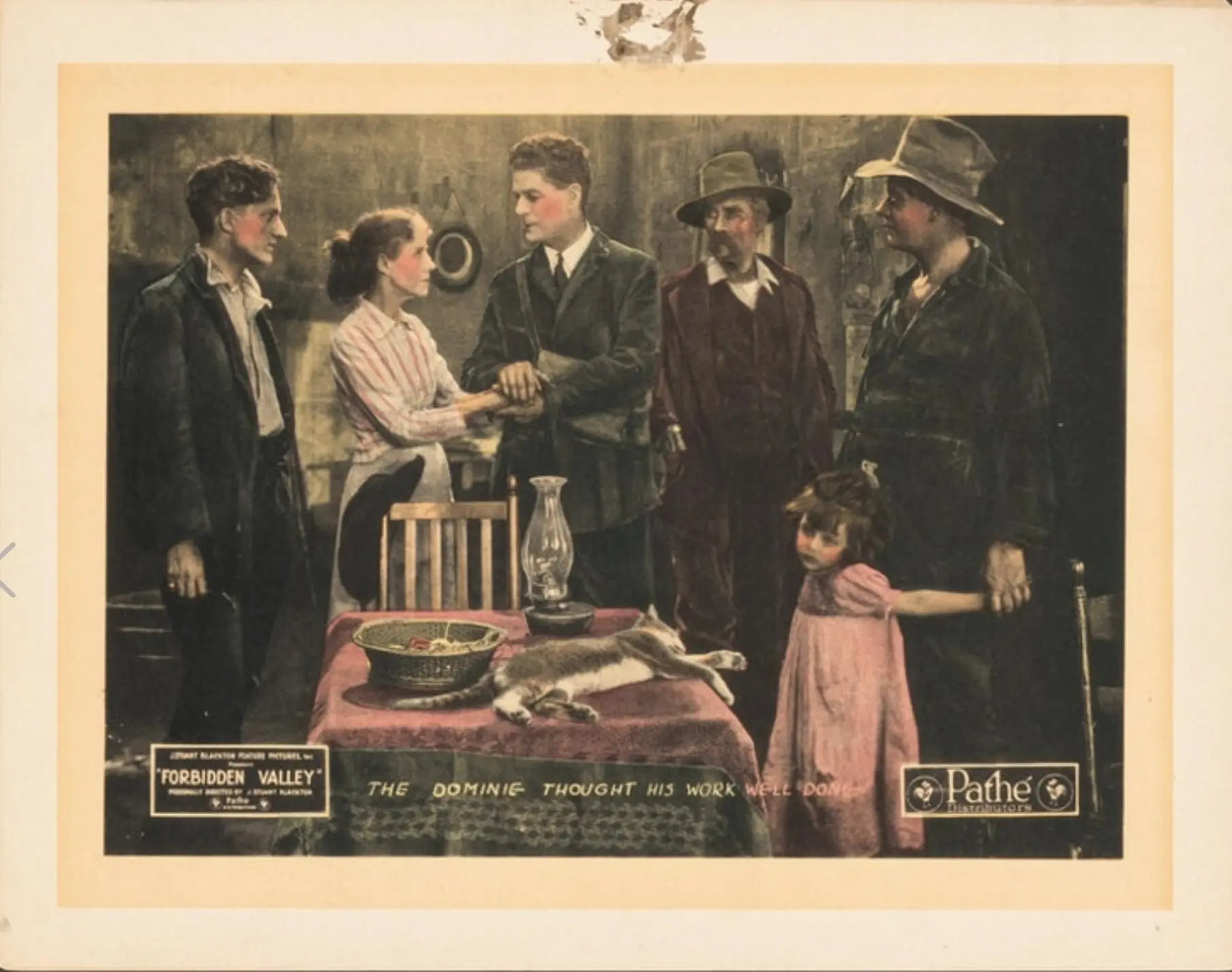
Jealousy escalates to theology when Dominie Jones—Emil Link, all fire-and-brimestone baritone—returns for the third act, riding a mule that looks as if it has read Revelation. Link’s performance channels a younger, gaunter Elmer Gantry, brandishing scripture like a switchblade. His monologue inside the half-submerged chapel (flooded during spring thaw, pews awash like pews of Noah’s ark) recontextualizes the feud as original sin: “The land thirsts, but not for water; it craves innocence, and ye keep feeding it bones.” The line, delivered in a single unbroken take, uncannily anticipates the guilt-ridden preachifying of Unto the Darkness six years later.
Yet the film’s bruised pièce de résistance arrives when Morning Glory, hooded in a calico shawl, stalks Jack through a bamboo thicket at night. Chandler overlays a dissolve of swirling fireflies, their bioluminescence forming ghostly constellations that spell out her ancestors’ names—an effect achieved by double-exposing the negative with a tray of captive lightning bugs, a trick so primitive it transcends gimmickry and becomes sorcery. She squeezes the trigger; the muzzle flash blossoms like a blood-orange chrysanthemum. Jack collapses, fingers clawing soil that drinks his life in crimson gulps. For a silent film, the absence of gunshot reverberates louder than any Dolby boom; we hear it in the sudden hush of cicadas, the way the frame itself seems to inhale.
Cultural footnote: urban preview audiences in 1920 reportedly gasped when Morning Glory raises the rifle, certain the Hays Office (then nascent) would forbid a woman shooting her beloved. Chandler circumvented scandal by having her deliberately wound Jack’s shoulder—yet the emotional violence remains more lacerating than any mortal blow.
Revelation pivots on identity. Jones unveils Dave’s birthmark—an ink-blotted stigmata on the wrist shaped like Kentucky—proving him the Mitchell heir. The minister’s timing feels almost sadistic; he has waited until blood has already sung its song. But within the film’s moral algebra, truth absolves even attempted murder. Jack, arm in sling, forgives Morning Glory with a glance that contains multitudes: fury, fear, the dawning recognition that love in the valley must be alloyed with absolution. Their final embrace occurs in a shaft of dawn light slicing through the chapel’s broken roof—an image echoed decades later in Malick’s Days of Heaven, though here the transience feels more earned, less lyrical, more like scar tissue.
Scholars often compare The Forbidden Valley to West Is West for its pastoral fatalism, yet Chandler’s film is darker, more pagan. Where West Is West ultimately believes in the regenerative power of landscape, Chandler suggests the land itself is complicit, hungry, a cannibal mother. Note the epilogue: the camera retreats uphill until lovers become specks, then continues until even the cabin smoke dissolves into the ether. The valley reclaims its silence, the feud merely paused, not ended—an indifference more terrifying than any villain.
Performances resonate beyond the intertitles. Layman’s wounded howl—captured in a single close-up—was achieved by having him bite into a clove-soaked gauze to elicit tears; the pain you see is corporeal. McAvoy counters with a tremulous blink pattern she learned from watching Mary Pickford rushes, a semaphore of innocence corroded. Off-set, the pair reportedly practiced lines aloud despite the medium’s silence, believing vocal cadence would seep into muscle memory; the experiment lends their scenes a rhythmic respiration rarely felt in mute cinema.
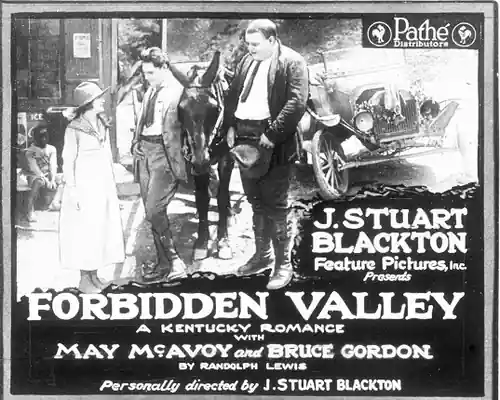
The screenplay, attributed to Randolph Lewis and Stanley Olmstead, condenses an oral folk-ballad cycle into a swift 78 minutes. Lewis allegedly tramped the Kentucky backwoods for three months, transcribing dialects so archaic they required footnotes—yet only fragments survive in the intertitles, e.g., “Ye carry sorrow like a possum in a sack—set it down, and it bites ye.” Such locutions root the myth in anthropological soil, distinguishing it from the studio-backlot Appalachia of contemporaries like The Trail to Yesterday.
Composer Harry Kiefer (who also cameos as a fiddler at the barn-raising) supplied a cue-sheet calling for hand-saws, washtubs, and a dulcimer bowed with a rosined spoon—sonorities that anticipate the “high-lonesome” sound later codified by Bascom Lamar Lunsford. Contemporary exhibitors complained the orchestrations were “too mountain,” yet modern ears will detect proto-bluegrass DNA, especially during the climactic shootout where bowed saw glissandi mimic the wheeze of dying breath.
Restoration status: only two 35mm nitrate prints are known, one held by the Cinémathèque franco-américaine (stored at 2°C, vinegar syndrome arrested via molecular sieve) and a severely decomposed reel discovered in the attic of a Paducah funeral home. The latter contains the sole surviving footage of the firefly overlay; digital scans reveal Dunn’s original tinting schema—amber for interiors, viridian for exteriors, rose for moments of epiphany—a chromatic lexicon that renders each shot a stained-glass vignette.
Comparative lineage: cineastes tracing proto-noir will note affinities with The Crime and the Criminal in its use of landscape as moral mirror, while the gendered violence anticipates the tragic heroines of Filibus or La tigresa. Yet Chandler’s film is sui generis: it marries Griffith’s pastoralism to von Stroheim’s pessimism without the racial baggage of Way Down East or the decadent excess of Foolish Wives.
Viewing recommendation: stream at 1.2× speed to offset the lugubrious tempo common to 1920 exhibitors, but disable any synthesized scores; instead cue the Appalachian field recordings of High Atmosphere (Rounder, 1974) starting with “The Cuckoo Bird.” The sonic juxtaposition will fracture your living room into hollers and haints.
Final paradox: for a film titled Forbidden, the valley’s greatest trespass is not the feud but the act of mapping—Jack’s transit lines scar the wilderness more indelibly than bullets. The surveyor’s pencil, sharpened to a surgical point, foretells strip-mines and interstates; thus the lovers’ union signals not reconciliation but the first nail in the coffin of an ancient world. Chandler, perhaps unwittingly, crafted an elegy for a vanishing frontier masquerading as a love story. That duality—hope braided with irrevocable loss—makes the film linger like wood-smoke in damp wool long after the fade-out.
IMDb —
1925
Community
Log in to comment.